
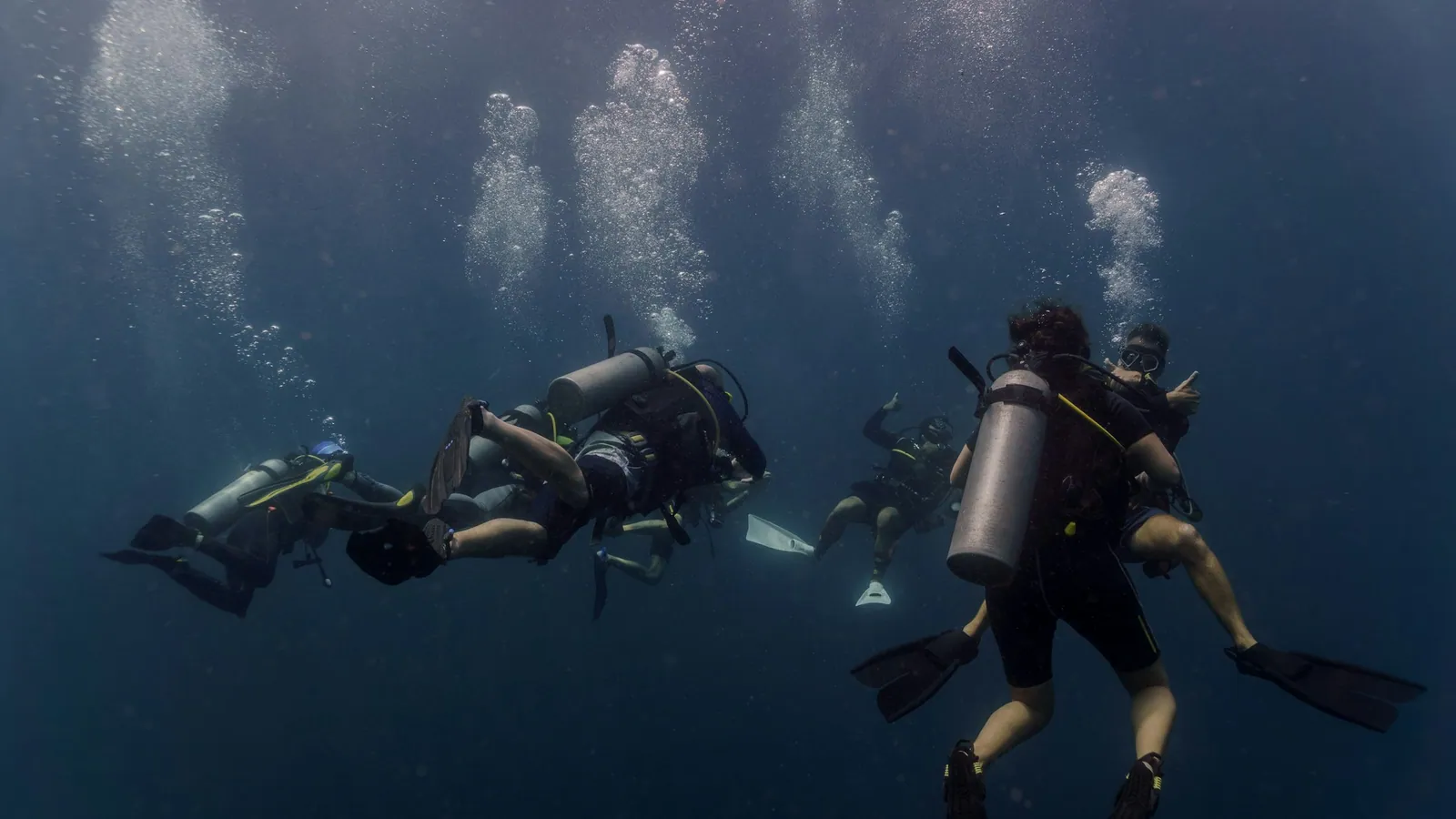
Emergency oxygen is the primary first aid for the two injuries divers actually worry about. Somebody on the boat needs to know how to give it. It takes a day to become that person.
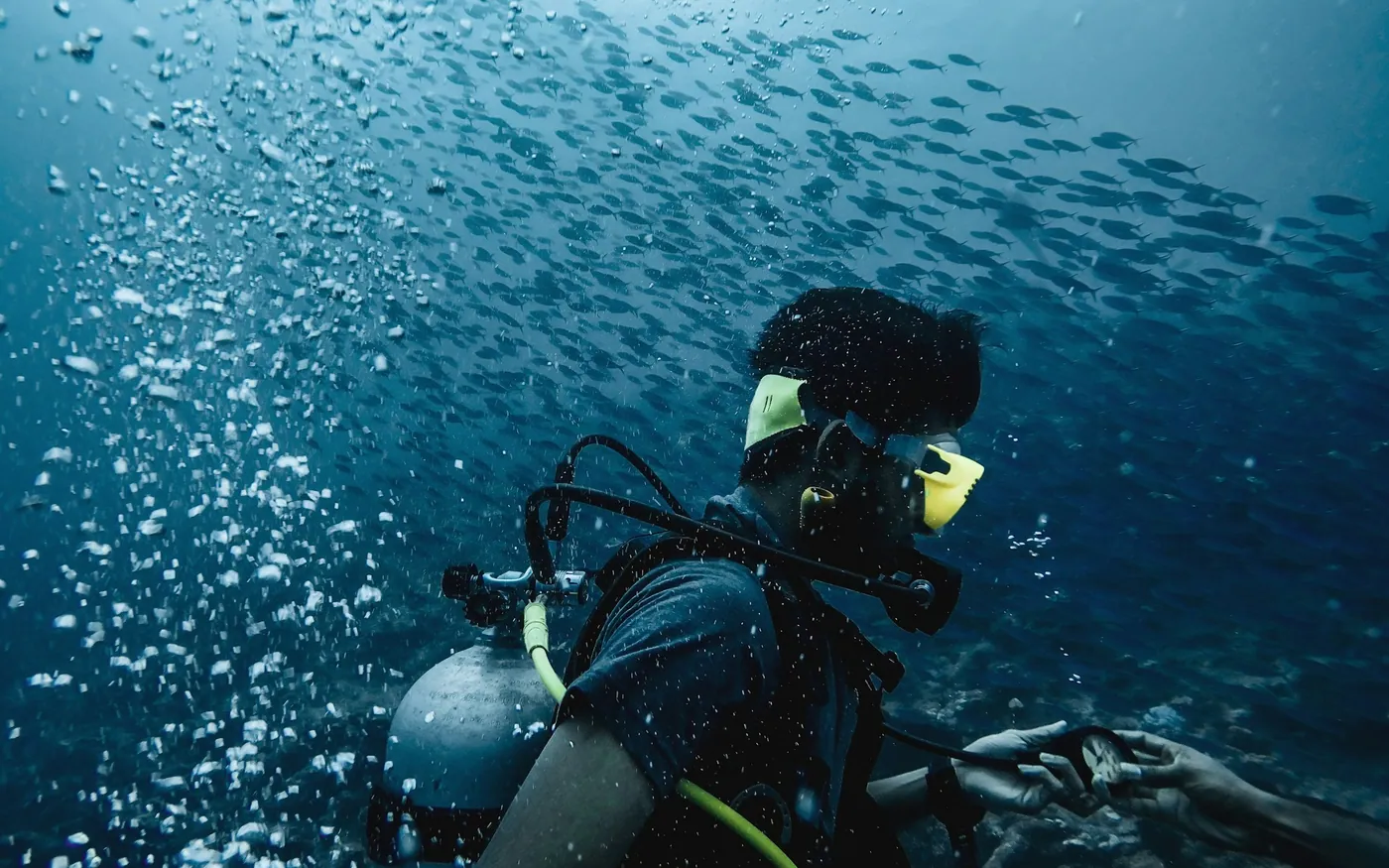
This post explains why the training exists and what it covers. It is not medical advice and it does not teach the skill — that part is deliberately done in a room, with an instructor and a kit in front of you.
The argument from distance
The case for this training is not dramatic. It is arithmetic about how far away help is.
The published guidance is straightforward: if you regularly dive more than about thirty minutes from a medical facility, you should have an oxygen kit and know how to use it. Boat diving on this coast comfortably meets that description, and so does a good deal of the shore diving.
For the first half hour, the oxygen on site is not first aid. It is the treatment.
That half hour is the window in which early oxygen makes the largest difference to how a case of decompression sickness turns out, and it is entirely in the hands of whoever is standing there.
What it is actually for
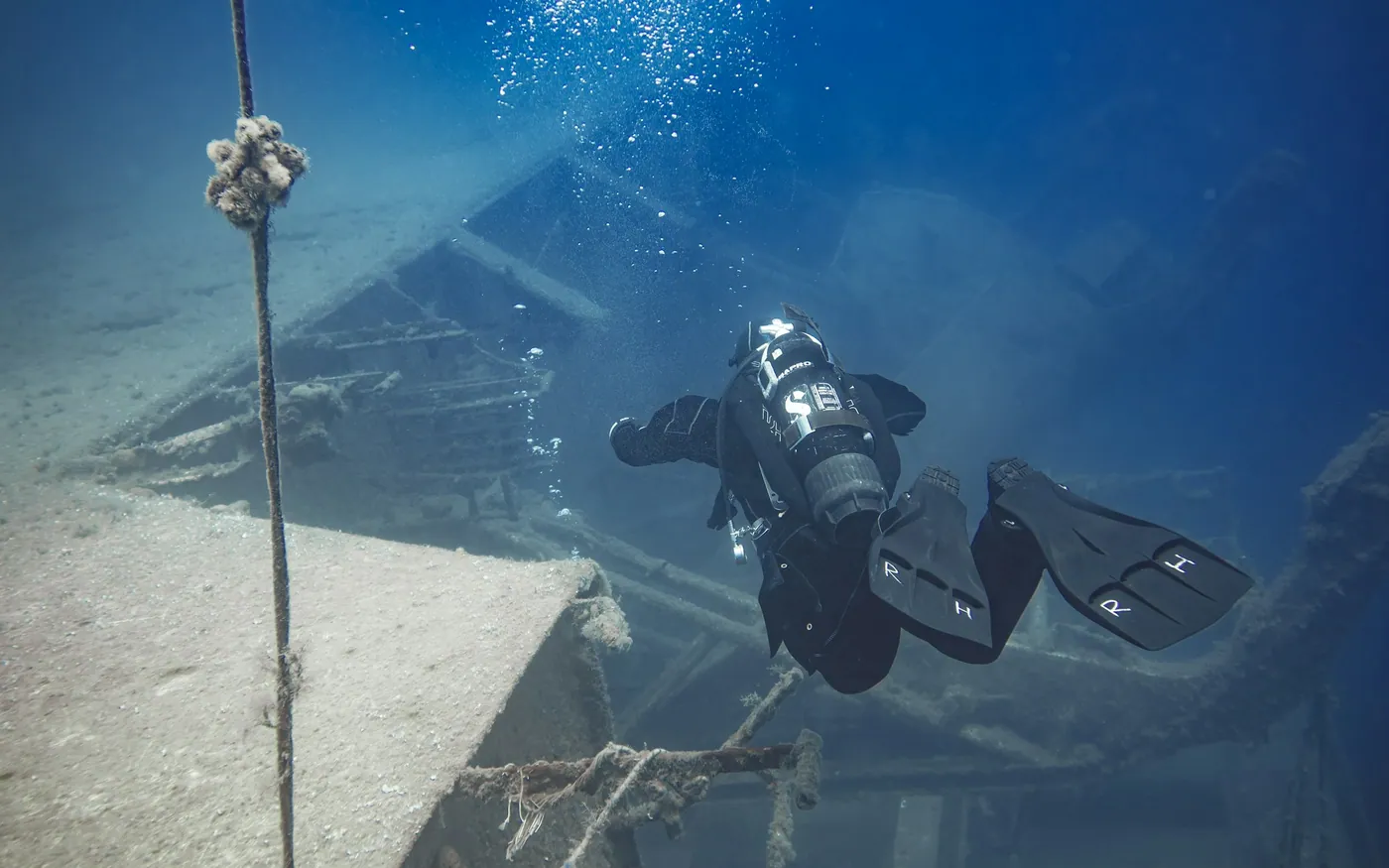
Emergency oxygen is the preferred first aid for scuba diving injuries, and there are specific reasons.
It is the primary first aid for decompression sickness and for arterial gas embolism, and it is also used in near-drowning and cardiac arrest. Giving a high concentration of oxygen promptly, and keeping it going, is the intervention that the whole chain of later treatment depends on.
A basic kit runs somewhere in the region of forty minutes to an hour of oxygen, which frames the problem neatly: it is enough to matter and not enough to waste while somebody works out how the regulator attaches.
What the day looks like
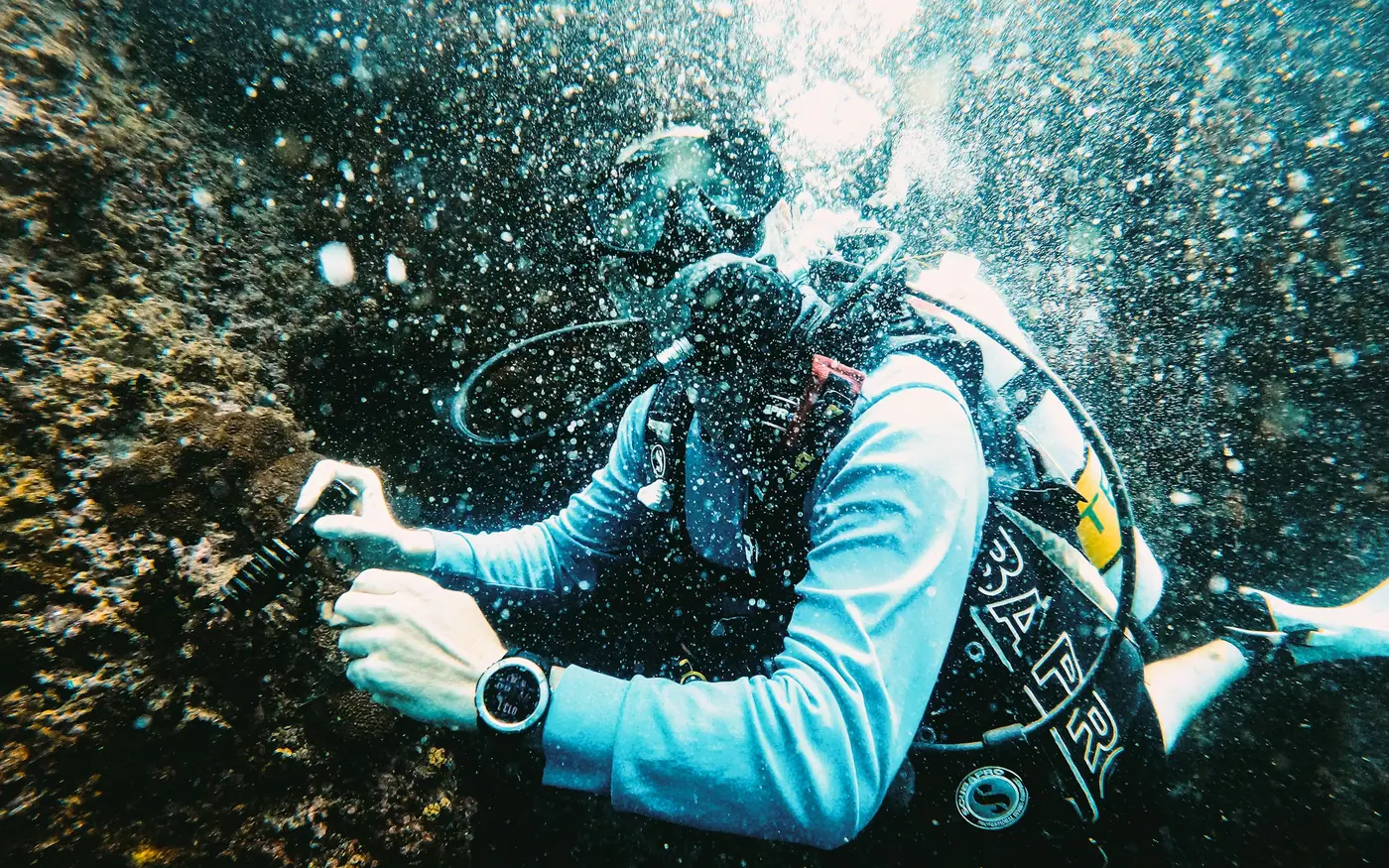
It is one of the least glamorous courses in diving and one of the most useful.
- Recognizing the signs of decompression illness, which is the part that makes you useful before anyone has decided there is an emergency.
- Assembling and checking the kit, which is fiddly the first time and automatic by the fifth.
- Delivering oxygen to a breathing casualty and to one who is not.
- Keeping it going, monitoring, and handing over to emergency services.
- No dives. This is a classroom day.
PADI sets out the case for the training in more detail. Ours runs as Emergency Oxygen Provider.
The prerequisite nobody expects
Current CPR and first aid training is a prerequisite, which surprises people who book the oxygen course on its own.
That is why the two are usually taken together and why Emergency First Response sits beside it on our course list. EFR is also the first aid prerequisite for Rescue Diver, so if you are heading that way you will be doing it regardless, and doing all three in sequence is the efficient route.
It is worth adding that the CPR and first aid content is not diving-specific and does not expire quietly in a drawer. It is the most transferable training on the list.
Who this is really for
Course descriptions tend to frame this as a professional requirement, which is true and is the least interesting reason to do it.
Dive operators do expect it of divemasters and instructors. But the person who actually needs it is the ordinary recreational diver standing on a boat deck when somebody surfaces and does not look right — which is a description of almost every diver, on almost every charter, and there is no rule that says a professional will be within reach.
The skills are also not confined to diving. They apply to any water activity and a good deal beyond it, which makes the day a reasonable investment even for somebody who dives twice a year.
The part that is harder than the equipment
Assembling a kit is the easy half. Deciding to use it is the half that catches people out.
Divers hesitate because the casualty is talking, or says they feel fine, or is embarrassed, or because nobody wants to be the person who overreacted on a perfectly good Saturday. That hesitation is the most common reason oxygen goes on late, and it is a social problem rather than a technical one.
What the course does about it is straightforward: it gives you a rehearsed sequence, so that starting is a decision you have already made rather than one you make under pressure. It is the same reasoning as agreeing a lost-buddy procedure on the surface — the point of practicing something is that you do not have to be brave to begin it.
And giving oxygen to somebody who turns out to be fine costs an hour of gas and nothing else. Nobody in dive medicine has ever criticized that.
Where it sits alongside everything else
If you are weighing this against a specialty, the comparison is not close.
A specialty opens a kind of diving. This opens the ability to be useful in the one situation where being useless is expensive, and it takes a day rather than a weekend. Set beside the options in what comes after Advanced Open Water, it is the least glamorous entry and the one most divers are glad they did.
And a smaller practical benefit: once you have done it, you will start noticing where the oxygen is kept on every boat you board. That habit alone is worth something, and it is part of paying attention to the briefing described in your first dive charter.
Frequently asked questions
Why does a diver need oxygen training?
Because emergency oxygen is the primary first aid for decompression sickness and gas embolism, and giving it early materially improves the outcome. If you dive somewhere more than half an hour from a hospital, the oxygen on site is the treatment until you get there.
Do I need CPR training first?
Yes. Current CPR and first aid training is a prerequisite for the oxygen course, which is why the two are usually taken together — the shop runs Emergency First Response alongside it.
How long does it take?
A day, typically, and there are no dives involved. It is one of the shortest and most useful things a recreational diver can add.
Do I have to buy an oxygen kit?
No, and most divers do not. The point of the training is that you can use the kit that is on the boat or in the shop, competently, when it matters.
Is this only for people going professional?
Dive operators do expect it of divemasters and instructors, but that is not the reason to take it. The reason is that somebody on a boat should know how to use the oxygen, and on a given day that person might have to be you.
Ask when the next one runs
The oxygen course is a day, needs no dives, and pairs naturally with first aid. Ask us how the two fit together.