
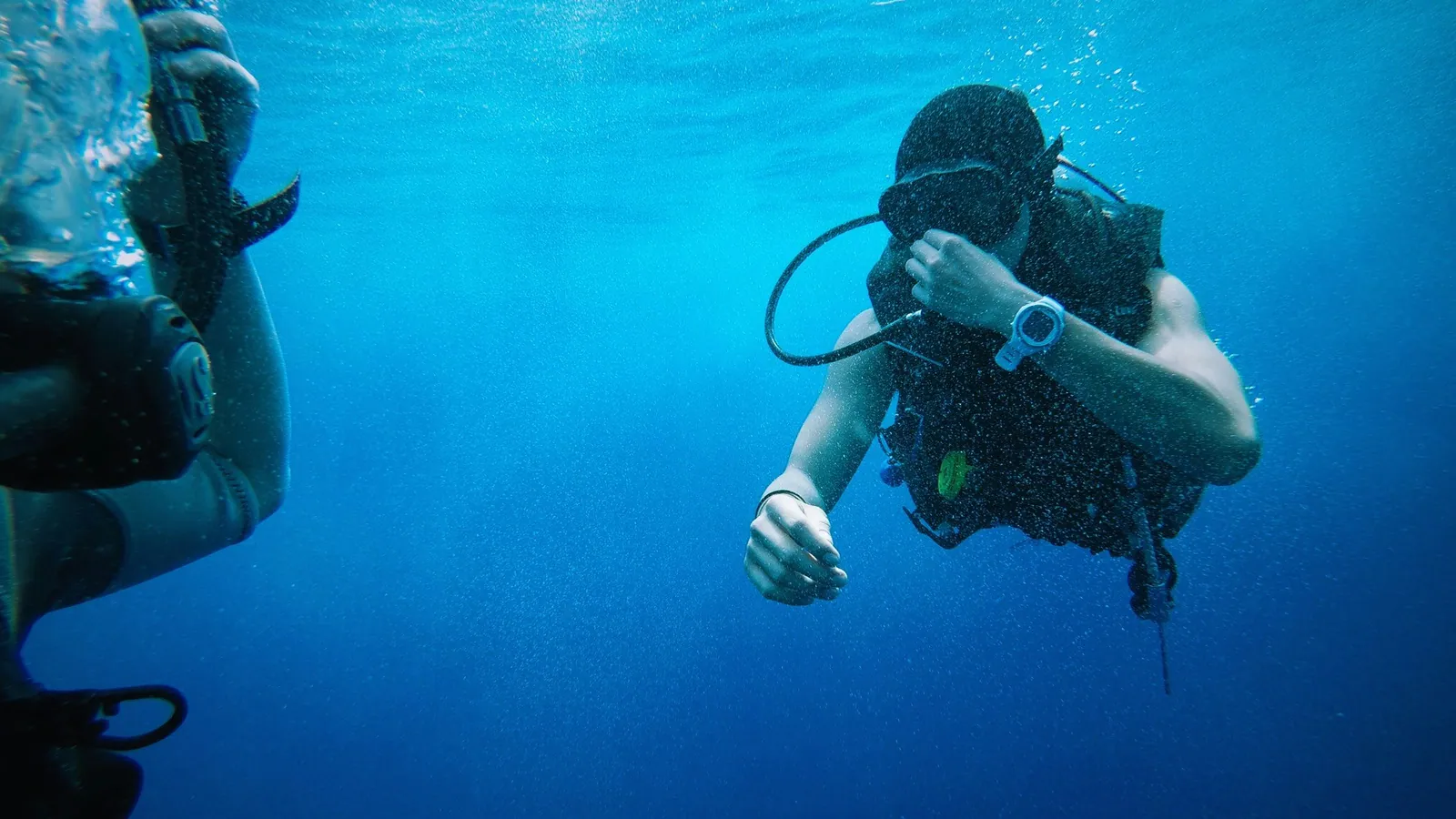
Rescue Diver is the first course where you spend more time thinking about other people than about yourself. Divers who have taken it describe it as tiring, occasionally humbling, and the one that changed how they dive.
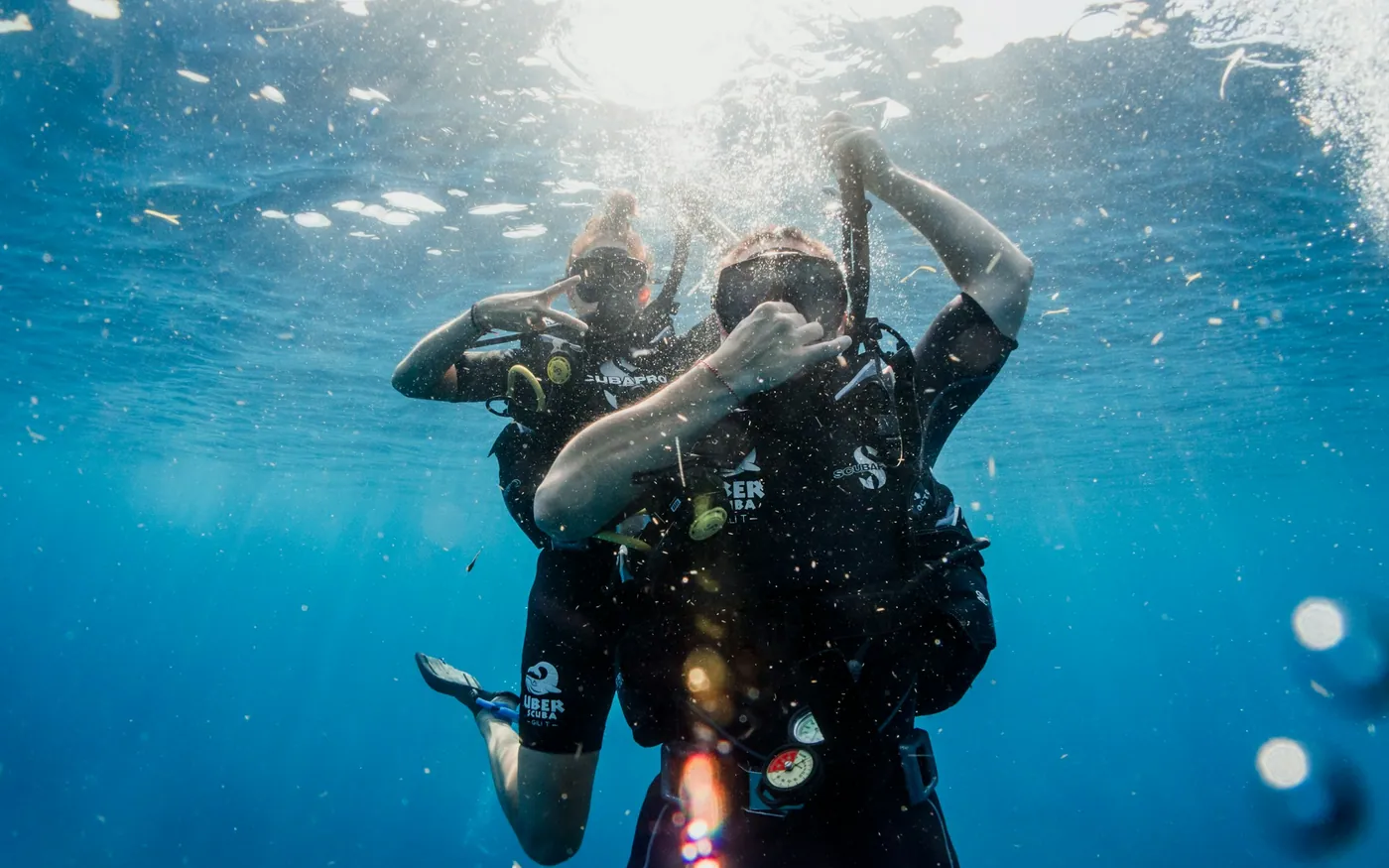
What the course actually covers
It is not a first aid course with fins on. The content divides into three parts, and the first is the one people underestimate.
- Self-rescue. Cramp release, out-of-air situations, and managing your own problems before they become somebody else’s.
- Recognizing trouble. Spotting a diver in difficulty at the surface or underwater, often before they know it themselves.
- Responding. Search patterns, towing an unresponsive diver while removing gear, and in-water rescue breathing.
The through-line is stress. You learn to read it — physical, mental and emotional — and to intervene while it is still a small problem.
The best rescue is the one that never becomes a rescue.
Why EFR comes first
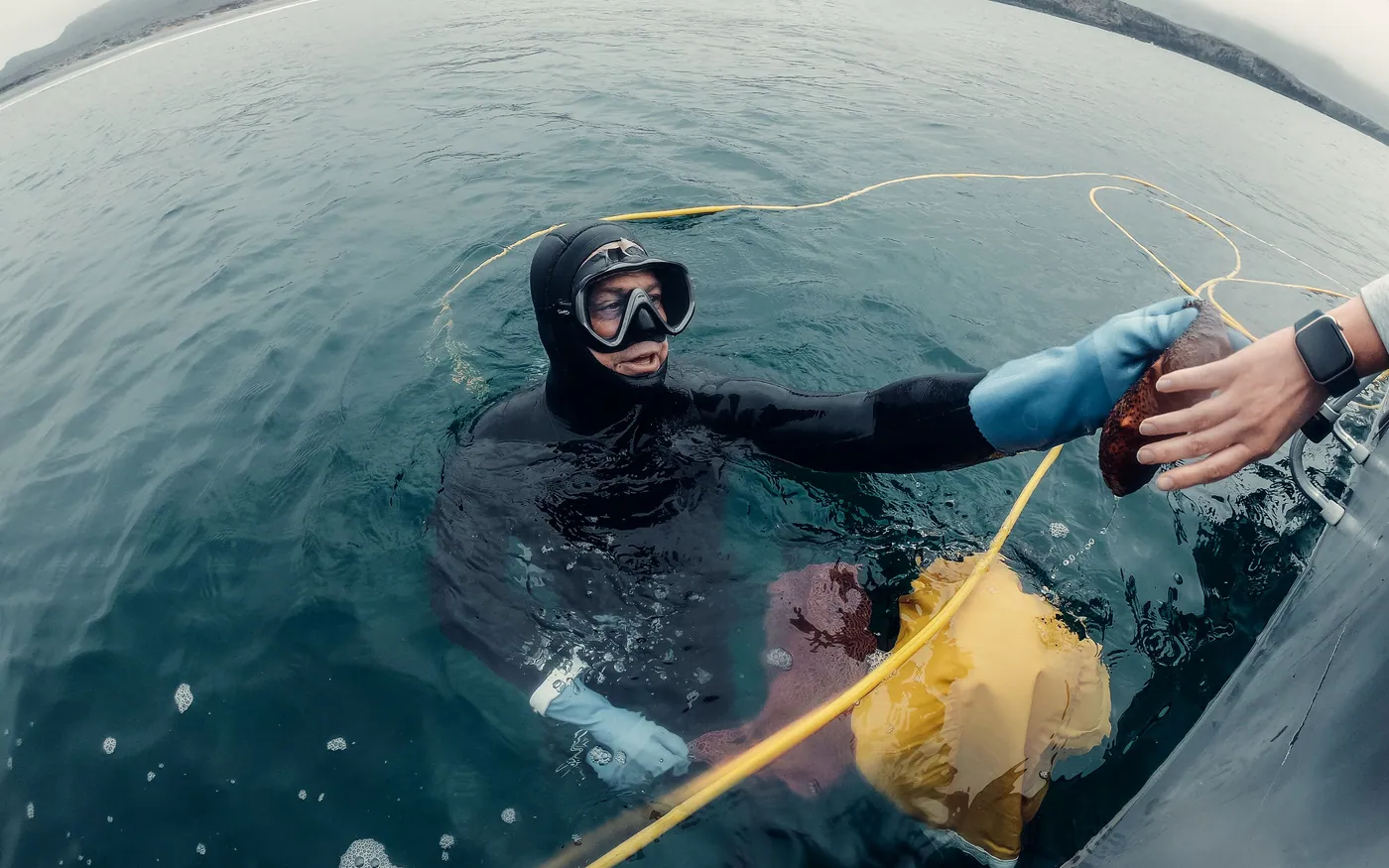
This is the practical detail that trips divers up, so it is worth stating plainly: you need current first aid and CPR training before you can certify as a Rescue Diver.
Specifically, an Emergency First Response certification — or an equivalent — held within the last two years. If yours has lapsed, it has lapsed, and the certification will wait until it is renewed.
| Package | What it includes | Best if |
|---|---|---|
| eLearning, Practical and EFR | The eLearning code, the practical dives, and EFR added at a discounted price | You have no current first aid certification |
| eLearning and Practical | The eLearning code and the practical dives with an instructor | You already hold EFR or an equivalent |
EFR itself is not a big commitment: two to four hours of eLearning and four to eight hours in total. You learn eight core skills, practice CPR on a manikin, work through bandaging and splinting, and finish with a role-playing scenario. There is no minimum age, and the only stated prerequisite is wanting to help.
Why divers say it changed them
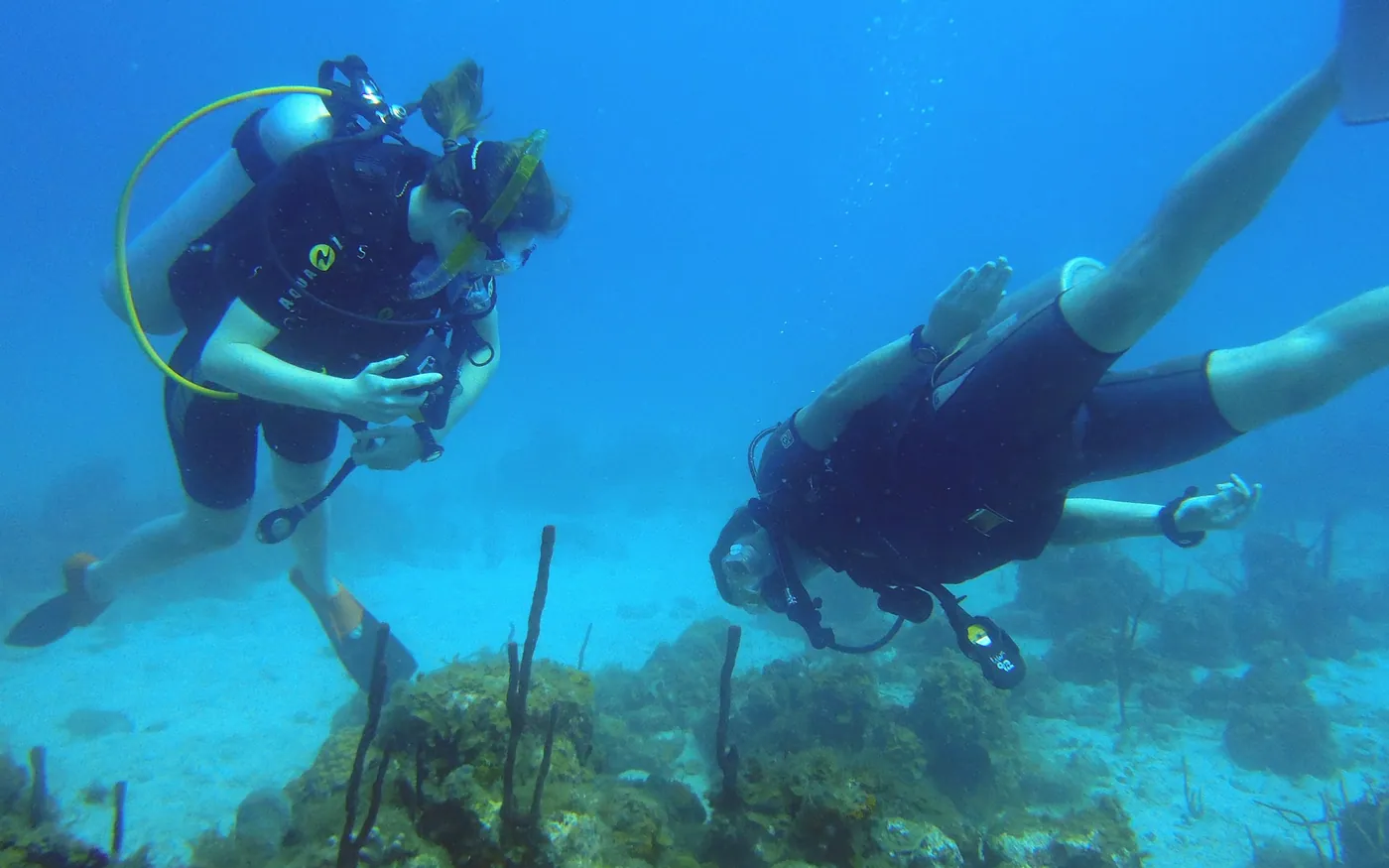
Instructors routinely describe Rescue as the most rewarding course they teach, and the reason is not the skills list.
Up to this point every course has been about you: your buoyancy, your air, your limits. Rescue is the first one that asks you to watch someone else and act before they ask for help. Divers come out of it noticing things they had been swimming past for years.
The side effect is confidence. Knowing you could handle a problem makes you calmer when nothing is going wrong, which is most of the time. Scuba Diving Magazine covers what the course involves in more detail if you want an outside view.
The scenarios, and why they feel unfair
Divers come out of the course talking about the scenarios more than the skills, and usually with a slightly rueful expression.
The reason is that they are not staged politely. An instructor will let a situation develop while you are busy with something else, so that you find the problem late rather than being handed it. That feels unfair the first time and obvious afterwards, because that is exactly how real incidents present.
You will miss things. Everyone does, which is the point of doing it under supervision rather than discovering the gap on an ordinary dive with nobody watching.
By the end the difference is not that you have memorized a procedure. It is that you have already been surprised a few times and know what that feels like.
It is genuinely demanding
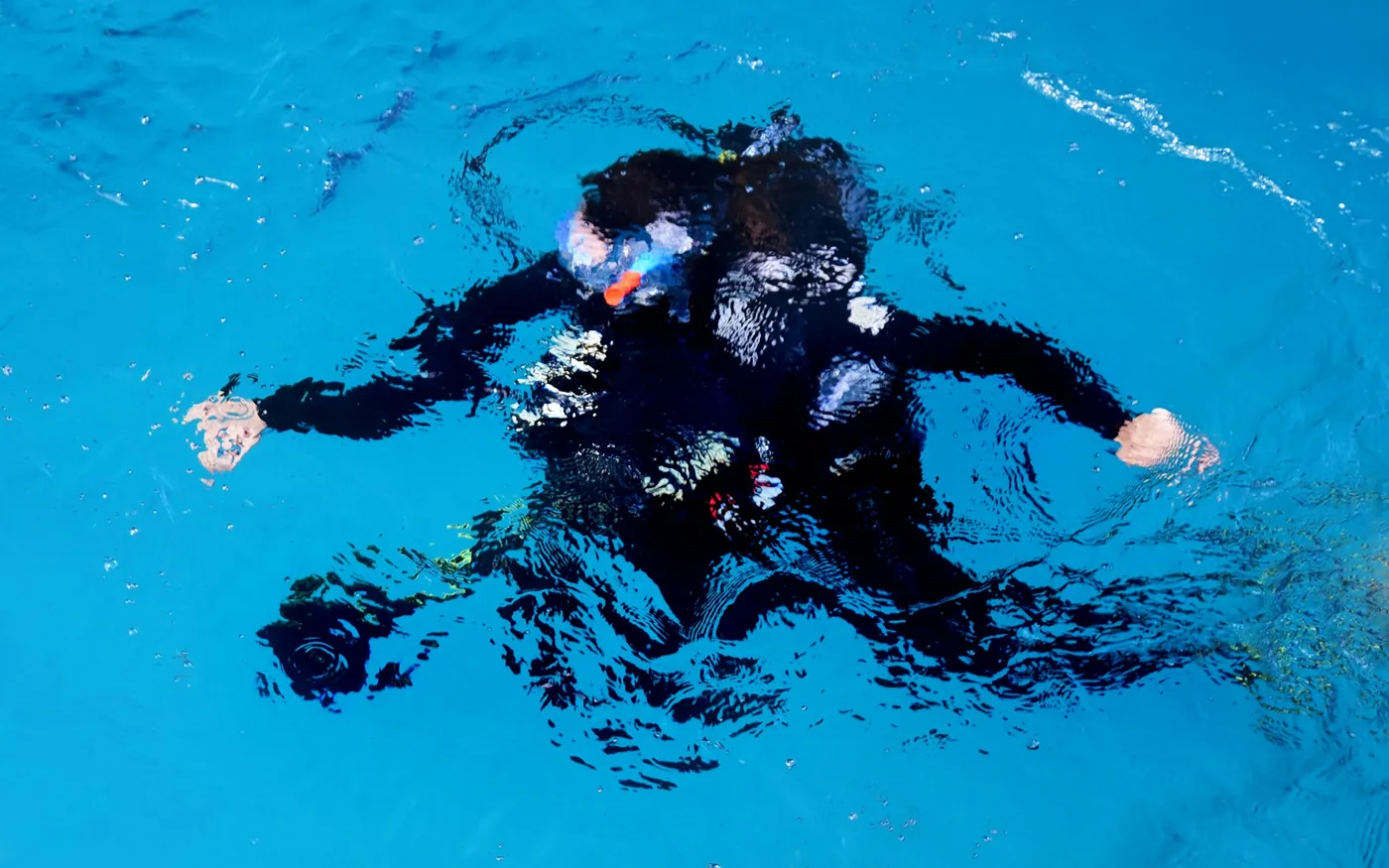
Nobody should book this expecting a relaxed weekend, and it would be dishonest to sell it that way.
Towing an unresponsive diver while stripping their gear and giving rescue breaths is hard physical work, and the scenarios are designed to arrive when you are already tired. That is deliberate: real incidents do not wait until you are fresh.
You are not expected to be good at it immediately. The course is built around repeating things until they become automatic, which is exactly why the tiredness matters.
What it changes about ordinary diving
The certification matters less than the habits, and the habits show up on dives where nothing goes wrong at all.
You start counting heads without thinking about it. You notice that someone is breathing faster than they were ten minutes ago. You check where the exit is before you need it, and you position yourself where you could reach your buddy rather than simply near them.
None of that is dramatic, and none of it appears on a skills list. It is the reason experienced divers keep recommending the course to people who have no intention of going professional.
It is also the point at which diving with you becomes noticeably better for everyone else, which is not something the earlier courses can claim.
When to take it
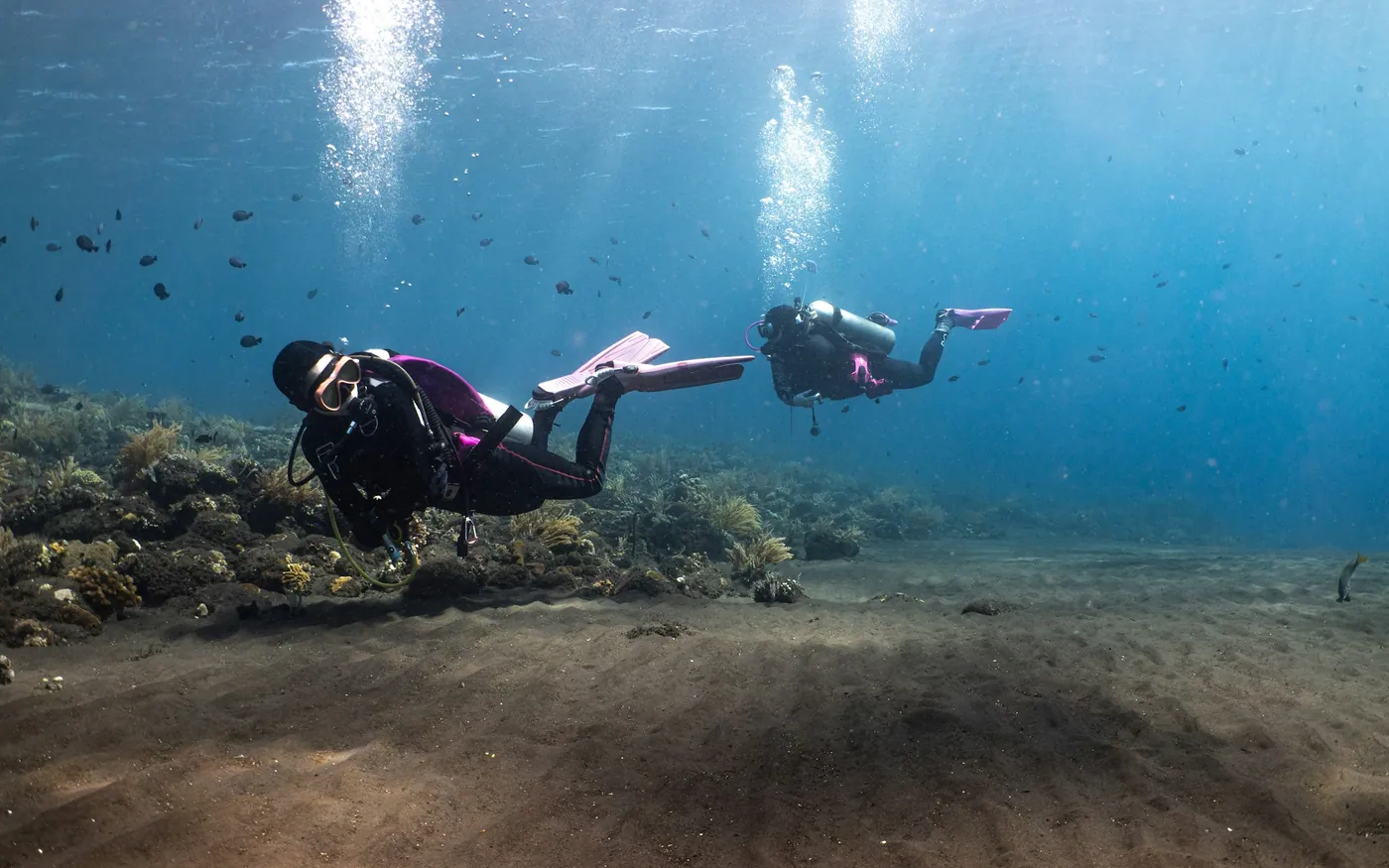
There are the formal prerequisites, and then there is a judgment call, and they are not the same thing.
The formal side is the first aid requirement plus a prerequisite certification level, which we will check against what you hold. The judgment call is whether you have enough dives behind you that your own buoyancy and gas management are automatic — because if you are still thinking about those, you have no attention left for anyone else.
For divers here that usually means a season or two of local diving after Advanced. If you are diving cold water with limited visibility, from boats and from shore, you are building exactly the kind of experience this course assumes.
Frequently asked questions
Do I need Emergency First Response first?
You need EFR or an equivalent first aid and CPR certification held within the last two years. It does not have to be ours — bring your certification details and we will check it. If you do not have one, we run Emergency First Response and one of our packages adds it at a discount.
Is it a hard course?
It is the most demanding recreational course most divers take, and that is a feature. The scenarios are deliberately tiring. Nobody is expected to be graceful the first time through them.
What certification do I need before it?
PADI sets a prerequisite certification level in addition to the first aid requirement, and exactly where you stand depends on which courses you already hold. Bring your certification details and we will tell you — the Advanced course is the step most divers take before this one.
What is the minimum age for EFR?
There is no minimum age for Emergency First Response, and the only stated prerequisite is a desire to help others. The eLearning is two to four hours and the whole thing runs four to eight.
Will I actually use any of it?
The rescues, hopefully never. The prevention, on every dive. Most of what the course changes is how early you notice that something is going wrong.
Ask what you would need
Bring your certification details and we will tell you exactly what is missing before you can start. It is a short conversation and it saves a wasted booking.