

Most buddy pairs have never actually agreed what they will do if they lose each other. The procedure takes thirty seconds to settle on the surface, and it is the difference between an inconvenience and an incident.

What the buddy system is actually for
It is not company. It is a second person who can solve a problem you cannot solve alone, and that only works if they are close enough and paying attention.
A diver who is fifty feet away and facing the other way is not a buddy in any useful sense. They are somebody who will notice you are missing later, which is a different and much less helpful thing.
A buddy you cannot reach is a witness, not a buddy.
The conversation before the dive

This is the part that gets skipped, and it is the part that does the work. It is five items and it takes less than a minute.
- The abort signal. How either of you says the dive is over, with no discussion required.
- The separation plan. How long you search — usually one minute — and where you meet.
- The shape of the dive. Roughly how deep, roughly how long, and which direction you are heading.
- Who leads. Somebody should, and it should not be decided underwater.
- The turn pressure. What gauge reading means we go back, agreed in advance rather than negotiated at depth.
With a stranger this matters more, not less. You know nothing about how they dive, and they know nothing about you.
The check that catches things
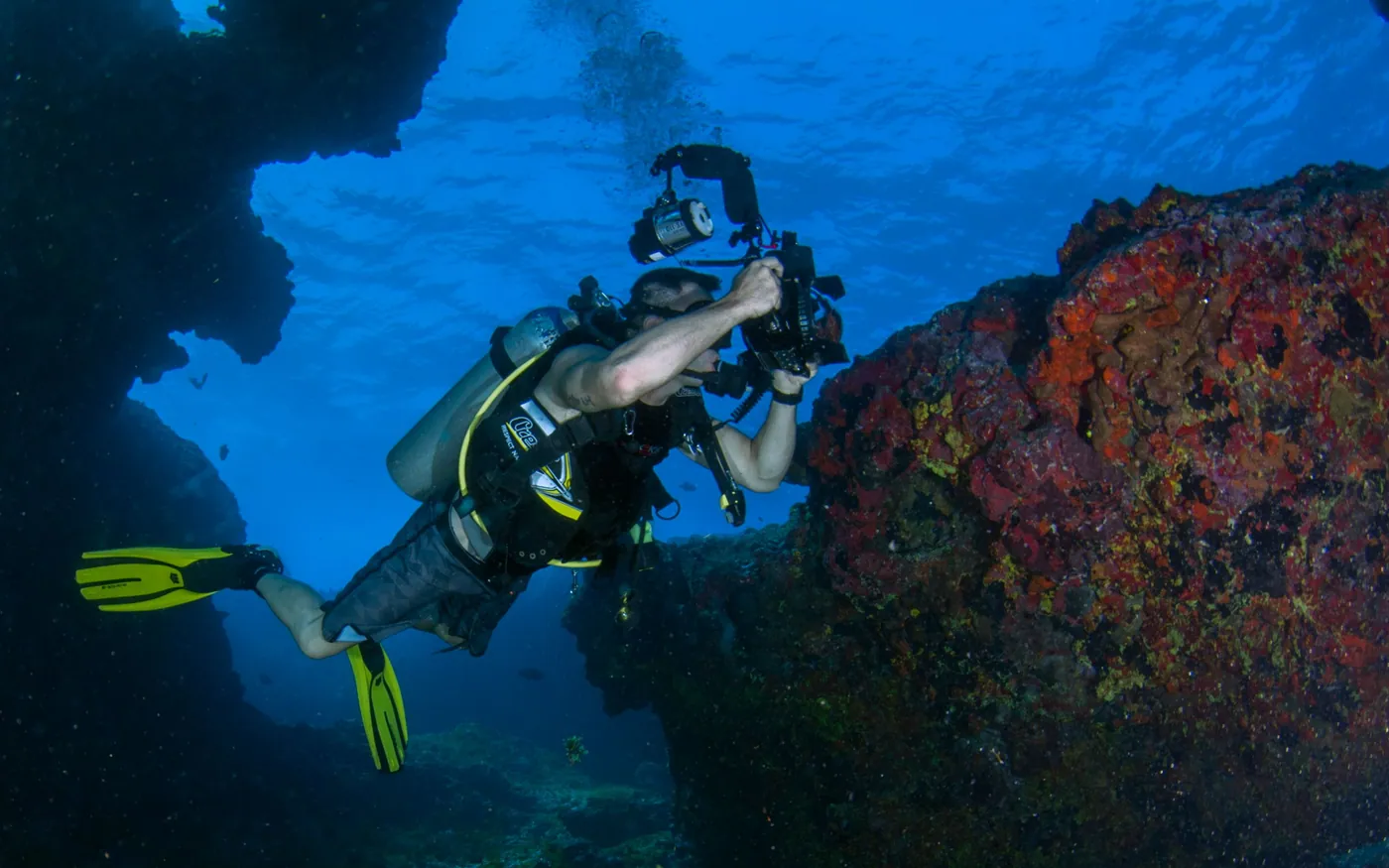
A buddy check is often treated as a formality performed on new divers. It is more useful between experienced ones.
The reason is that you are not checking their competence — you are checking equipment you have never seen before. Where their releases are, which side their octopus is on, how their weights come off. If you ever have to help them, that is the information you will need and there will be no time to find it then.
It also catches the ordinary mistakes: an air valve not fully open, a weight belt threaded the wrong way, a strap not clipped. None of those are exotic and all of them happen to people who have done a thousand dives. SDI has a good piece on what makes somebody worth diving with.
When you lose each other

The standard procedure is short and specific, and its value is entirely in both of you doing the same thing.
Search for one minute. Turn slowly through a full circle, look up as well as around, and look for bubbles rather than for a diver. Then ascend slowly, still looking, make your safety stop, and meet at the surface.
The minute is short deliberately. If you search for one minute and your buddy searches for five, you arrive at the surface four minutes apart and each assume the other is still down. The procedure only works because it is fixed.
And once you are up: stay up. Two divers who each go back down to look are the classic way a separation becomes something worse.
Staying together in the first place

Separations rarely happen suddenly. They happen because one diver stopped to look at something and the other kept swimming.
- Check every thirty seconds or so. Not on a timer, but as a habit.
- Dive side by side, not in file, except where the site forces it. Behind is where buddies get lost.
- Agree who leads, and if you are following, follow.
- Signal before you stop. The moment you settle to look at something is the moment to make sure they know.
- Close up in poor visibility, which on this coast means most days.
Photographers are the classic offenders and usually know it — a point made in underwater photography for beginners.
None of this makes buddy diving a chore. It makes it work, and a pair who have settled these things spend the dive looking at the water rather than at each other.
Diving with someone new
Most of the advice above assumes a regular buddy. On a charter or a course you will often be paired with a stranger, and that is where the pre-dive conversation stops being optional.
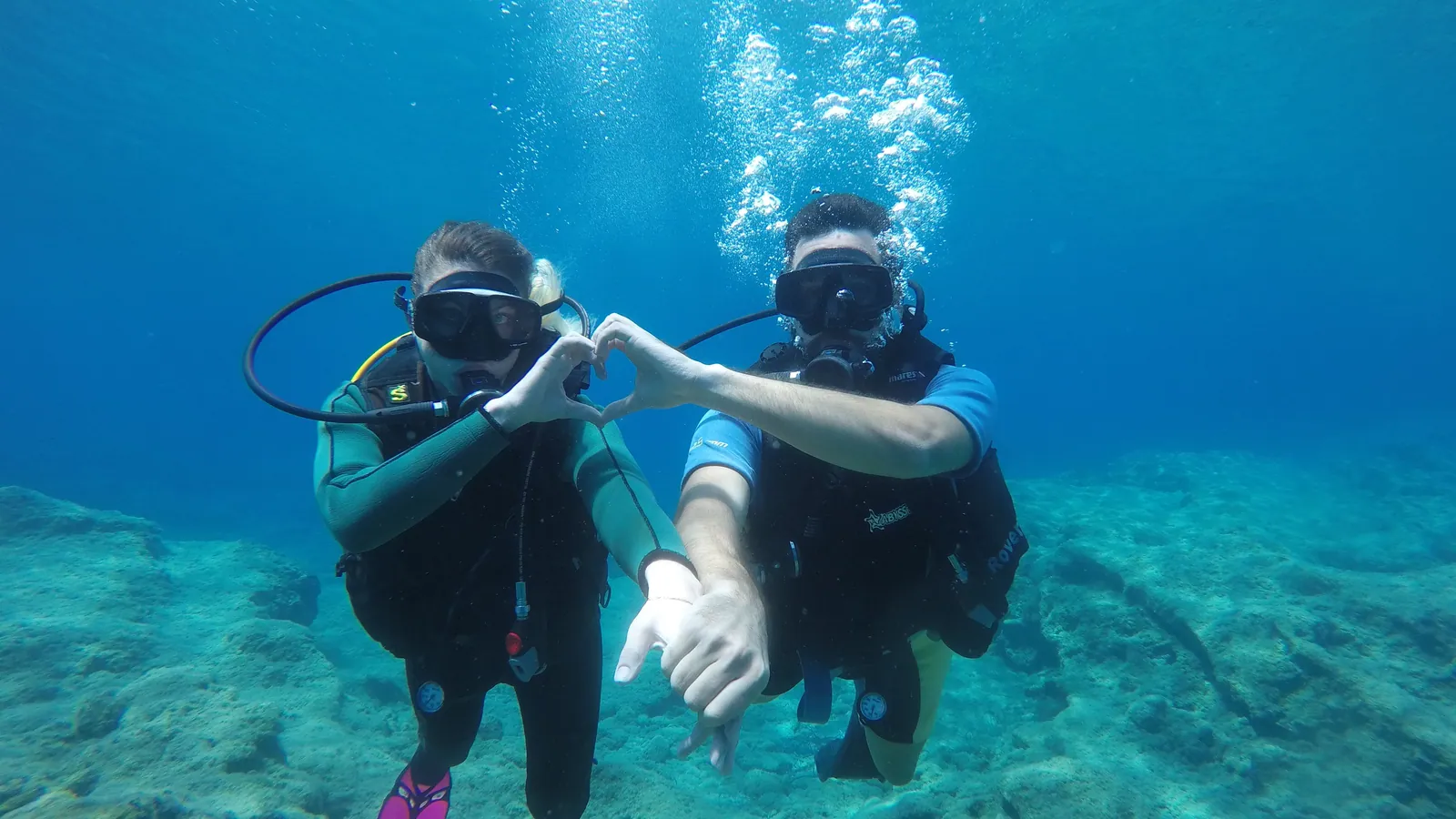
Two extra questions are worth asking someone you have not dived with. How many dives have you done recently, rather than in total — somebody with two hundred logged dives and none in three years is a different proposition from somebody with forty in the last season. And what are you hoping to do on this dive, because a photographer and someone who wants to cover ground will make each other miserable without ever saying so.
Neither question is an interrogation. Both take ten seconds and they prevent the commonest kind of bad dive, which is not dangerous but is genuinely disappointing. If either of you is rusty, a refresher beforehand is the honest fix, and a newer diver is usually better paired with a divemaster than with another beginner.
What makes somebody good to dive with
Beyond procedure, the divers people want to buddy with have a few things in common, and none of them is skill.
They turn up on time with their gear working. They say what they want from the dive before it starts. They notice when you are cold or low on gas before you mention it. And they will call a dive without making it awkward, which is probably the most valuable of the lot — it is what makes it safe for you to call one too. If you have been out of the water long enough to be unsure of any of that, a refresher is a kindness to whoever you dive with next.
Frequently asked questions
What do I do if I lose my buddy?
Search for one minute, then surface slowly while still looking, making your safety stop on the way. That is the standard taught procedure. The point of the minute is that it is short enough that you both arrive at the surface at roughly the same time.
Why one minute?
Because two divers each searching for five minutes in different directions is how a separation becomes a search. A short fixed interval means you both give up at the same point and meet where you agreed.
What should we agree before the dive?
The abort signal, the separation plan, roughly what depth and how long, who leads, and what gas pressure turns the dive. Five sentences on the surface, and none of it takes long.
Is a buddy check really necessary with someone experienced?
It is more useful with an experienced buddy, not less — you are checking unfamiliar equipment rather than testing their competence. Two sets of eyes catch what one set misses.
How close is close enough?
Close enough to reach them before they need you. In clear water that is further than in green water, which is why the answer is a distance rather than a number — see diving in low visibility.
Find people to dive with
Our local charters are a straightforward way to meet divers who dive this coast regularly. Ask what is on the calendar.