
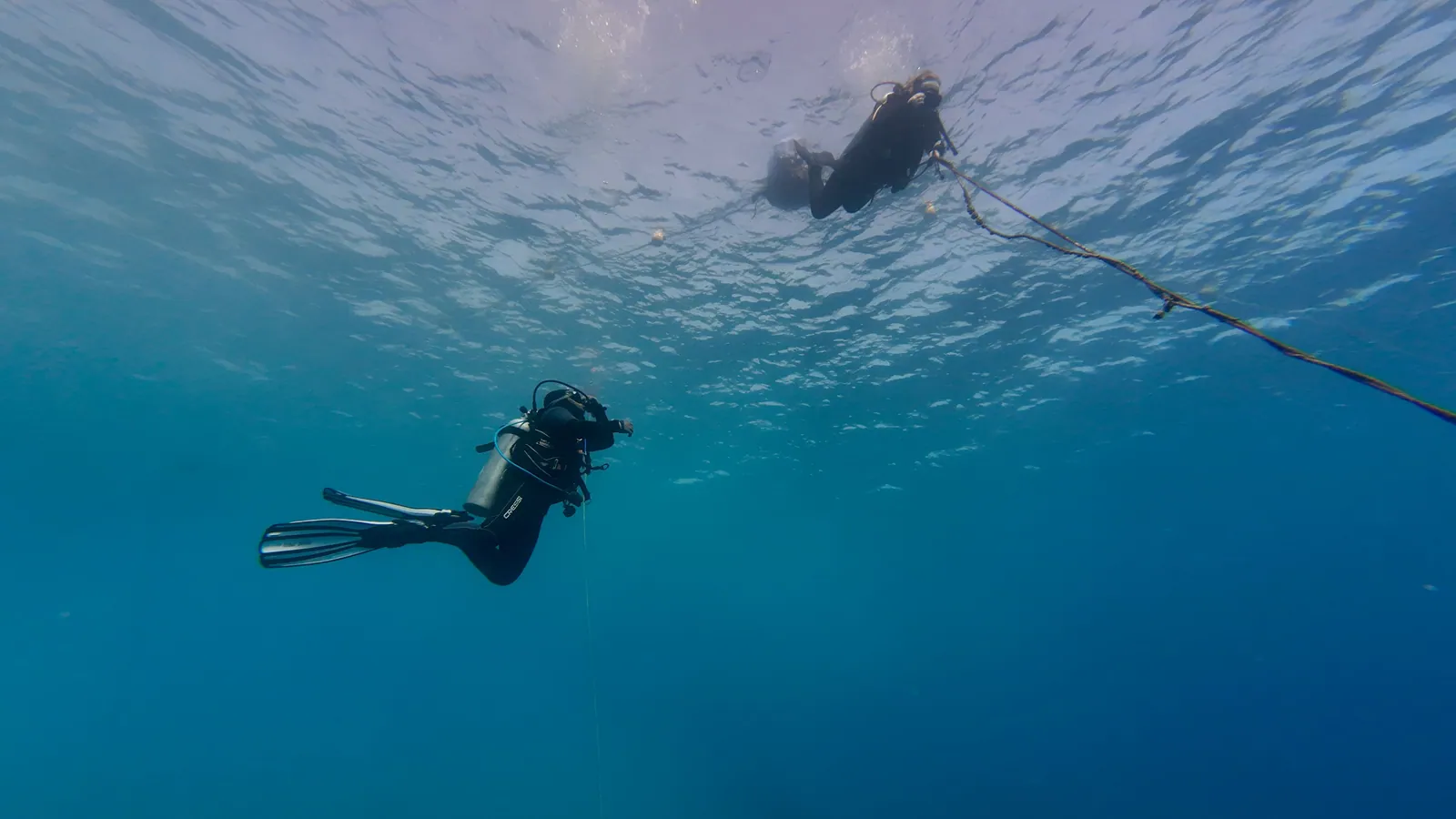
Most underwater navigation is not done with a compass. It is done by looking at things and remembering them, and the compass is what you fall back on when there is nothing left to look at.
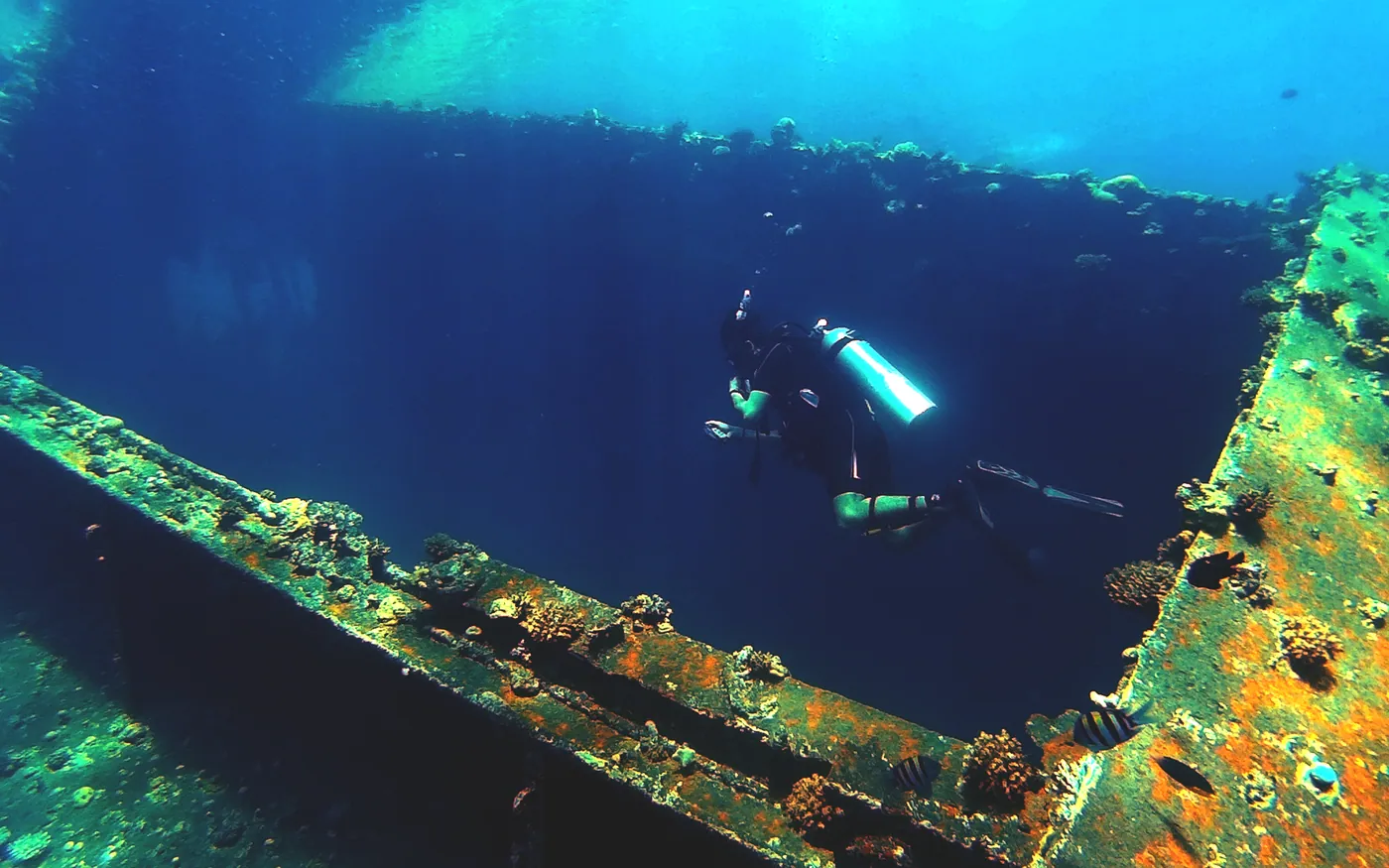
Natural navigation comes first
The way experienced divers actually get around is by reading the site, and it is taught second because it is harder to put in a syllabus.
It is point-to-point: you go from one recognizable thing to the next, and you remember the order. A boulder, a ledge, a change from rock to sand, the edge of a kelp bed. On the way back you run the list in reverse.
- Look behind you. The site looks completely different from the other direction, and that is the view you will need.
- Note the bottom composition. Sand to rock is a boundary you can follow like a road.
- Watch the light. Which way the sun is coming from tells you a great deal, and it does not move much in an hour.
- Note the slope. Deeper is usually one direction and shallower the other, and your depth gauge reads that without you looking up.
- Watch the ripples in sand. They usually run parallel to shore.
Your depth gauge is a navigation instrument. Shallower is almost always the way home.
Where the compass earns its place

Natural navigation needs something to see. On open sand, in poor visibility, or anywhere featureless, it stops working and the compass takes over.
The mechanics are simpler than people expect. Point the lubber line — the long line on the face — in the direction you want to go, and point your body the same way. Set the bezel so the north arrow sits between the index marks. Swim, keeping the arrow between them.
The return is the part that makes it worth carrying. Turn until the north arrow sits at the opposite hatch mark on the bezel and swim that: it is your reciprocal heading, and the bezel has done the arithmetic for you. DAN covers the technique and its refinements in more detail.
Distance is the half nobody practices
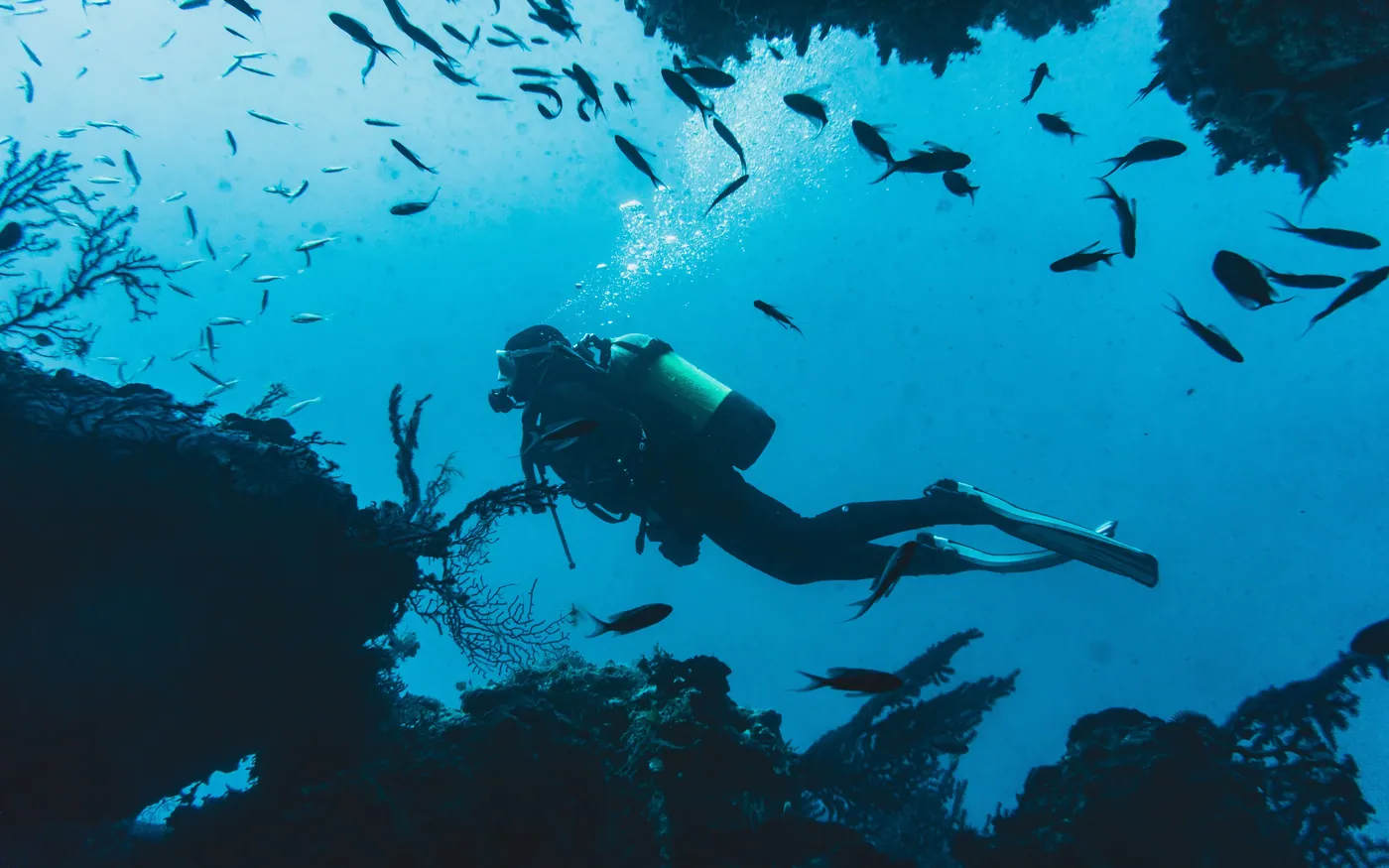
A heading gets you pointed correctly and tells you nothing about when to stop, which is how divers end up surfacing a long way from where they meant to.
The two units divers use are kick cycles and time. Count the cycles on the way out — one cycle is both fins completing a stroke — and the same count brings you back. Timing a leg works identically and is easier to hold in your head, though it is less reliable if your speed changes.
Either way the point is that you decided in advance. A diver who knows the outbound leg was forty kick cycles knows when the return should have arrived, and knows to stop and reassess rather than pressing on hopefully.
Current changes the arithmetic
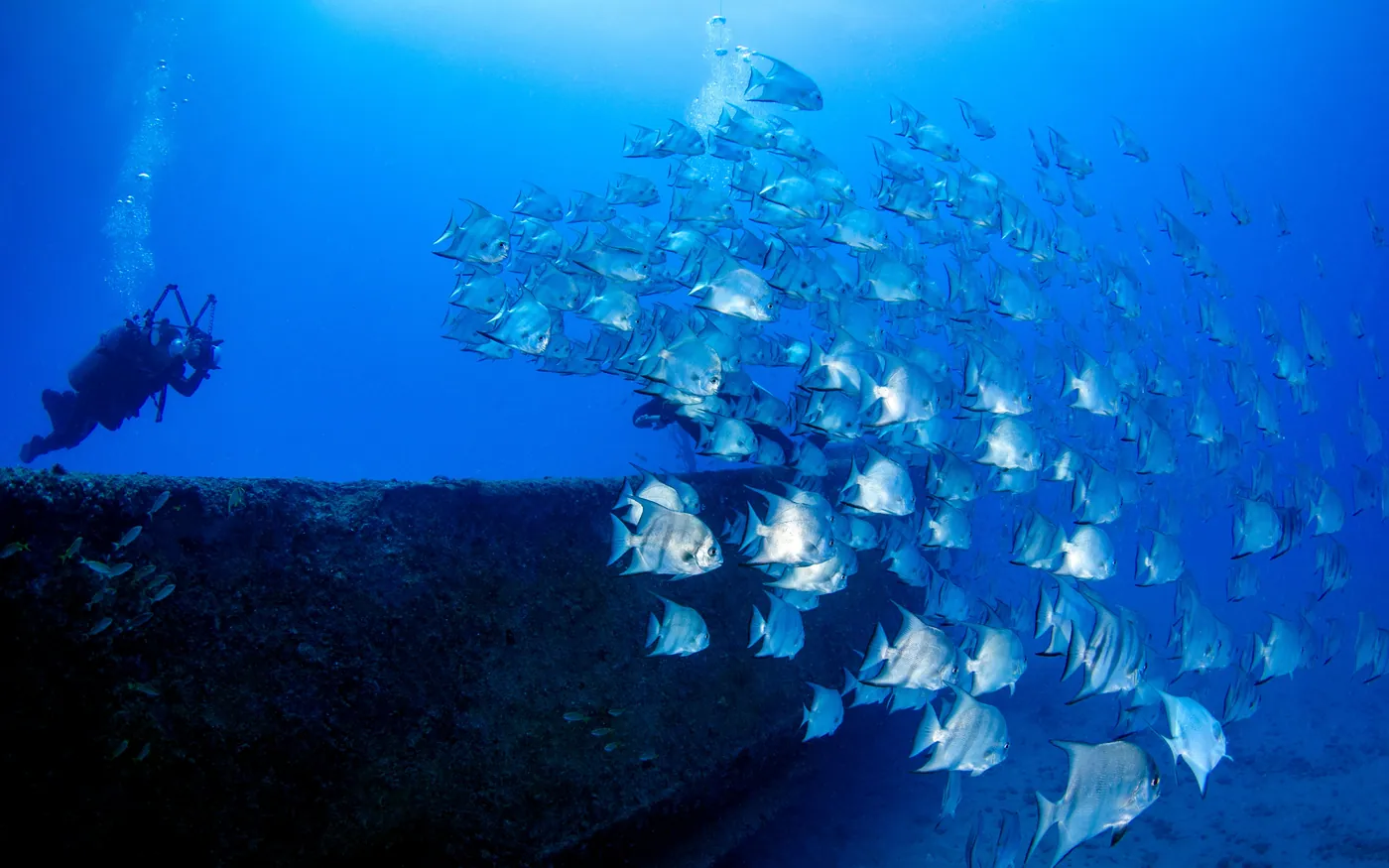
Current is what turns a good heading into the wrong place, and it does it without any sensation of being pushed.
In a cross current you hold the compass heading and angle your kick into the current, so your net movement is where you intended. How much to angle is a judgment you make by watching the bottom go past rather than by calculation.
It also breaks the kick-cycle count, because the same effort covers different ground in each direction. If there is current, plan to swim into it first, so the leg you have to do tired is the easy one.
Edges, and why they suit this coast
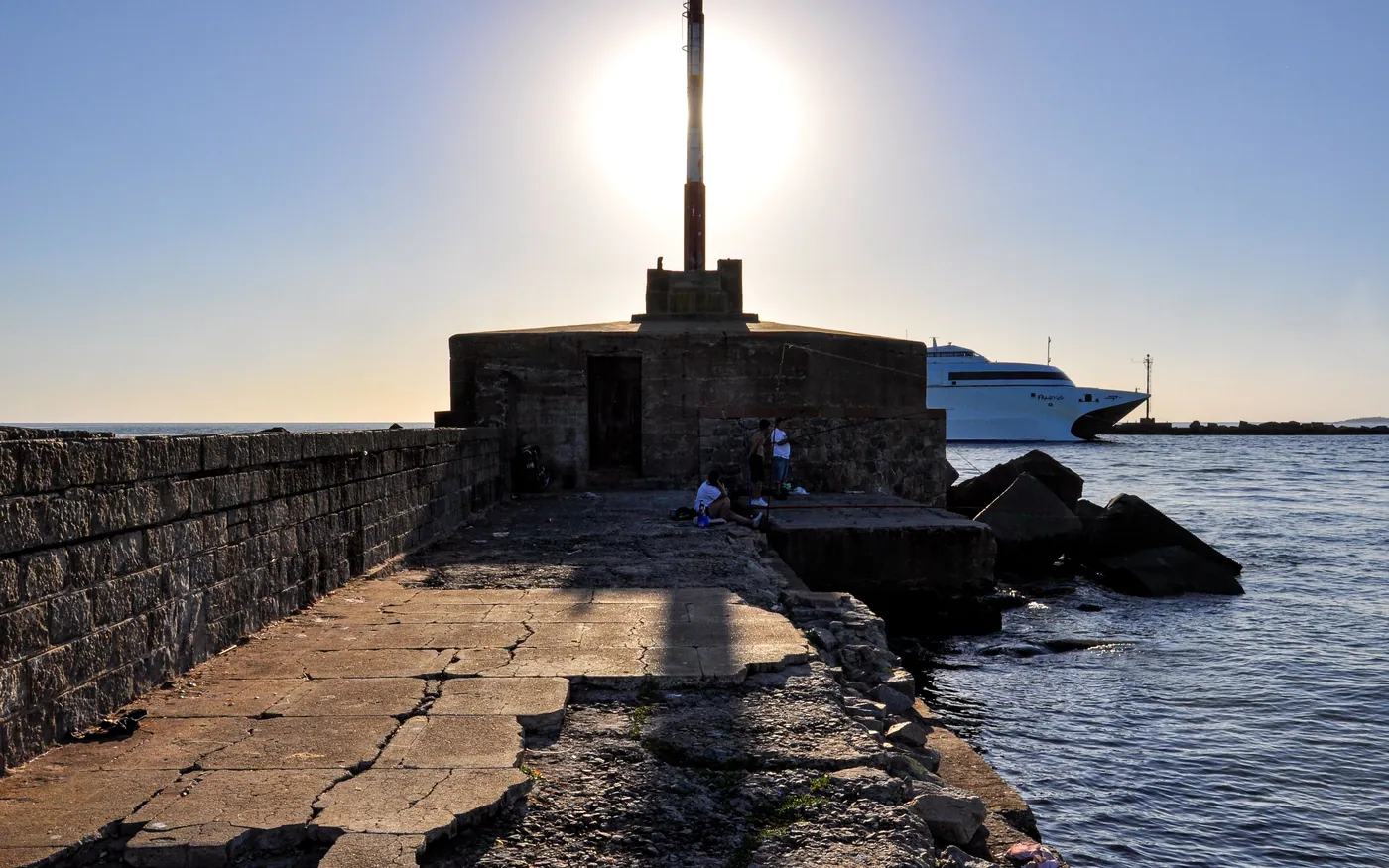
The technique that works best in New England is the one that gets the least attention: find a linear feature and follow it.
A jetty, a wall, a rock line, a slope, the edge of a kelp bed. All of them are continuous, none of them requires you to see far, and all of them lead back to where they started. In twelve feet of visibility that is worth more than any amount of compass skill.
It is why the jetty at Back Beach makes such a good site for a nervous navigator — see diving the Massachusetts North Shore — and why the shore sites in our shore diving guide are worth learning one at a time rather than sampling.
Practicing where it does not matter
The awkward thing about navigation is that the dive where you need it is a poor place to find out whether you have it.
So practice it on dives where being wrong costs nothing. Set a heading on a shallow sandy bottom, swim a fixed count, turn to the reciprocal, swim the same count and see how close you land. Do a square: four legs, four ninety-degree turns, and see whether you finish where you started. Neither exercise is interesting, and both take ten minutes of a dive you were doing anyway.
What you are calibrating is yourself rather than the compass. Most divers pull consistently to one side, and knowing which side and by how much is worth more than any amount of theory.
Getting better at it
Navigation is one of the two required dives on the Advanced course, and it is there because it is the skill that most changes how a diver feels underwater.
A diver who knows where they are dives calmly, breathes slower and enjoys the dive. A diver who does not spends the whole dive quietly worrying about the swim back, which shows up in their gas consumption — the connection made in how to use less air. If you want to work on it deliberately, the Advanced course is where it is taught properly.
Frequently asked questions
Do I need a compass?
Carry one, and learn it. Most of your navigation will be natural — following features you can see — but the compass is what saves you on the day the visibility closes in and the features disappear.
How do I measure distance underwater?
Kick cycles or time. Count how many kick cycles a leg takes on the way out and the same number brings you back, allowing for current. Timing works the same way and is easier to remember.
What is a reciprocal heading?
The return course, 180 degrees from your outbound one. Set your heading on the bezel on the way out and the bezel gives you the way home without any arithmetic.
What if there is a current?
Hold your compass heading and angle your kick into the current, so your net movement is the direction you actually want. Expect the return leg to take a different amount of effort from the outbound one.
Is navigation harder in low visibility?
Harder to do by eye, and easier to do by edge. Following a jetty, a wall or a slope works when you cannot see twenty feet — which is the argument in diving in low visibility.
Practice it somewhere easy
Navigation is worth learning in good conditions before you need it in bad ones. Ask an instructor at Divers Den to run through it with you.