
You never win a fight with moving water. Every technique below comes from that one fact: you either use the current, hide from it, or end the dive, and the only losing option is swimming into it.
Two completely different situations
The word current covers two things that need opposite responses, and confusing them is where divers get into difficulty.
A drift dive is planned. You go in expecting to move, the boat follows, and the current is the transport. Getting caught in current is unplanned, and the problem is not the water — it is that you now finish somewhere other than where you meant to.
On a drift dive the current is the plan. Everywhere else it is a problem to be managed.
If it is a drift, let it carry you
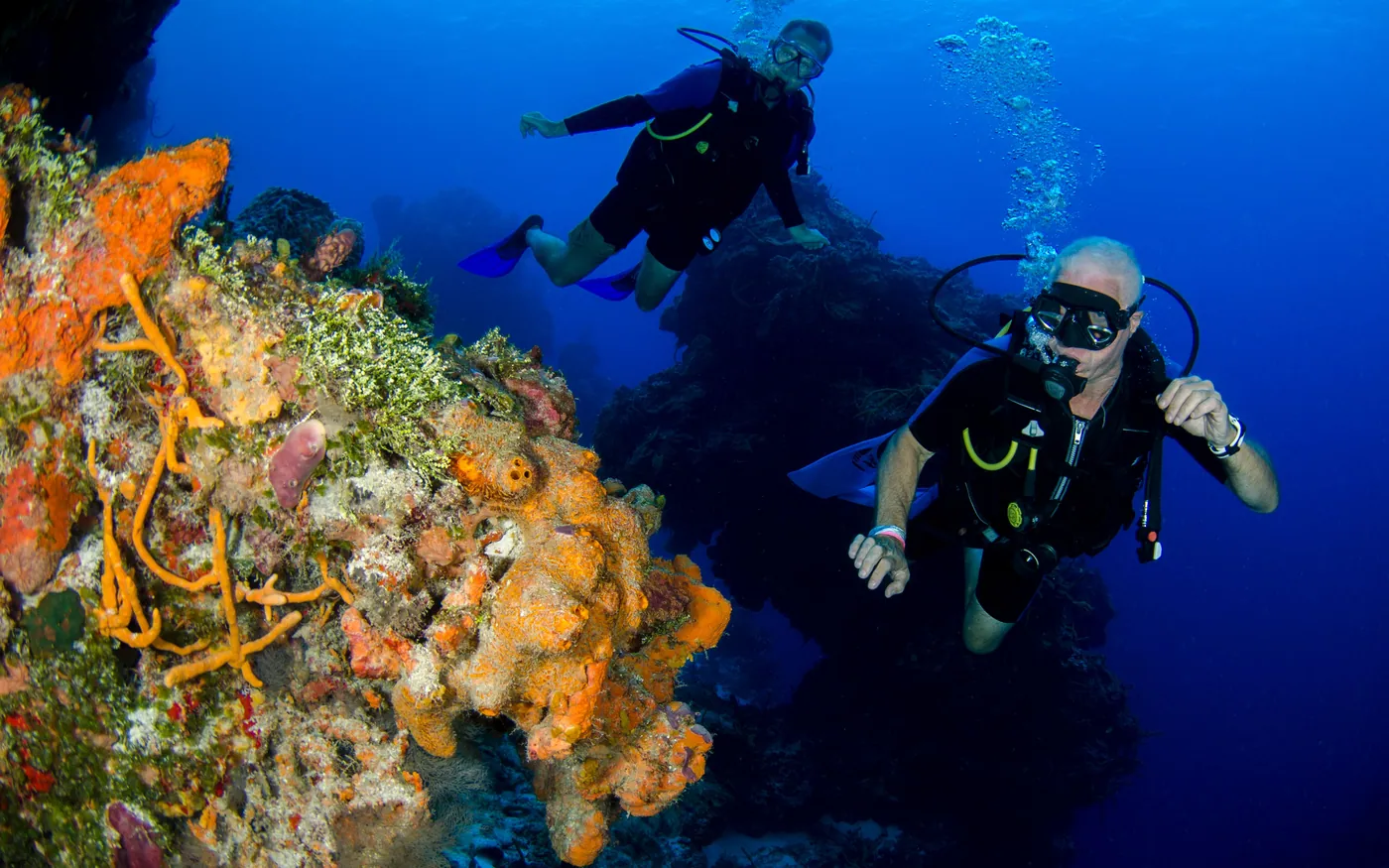
The mistake new drift divers make is swimming. There is no need, and it costs you the dive.
You fin to approach something or to hold position, and otherwise you let the water do the work. The skill that matters most is buoyancy: a diver who is neutral drifts cleanly past structure, while a diver who is not spends the dive fending off rock.
It is also worth knowing that drifts finish where they finish. The boat comes to you, which means being visible matters more than usual — the argument in dive flags and surface markers.
Holding position when you need to
Sometimes you have to stop moving, and the instinct is to kick hard. That is exactly wrong.
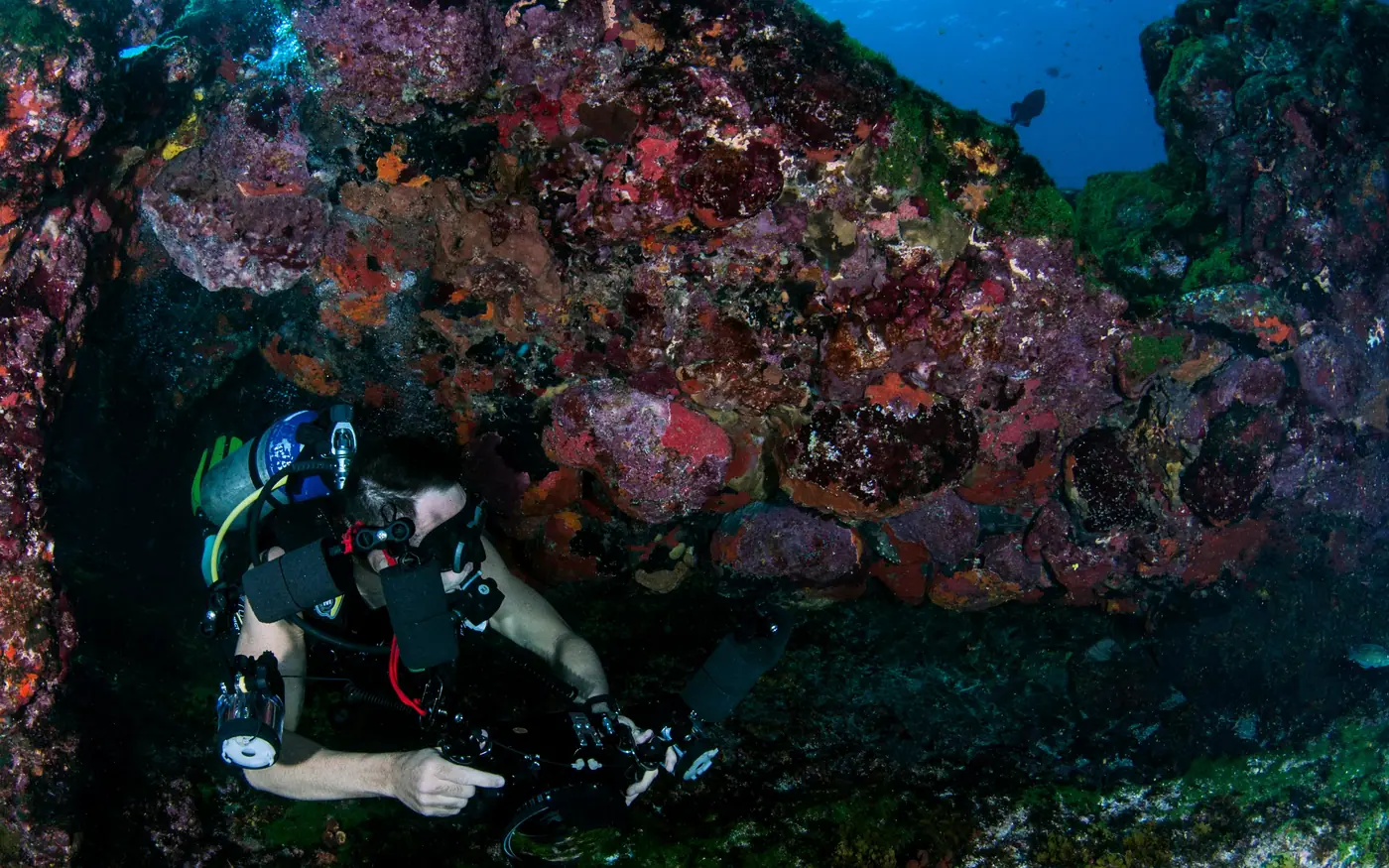
- Get low. Friction slows water near the bottom, so the flow a foot off the rock is much weaker than it is ten feet up.
- Use structure. A boulder or a ledge is a windbreak, and getting behind one costs nothing.
- Point into it. Face the current and use your fins as a rudder rather than a paddle.
- Do not kick hard. It tires you, burns gas and rarely moves you — the consumption problem set out in how to use less air.
- Pull along the bottom if you must, on dead rock rather than on anything living.
On guided tropical drifts you will sometimes see reef hooks used to hold a group in place. That is a specific tool for a specific kind of site, and it is not something to improvise with locally.
Negative entries
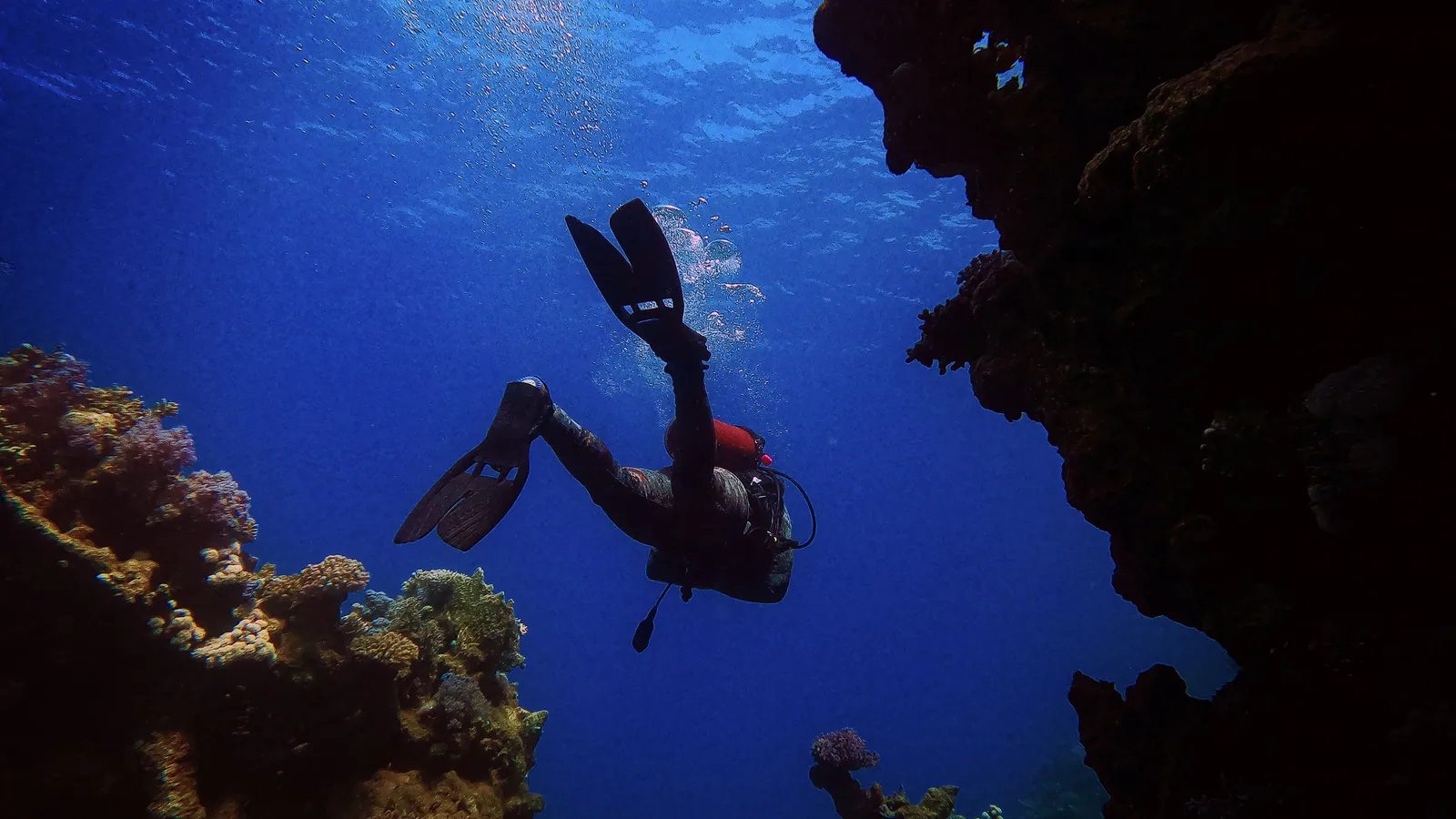
Where the surface current would carry a group off the site before they could descend, the answer is not to be on the surface at all.
A negative entry means going in with your BC empty and continuing straight down. A long stride on a deep exhale, vertical to start with, equalizing early and often because you are descending faster than usual. It is not difficult, but it removes the pause where problems are normally caught, so it is briefed carefully or not done at all.
The regrouping point moves too. Rather than assembling on the surface, the group stops at fifteen or twenty feet, gets neutral, and checks everyone is there before continuing. That is a small change with a large effect on how the dive starts.
Reading it before you get in
Most current problems are avoidable from the shore, because moving water leaves signs that are easy to read once you know to look for them.
- Watch something float. Weed, foam, a leaf. If it is moving past a fixed point at walking pace, so will you.
- Look at the surface texture. A line where smooth water meets ripple is usually a current edge, and the ripple side is the faster side.
- Look at moored boats. They lie pointing into whatever is moving, and how hard they pull on the line tells you how much.
- Check the tide, not the clock. Slack water is not the same as high water, and at a narrow site the difference between them is the whole dive.
- Ask. Somebody has dived the site at that state of tide, and they will tell you in one sentence what would take you three dives to learn.
The judgment that follows is simple enough to make on the shore: if you could not swim back against what you are looking at, do not swim out into it. DAN sets out how current dives are planned and where they go wrong, and almost every case starts with a diver who entered anyway.
When it goes wrong
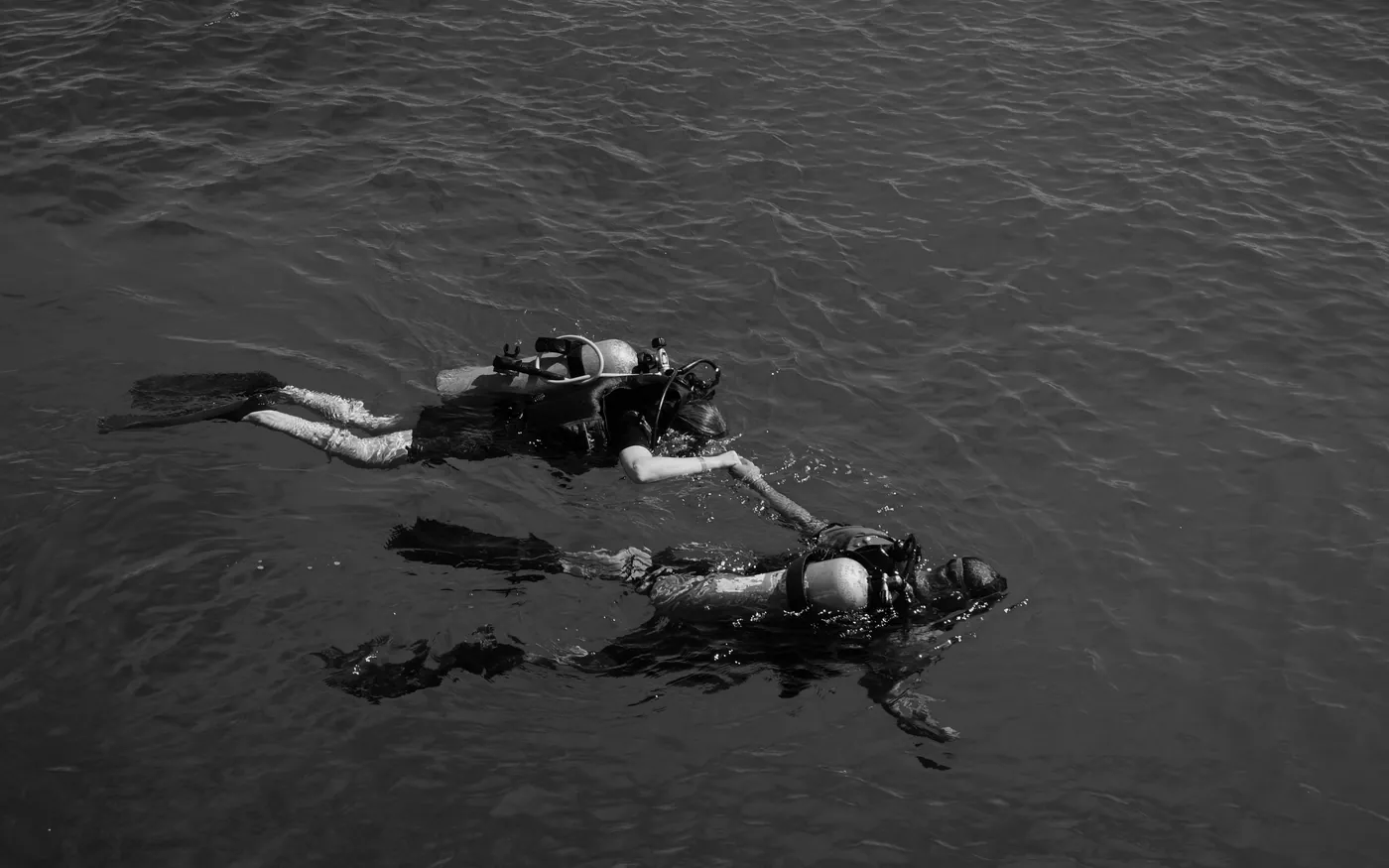
The failure mode is predictable: you find yourself unable to make headway back toward the boat or the exit.
The correct response is to stop trying. Get low and see whether you can make progress out of the flow. If you cannot, surface, inflate fully, signal, and wait — a diver on the surface with a marker up is a diver who gets collected. A diver swimming into current until their gas runs out is a much worse problem.
The instinct to keep swimming is strong and it is worth deciding against it in advance, on the surface, with your buddy, as part of the conversation in being a dive buddy worth having.
What it looks like here
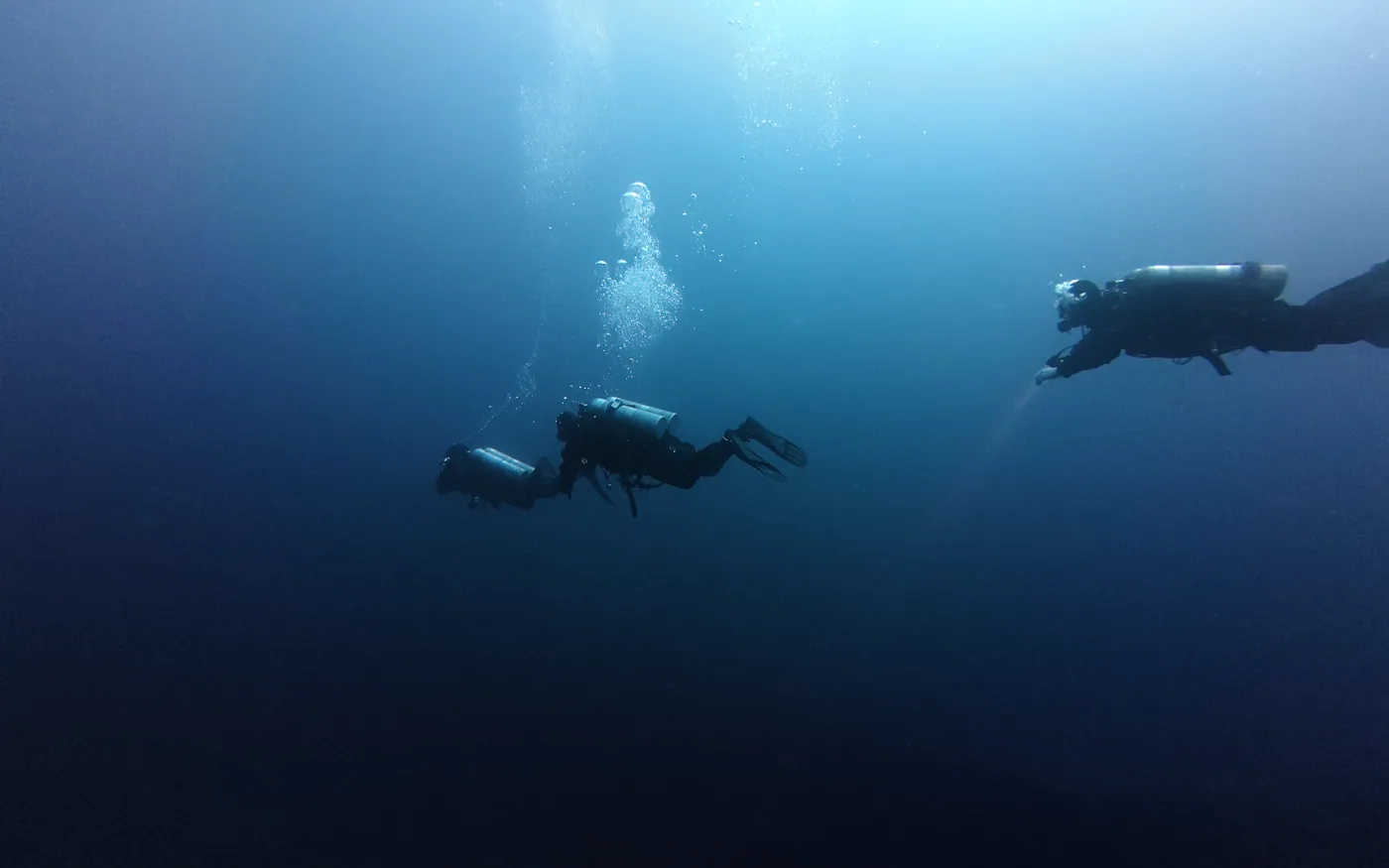
New England current is tidal, which makes it different from the drift diving most published advice is written about.
Tidal flow builds, runs and slackens on a schedule, which means it is predictable in a way that ocean current is not. At most open sites it is a minor factor; at channels, inlets and narrows it is the whole plan, and the answer is to dive slack water rather than to develop technique for fighting it.
That is a planning problem more than a skills problem, and it is covered in reading conditions before a shore dive. If you want the skill taught properly, drift is one of the adventure dive options on the Advanced course.
Frequently asked questions
What do I do if I get caught in a current?
Stop swimming against it. Get low, get behind structure if there is any, and signal your buddy. If you cannot make progress, surface, inflate, signal, and let the boat come to you — which is what a surface marker is for.
How do I hold position without exhausting myself?
Point into the current and use your fins as a rudder rather than kicking hard. Get low, where the flow is slower, and use rock or structure as a windbreak. Hard kicking burns gas and achieves very little.
What is a negative entry?
Going in with an empty BC and continuing straight down rather than pausing at the surface. It is used where the surface current would carry the group off the site before they could descend, and it needs to be briefed properly beforehand.
Does current always mean bad diving?
No — moving water brings food, and the sites with the most life are often the ones with some flow. What matters is whether the current is predictable and whether you have a plan for ending up downstream of where you started.
Is there much current diving in New England?
Tidal flow rather than continuous current, and it matters most at channels, inlets and narrows. Planning around slack water is covered in reading conditions before a shore dive.
Ask what the tide is doing
Local current is predictable if you know the site. Ask the shop before you plan a dive somewhere with flow.