

A dive flag, an SMB and a DSMB are three different pieces of equipment doing three different jobs. They get used interchangeably in conversation and they are not interchangeable in the water.
Why any of this matters
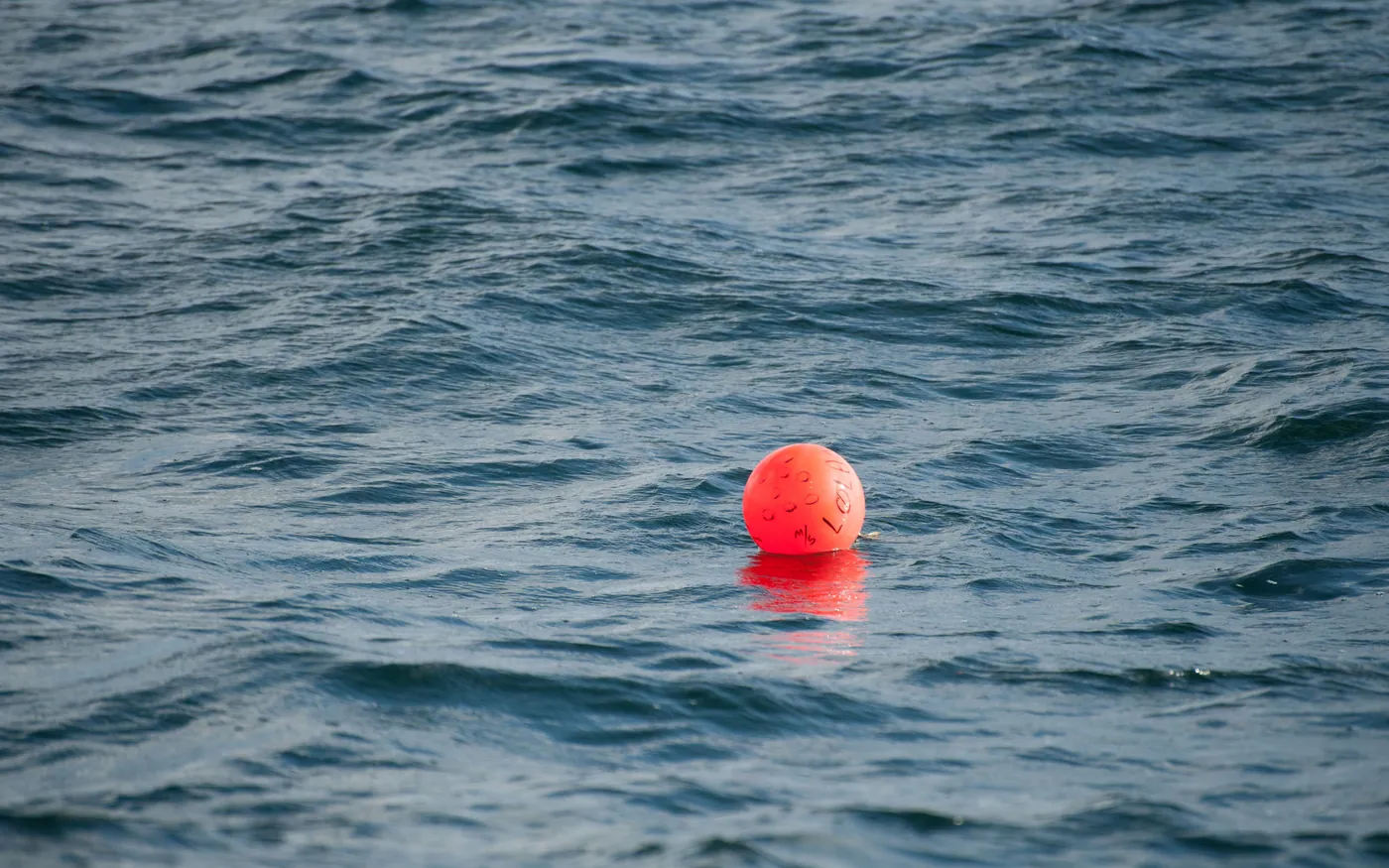
The hazard is boat traffic, and it is the one risk in recreational diving that you cannot manage by being a better diver.
A boat driver cannot see bubbles reliably, cannot hear you, and is not looking for you. Everything below is about putting something on the surface that they can see and are trained to interpret.
You can control your buoyancy, your gas and your ascent. You cannot control the boat.
The three things people mean by “buoy”
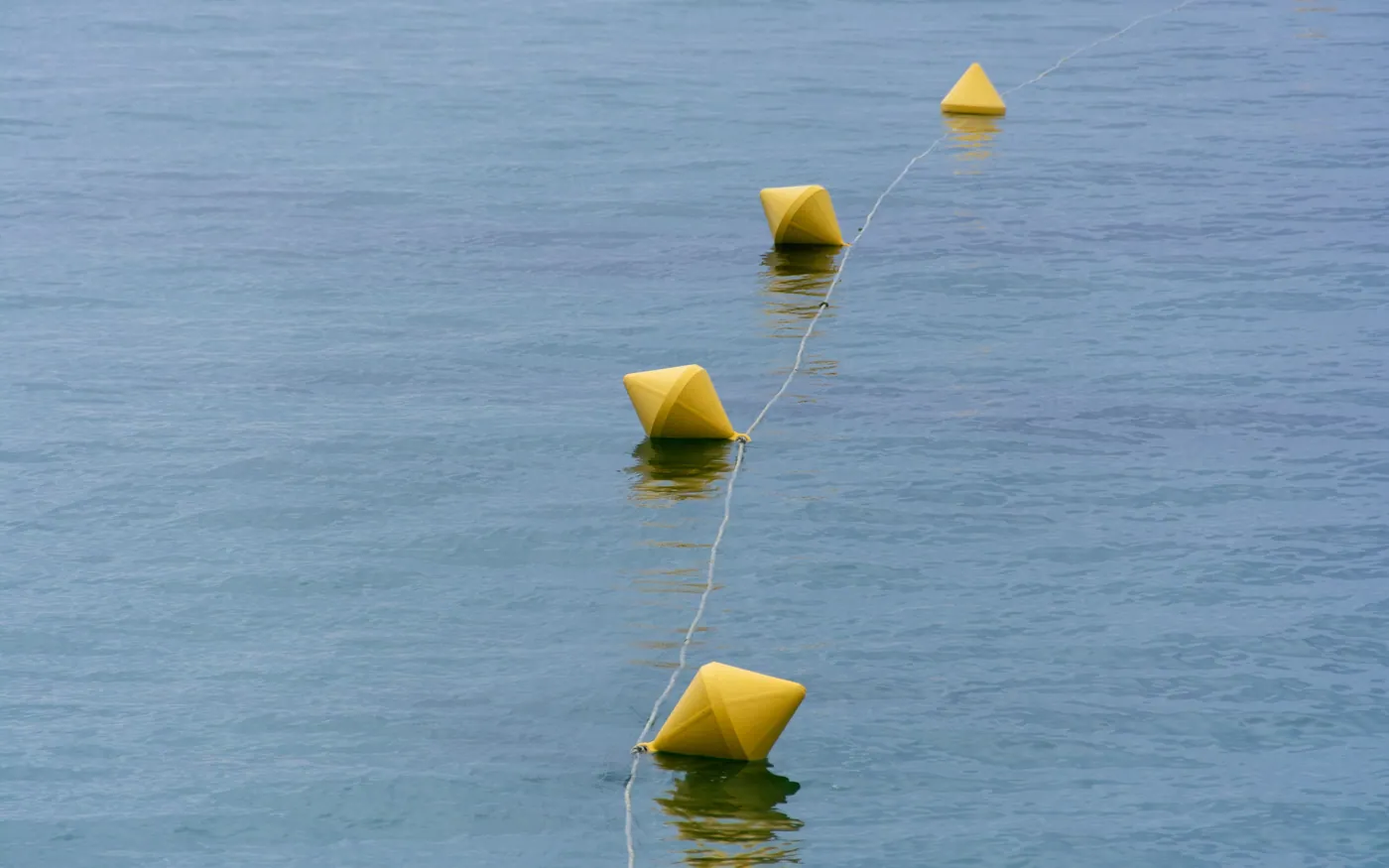
Getting the vocabulary straight makes the rest of it obvious.
| What it is | When | |
|---|---|---|
| Diver down flag | A red flag with a white diagonal stripe, on a vessel or float | Whenever divers are in the water |
| Alpha flag | Blue and white international signal flag | When a vessel’s mobility is restricted |
| SMB | An inflated buoy left at the surface, sealed | Put up before the dive, stays up throughout |
| DSMB | A rolled tube inflated from depth on a reel or spool | Deployed at the end of the dive, usually at the safety stop |
The distinction that catches people out is the last one. The D stands for delayed, and a DSMB is only useful if it goes up before you do.
The flag
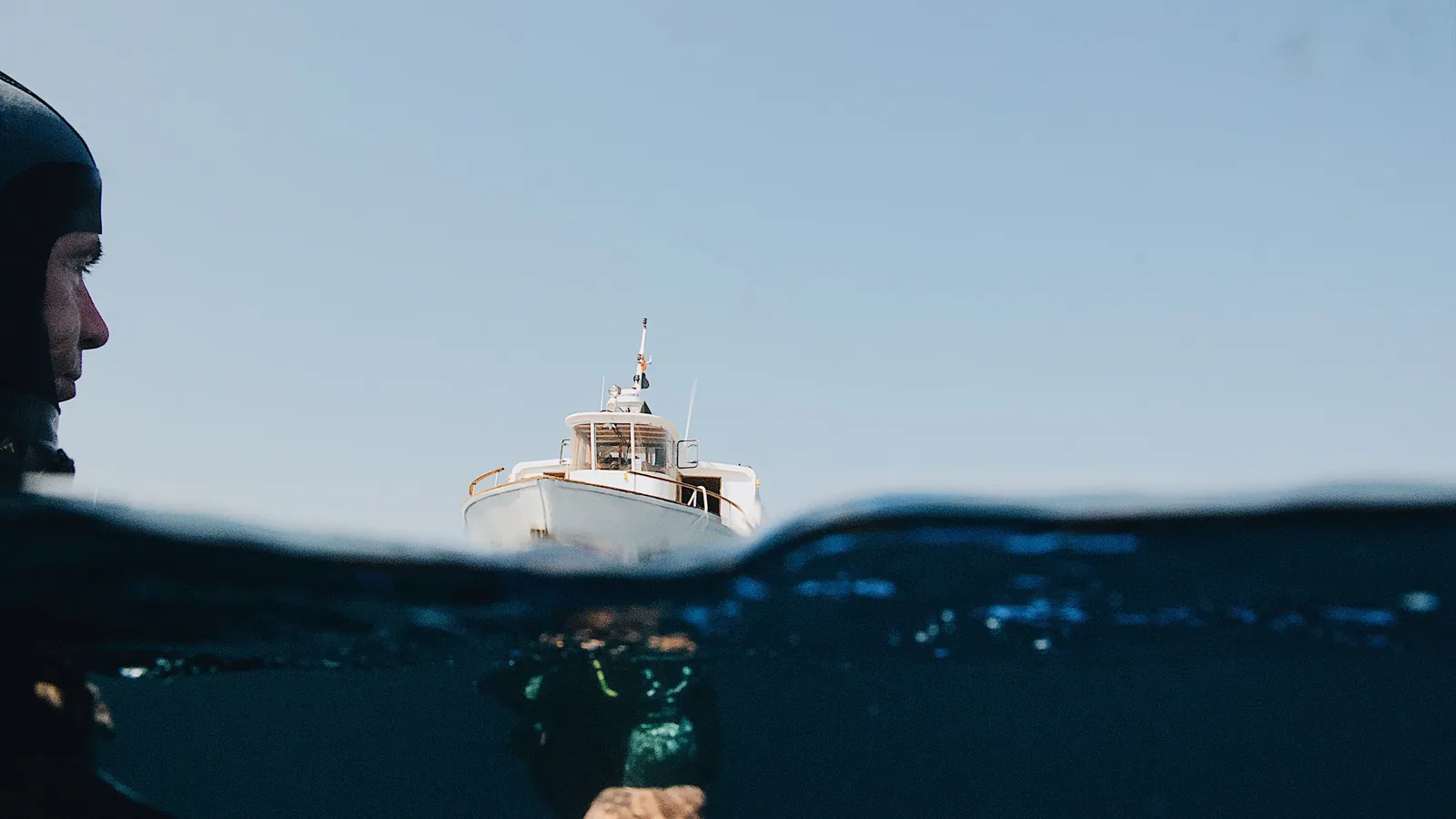
The diver down flag is the oldest piece of this and the one with actual conventions attached to it.
Published guidance puts it at a minimum of 20 by 24 inches when flown from a vessel, above the highest point of that vessel, and at least 12 by 12 inches when displayed from a buoy. It has to be stiff, unfurled and in recognizable condition — a flag that has faded to pink and wrapped itself around its staff is not communicating anything.
The alpha flag is a different signal doing a different job. It is international, and it says the vessel flying it cannot maneuver freely, so give it room. Boats diving with divers down often fly both.
On the legal question: flag requirements are set by state law and differ between New Hampshire, Maine and Massachusetts. Check the rules for wherever you are diving rather than assuming they travel with you.
Shore diving, where it is easy to skip
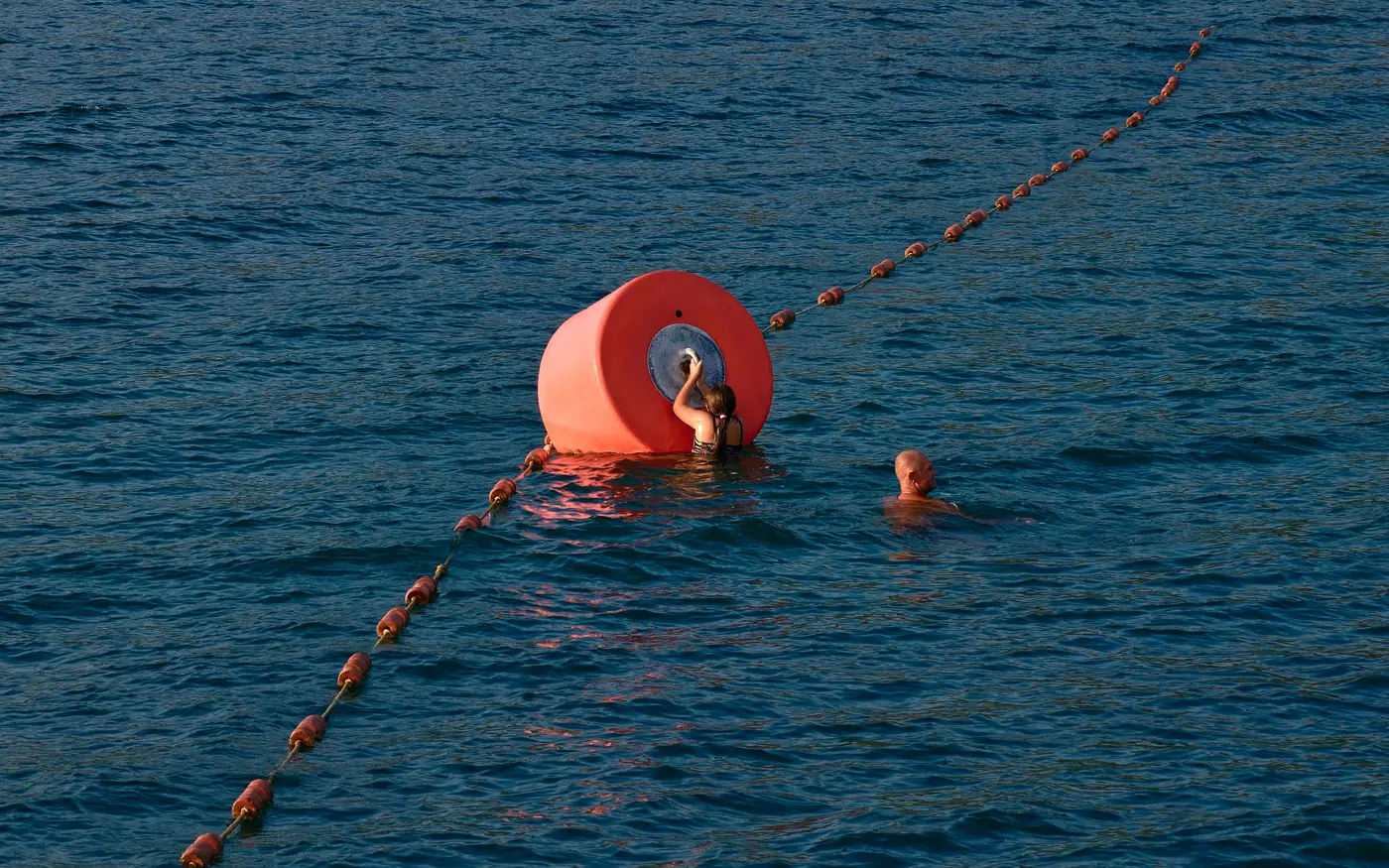
Divers on a charter get a flag whether they think about it or not. Shore divers have to supply their own, and this is where it quietly does not happen.
A float with a flag on it, towed on a line, does two jobs at once: it tells boats you are there, and it gives you something to hold onto at the surface. On a site with any boat traffic at all it is not optional equipment, and the sites in our shore diving guide are all places where boats operate.
The practical objection is that towing a float is a nuisance in surge. It is, and it is still the right call. Reading the conditions beforehand — the subject of reading conditions before a shore dive — is what keeps it manageable.
The DSMB, and why it is a skill
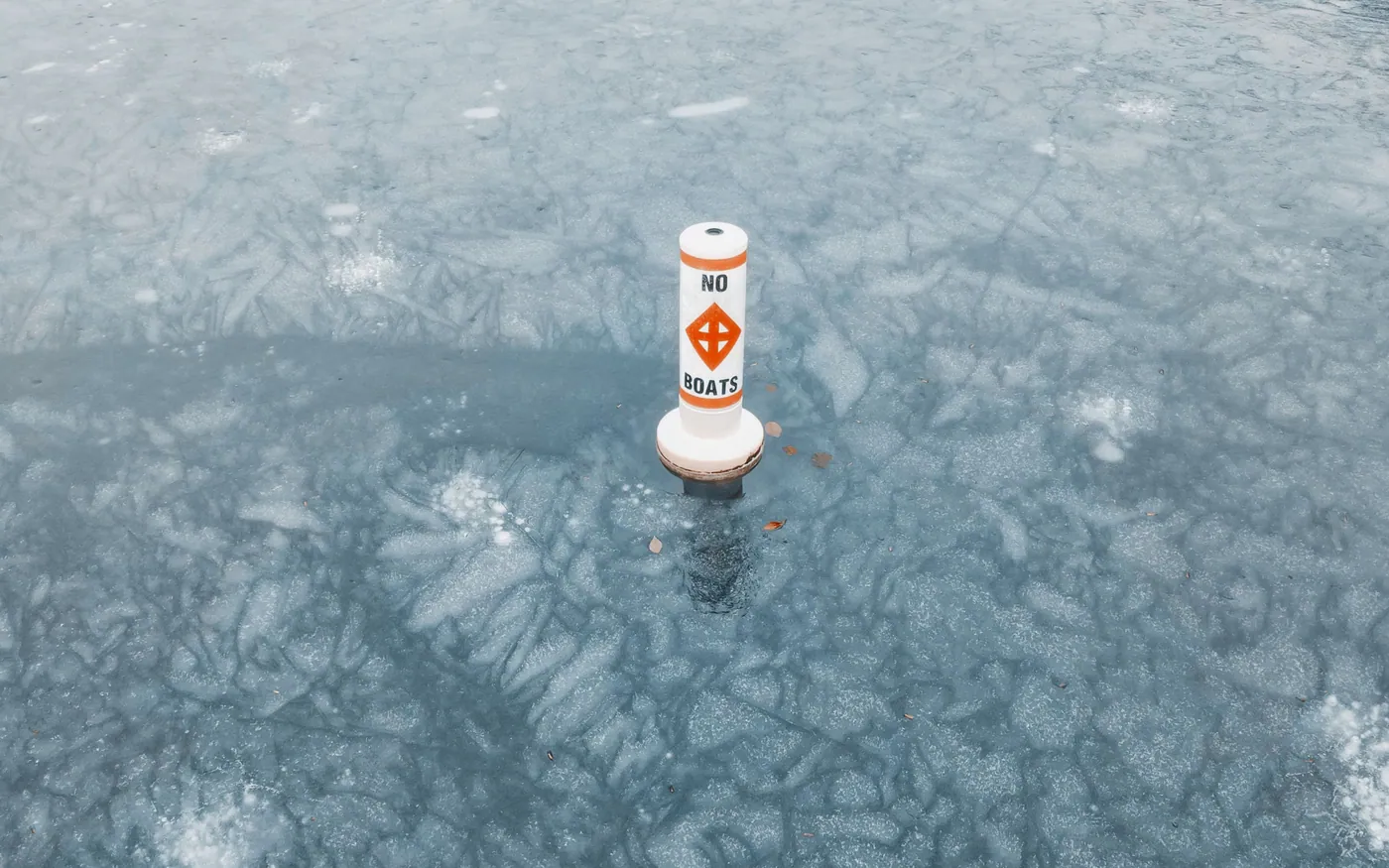
A delayed surface marker buoy is the one that needs practice, because deploying it badly is genuinely hazardous.
You inflate a rolled tube from depth and let it rise on a line from a reel or spool. Done well it marks your position minutes before you arrive, so the boat is already coming to you. Done badly — line wrapped around a wrist, or too much gas in the tube — it can take a diver up with it.
That is why it is taught rather than improvised, and why it is one of the adventure dive options on the Advanced course. SSI covers the equipment and the technique in more detail.
Most standards recommend sending it up before you ascend, generally from your safety stop. On drift sites and in current it is frequently mandatory rather than advisory.
The common mistakes
Most of the failures here are not equipment failures. They are people using the right kit at the wrong moment.
- Flag left on the boat. A flag in a locker signals nothing.
- DSMB sent up as you surface. Too late to be useful — the boat needed those three minutes.
- Float left far behind. A flag marking where you were twenty minutes ago is worse than no flag, because it is actively misleading.
- Line wrapped round a hand. The one genuinely dangerous mistake, and the reason DSMB deployment is taught rather than improvised.
- Assuming the boat has seen you. It has not until it changes course.
The last one is worth holding onto. Surfacing away from your marker, in chop, in a wetsuit the color of the water, you are close to invisible — which is the whole argument for the equipment above.
What to actually carry
For diving on this coast the list is short and none of it is expensive.
A flag and float if you are diving from shore. A DSMB and spool once you are diving from boats, along with the training to use it. And a whistle or other audible signal on your BC, because being seen and being heard are two different problems and the surface is where both matter most — which is the point at which the ascent stops being about physiology and starts being about traffic.
Frequently asked questions
Do I legally need a dive flag?
Requirements are set by state law and differ between New Hampshire, Maine and Massachusetts, so check the rules for wherever you are diving. In practice, fly one regardless: the argument for it is boat traffic, not enforcement.
What size should the flag be?
The published convention is at least 20 by 24 inches from a vessel, flown above its highest point, and at least 12 by 12 inches from a buoy. It has to be stiff, unfurled and in recognizable condition — a faded rag wrapped around a pole is not a signal.
What is the difference between an SMB and a DSMB?
An SMB goes up before the dive and stays at the surface marking where you are. A DSMB is carried rolled up and deployed from depth at the end of the dive — the D is for delayed.
When should I send up a DSMB?
Before you ascend, generally at your safety stop, so the boat has time to see it and reach your position. Sending one up as you break the surface is too late to be useful.
What is the alpha flag for?
It is the international signal that a vessel’s mobility is restricted and other vessels should keep clear. It is about the boat rather than the divers, and is often flown alongside the diver down flag.
Sort the surface kit
Flags, floats, spools and markers are cheap and worth having before you need them. We sell gear in store so you can see how it works.