
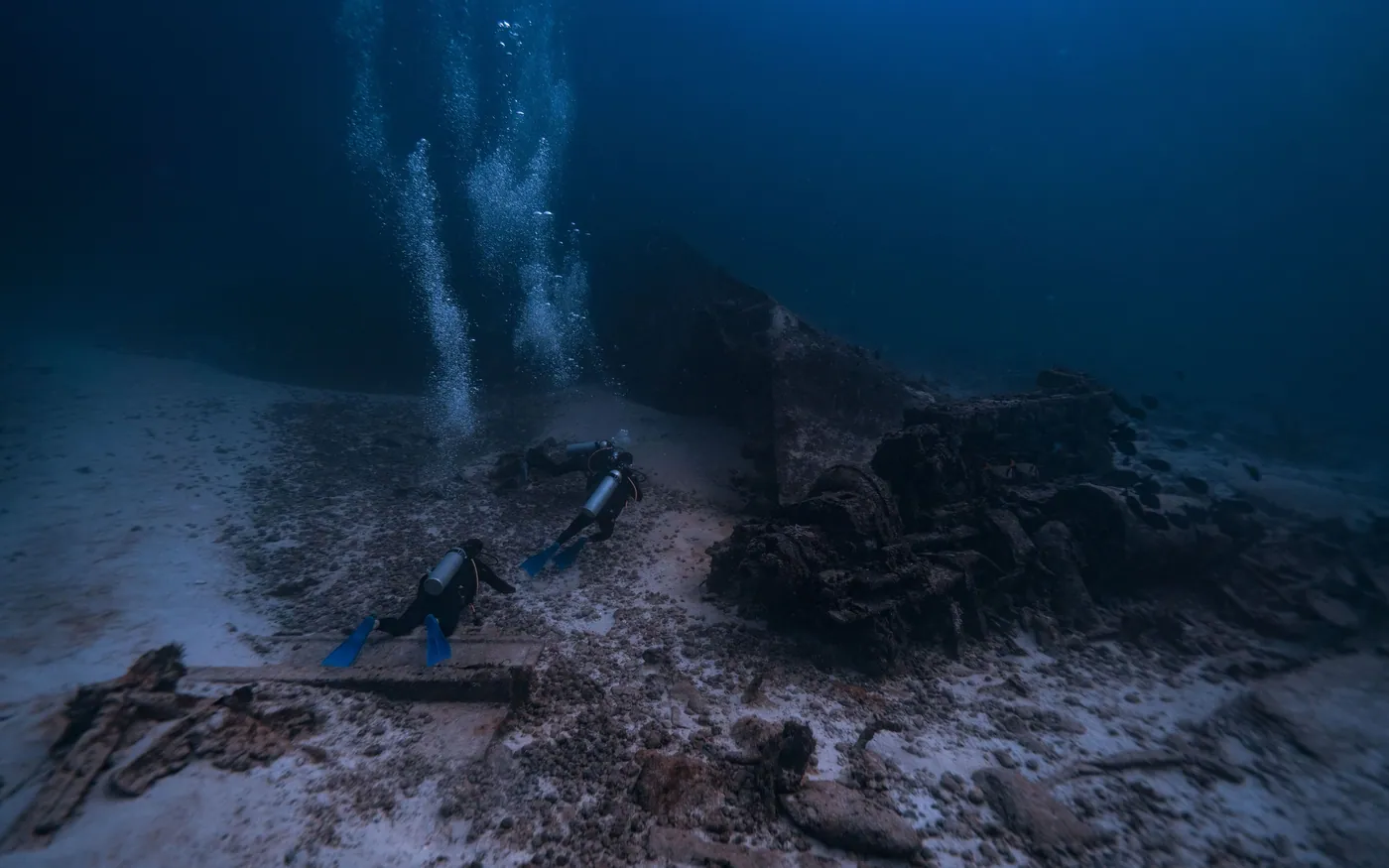
The shallowest part of the dive is the part that needs the most care. Pressure changes faster in the last 15 feet than anywhere else, which is exactly where most divers speed up.

Why slow matters
An ascent is not just the trip back to the boat. It is the part of the dive where your body sheds the nitrogen it took on.
Go up slowly and that offgassing happens gradually, in solution, the way it is supposed to. Go up quickly and dissolved gas can come out as bubbles instead, which is the mechanism behind decompression sickness.
A slow ascent is a rolling decompression stop. You are already doing one whether you think of it that way or not.
Thirty feet a minute, and why

The number that gets argued about is the ascent rate, and the argument is largely settled.
The US Navy and NOAA both use 30 feet per minute. Recreational agencies recommend a range of 30 to 60. The reason the slower figure is preferred is not theoretical: Navy studies found that 30 feet per minute produced fewer cases of decompression sickness than the older 60 feet per minute rate.
Thirty feet a minute is slower than it sounds. It is roughly one foot every two seconds — slower than your smallest bubbles, which is the old rule of thumb and still a reasonable check when you have no other reference.
The last 15 feet is the dangerous part

This is the piece that is rarely explained, and it makes the whole thing make sense.
Pressure changes proportionally, not linearly. Going from 100 to 90 feet is a small proportional change; going from 10 feet to the surface is an enormous one. The shallowest water is where gas volumes change fastest, which is where nitrogen is most likely to come out of solution quickly.
The same physics works on your equipment. Air in your BC and the gas trapped in your wetsuit both expand rapidly over the last 15 feet, which can make you significantly positive without you noticing until you are moving up faster than you meant to.
What the safety stop actually does
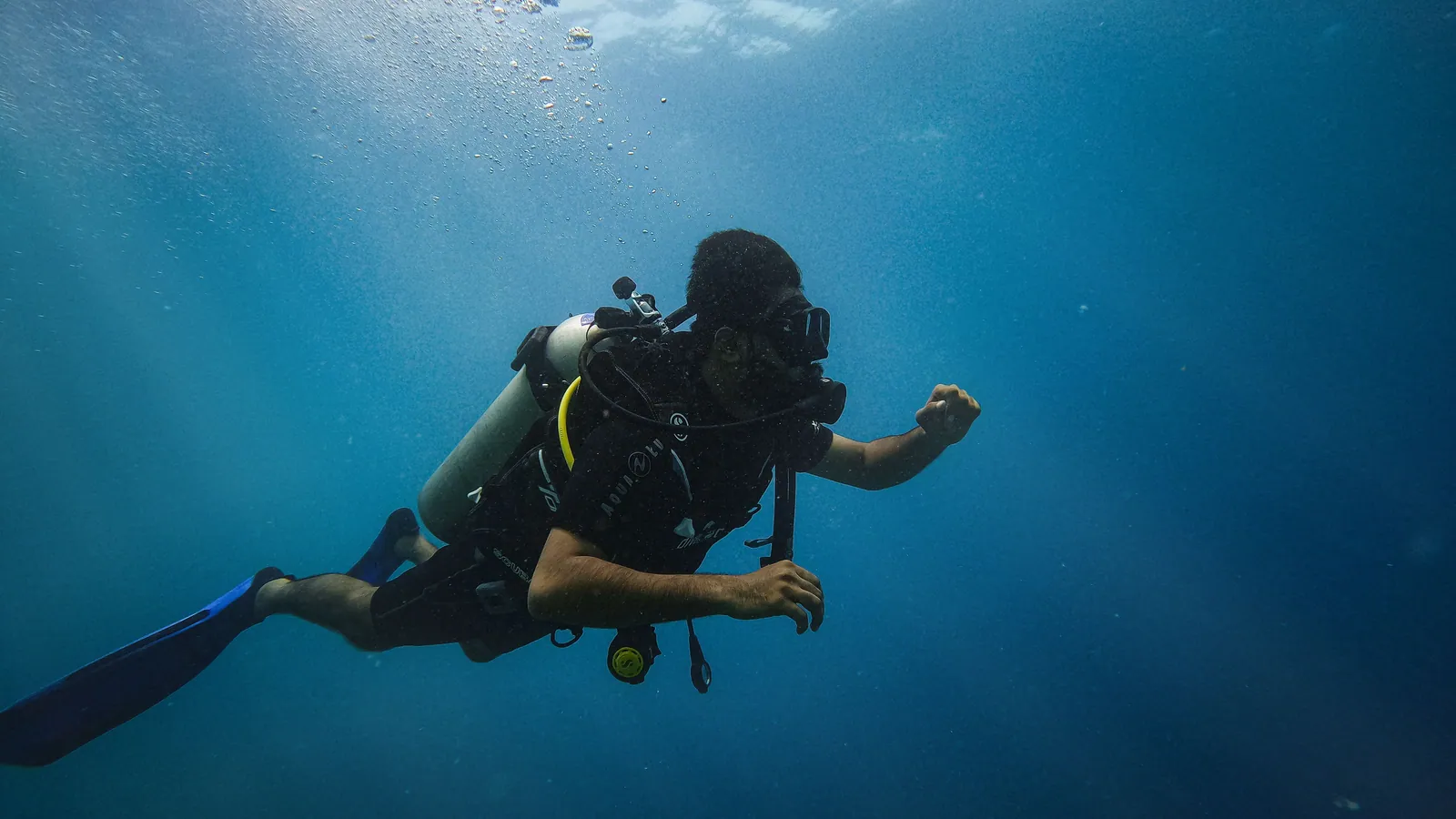
The safety stop is three to five minutes at about 15 feet at the end of every dive, and it is doing two jobs rather than one.
- It offgasses you in the shallow water just above the zone of fastest pressure change, before you go through it.
- It forces a pause. Three minutes of holding position is three minutes you are not ascending, which is its own benefit.
- It is a buoyancy check. If you cannot hold 15 feet with an empty BC, your weighting is wrong and you have just found out.
- It slows the whole profile. The last part of the ascent starts from a settled diver rather than a rising one.
Scuba Diving Magazine has practical advice on holding a good stop if yours tends to drift.
Why yours goes wrong

Divers who cannot hold a stop usually blame the current or the surge. It is almost always weighting.
At the end of a dive your cylinder is at its most buoyant, and if you were weighted for a full one you are now light. Add the expanding gas in your suit and BC, and holding 15 feet becomes a fight rather than a hover.
The fix is not to grip a line. It is to check your weighting properly, at the end of a dive with 750 to 500 psi remaining, as set out in getting your weighting right. A correctly weighted diver hovers at a stop with no air in the BC at all.
Finally, the ascent is not over when you break the surface. Inflate your BCD, establish positive buoyancy, and signal before you do anything else — the surface is where tired divers get into trouble, and it is the one part of the dive with boat traffic in it.
Deep dives change the arithmetic
Everything above applies to an ordinary dive. It applies more strictly the deeper you have been.
A dive to 90 feet loads considerably more nitrogen than one to 40, and the ascent from it is doing correspondingly more work. That is why deep dives are planned with the ascent in mind from the start rather than as an afterthought, and why gas planning matters: an ascent you have to hurry because you are low on air is the one situation the whole procedure is designed to avoid.
It is also why depth training exists. Managing gas, time and ascent at 100 feet is a different exercise from doing it at 40, and it is the substance of the deep dive on the Advanced course — which on this coast is often run on the Chester Poling, at around 90 feet.
Nitrox does not change any of this. It extends your no-decompression limit; the ascent rate, the safety stop and the flying guidelines all stay exactly where they were.
Building the habit
None of this is difficult. It is a matter of treating the ascent as part of the dive rather than as the end of it.
- Start the ascent with gas to spare. An ascent planned around a nearly empty cylinder is one you will rush.
- Use a line or a wall where you have one. A visual reference makes rate far easier to judge.
- Watch your computer, not your buddy. Ascent rate alarms exist for a reason.
- Slow down further in the last 15 feet, rather than treating the stop as the end of the requirement.
- Look up and listen. Especially from a boat, and especially somewhere with traffic.
If you are ascending under a reverse block and cannot clear, the ascent itself is the problem — that situation is covered in equalizing your ears. And if you are flying afterwards, the ascent does not end at the surface: see flying after diving.
Frequently asked questions
Is it 30 feet per minute or 60?
Thirty is the rate the US Navy and NOAA use, and Navy studies found it produced fewer cases of decompression sickness than the older 60. Recreational agencies recommend somewhere in the 30 to 60 range. Slower is the safer end of that.
Is a safety stop required?
It is not a decompression obligation on a no-stop dive, which is why it is called a safety stop rather than a decompression stop. Treat it as part of every dive anyway — it is three minutes and it sits exactly where the pressure change is steepest.
Why 15 feet specifically?
Because that is just above the zone where pressure changes fastest. Pausing there lets you offgas before you ascend through the last stretch, which is where nitrogen is most likely to come out of solution quickly.
Why do I float up during my safety stop?
Almost always weighting. Air in your BC and the gas in your suit both expand as you rise, and a nearly empty cylinder is more buoyant than a full one. See getting your weighting right.
What if I have symptoms after a dive?
Seek emergency medical care and contact the DAN emergency hotline. Do not wait to see whether it passes. A dive shop is not the right place to have symptoms assessed.
Get your weighting checked
A drifting safety stop is a solvable problem, and it takes ten minutes with an instructor. Ask at the shop in Hampton Falls.