
Most divers carry more lead than they need, and pay for it in gas, effort and dive time. Getting it right takes one properly done check and costs nothing.
What correct weighting actually means
It is not a number. It is a condition you can test for, and the test is the same whatever you are wearing.
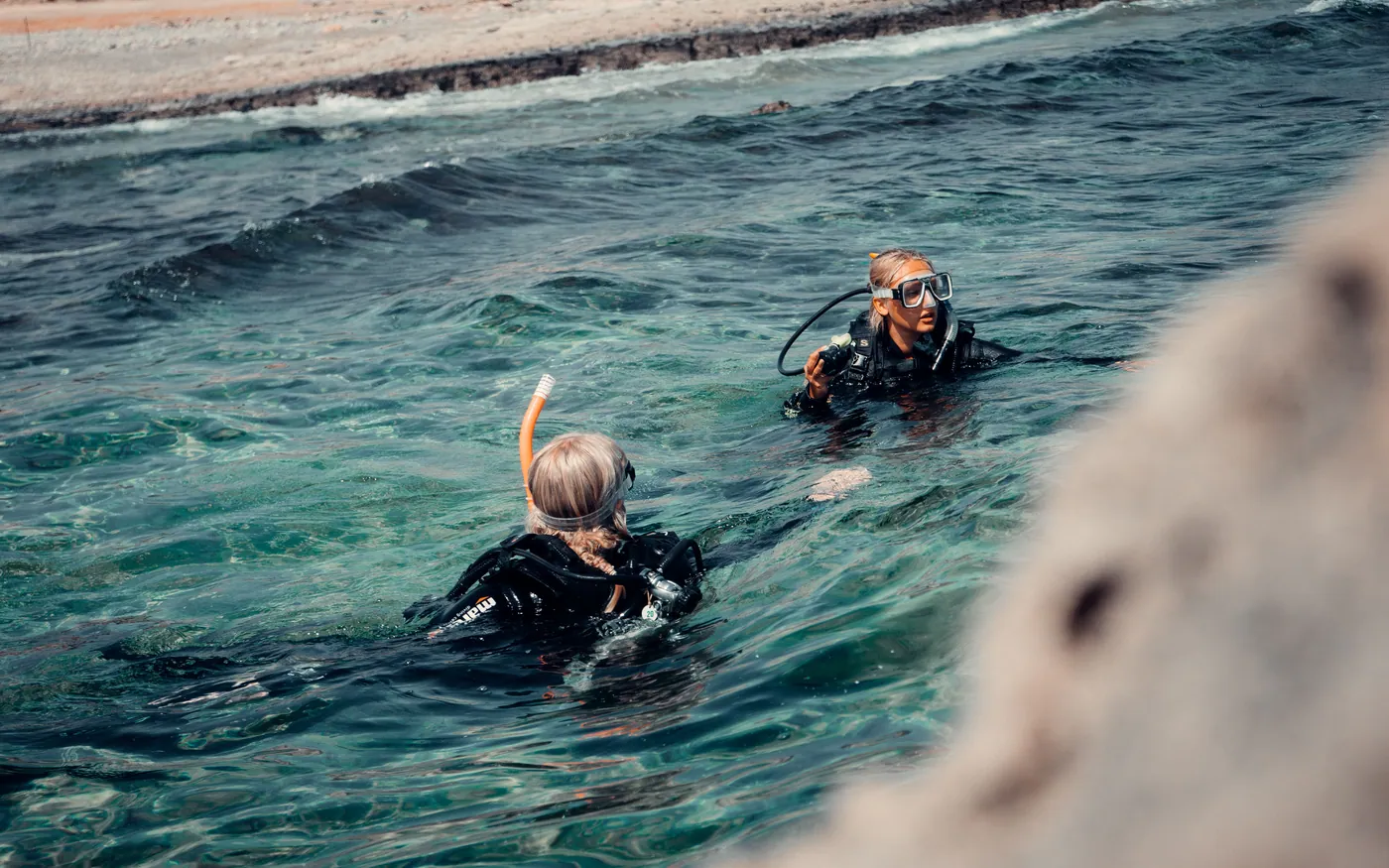
In full gear, with an empty BCD, holding a normal breath, you should float at eye level. When you exhale, you should sink slowly. That is it — that is the whole definition.
If you float higher than that, you are underweighted and will fight to descend. If you sink while holding a breath, you are carrying too much.
Float at eye level with a full breath. Sink slowly when you let it out. Everything else is adjustment.
The full tank correction
There is one complication, and it is the reason a lot of weight checks give the wrong answer.
A cylinder gets more buoyant as you breathe it down. Weighting that felt right at the start of the dive can leave you unable to hold a safety stop at the end, which is exactly when you need to.
So either check with a nearly empty cylinder — around 500 psi — or check with a full one and add roughly five pounds to account for the buoyancy you will gain by the end. The first is more accurate; the second is more practical at the start of a day.
The better check, at the end of a dive

If you want the most accurate answer available, do the check at the end of a dive rather than the beginning.
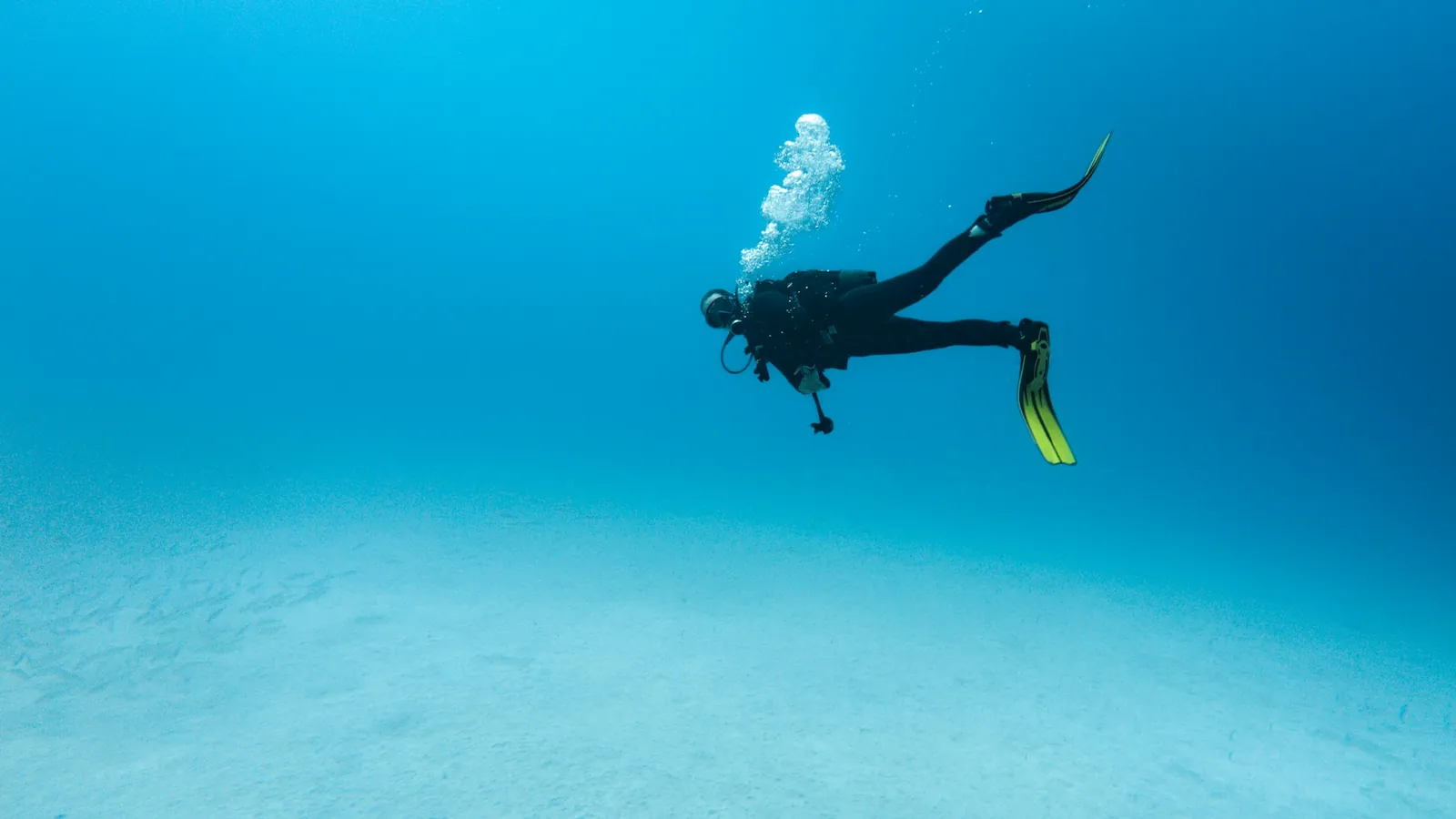
With 750 to 500 psi remaining, at the shallowest depth you spend meaningful time at, you should be able to hover effortlessly with no air in your BCD. If you are sinking, you have too much lead. If you are drifting up, you have too little.
Every safety stop is an opportunity to run this check, and it costs you nothing because you are already hanging there. SSI describes the procedure step by step.
What overweighting actually costs you
Divers who are overweighted rarely notice, because the BCD hides it. That is the problem rather than the solution.
Every extra pound of lead has to be balanced with roughly a pint of air in your buoyancy compensator. That air expands as you ascend and compresses as you descend, so you spend the dive adjusting a volume that would not exist if the lead were not there.
| Cost | What actually happens |
|---|---|
| Gas consumption | More effort and constant adjustment raise your breathing rate |
| Dive time | Higher consumption ends the dive sooner |
| Buoyancy control | Larger BCD volume means bigger swings with depth |
| Trim | Lead low and behind you drags your legs down |
| Silt and visibility | A diver who cannot hold position stirs up the bottom |
| Fatigue | You carried it to the entry and back |
That last row is not trivial on a shore dive, where the walk in full gear is already the hardest part of the day.
Where the lead sits matters too
Two divers carrying identical weight can swim completely differently, because the amount is only half of it.
Weight concentrated low on a belt pulls your hips down and leaves you swimming at an angle, which means your fins push water toward the bottom instead of behind you. That stirs up silt, wastes effort and is one of the most common reasons divers ruin their own visibility in water that was already marginal.
Integrated pockets, trim pockets on the cylinder band and a mix of small weights rather than a few large ones all let you move the load around. It is worth experimenting with position before you conclude you have the wrong amount.
Fixing it without guessing
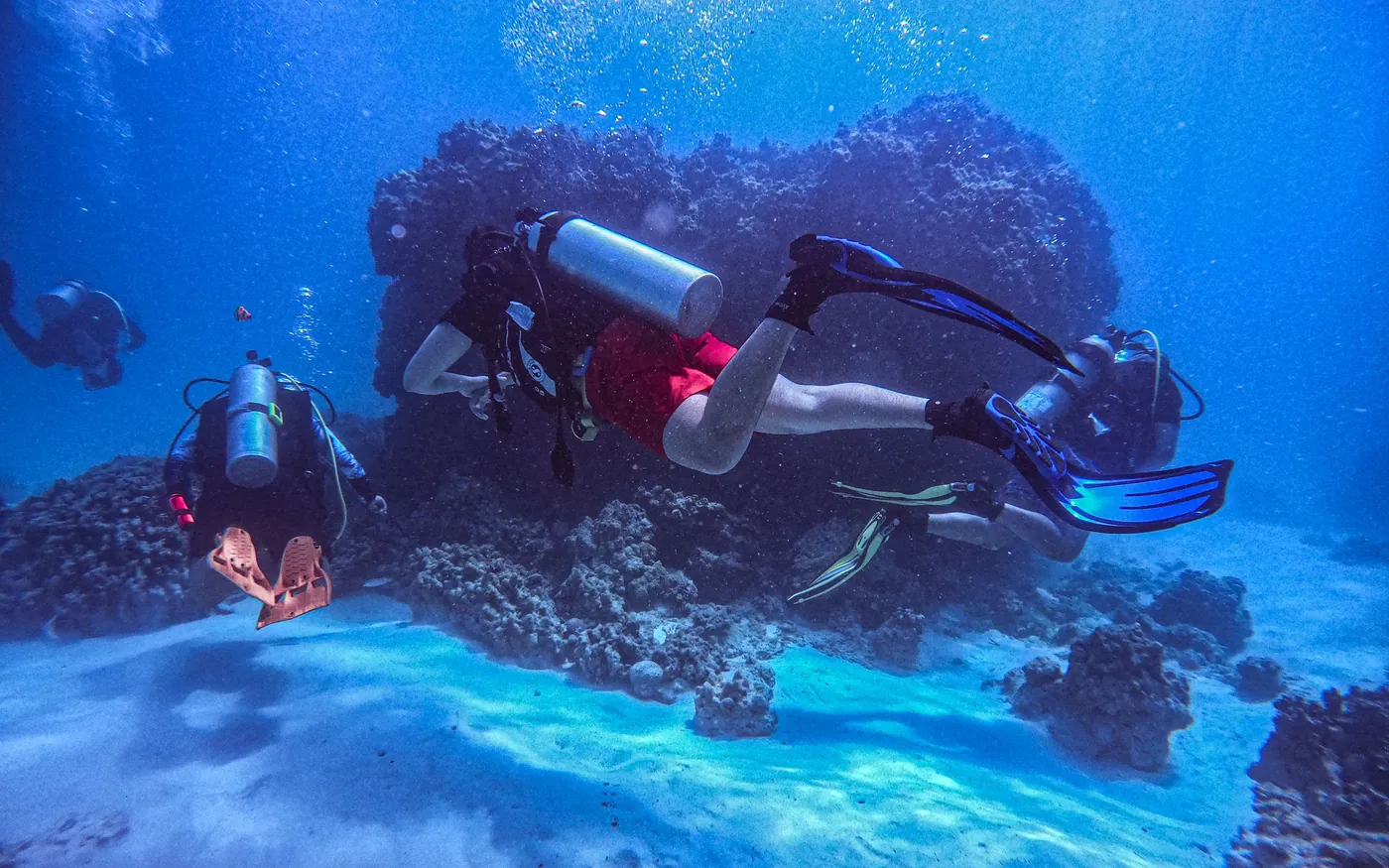
The way to correct overweighting is gradually, in conditions where being slightly light is not a problem.
- Change one thing at a time. Drop two pounds, dive it, and see.
- Do it in shallow, easy conditions. Not on a deep dive or in surge.
- Re-check whenever anything changes — a different suit, a different cylinder, salt water instead of fresh.
- Move weight before removing it. If your legs sink, the problem may be where the lead sits rather than how much there is.
- Write it down. Your weighting for each configuration is worth logging, because you will not remember it next season.
A last note on habit. Weighting tends to drift upward over a diving career, because adding a pound is easy and removing one takes a deliberate decision. Divers who add weight after a difficult descent rarely take it off again when the conditions improve.
The fix is to treat the weight check as something you repeat rather than something you did once when you certified. A check every season, and after any change of gear, keeps the drift from accumulating into six pounds you no longer remember adding.
It changes with your gear
Weighting is a property of the whole system, not of you, which is why a number that worked on vacation is useless at home.
A 7 mm suit with hood and gloves is far more buoyant than a thin tropical one, salt water is more buoyant than fresh, and aluminum and steel cylinders behave differently as they empty. Change any of those and the check has to be redone. If you are renting rather than owning, that is worth building into the day — rental gear varies, and the first dive on unfamiliar kit is the one to check on.
Frequently asked questions
How much weight should I use?
There is no number that works for everyone. It depends on your body, your exposure protection, your cylinder and how much gas is in it. The point of a weight check is that it gives you your number rather than a guess.
Should I check with a full tank or an empty one?
Empty is more accurate, because a cylinder gets more buoyant as it empties and the end of the dive is when you need to hold a stop. If you check with a full tank, add roughly five pounds to allow for it.
Why does being overweighted use more air?
Because every extra pound has to be offset with about a pint of air in your BCD, and that air expands and contracts as you change depth. You spend the dive adjusting, and dragging the extra lead costs effort on top.
Do I need more weight in cold water?
Usually yes, because a thicker suit is more buoyant. A 7 mm suit with a hood needs noticeably more than a thin tropical suit — which is why weighting from a warm-water trip does not transfer to diving here.
Can I rent weights?
Yes. Our rental range runs from 2 lb bullets to 8 lb molded weights, with a belt included if you need one.
Sort it in the pool, not on the dive
Ask an instructor at Divers Den to run a weight check with you. It takes ten minutes and improves every dive afterwards.