

Buoyancy is whether you sink. Trim is which way you are pointing. They are two different problems, most divers only ever hear about the first, and the second is usually what is actually wrong.

Two separate axes
It is worth being precise here, because the vocabulary gets used loosely and the looseness is what keeps divers stuck.
Buoyancy is your position on the vertical axis: whether you are rising, sinking or holding depth. Trim is your posture: whether you are lying flat or hanging at an angle. You can be perfectly neutral and still be standing upright in the water, and a diver in that position is finning the bottom with every kick.
Neutral and vertical is still wrong. It is just wrong in a different direction.
Good trim is roughly horizontal, with your shoulders and knees on about the same plane. From the side you look like a flat platform rather than a seahorse.
Start with the weight, not the skill
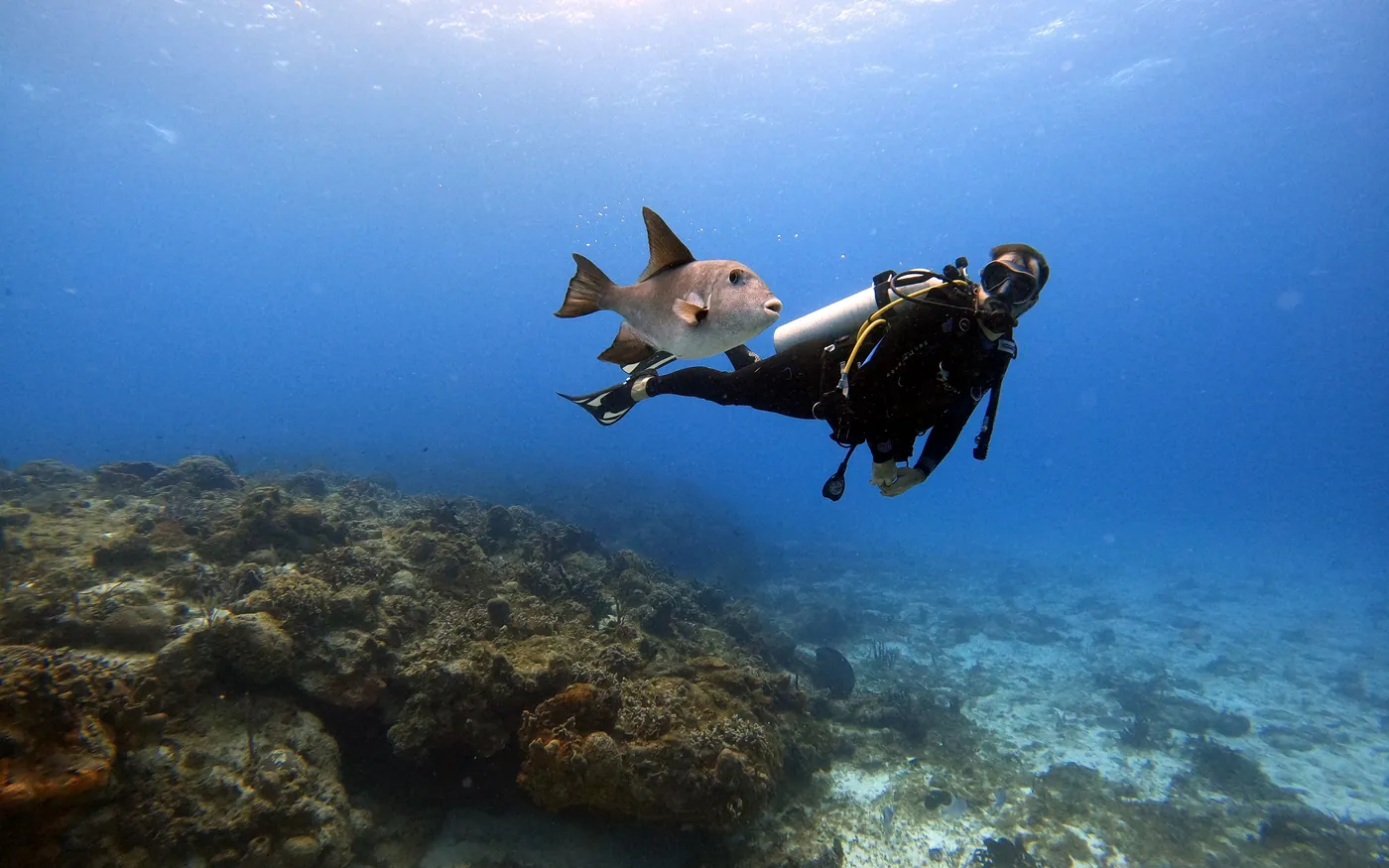
The commonest cause of bad buoyancy is not technique. It is carrying too much lead, and then inflating the BC to compensate.
That combination is unstable by design. The extra air in the BC expands as you rise and compresses as you sink, so every small depth change gets amplified instead of damped, and you spend the dive chasing yourself up and down.
The test is simple: at the surface, BC completely empty, holding a normal lungful of air, you should float at about eye level. If you sink, you are overweighted. The full procedure, including how to check it at the end of a dive rather than the start, is in how much weight you actually need.
Where the weight sits matters as much as how much
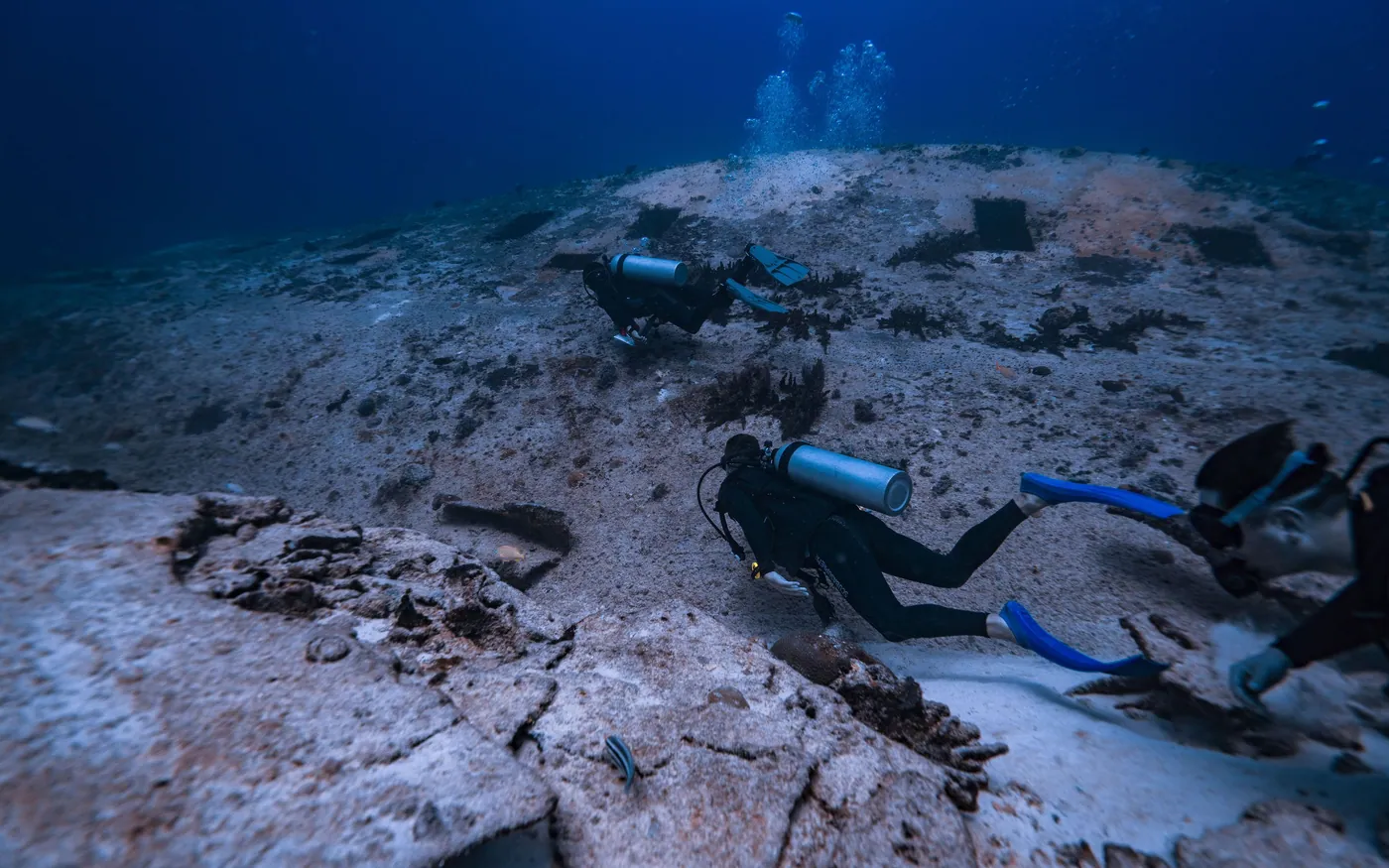
This is the part nobody mentions in an Open Water course, and it is the fix for the single most common complaint.
If your feet sink, you almost certainly do not need less weight. You need the same weight higher up and further back. Moving a couple of pounds from a hip pocket to the cylinder band, or into trim pockets on the tank strap, rotates you flat without changing the total by an ounce.
- Feet sinking: move weight up toward the cylinder.
- Feet rising: move weight down toward the hips, and check whether thick boots and big fins are lifting you.
- Rolling to one side: your ballast is unevenly split left to right.
- Head-heavy on descent: often a low tank position in the band.
- All of it changes with the suit. A 7 mm suit trims differently from a 3 mm one, and both differ from a dry suit.
Breathe, do not press buttons

Once you are weighted properly, almost all your buoyancy control is breathing.
Your lungs hold several pounds of adjustment, they respond instantly, and they cost nothing. A slightly fuller breath lifts you over a boulder; a slightly longer exhale settles you past a ledge. Neither requires touching anything.
The BC is for real depth changes, and it wants small, deliberate inputs with a pause after each one to see what happened. The classic beginner error is adding air, feeling nothing immediately, adding more, and then rocketing — which is how an uncontrolled ascent starts, and why ascent rate and buoyancy are really the same subject.
Why it is worth the trouble
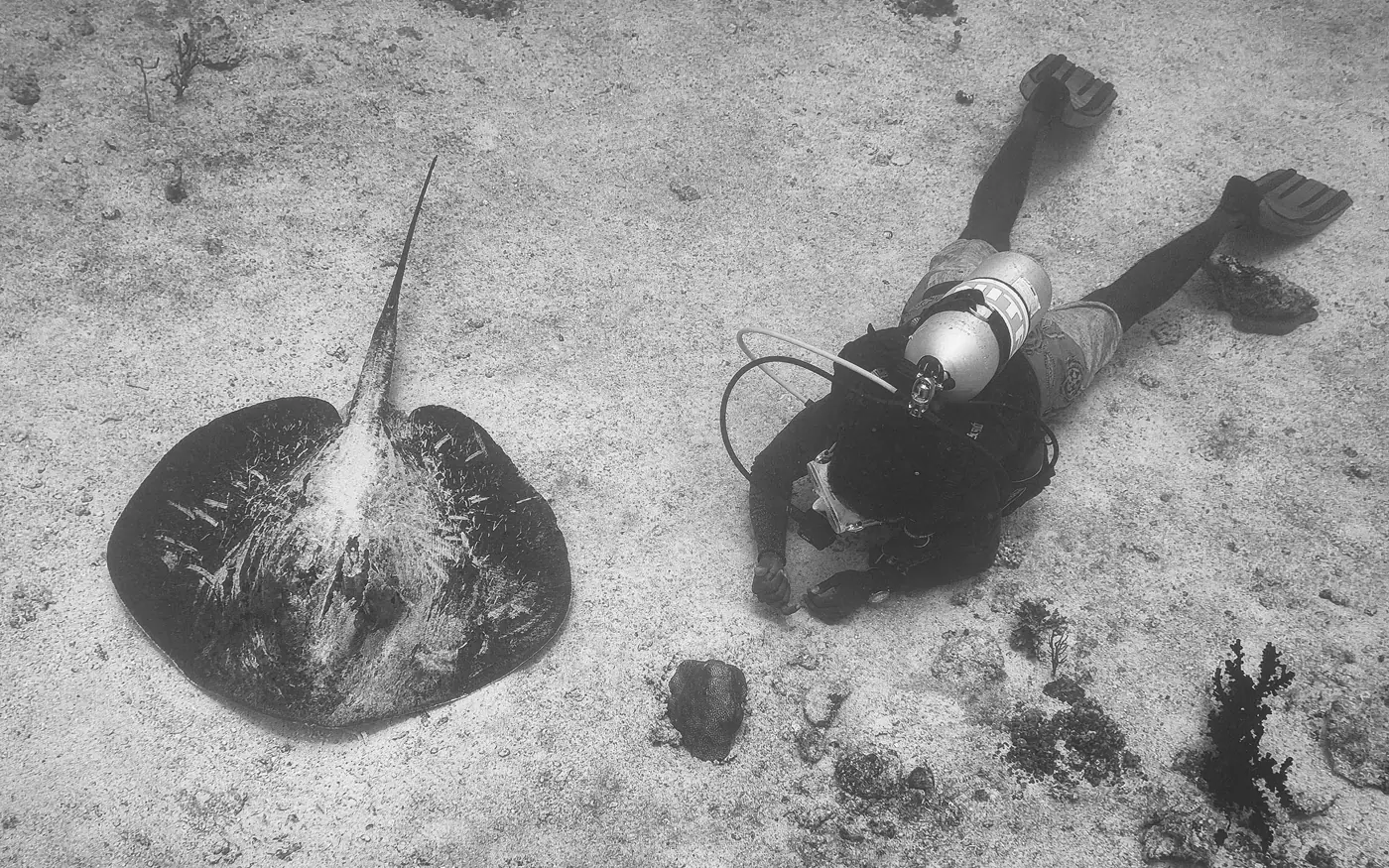
Trim is not an aesthetic preference. It changes the dive in measurable ways.
A horizontal diver presents a much smaller cross-section to the water, so the same swimming speed takes noticeably less effort. Less effort means less gas — which is why almost every honest answer to how to use less air starts here rather than with breathing tricks.
It also keeps your fins off the bottom. On a reef that matters for the reef; on the silty, sandy bottoms we have locally it matters for you, because a diver who kicks up the bottom has just ended their own visibility — the problem set out in diving in low visibility.
Practicing it deliberately
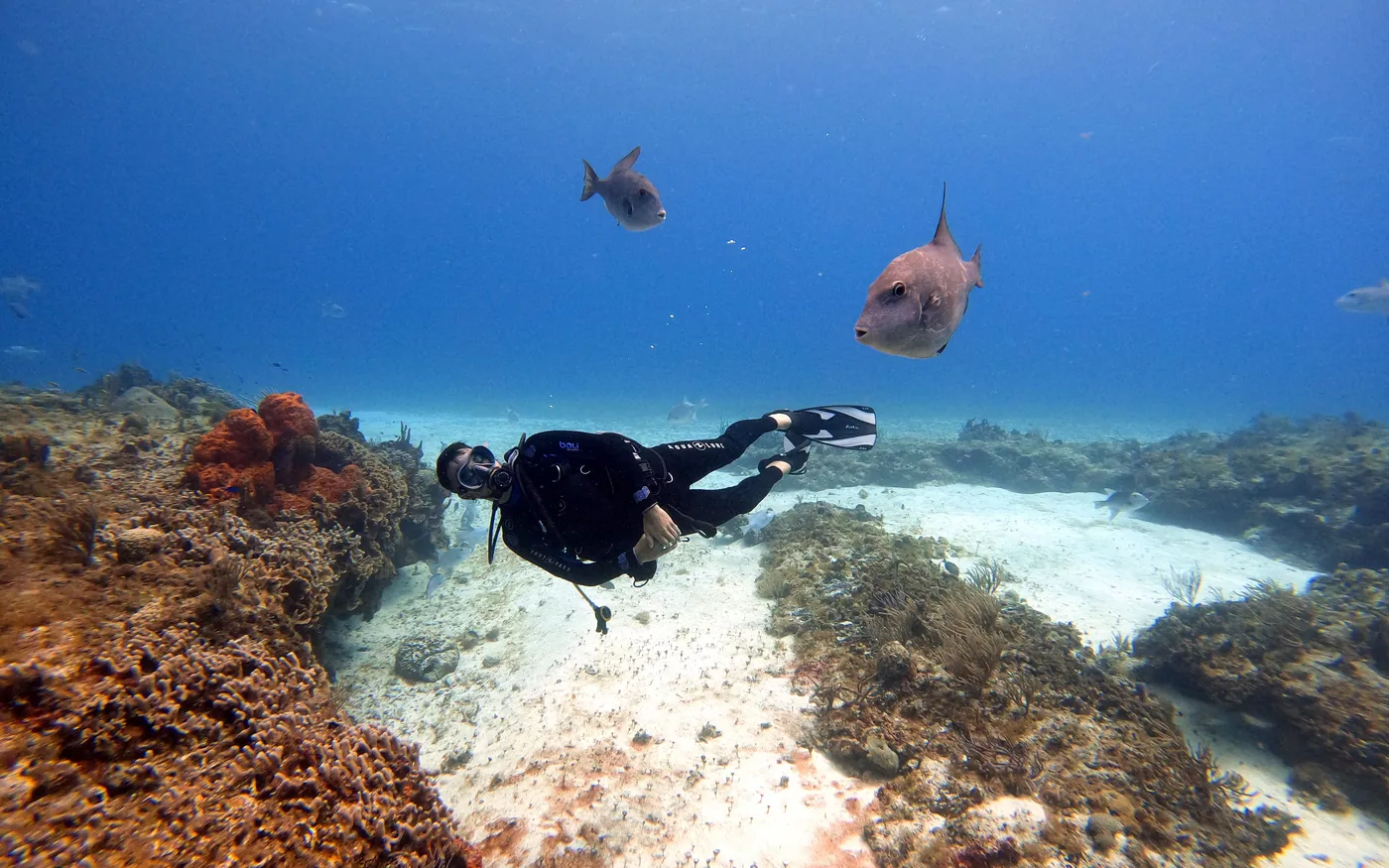
Buoyancy improves fastest when you spend a little of each dive on it on purpose rather than hoping it arrives.
- Hover motionless for a minute at the safety stop, hands still, no finning. It is harder than it sounds and it is the whole skill in miniature.
- Hold a fixed distance off a flat bottom while swimming a straight line.
- Stop without using your hands. If you sculle to stay put, you are not neutral.
- Change depth by breathing alone over a few feet, then come back.
- Check your trim from your buddy. You cannot see your own angle, and they can — a genuinely useful thing to ask for, in the spirit of being a buddy worth having.
None of this requires a course. SDI has a good short piece on trim if you want the theory alongside it, and if you would rather have somebody watch you and say what is actually happening, that is what an instructor is for.
The reason it is worth doing early is that everything else in diving gets easier once it is settled. Photography, navigation, wreck diving and cold water all assume you can hold a position without thinking about it — and a diver who has been out of the water for a while will find this is the first thing to have gone, which is a large part of what a refresher is actually for.
It is also the skill that separates divers who look effortless from divers who look busy, and the difference between them is almost never fitness or experience. It is a few pounds of lead in a better place, and the patience to stop correcting.
Frequently asked questions
What is the difference between buoyancy and trim?
Buoyancy is whether you go up or down. Trim is what angle you are lying at. A diver can be perfectly neutral and still be hanging feet-down at forty-five degrees, which is why fixing buoyancy alone often does not fix the problem.
How do I know if I am overweighted?
Hold a normal breath with an empty BC at the surface and you should float at eye level. If you sink, you are carrying too much — the full method is in how much weight you actually need.
Why do my feet sink?
Almost always weight placement rather than weight amount. Your ballast is too far forward, and moving some of it up onto the cylinder band or into trim pockets usually fixes it without changing the total.
Should I use my BC or my breathing?
The BC for depth changes, your breathing for everything else. Divers who chase small corrections with the inflator end up oscillating; divers who use their lungs stay still.
How long does it take to get good?
Most of the improvement comes in the first twenty or thirty dives if you are paying attention to it. It comes far more slowly if you are not, which is the argument for making it the thing you work on rather than a thing you hope for.
Have somebody watch you dive
Trim is very hard to self-diagnose and very quick to fix when somebody can see what you are doing. Ask an instructor at Divers Den to look at it.