
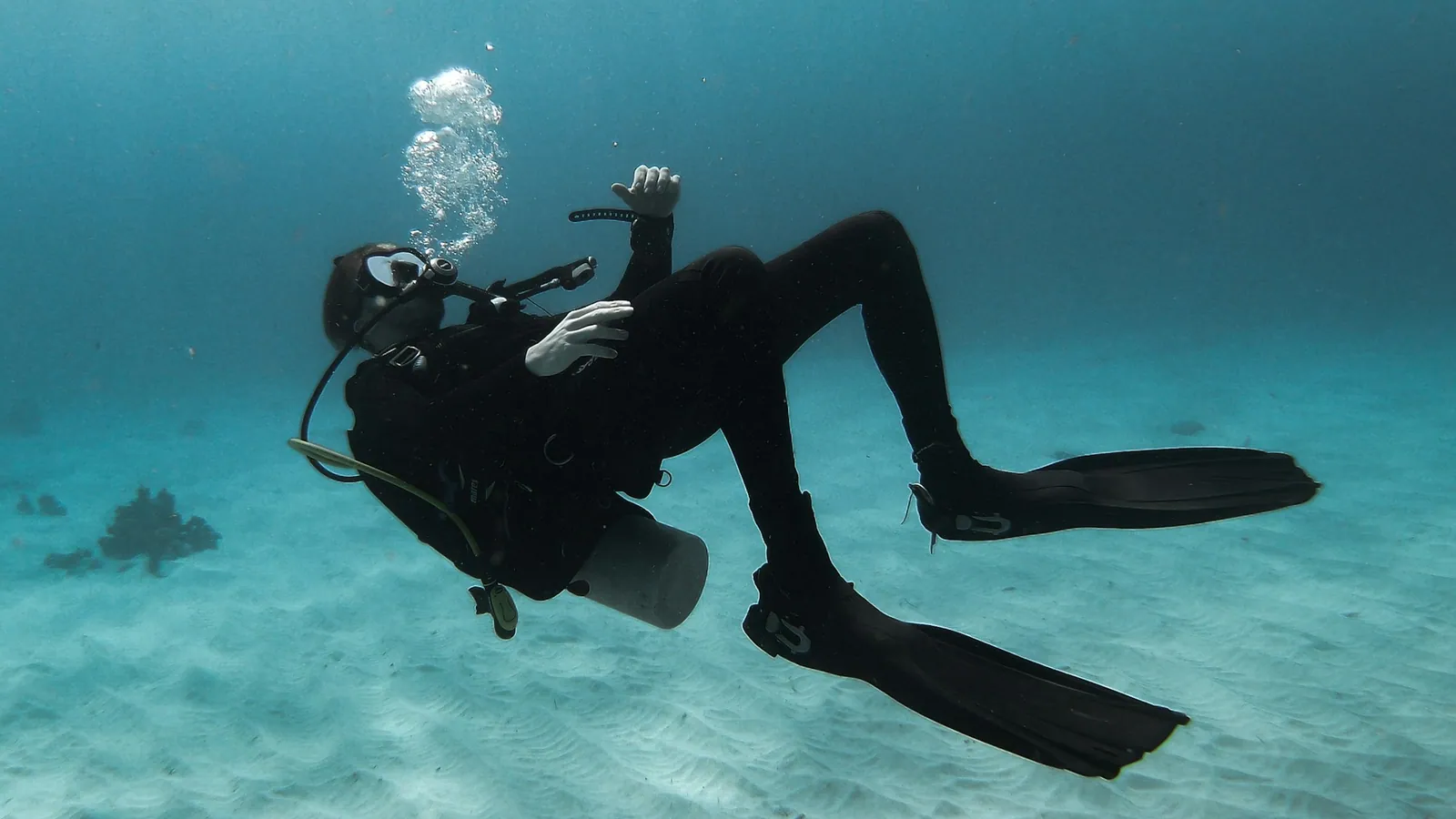
Most divers learn one kick in their Open Water course and never learn another. That kick is the flutter, and on a soft bottom it is the reason the visibility disappears ten minutes into the dive.
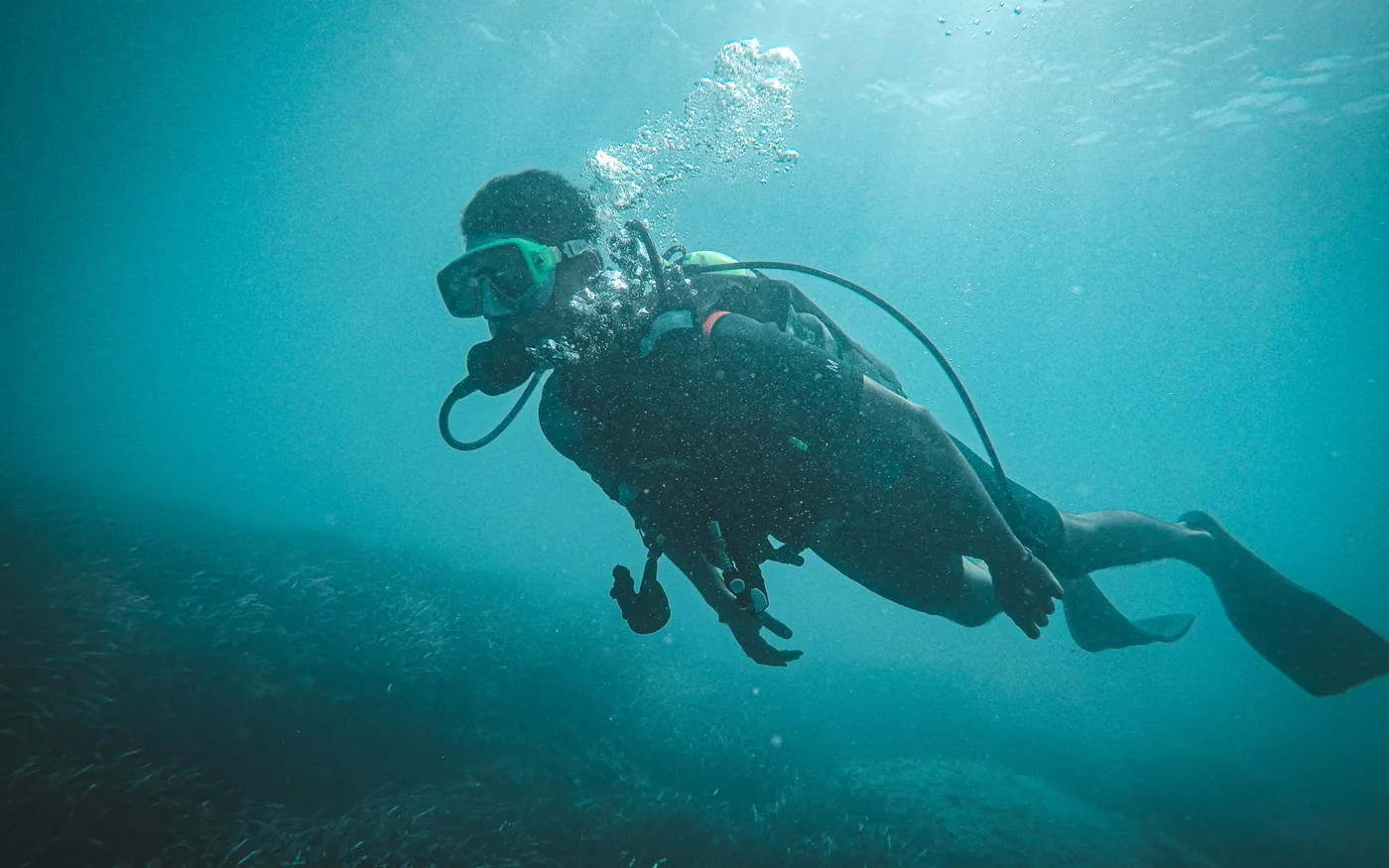
Why this matters more here than most places
In clear tropical water, kicking style is largely an aesthetic question. On this coast it is not.
Our bottoms are silt, fine sand and organic matter, and the visibility is limited before anybody touches anything. One diver flutter-kicking along a foot off the bottom can turn twenty feet of visibility into five, and it does not settle again for the rest of the dive.
You cannot see what you have stirred up. The diver behind you can.
It is also a buoyancy problem in disguise. A diver who is properly trimmed is further off the bottom and pointing their fins backward instead of downward — which is why this post really begins with buoyancy and trim.
The flutter kick, and where it belongs
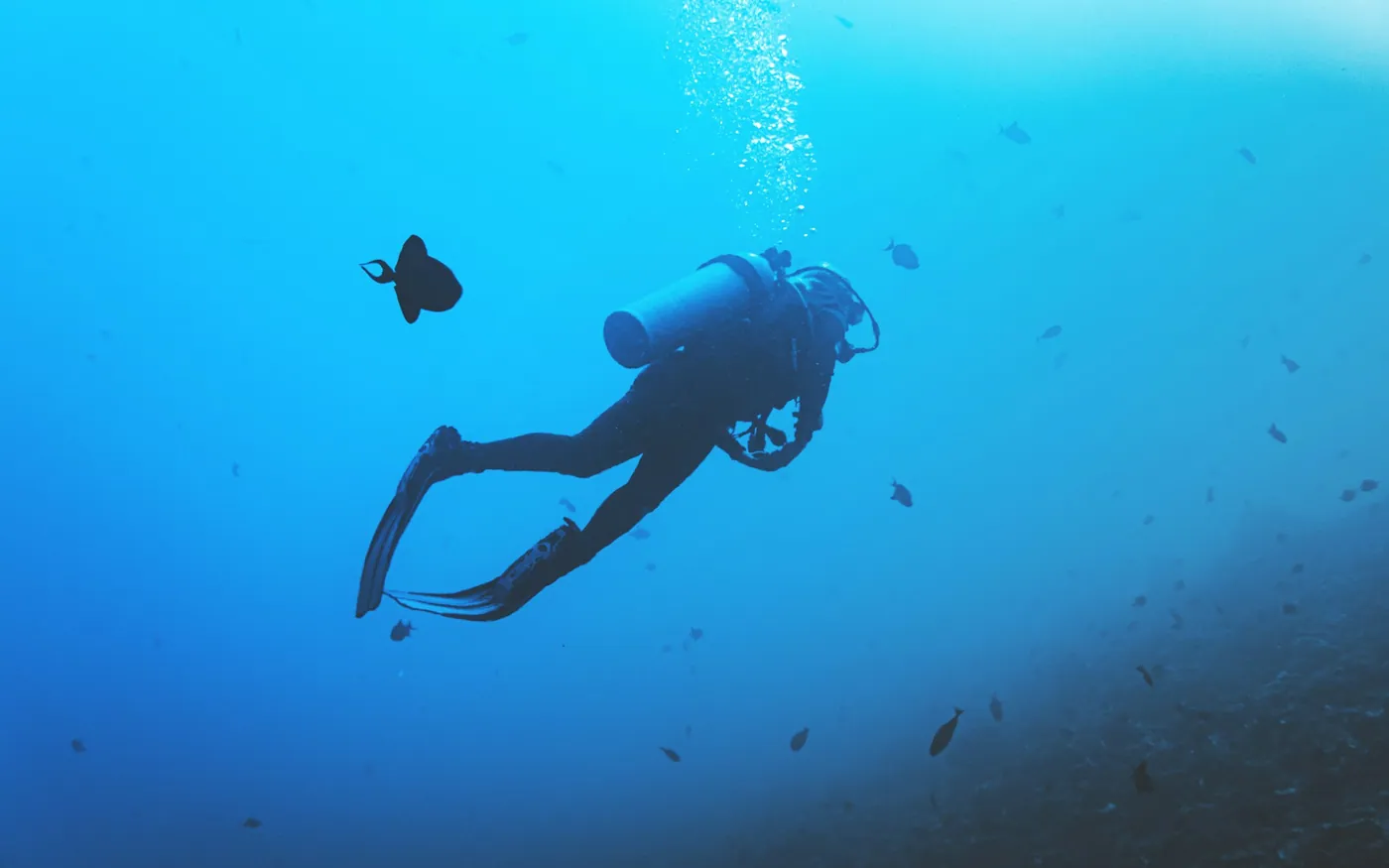
The flutter is what everybody already does: legs more or less straight behind, knees slightly bent, alternating up and down with the power coming from the hips rather than the knees.
It is genuinely good at what it does. It covers ground, it works against current, and it is the kick you want in open water when there is nothing below you to disturb. Most divers do it badly by pedalling from the knees, which is tiring and slow — the power should come from the hip with a long, unhurried stroke.
What it should not be is your only option, because the moment you are near the bottom it becomes a liability.
The frog kick, which should be your default
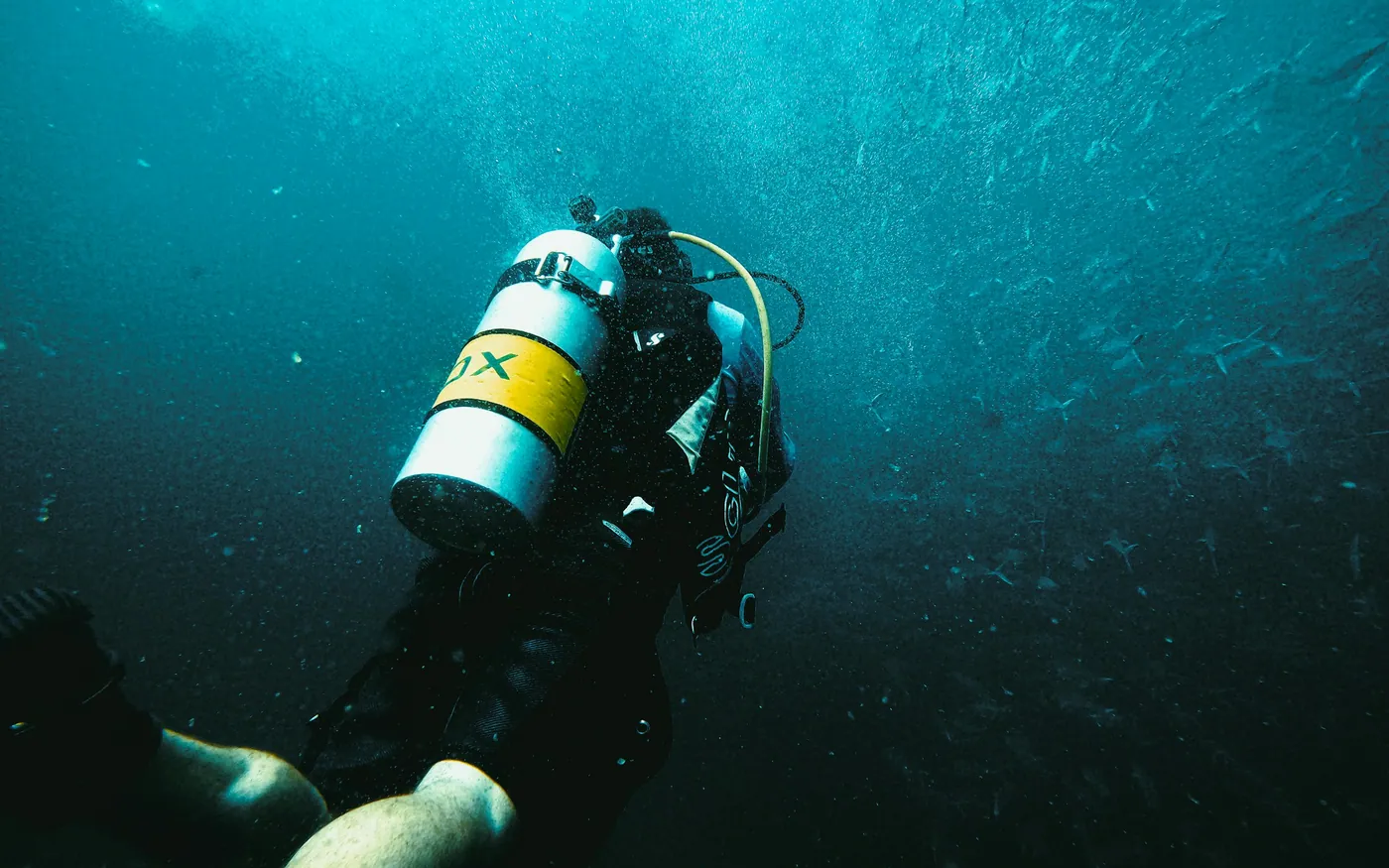
If you learn one new kick, learn this one. Technical divers use it as their primary kick for a reason, and that reason applies to every silty site in New England.
The movement is a breaststroke with your legs. From straight and together, bend the knees and bring your feet up and apart, rotate the fin blades outward, then sweep them out and back together in one push. Then glide. The glide is half the technique and the part everybody skips.
- The push goes backward, not down, so nothing gets lifted off the bottom.
- It is efficient. One good kick and a long glide covers more ground per breath than continuous fluttering.
- It is quieter, which matters if you want to get close to anything alive.
- It is slower, which is its one real drawback in current.
- It takes practice. Expect to feel clumsy for several dives.
The modified frog, for tight and silty places
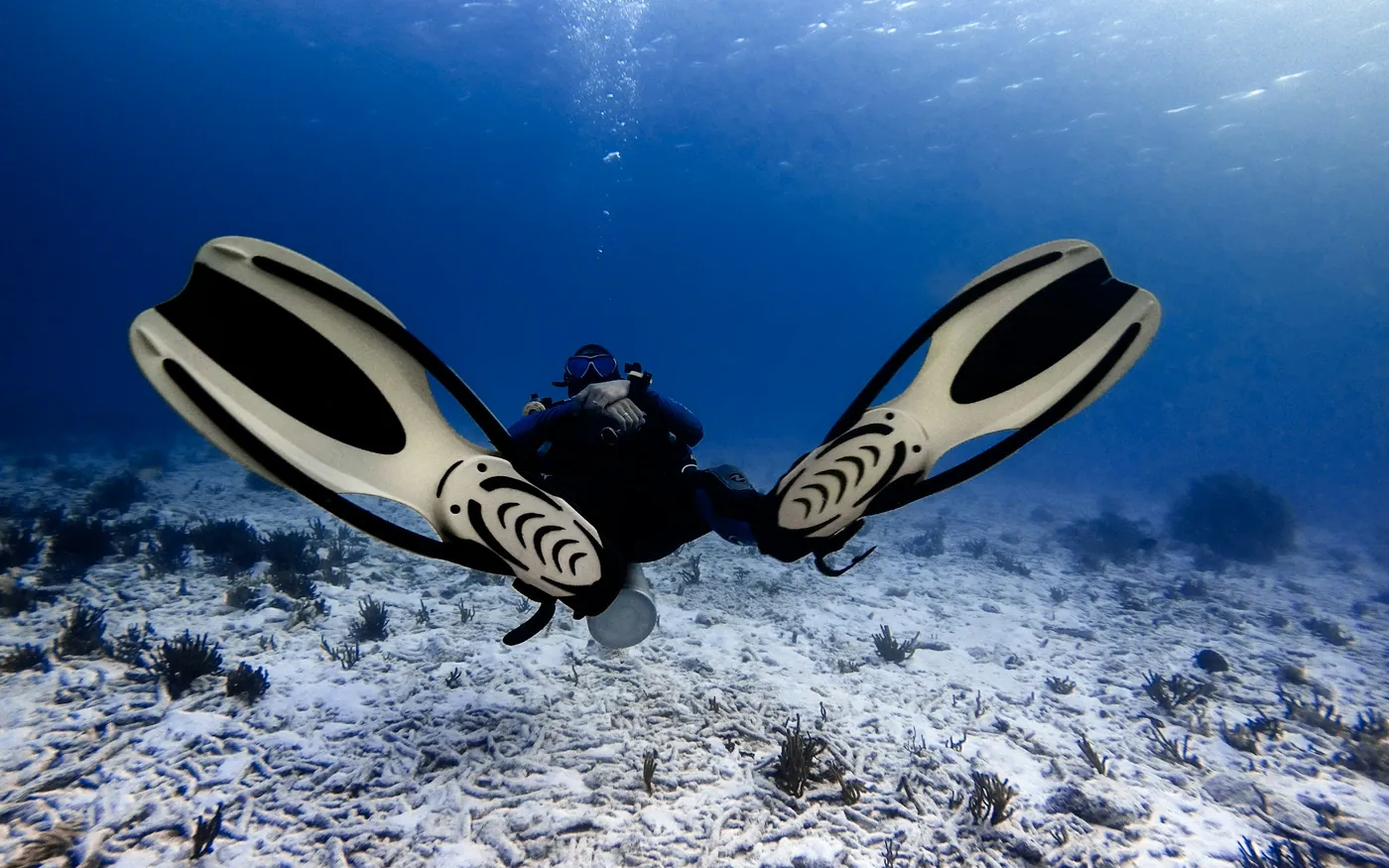
The modified frog is the same kick with the arc shrunk down, worked almost entirely from the knees and ankles with the thighs barely moving.
It is slow and it is deliberate, and it is what you want inside a gully, along a wreck, or anywhere a full frog kick would put your fins into something. It produces very little water movement, which is precisely the point.
For local diving it earns its place on exactly the dives where visibility is already marginal — the conditions described in diving in low visibility, where the difference between a good dive and a wasted one is often just how much the group stirred up.
Backing up and turning on the spot
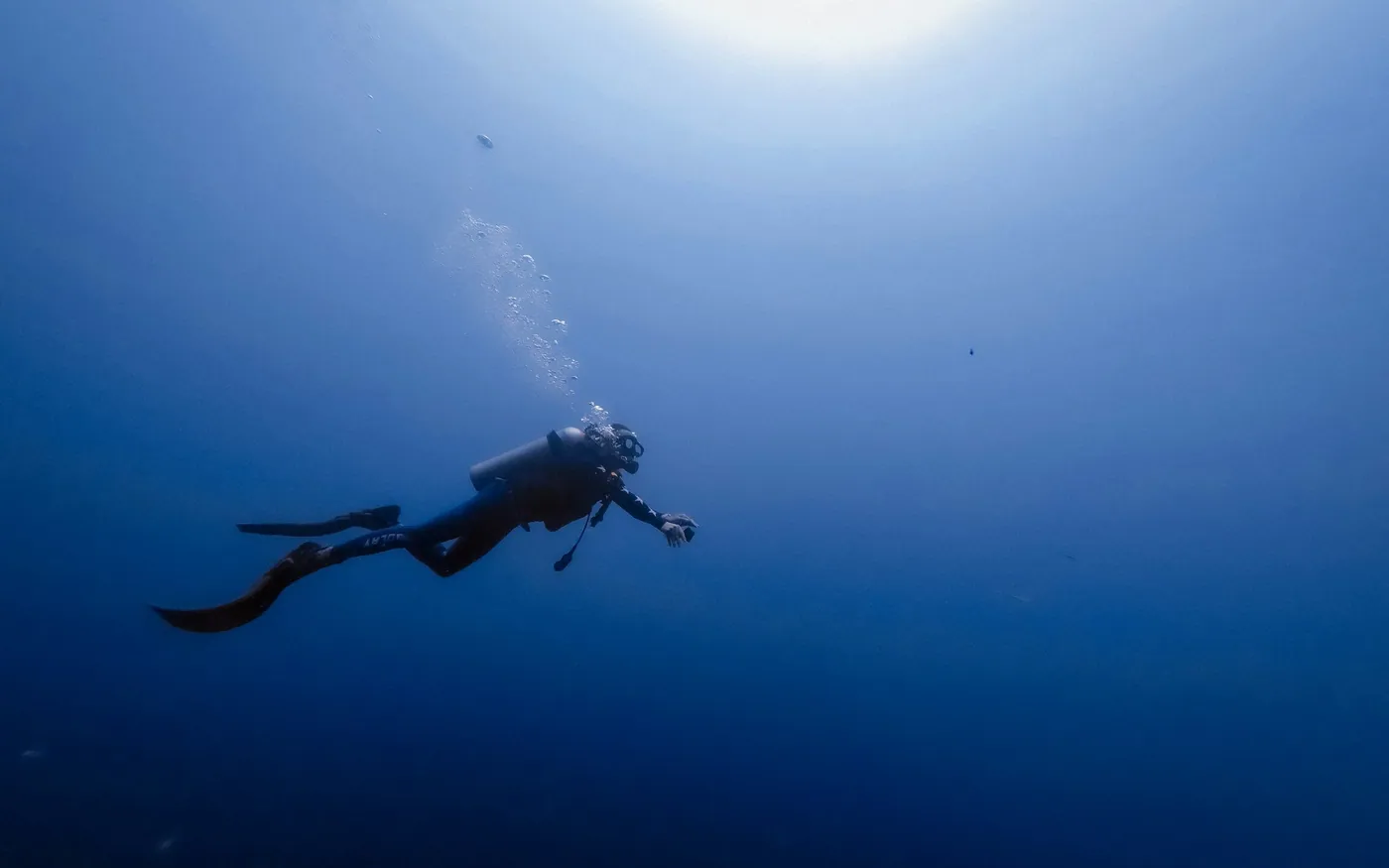
These two are the ones that make divers look like they know what they are doing, and both solve a real problem.
The back kick is a frog kick in reverse: the fin blades are presented so that the push moves you backward. It lets you get off something without turning around, which is the maneuver that otherwise ends with your fins in the reef. It is the hardest kick on this list and worth the effort.
The helicopter turn rotates you on the spot: your fins move in opposing directions, ankles rotating, and you pivot without traveling and without stirring anything. Once you have it you will use it constantly, especially with a camera — a point that underwater photography makes the hard way.
Ankles, and why the kick is not in your legs
One thing that is rarely said out loud: almost all of the frog kick lives in your ankles, and that is why divers who are strong swimmers often struggle with it.
The power comes from presenting the flat of the fin blade to the water and sweeping it, not from how hard you can push your legs. A diver who muscles it gets tired and goes nowhere; a diver who rotates the ankles and lets the blade do the work glides. If your calves ache after a dive, you are almost certainly kicking from the wrong place.
Stiff boots and very floppy fins both make this harder, which is the one honest equipment note in this post.
Learning them without wasting a dive
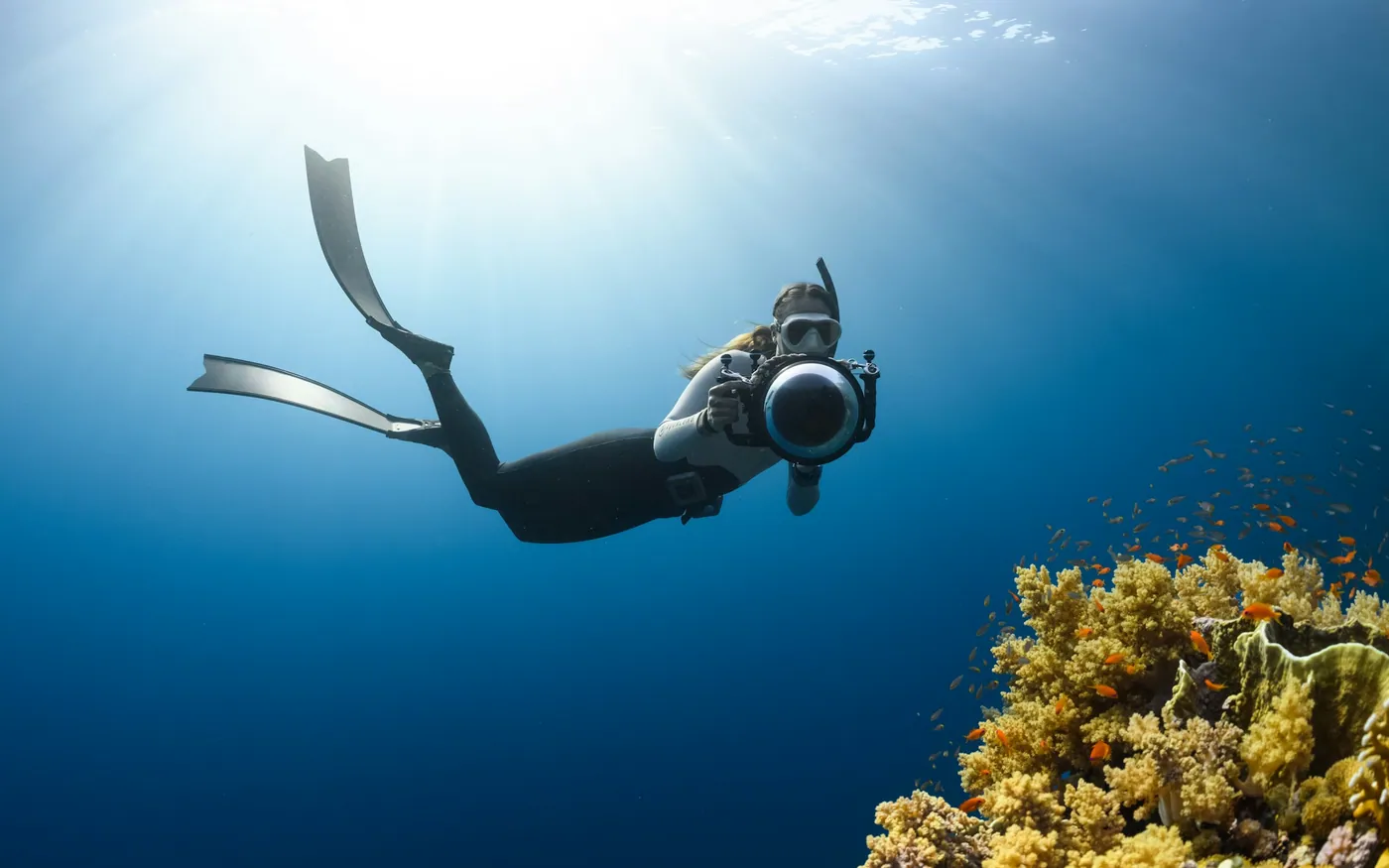
None of these need a course. They need a shallow, sandy, boring bit of bottom and a few minutes of several dives.
Start with the frog kick over open sand, where you can look behind you and see exactly what you disturbed. That feedback is the whole lesson: a good frog kick leaves the bottom untouched and a bad one leaves a trail you can follow. Get the glide long before you worry about speed.
Once the frog kick is comfortable, the modified version is a small adjustment, and the back kick and helicopter turn follow from the same ankle movement. SSI has a good illustrated rundown of the full set if you want to see the shapes before you try them.
The payoff is not style. It is that your gas lasts longer, because an efficient kick with a glide costs less than continuous fluttering — the connection made in how to use less air — and that the group behind you still has something to look at.
Frequently asked questions
What is wrong with the flutter kick?
Nothing, in open water. The problem is that it drives water downward, so over a soft bottom it lifts silt and ends the visibility for everyone behind you. It is the right kick for covering distance in mid water and the wrong one near the bottom.
What is the frog kick?
A breaststroke movement with the legs: knees bend, feet come up and apart, then sweep out and back together. The force goes backward rather than down, so it moves you without touching the bottom. It is the default kick for divers who care about visibility.
Can I really swim backwards?
Yes, and it is more useful than it sounds. The back kick is essentially a frog kick in reverse, and it lets you back off something without turning around and finning it. It takes practice and it is worth it.
What is a helicopter turn?
Turning on the spot by moving your fins in opposite directions. You rotate without going forward or backward and without stirring anything up — useful in a gully, beside a wreck, or anywhere the space is tight.
Do I need special fins?
You will find a stiffer paddle fin easier for the frog kick than a very soft or split fin, but the technique matters far more than the equipment. Learn the kick with what you have before buying anything.
Get somebody to watch your kick
Finning is very hard to see from the inside. Ask an instructor at Divers Den to look at what you are actually doing down there.