
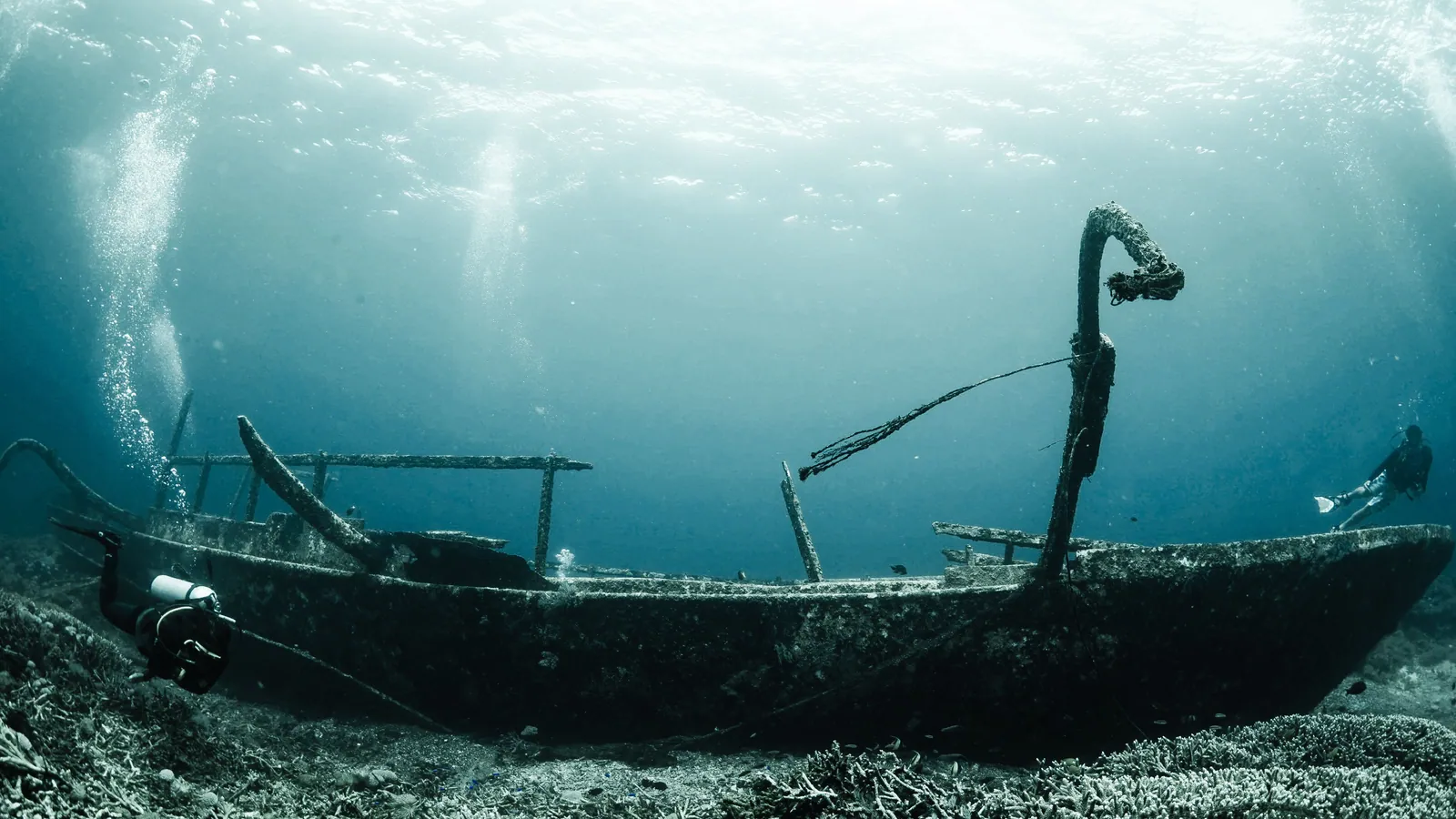
The outside of a wreck is a complete dive. Almost everything worth seeing is on the exterior, and the inside is a different activity with different training, different equipment and different ways to go wrong.
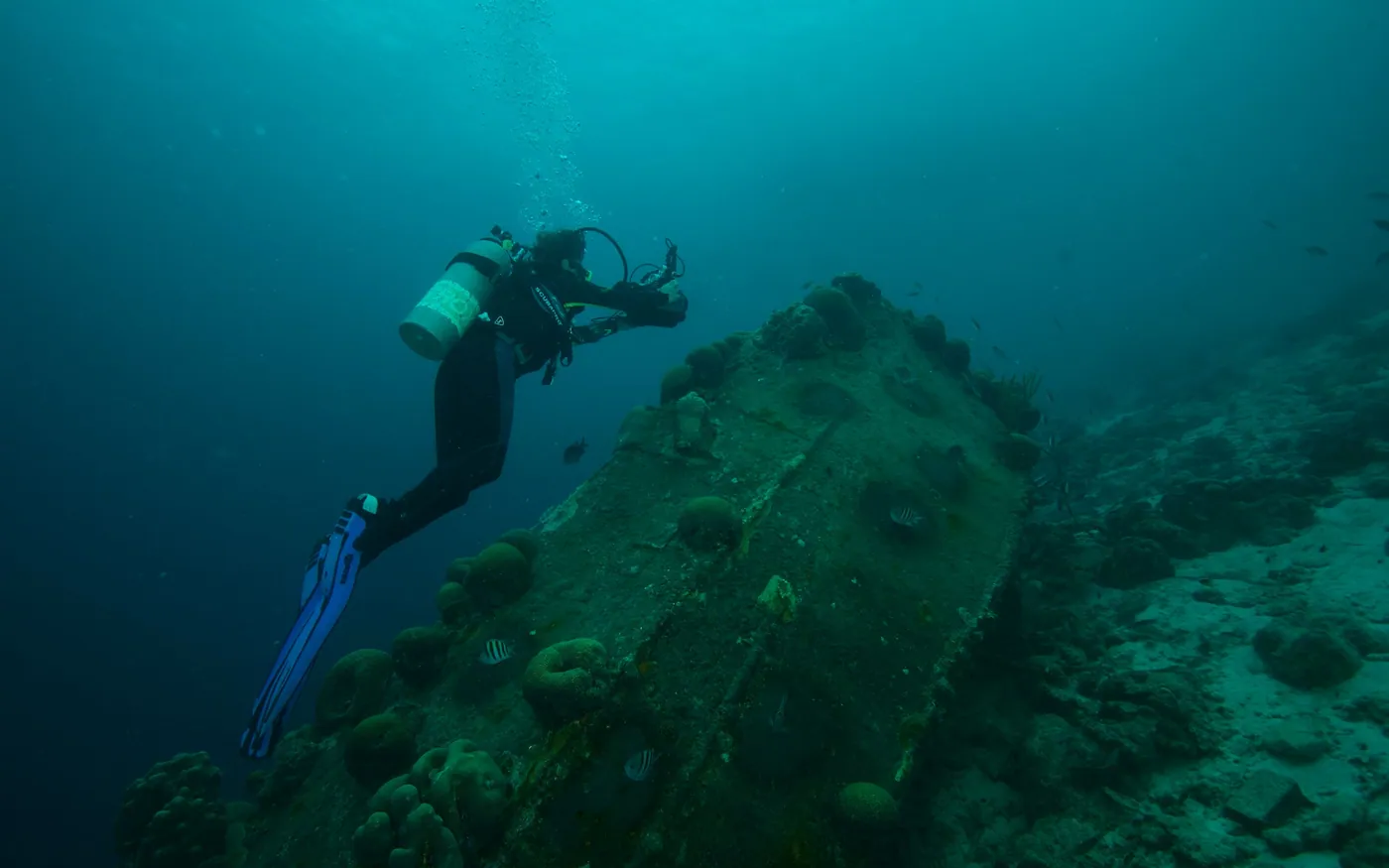
Why wrecks are good diving
A wreck is structure dropped onto a seabed that mostly does not have any, and on this coast structure is where everything lives.
Within a few years a hull is encrusted, and the fish that follow cover work their way in. That is why a wreck can be the most productive dive in an area of otherwise plain bottom, and why the older wrecks are usually the better dives.
It also gives you something to orient against, which matters more than it sounds in water where you cannot see far. A large solid object is a navigational aid as well as an attraction.
The hazard nobody expects
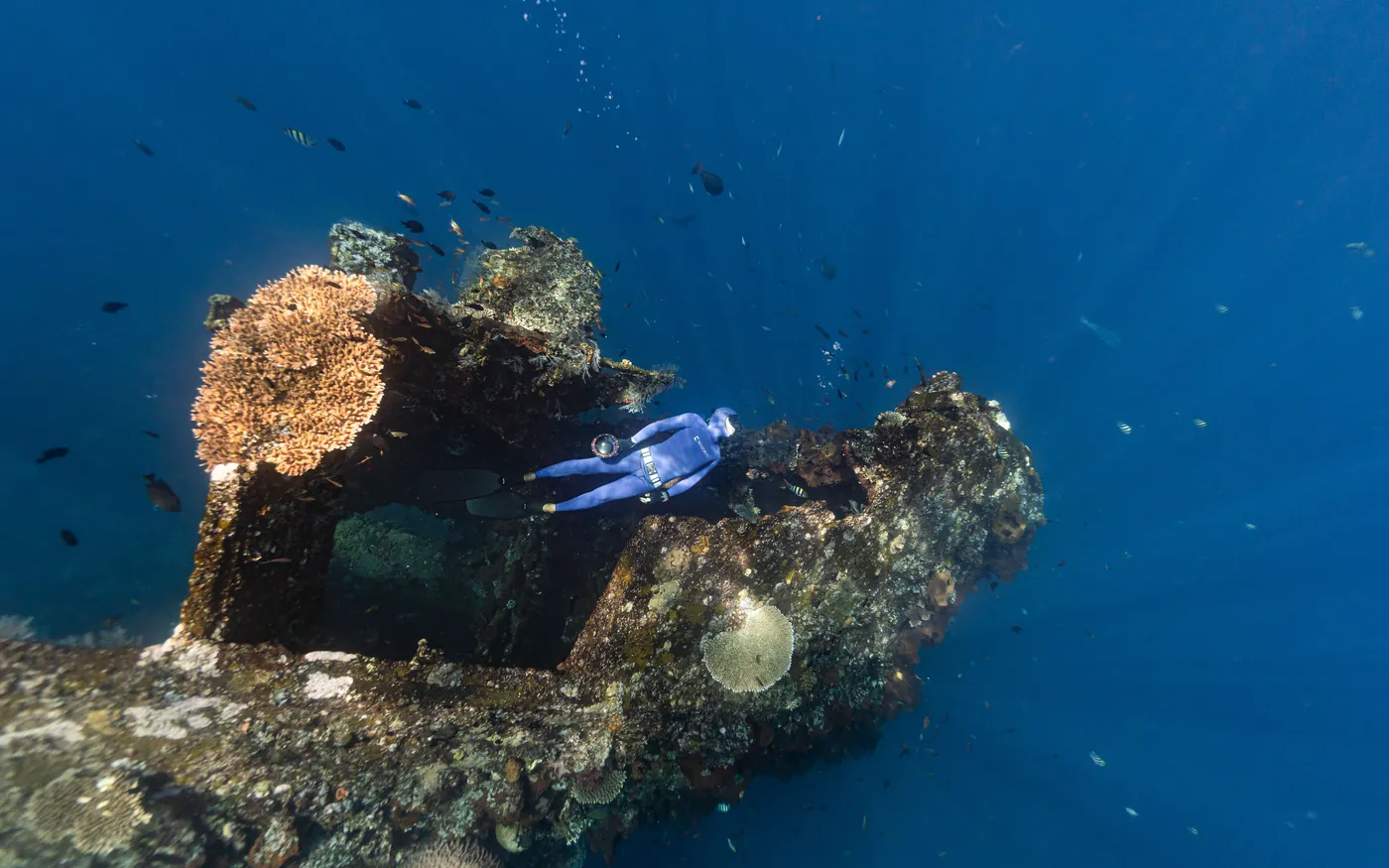
Ask a new diver what is dangerous about a wreck and they will say getting lost inside it. For divers on the outside, the real answer is fishing line.
Wrecks attract fish, fish attract anglers, and anglers snag their gear on the structure. What is left behind is monofilament: long strands that drift, weave across openings and catch on a cylinder valve or a gauge before you have noticed they are there.
You will see the wreck from a long way off. You will not see the monofilament until it has you.
The response is equipment and habit. Carry a cutting tool you can reach with either hand, and look up before you swim under anything — nets, rigging and dangling line are all overhead hazards rather than things at eye level.
The other exterior hazards
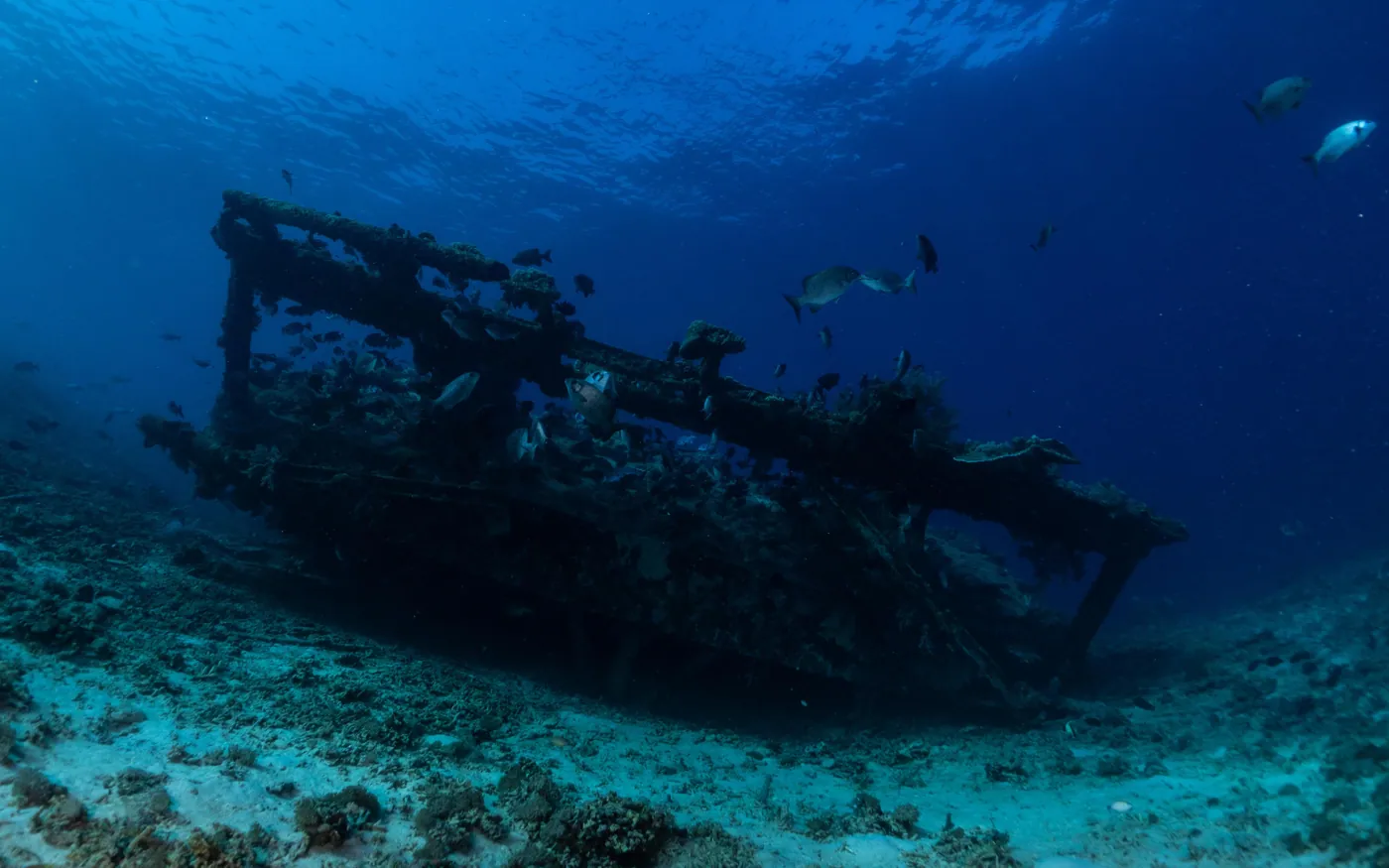
Entanglement is the headline, but an entry-level wreck course covers a short list of others and they are worth knowing.
- Sharp metal. Corroded steel is edged. A wreck is not somewhere to be pushed around by surge.
- Disorientation. Wrecks look different from every angle and one section of hull looks much like another.
- Depth changes. Swimming along a wreck can take you deeper without you watching the gauge.
- Silt. A fin kick near the bottom of a wreck can take out the visibility for everyone behind you.
- Overhead structure. Being under something is a different situation from being beside it, even when you have not entered anything.
Where the line actually is
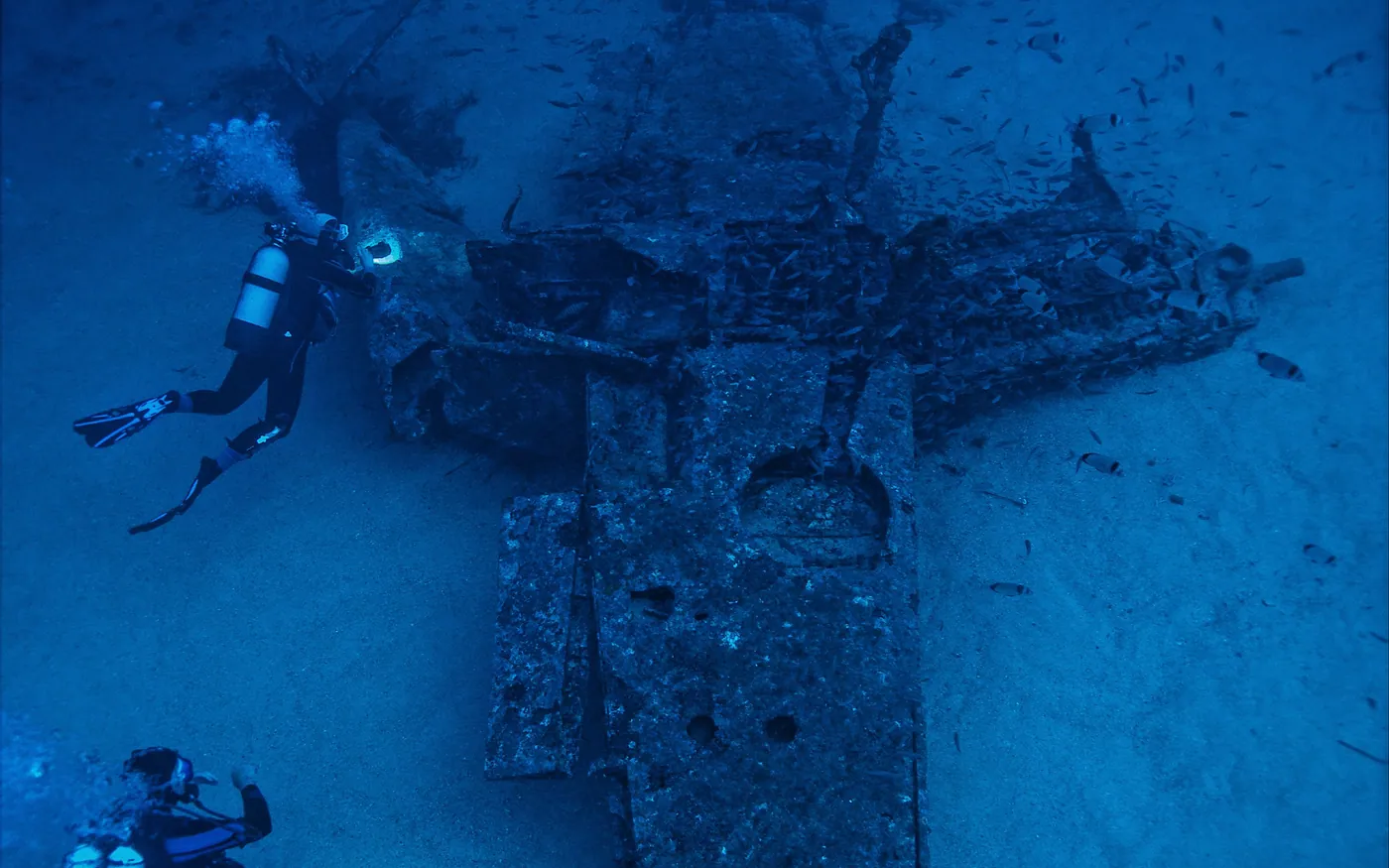
There is a clear training ladder here, and it is worth understanding because the steps are not interchangeable.
| Level | What it is | What it does not cover |
|---|---|---|
| No wreck training | Diving the exterior with a guide or buddy | Recognizing hazards systematically |
| Entry-level wreck course | Exterior diving, hazard identification, survey and mapping | Going inside |
| Limited penetration | Simple swim-throughs, guideline use, gas rules | True overhead environments |
| Technical wreck | Full penetration, redundant gas, decompression | Nothing we teach or advise on |
SDI make the point that wreck diving is more than a one or two day specialty, and they are right. The distance between the exterior and full penetration is much greater than the course names suggest.
Diving one well
There is a difference between swimming past a wreck and diving it, and it is mostly about pace.
A wreck rewards being worked slowly along one section rather than circled at speed. Divers who cover the whole hull in twenty minutes see the shape of it; divers who spend the same twenty minutes on one stretch of gunwale see what is living in it. On a big wreck you will not see everything in one dive, and trying to is the most common way to have a mediocre one.
Plan the dive around depth, too. Swimming along a wreck that slopes takes you deeper without any decision being made, which affects your gas, your no-decompression time and how much of your reserve is left for a proper ascent. Deciding beforehand which end you start at is a small thing that keeps the profile sensible.
And look up periodically. It is the habit that catches overhead line before it catches you, and it is the one most divers have to be told twice.
If you do go inside
This section exists so the rules are stated rather than implied, not because it is something to attempt on the strength of an article.
Limited penetration means simple swim-through areas where entanglement and entrapment risk is minimal, the water inside is clear, and daylight is visible at the exit. The standard gas rule is never to enter with less than two-thirds of your supply remaining. Divers run a guideline from a reel — braided nylon, kept low along one side of the passage — so there is a physical way out that does not depend on visibility.
All of that is taught in a course, in the water, with an instructor. None of it is learned from a page, and we do not teach the technical end of it.
A last point about expectations. Wrecks in this part of the world rarely look like the photographs, because those are mostly taken in clear tropical water on purpose-sunk vessels. What you get here is a heavily encrusted shape emerging from green water at fifteen or twenty feet of visibility, which is atmospheric rather than photogenic and is genuinely better diving.
Diving wrecks here
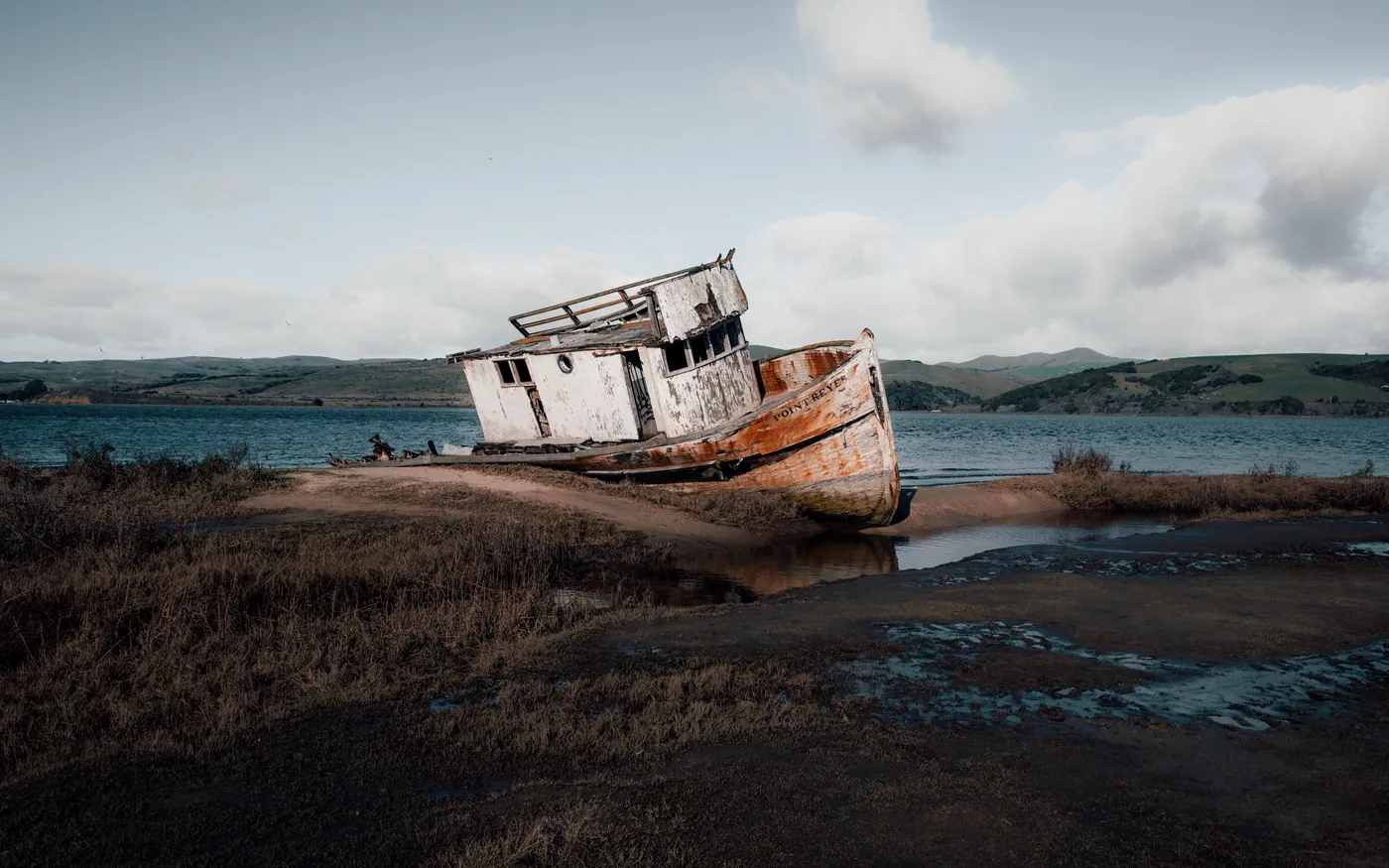
On this coast the wreck everyone means is the Chester Poling, and its stern sits at about 90 feet.
That is past the 60-foot limit of an Open Water certification, which is the practical reason most local divers do the Advanced course. The deep dive on ours runs on the Poling when the weather allows, and we have written the site up separately.
Getting there is a boat job. Boat and shore diving compared covers why, and our local charters are the straightforward route if you would rather not organize it yourself.
Frequently asked questions
Do I need a certification to dive a wreck?
Not to swim around the outside of one, which is what most wreck diving is. An entry-level wreck course teaches you to recognize and handle the hazards, and it is worth doing before you make a habit of it.
What is the biggest hazard?
Monofilament fishing line, by a wide margin. Wrecks attract anglers, anglers snag them, and the cut line stays. It is nearly invisible and it catches valves, fins and gauges.
Can I go inside?
Not on a recreational certification and not without training. Penetration is a separate discipline with its own equipment, procedures and courses. We do not teach it and would point you to a technical instructor.
What should I carry?
A light, even in daylight, and a cutting tool you can reach with either hand. The light is for seeing into structure; the cutting tool is for the monofilament.
Where can I dive a wreck locally?
The best known is the Chester Poling off Gloucester. Its stern sits at about 90 feet, which puts it beyond an Open Water certification — the deep dive on our Advanced course runs there when the weather allows.
Get on a wreck properly
Ask about the wreck adventure dive, or about the Advanced course and its deep dive on the Poling. Divers Den has been diving these wrecks since 1968.