
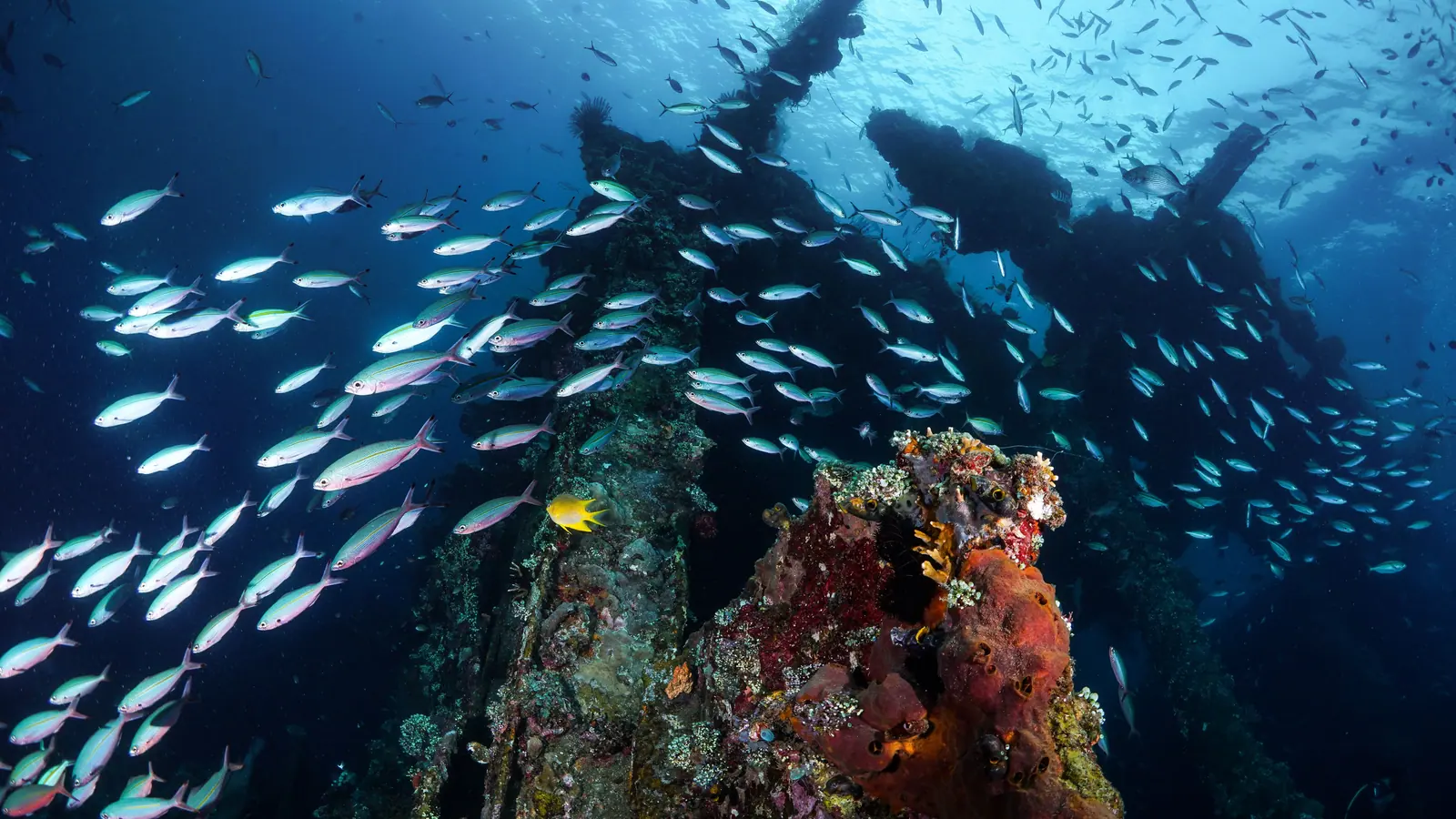
The Chester Poling is the best-known shipwreck in Massachusetts, and it is really two dives. The stern sits at about 90 feet and is within recreational limits. The bow, several miles further out and far deeper, is not.
What happened
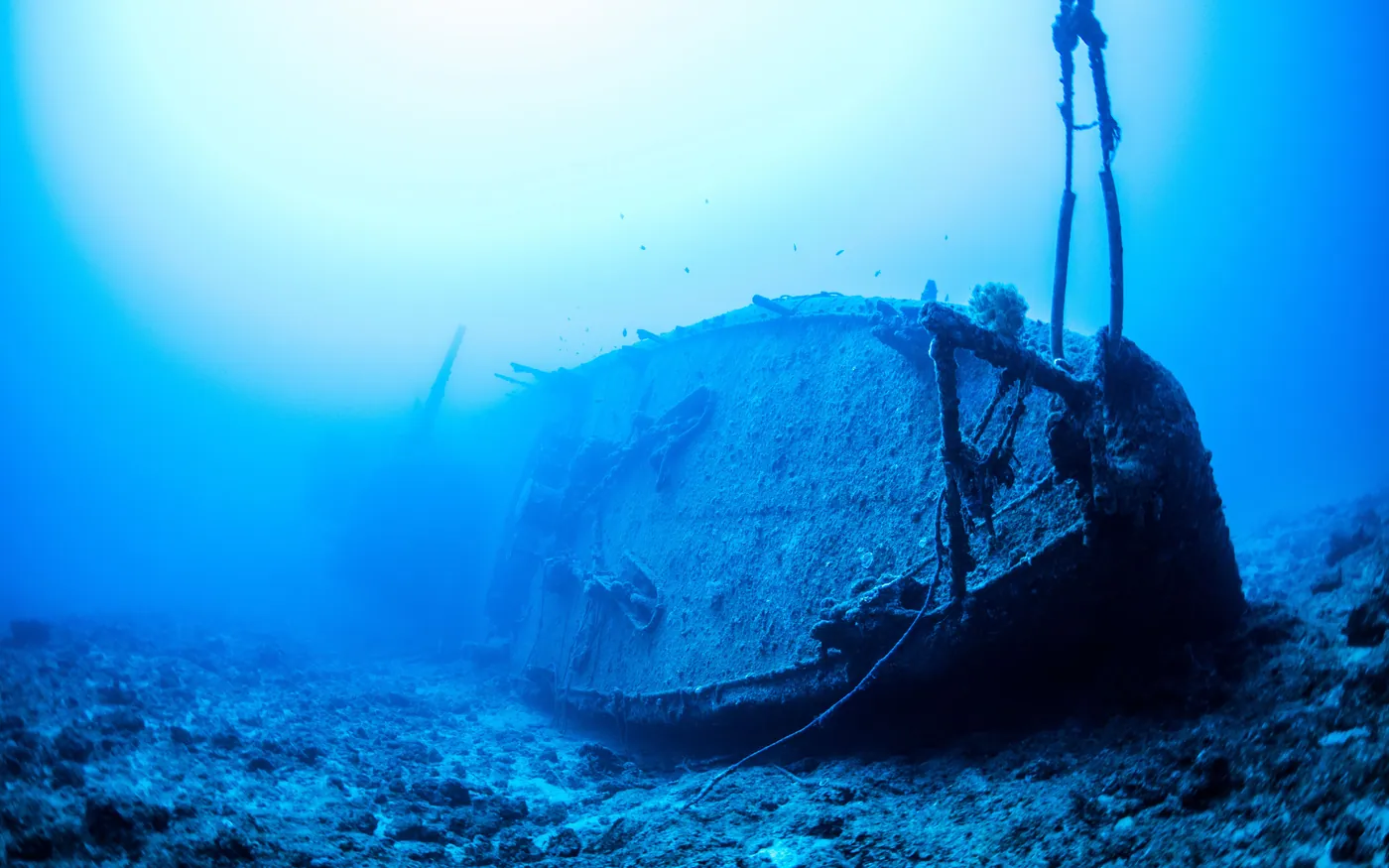
The Chester A. Poling was a 280-foot coastal tanker that carried heating oil around New England. On 10 January 1977 she was caught in heavy weather off Cape Ann and broke in half.
The two halves did not stay together. The stern went down close inshore, within roughly 800 yards of Eastern Point in Gloucester. The bow ended up several miles offshore in far deeper water.
The sea kept rearranging her afterwards. The Blizzard of 1978 shifted the stern section a considerable distance from where it first came to rest, which gives some sense of what winter does to this coast.
Two wrecks, two very different dives
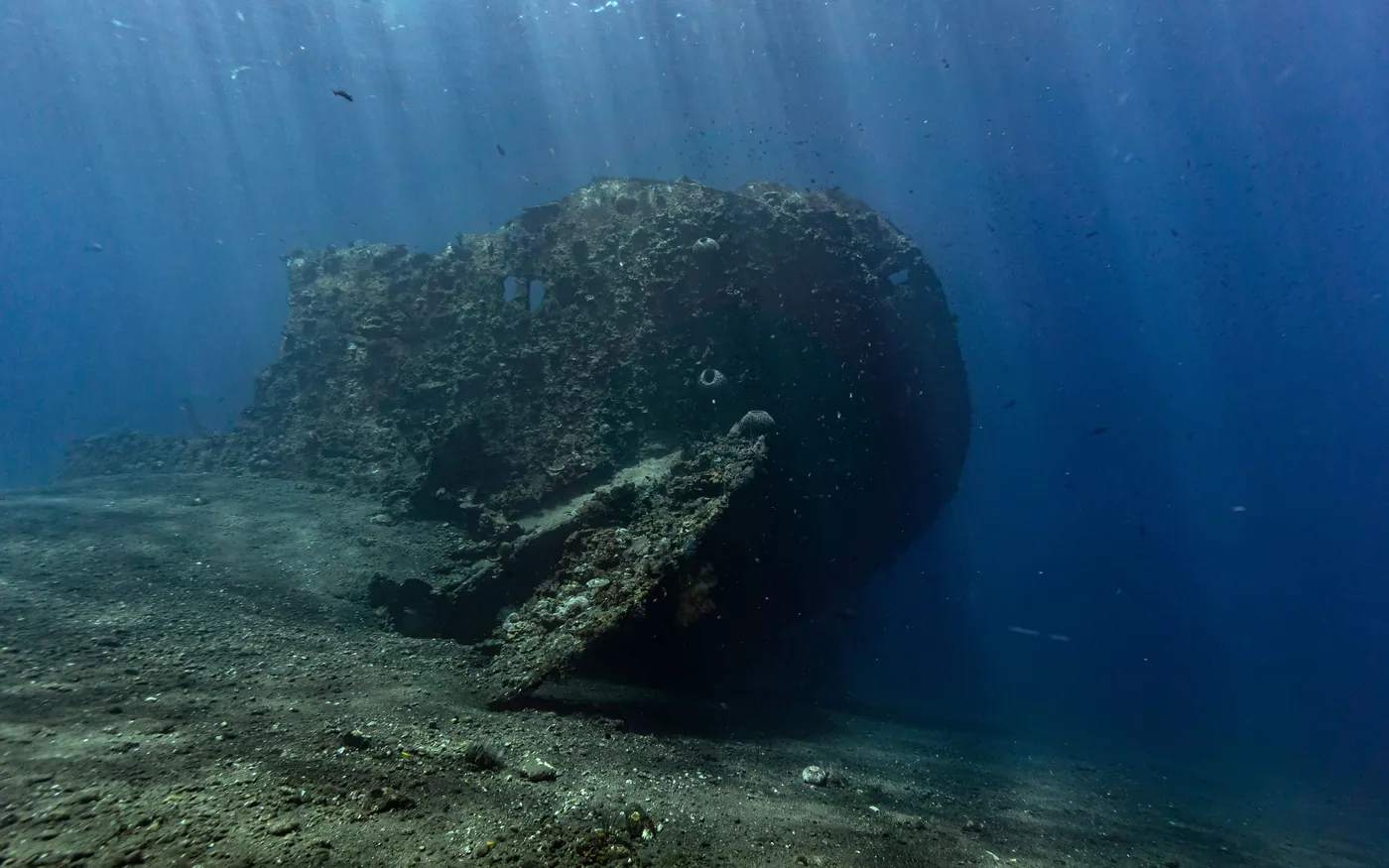
This is the distinction that matters, and it is the one most listings blur. Asking whether you can dive the Chester Poling is not a single question.
| Stern section | Bow section | |
|---|---|---|
| Depth | About 90 ft | About 180–190 ft |
| Distance offshore | Close in, off Eastern Point | Roughly four miles out |
| Who can dive it | Advanced Open Water and up | Technical divers only |
| How you get there | Local charter | Specialist technical charter |
| What it is | The most popular deep dive in New England | A technical objective |
If someone says they have dived the Chester Poling, they almost certainly mean the stern.
Everything below refers to the stern. SSI keeps a dive site entry for the wreck with additional detail if you want a second reference.
What the dive is actually like
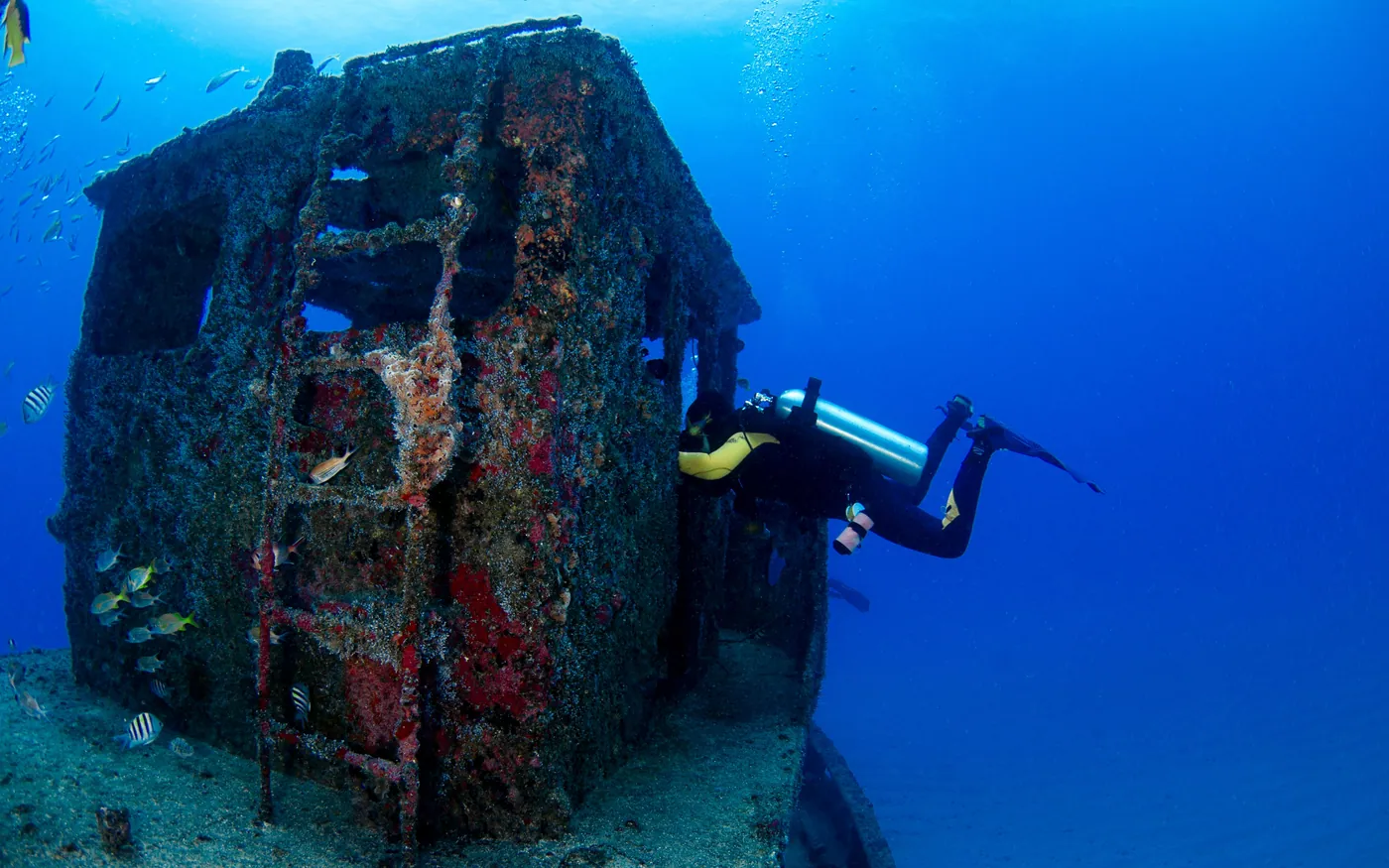
Visibility typically runs somewhere in the 15 to 20 foot range. That is normal for New England and considerably better than most of what you get from shore.
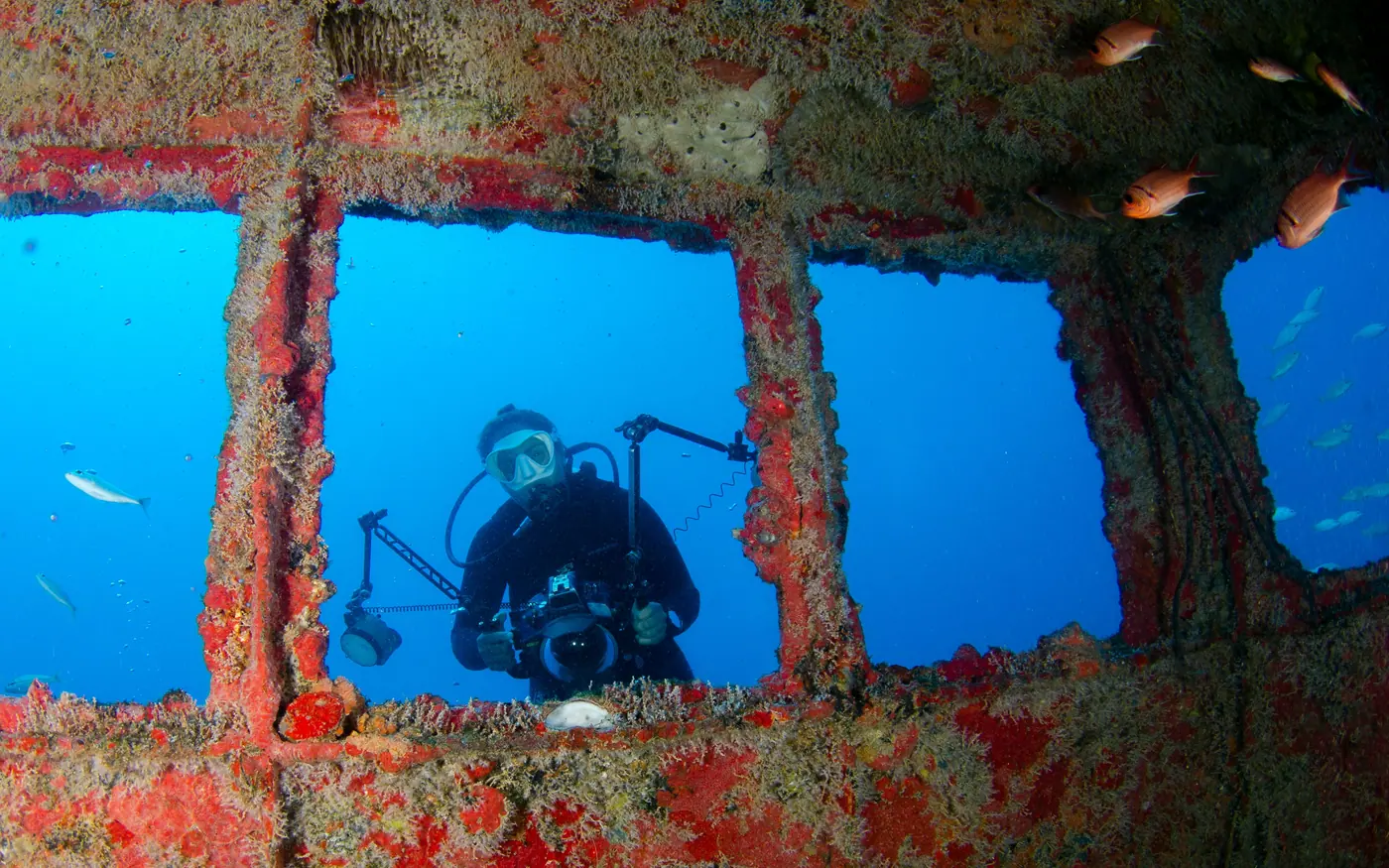
At 90 feet the light is already thin and the color has gone out of everything, so a light is not optional even in the middle of a bright day. What you get in return is a substantial piece of structure covered in growth, with the fish life that always follows structure on this coast.
- Bring a light. Not for penetration — for seeing color and reading gauges.
- Watch your gas. At three atmospheres you are using air roughly four times as fast as at the surface.
- Watch your no-decompression limit. At 90 feet it arrives long before your tank runs out.
- Plan the ascent before you descend. This is a dive where the line is your friend on the way up as well as the way down.
Why it is a good first deep dive
Ninety feet sounds like a lot to a newly certified diver. In practice this is a well-chosen place to do it for the first time.
The wreck gives you something to orient against, which removes the vague, disorienting quality of open blue water at depth. You can see where you are relative to a large solid object, and the ascent line is right there.
It is also short by necessity. At that depth the dive is limited by your no-decompression time, so the plan is tight and the profile is simple — which is exactly what you want the first time you go past 60 feet.
What is left of her
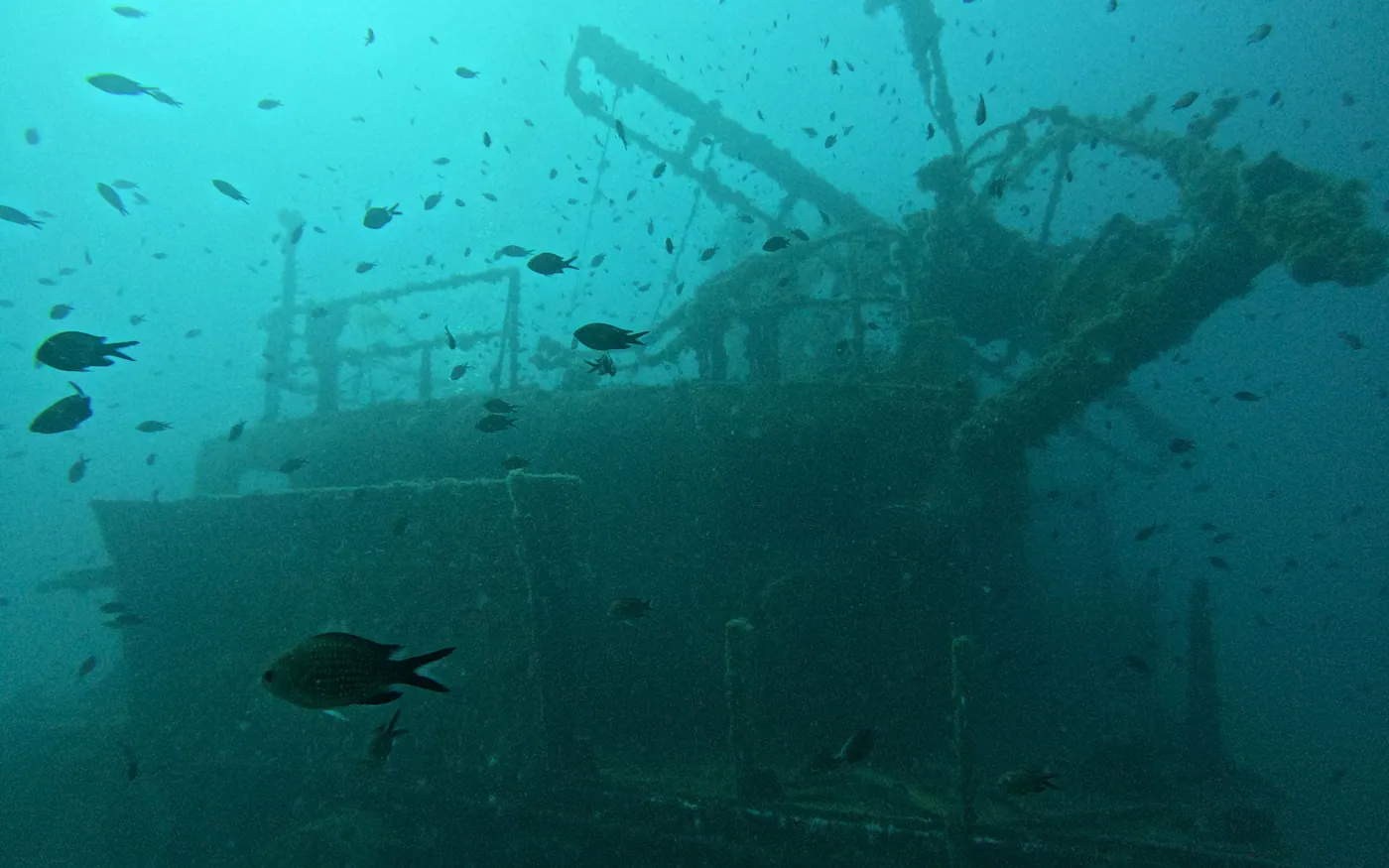
People expect a shipwreck to look like a ship. After nearly fifty years on an exposed New England seabed, the Poling looks like structure.
The steel is heavily encrusted, and the growth is the point rather than the damage: it is what draws the fish, and it is why a wreck this old is better diving than a wreck this new would be. Winter storms keep rearranging the lighter material, so divers who have been coming for years describe a site that is recognizably the same and quietly different each season.
That also means the wreck is not static in the way a reef is. Plate work shifts, openings that were clear one year are not the next, and lines and nets accumulate on any structure that sits in fishing grounds.
Which is the practical argument for diving it with someone who was on it recently, rather than from a description written a decade ago.
How to actually get on it
There is no shore access. The Poling is a boat dive, and that means either a charter or a course that includes one.
The deep dive on our Advanced Open Water course is run on the Chester Poling when the weather allows. It is scheduled with Down Under Diving Ventures, and the charter fee is additional and paid directly to the boat operator rather than to the shop.
If you are already certified beyond Open Water and simply want to dive it, our local charters are run by PADI Divemasters who dive this coast constantly. If you have not certified at all yet, start with learning to dive in New Hampshire — the Poling will still be there.
Diving it well
Weather decides this dive more than anything else. It is exposed, it is offshore, and trips get moved — which is frustrating the first time and entirely normal after that.
Go with a boat that knows the site, dive it as an exterior tour rather than trying to see everything at once, and treat the depth with the respect it deserves. If you want easier days between attempts, the sites in our guide to shore diving in New England are a good way to keep your skills current while you wait for a weather window.
Frequently asked questions
What certification do I need?
The stern sits deeper than the 60-foot limit of an Open Water certification, so you need Advanced Open Water or equivalent. That is exactly why the deep dive on our Advanced course is run here when the weather allows.
Can I dive the bow section?
Not on a recreational certification. The bow lies far deeper, several miles further out, and is technical diving with the training, gas and planning that implies. We do not teach technical diving, and would point you to a technical instructor rather than take you there.
How is the visibility?
Typically in the range of 15 to 20 feet, which is normal for this coast and better than many shore sites. Bring a light: even in good visibility the interior spaces and the shaded side of the hull are dark.
Is it a shore dive?
No. It is well offshore and only reachable by boat, which is part of why it stays in good condition and part of why it costs more than a shore dive.
Do I need a wreck certification to dive it?
Not to swim around the outside of it, which is what most divers do. Going inside is a different activity requiring wreck training. Treat the exterior as the dive and anything beyond that as a separate decision.
Ask about getting out there
Divers Den has been diving this coast since 1968. Talk to us about the Advanced course, or about getting on a local charter.