
The dangerous thing about narcosis is not the feeling. It is that the part of you that would notice the feeling is the part being affected. That is the whole problem in one sentence.
What it is
Breathing compressed gas at depth has an anaesthetic effect. The gas responsible is mostly nitrogen, and the effect goes by several names — the martini effect, rapture of the deep, or simply being narced.
It is genuinely an anaesthetic effect rather than a metaphor for one. Thinking slows, inhibition and self-control drop, and whatever mood you brought with you gets amplified: a relaxed diver becomes cheerfully unbothered, an anxious one becomes considerably more anxious.
Narcosis does not make you feel impaired. It makes you feel fine.
Where it starts, and why nobody can tell you
The number usually given is that narcosis becomes significant somewhere around a hundred feet on air. It is a reasonable rule and it is not a boundary.
Measurable effects have been recorded far shallower — a Navy test found them at thirty-three feet — and susceptibility varies between individuals and between days for the same individual. Being tired, cold, dehydrated or stressed all appear to make it worse.
The martini rule is the popular shorthand: each fifty feet of depth is worth about one martini. It captures the idea nicely and it is useless as a measurement for the same reason the original comparison is — the impaired party is not a reliable narrator.
What it feels like

Symptoms are more varied than the cheerful version suggests, and it is worth knowing the quiet ones.
- Slowed thinking, and taking longer over simple tasks than you should.
- Difficulty reading your instruments, or reading them and not taking the number in.
- Euphoria or, just as often, anxiety. The direction depends on the diver.
- Reduced inhibition and self-control — the symptom that causes the actual accidents.
- Short-term memory loss, so parts of the dive are simply missing afterward.
- Dizziness, ringing in the ears, numb lips, or the gas tasting odd.
The tell that experienced divers watch for in others is task fixation: a buddy who is intently doing something small and unimportant, or who has stopped responding promptly to signals — which is one more reason the OK signal always needs an answer.
The fix is one thing, and it works
This is the reassuring part, and it is worth knowing before you need it.
Go shallower. The effect clears within a few minutes and leaves nothing behind. You do not have to surface and you do not have to end the dive — ten or twenty feet is often enough to lift the fog entirely. PADI covers the symptoms and the response in more detail.
The reason to ascend deliberately rather than gradually is that an impaired diver makes poor decisions about their own impairment. If the thought “am I narced?” occurs to you, the answer is to go up ten feet and find out, not to reason about it at depth.
Diving deep well

Since you cannot reliably judge your own state at depth, the answer is to decide things beforehand and reduce what you have to work out down there.
- Agree the maximum depth on the surface and treat it as a limit rather than a target.
- Descend slowly. A fast drop to depth gives you the largest change with the least adjustment.
- Do the deep part first, while you are freshest and have the most gas.
- Check gauges on a schedule, not when you happen to think of it. Thinking of it is the function that goes first.
- Stay close. A buddy at arm’s length can see what you cannot.
- Add depth gradually across a season rather than in one jump.
Cold, poor visibility and hard work all make narcosis worse, which is exactly the combination a deep dive on this coast presents. It is a fair argument for taking depth seriously here at shallower numbers than you might elsewhere, and for doing it under instruction first — the deep dive is one of the two required dives on the Advanced course.
Noticing it in somebody else
Since self-assessment is the unreliable part, the practical answer is that your buddy is your instrument.
What to watch for is not silliness, which is the version in the stories. It is slowness. A buddy who takes a long time over a simple task, who has to be signalled twice, who is staring at something unremarkable, or who has stopped checking their gauge on the rhythm they were using at the start of the dive.
If you see it, do not try to discuss it. Signal, take hold of them if you need to, and go up ten or fifteen feet together. The conversation can happen at the safety stop, by which point there will usually be nothing left to discuss.
It is worth agreeing before a deep dive that either of you can do this without it being a judgment on the other — the same pre-dive agreement described in being a dive buddy worth having.
Where it comes up locally
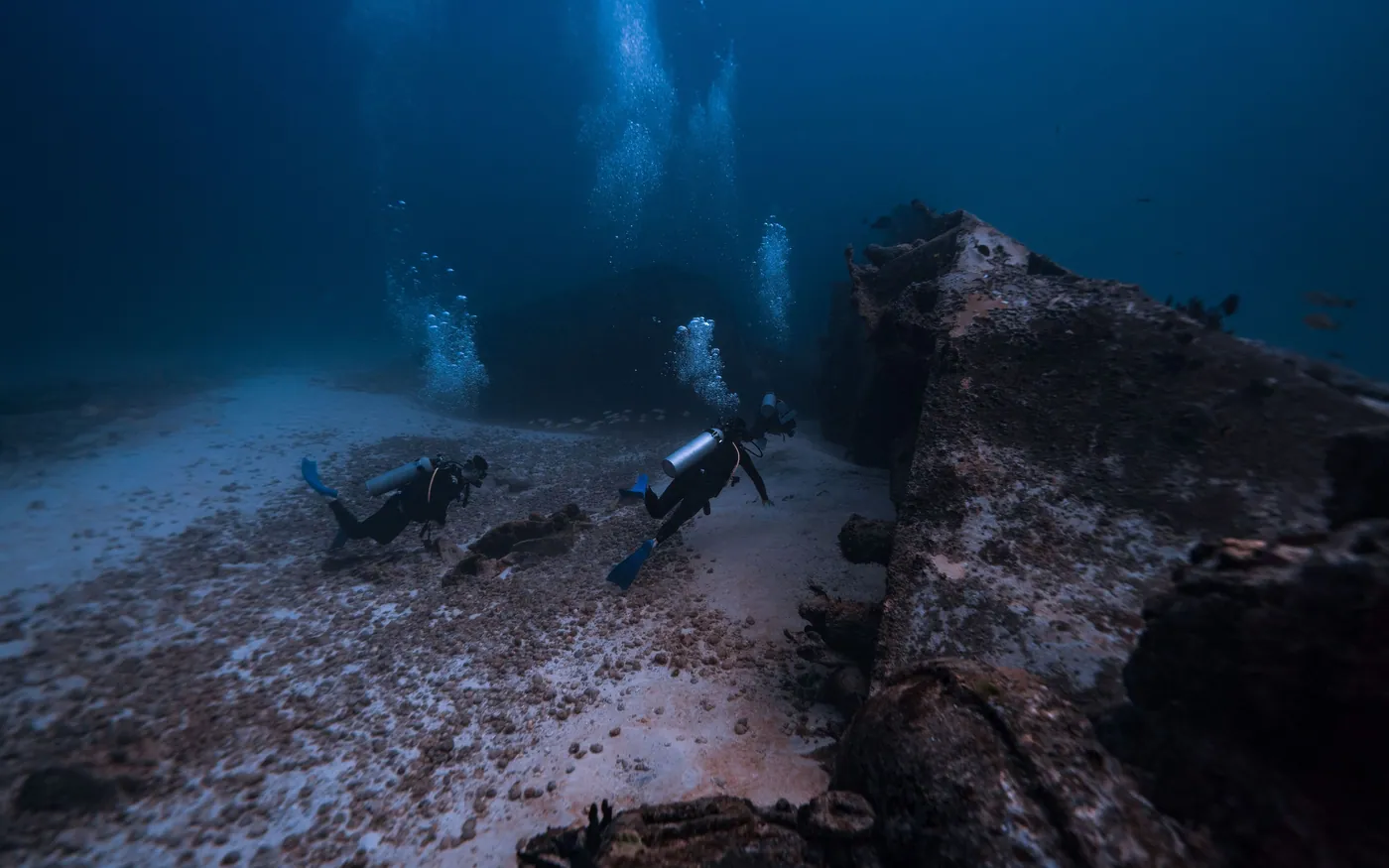
Most local shore diving is nowhere near the depths where this matters. The boat dives are a different conversation.
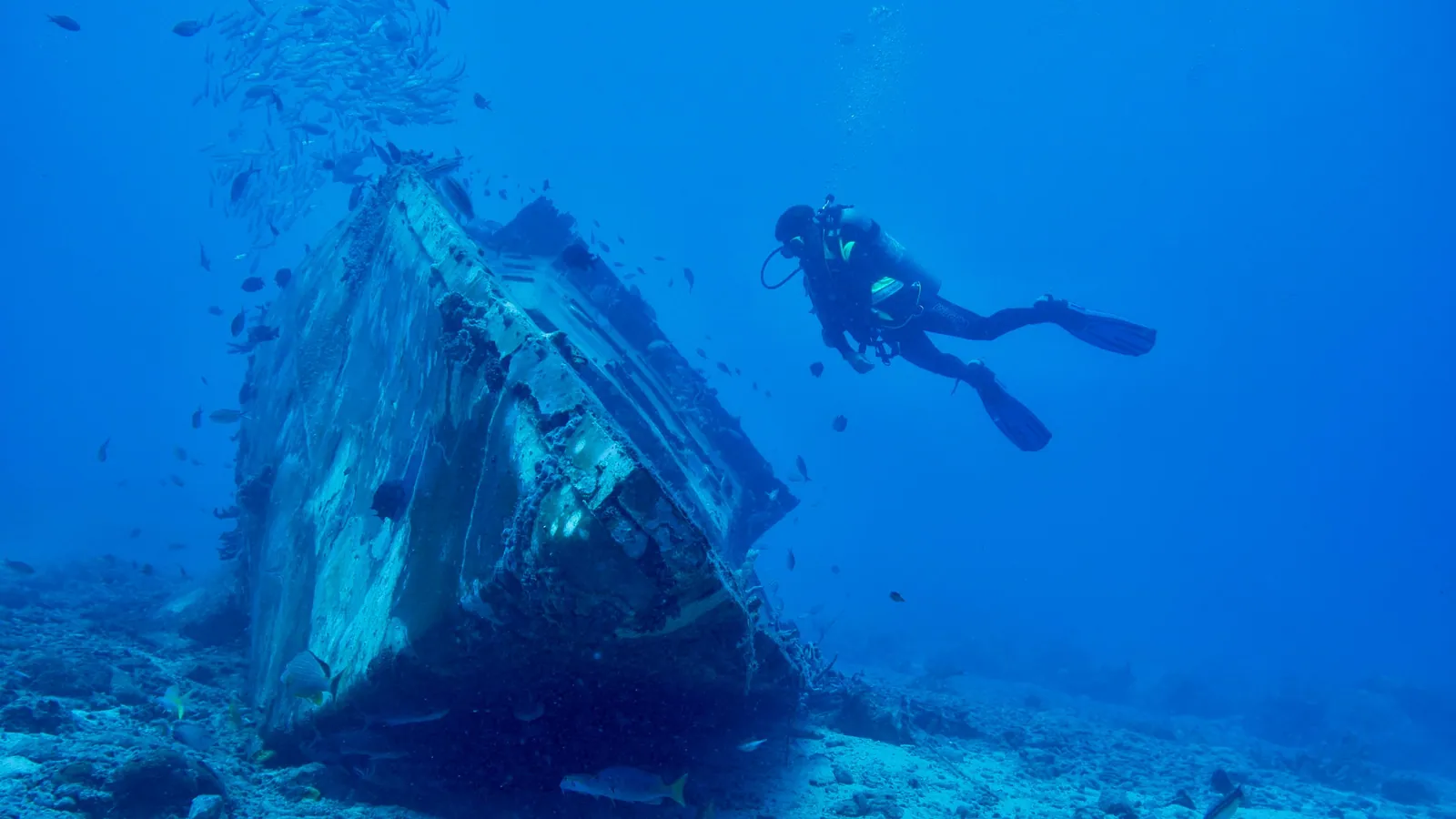
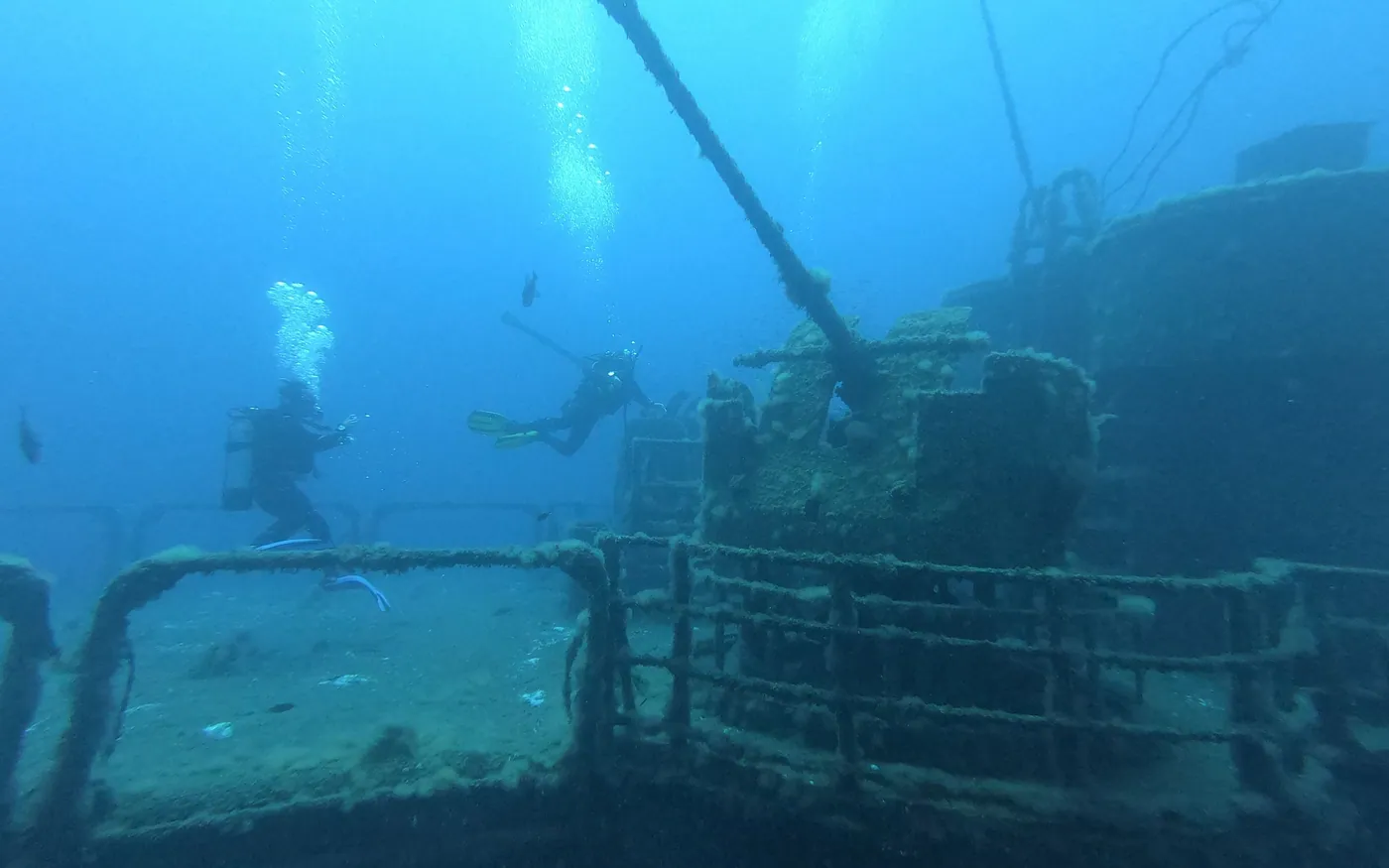
The Chester Poling is the obvious example, and it is the dive where local divers most often first meet narcosis — deep enough for it, cold enough to make it worse, and interesting enough that a narced diver has plenty to fixate on. It is not a reason to avoid the site. It is a reason to arrive rested, dive it with somebody who knows it, and go up ten feet the moment anything feels slow.
Frequently asked questions
At what depth does narcosis start?
There is no clean threshold. It is often described as significant from around 100 feet on air, but measurable effects have been recorded much shallower — one Navy test found them at 33 feet. It varies between people and between days for the same person.
What is the martini rule?
A rough analogy that each 50 feet of depth feels like one martini. It is useful for conveying the idea and useless as a measurement, because nobody knows how many martinis they have had either.
What do I do if I feel narced?
Go shallower. That is the whole remedy, it works within a few minutes, and ten or twenty feet is often enough. You do not have to end the dive, though ending it is never the wrong call.
Does narcosis cause any lasting harm?
The narcosis itself clears as you ascend and leaves nothing behind. The harm comes from what an impaired diver does while affected — missing a gas check, losing a buddy, or going deeper because it seemed like a good idea.
Does nitrox help?
It is not the reason to dive nitrox, and the claim is more contested than it is usually presented. What nitrox actually does is covered in nitrox vs air.
Learn depth under supervision
The deep dive on the Advanced course exists so that your first experience of depth happens with an instructor watching. Ask us how it runs.