
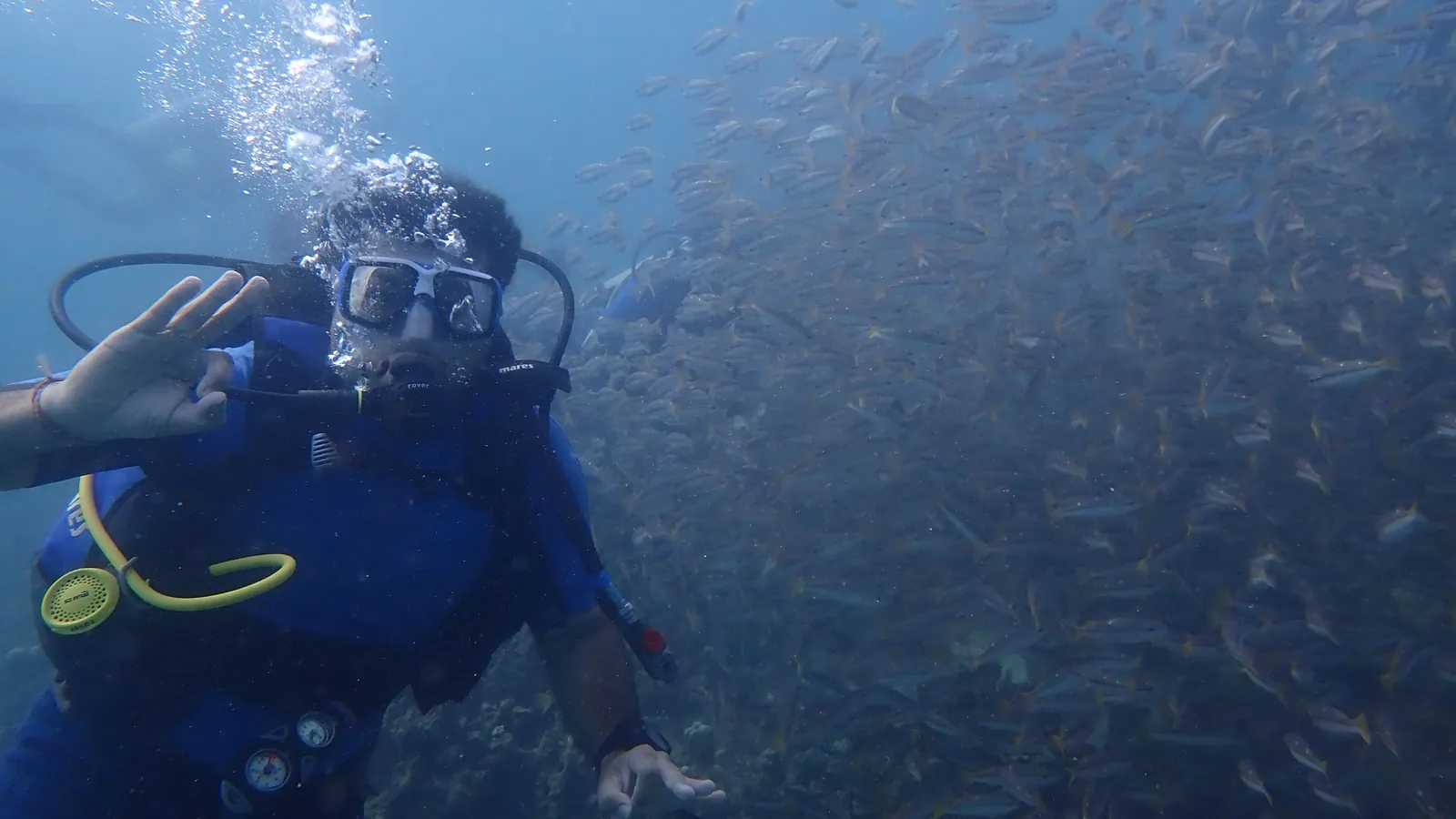
The wall charts show sixty signals. Divers use about ten. Knowing which ten, and which of them mean something different from what they look like, is most of underwater communication.
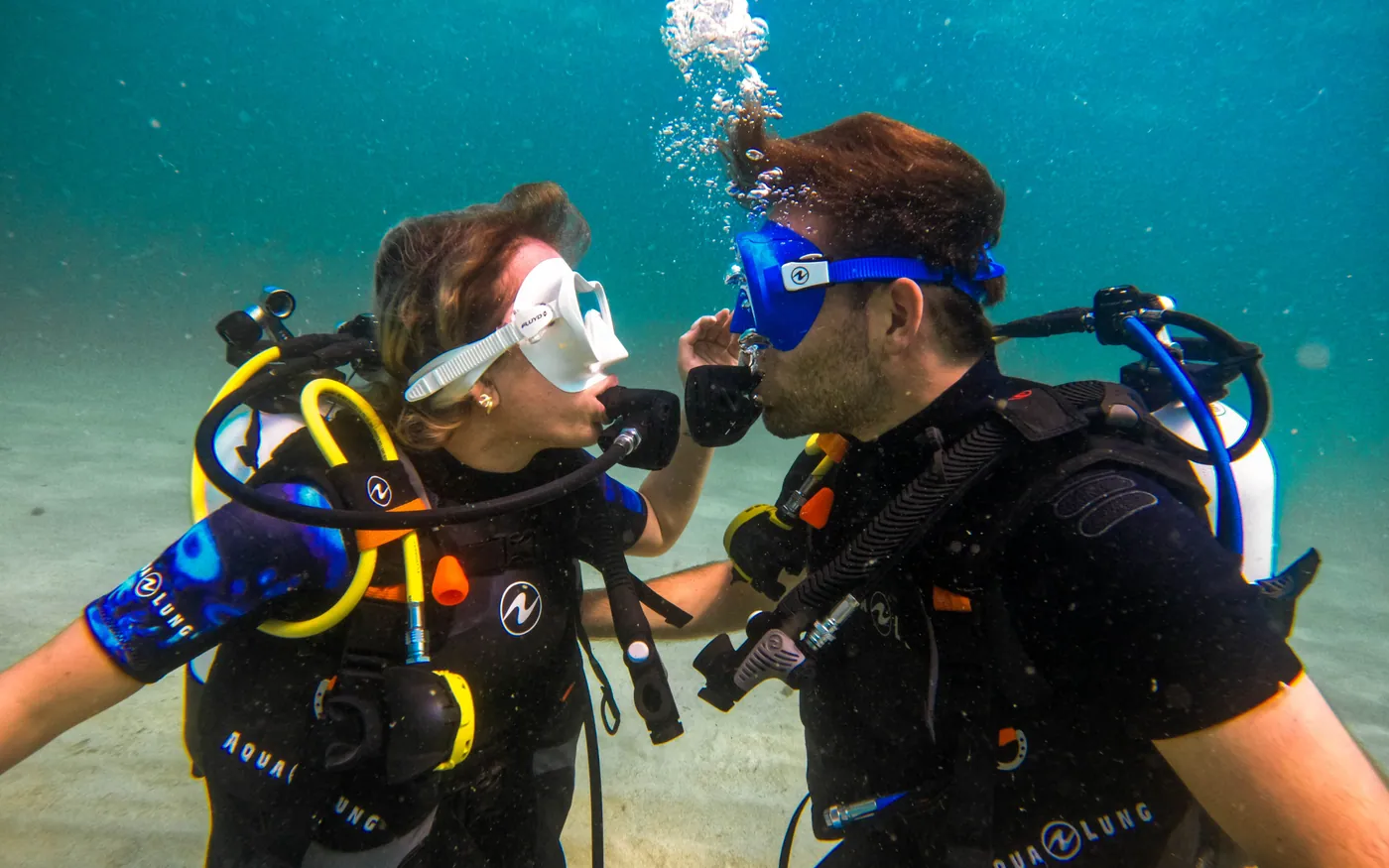
The ones that are genuinely universal
These work anywhere, with anybody, and they are the ones worth being fluent in rather than merely familiar with.
| Signal | Means |
|---|---|
| Thumb and forefinger in a circle | OK — both a question and an answer, and it always needs a reply |
| Thumb up | End the dive and ascend. Not “OK”, not “good” |
| Thumb down | Descend |
| Flat hand, palm down, held level | Stop or hold here |
| Flat hand rocking side to side | Something is not right |
| Closed fist against the chest | Low on air |
| Flat hand slashed across the throat | Out of air |
Thumbs up means the dive is over. It has never meant “great”.
OK is a question, not a statement

The most used signal is also the most misunderstood, because it works in both directions and it demands an answer.
When your buddy gives you OK they are asking. You reply with OK if you are, or with the rocking hand if you are not. What you do not do is nod, wave, or ignore it — a signal that goes unanswered has told your buddy something, and what it has told them is that they should come and look at you.
At the surface it changes shape. Hands are cold, gloves are thick, and a small finger circle is invisible at fifty yards, so the surface version is both arms in a circle overhead or one hand flat on the top of the head. Boat crews look for that specifically.
The two air signals, and why they differ
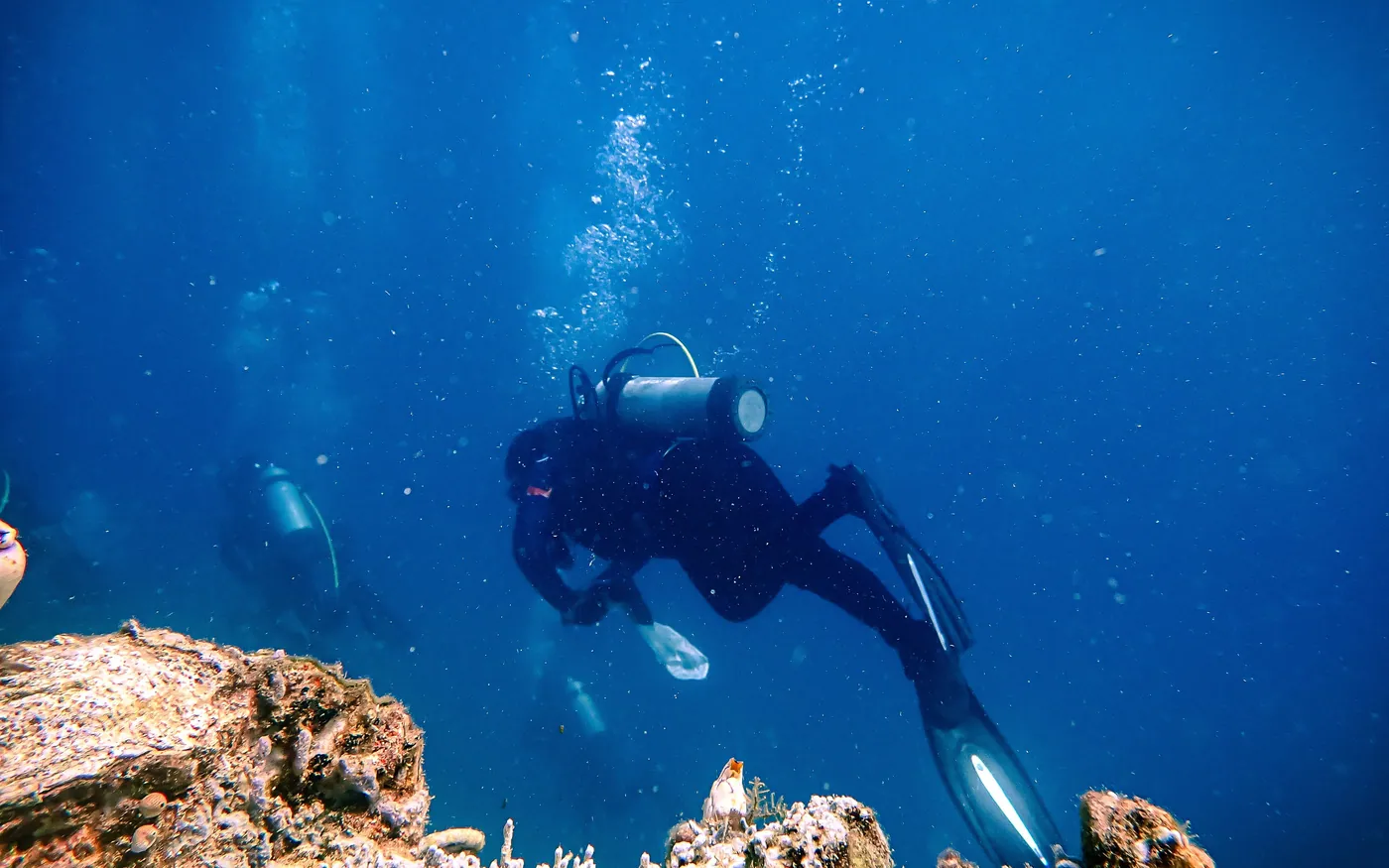
These are the two signals where being imprecise causes real harm, and they are kept visually distinct on purpose.
Low on air — a fist to the chest — is a planning signal. It means we should start heading back, and it is given early rather than at the last moment. Give it at the pressure you agreed on the surface, not at the pressure where you begin to worry.
Out of air — the hand across the throat — is an emergency, and it is followed immediately by pointing at your buddy’s alternate. There is no version of this that is a conversation. If you find yourself giving the first signal late and often, the underlying fix is in how to use less air.
The ones you have to agree beforehand
A surprising number of signals divers assume are standard are not, and the ones that vary are the ones that carry the most detail.
- Pressure numbers. How you sign a two-digit reading differs between regions and agencies. Ask before the dive.
- Direction. Pointing works, but “which way is the exit” is easily confused with “look at that”.
- Time and depth. Usually easier shown on the computer than signed.
- Marine life. Almost entirely local invention, and half the fun of it.
- The turn signal. Agree explicitly whether it means turn around or turn the dive.
This is exactly the conversation set out in being a dive buddy worth having, and it takes about a minute on the surface.
Getting attention in the first place
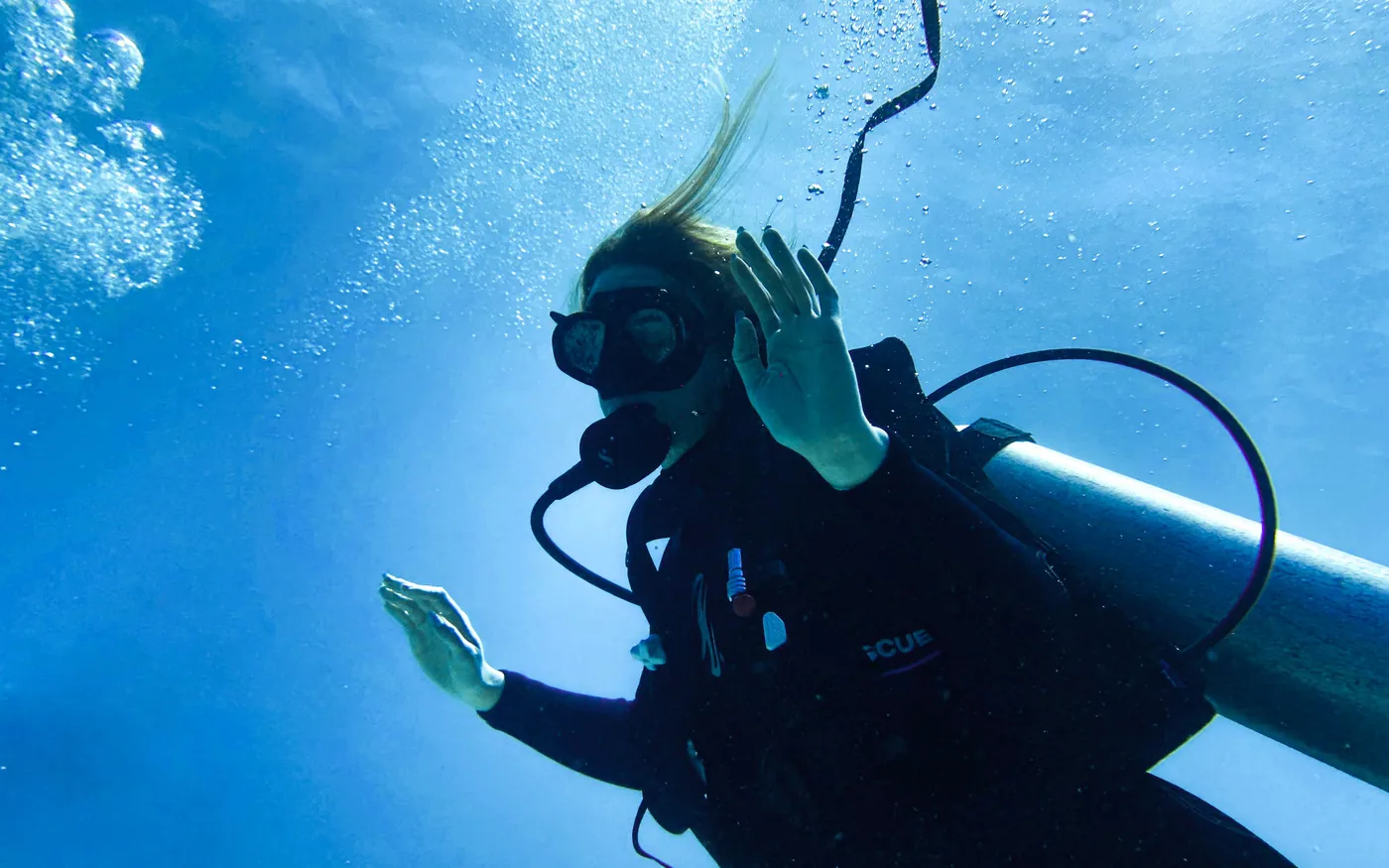
A signal only works if somebody is looking at you, and most of the time they are not.
At close range, a light beam moved across their field of view works well — across, not into their eyes. Further off, a tank bang or a rattle carries, though sound underwater gives almost no directional information, so expect them to look around rather than at you. In poor visibility the honest answer is that you were too far apart, which is why low visibility diving is mostly about distance rather than technique.
A light is worth carrying for this even on daylight dives — the case is made in choosing a dive light.
When signals are not enough
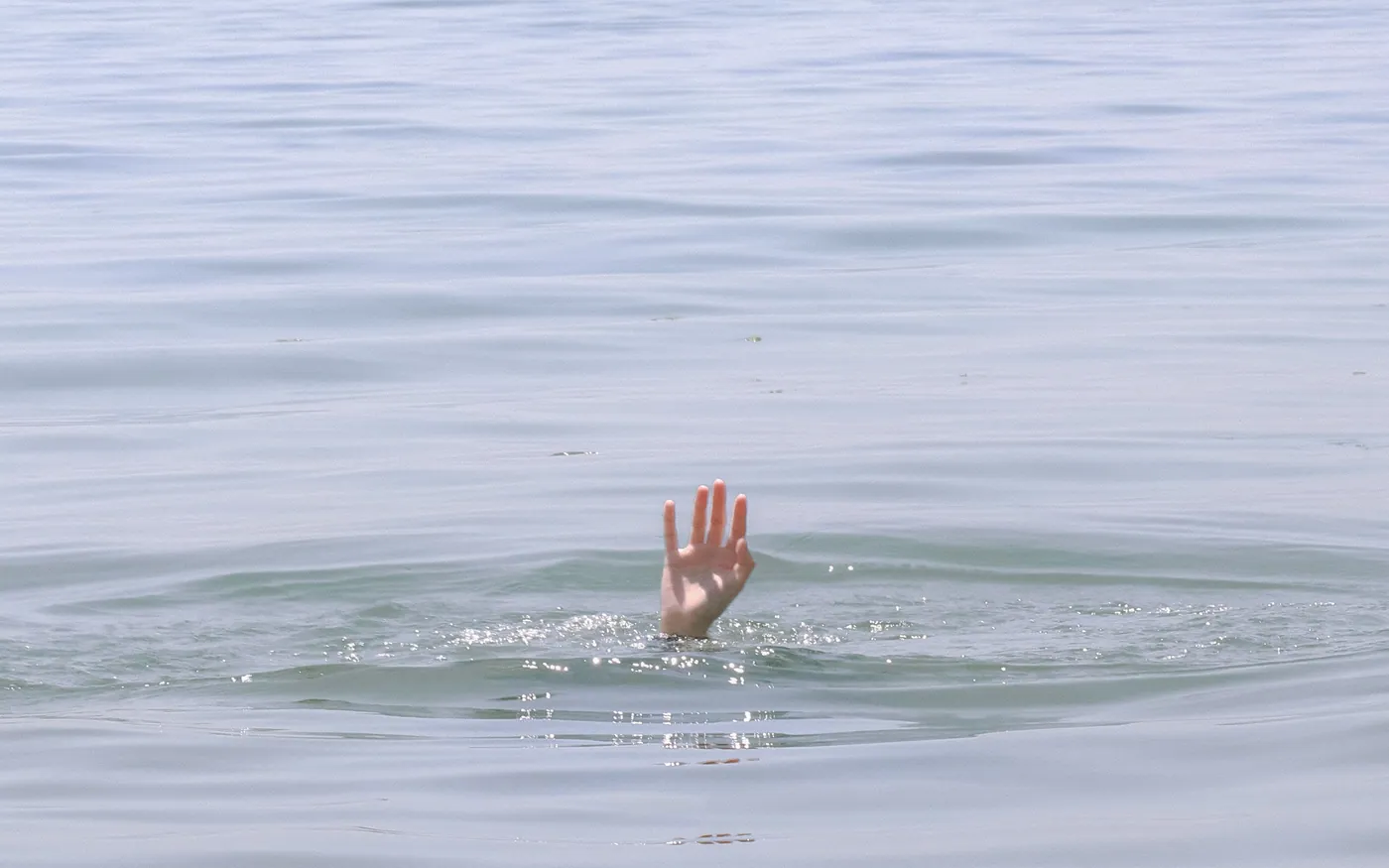
Hand signals handle the essentials and almost nothing else. Anything nuanced needs writing down.
A wrist slate or a wet notes book costs very little and settles the questions that gestures turn into charades: which direction the boat is, whether we are doing another lap, what that thing on the rock was. Divers who carry one use it far more than they expect to.
And the rule that sits above every signal on the list: if either diver signals to end the dive, the dive ends. There is no negotiation underwater, no asking for a reason, and no discussion until you are both on the surface. PADI keeps an illustrated reference for the standard set, which is worth a look if you learned them years ago.
Signalling with a torch, and with your body
After dark, and in green water where a hand is a grey shape at ten feet, the light becomes the hand.
The beam does the talking: a slow circle traced on the bottom or on a rock face is OK, and a vigorous side to side sweep is attention or a problem. Both are given on the bottom or on the wall rather than into anyone else. It is a small vocabulary, it is standard enough to rely on, and it is covered in what to expect on a night dive.
There is also a great deal of unofficial signalling that nobody teaches and every diver reads. A buddy who has gone still and vertical is working on something. A buddy who keeps checking their gauge is thinking about gas. A buddy whose breathing you can hear from six feet away is not relaxed. None of that is on a chart, and all of it arrives before the signal does.
Learning them so they are automatic
Knowing a signal and producing it without thinking are different skills, and only the second one is useful.
Signals are taught in the Open Water course and then, for most divers, never practiced again. If you have been out of the water a while, they are among the first things to go — one of the reasons a refresher is worth the morning. Run through the core seven with your buddy on the surface before a dive and you will find out quickly which ones you actually have.
Frequently asked questions
Why is thumbs up not OK?
Because it means end the dive and ascend. It is the single most important thing a new diver learns to unlearn, and giving it casually will start an ascent you did not intend. OK is the thumb and forefinger circle.
What is the signal for low on air?
A closed fist against the chest. Out of air is a flat hand slashed across the throat. They are deliberately different because they mean very different things — one starts a plan, the other starts a rescue.
How do I signal my pressure?
Most divers sign the number, but the convention varies between regions and agencies. Agree it on the surface with an unfamiliar buddy rather than assuming, which is part of the pre-dive conversation.
What if my buddy does not respond?
Repeat once, then move into their field of view and get their attention with a light or a tank bang. If there is still no response, treat it as a possible problem rather than rudeness and close the distance.
Do I need a slate?
For anything beyond the standard signals, yes. A wrist slate or a small wet notes book costs very little and settles the conversations that hand signals cannot — which direction, which wreck, what that fish was.
Learn them properly
Signals are taught from the first pool session of the Open Water course, and revisited on every course after it. Ask us what fits.