

Most advice about air consumption starts with breathing. It should start with weighting. A diver who is overweighted and swimming at an angle is working against the water on every kick, and no breathing technique fixes that.

Why you are using it
Gas consumption is mostly about effort. Everything that makes you work harder underwater makes you breathe more, and the causes are more mechanical than people expect.
Depth is the one you cannot argue with: at 33 feet you use gas twice as fast as at the surface, and at 99 feet four times. That is physics rather than technique. Everything else on the list is yours to change.
| Cause | What to do about it |
|---|---|
| Too much lead | A proper weight check — the single biggest lever |
| Poor trim | Move weight so you lie horizontal, not head-up |
| Drag from loose gear | Clip and route everything close to your body |
| Inefficient kicking | Short strokes, legs close, fins in your slipstream |
| Shallow fast breathing | Slow, deep, complete exhalation |
| Fitness | Slower to change, but it decides how much exertion costs you |
| Depth | Nothing — plan around it |
Start with the lead
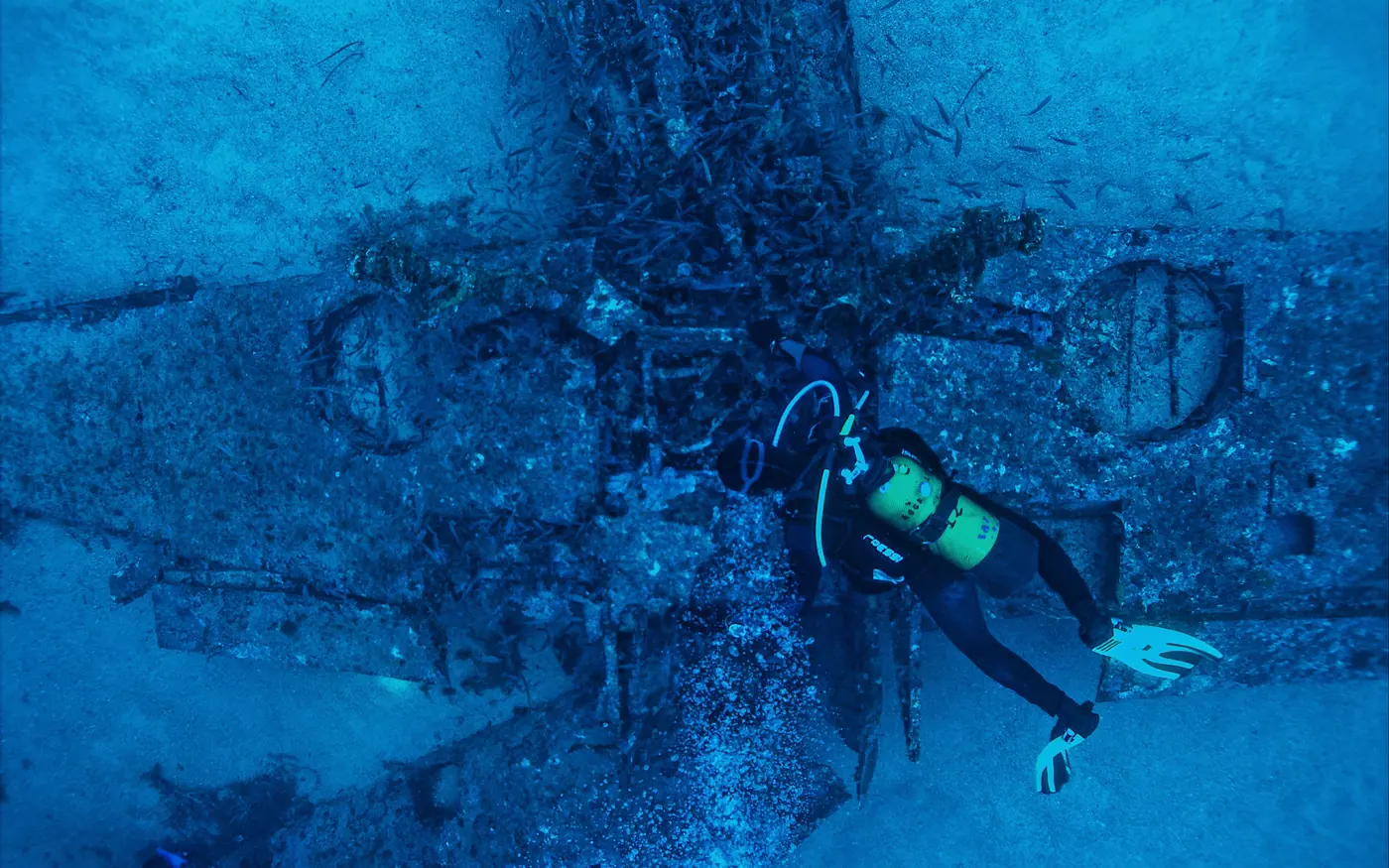
This is first on the list because it is the change that produces the largest improvement for the least effort, and because almost every recreational diver is carrying more lead than they need.
Extra weight has to be balanced with extra air in your BC, and that air expands and compresses as you change depth. You spend the dive adjusting a volume that would not exist otherwise, and dragging the lead itself costs effort on top.
The fix is a weight check done properly, which takes ten minutes and is set out in getting your weighting right. Divers who do one usually drop several pounds and notice the difference on the next dive.
Fix the lead first. It is the only item on the list that also improves everything else.
Then how you lie in the water

Trim is where the weight sits rather than how much of it there is, and it decides how much water you are pushing.
A diver in horizontal trim presents a narrow profile and drives themselves forward. A diver angled head-up presents their whole front to the water and sends half of every kick downward — which also stirs the bottom and ruins the visibility, as covered in diving in low visibility.
Fixing it usually means moving weight rather than removing it: trim pockets on the cylinder band, or shifting lead higher. It is worth experimenting before concluding you have the wrong amount.
Get rid of the drag

Everything dangling from your kit is a small anchor, and the total adds up more than any individual item suggests.
- Clip the octopus and gauges rather than letting them trail.
- Route hoses close to your body, not looping out into the water.
- Take off what you are not using. Most divers carry accessories they have never once needed.
- Fold your arms or clasp your hands while finning, rather than sculling with them.
- Kick with short strokes, legs close together, keeping your fins inside the slipstream your body is already making.
Now the breathing
Breathing technique is genuinely effective and it is fourth on this list for a reason: it works best once the mechanical problems are solved.
The goal is slow and deep rather than slow and shallow. Full inhalations reach more of the alveoli where gas exchange actually happens, and complete exhalations clear the carbon dioxide that drives the urge to breathe again. Divers who breathe shallowly end up breathing faster, which uses more gas rather than less.
Diaphragmatic breathing — breathing from the belly rather than the chest — produces the biggest improvement in the shortest time. Scuba Diving Magazine has a longer list of techniques if you want to work through them one at a time.
One rule sits above all of this: never hold your breath. A pause with your airway open is fine; holding a closed breath while your depth changes is the one thing in diving with no exceptions.
Working out your own number
If you want to measure rather than guess, the figure divers use is surface air consumption — how much gas you would use per minute at the surface, which lets you predict any dive at any depth.
The arithmetic is not complicated and it is more than this article can usefully teach, but the shape of it is: note your pressure at the start and end of a section of dive held at roughly constant depth, work out how much you used per minute, and correct that back to surface pressure. Do it on a few dives and you have a number that plans dives for you rather than a feeling that you are good or bad on air.
It is covered properly in continuing education, and it is one of the more genuinely useful things that comes out of the Advanced course, where deeper diving makes the planning matter.
Until then, the practical version is simply to log your start and end pressures and notice the trend. Consumption that is improving over a season tells you the changes are working.
The parts that take longer
Two things matter a great deal and neither improves this weekend.
The first is fitness. How far your breathing rate rises when you have to work is largely down to aerobic conditioning, so a fitter diver pays less for the same effort. The second is experience: a relaxed diver uses less gas than a tense one, and relaxation comes from having done it before rather than from being told to relax.
That is worth saying plainly, because “just relax” is unhelpful advice to somebody on their tenth dive. The honest answer is that it improves with dives logged, which is an argument for cheap local diving over occasional expensive trips — see shore diving sites in New England.
And check the regulator
One equipment note worth ending on, because it is invisible and easily overlooked.
The work of breathing varies considerably between regulators, and a regulator overdue for service breathes harder than it did when it was new. If your consumption has quietly got worse rather than better, the regulator is worth ruling out — servicing runs on a calendar, not on a dive count.
Frequently asked questions
Why does my buddy always have more air left?
Usually some combination of size, fitness, experience and weighting rather than anything you are doing wrong. Larger people move more water and use more gas, and it is not a competition — but most divers can improve considerably with better trim.
Does breathing slowly really help?
Yes, and deep matters more than slow. Full breaths with complete exhalation move more gas through the parts of your lungs that actually exchange it, which delays the urge for the next breath. Diaphragmatic breathing gives the fastest improvement of anything on this list.
Should I hold my breath to save air?
No. Never. Holding your breath while your depth is changing risks a lung overexpansion injury, and it is the one rule in diving with no exceptions. A brief pause after inhaling with your airway open is a different thing entirely.
Will a better regulator help?
A well-serviced one will. The work of breathing varies considerably between regulators, and a regulator overdue for service breathes harder than it should — see how often to service one.
How long before I see an improvement?
Weighting and trim changes show up on the next dive. Breathing technique takes a few dives. The largest factor is simply diving more, and that one is measured in seasons.
Get a weight check done
It takes ten minutes with an instructor and it is the change that improves every dive afterwards. Ask at the shop in Hampton Falls.