
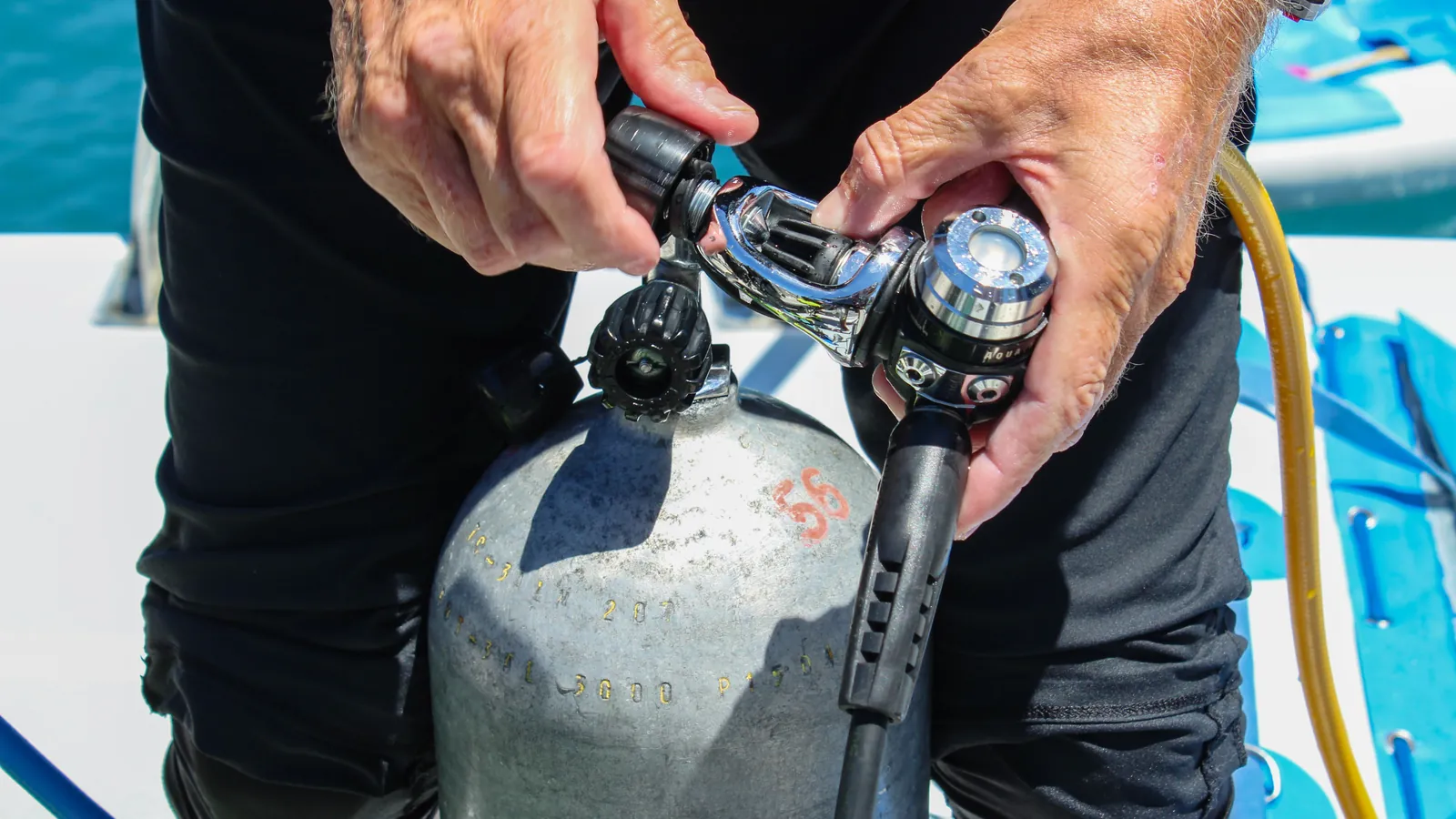
Once a year, or every 100 dives, whichever comes first. That is the industry answer, and for most divers it is the right one — but the interval your manufacturer actually requires may differ.
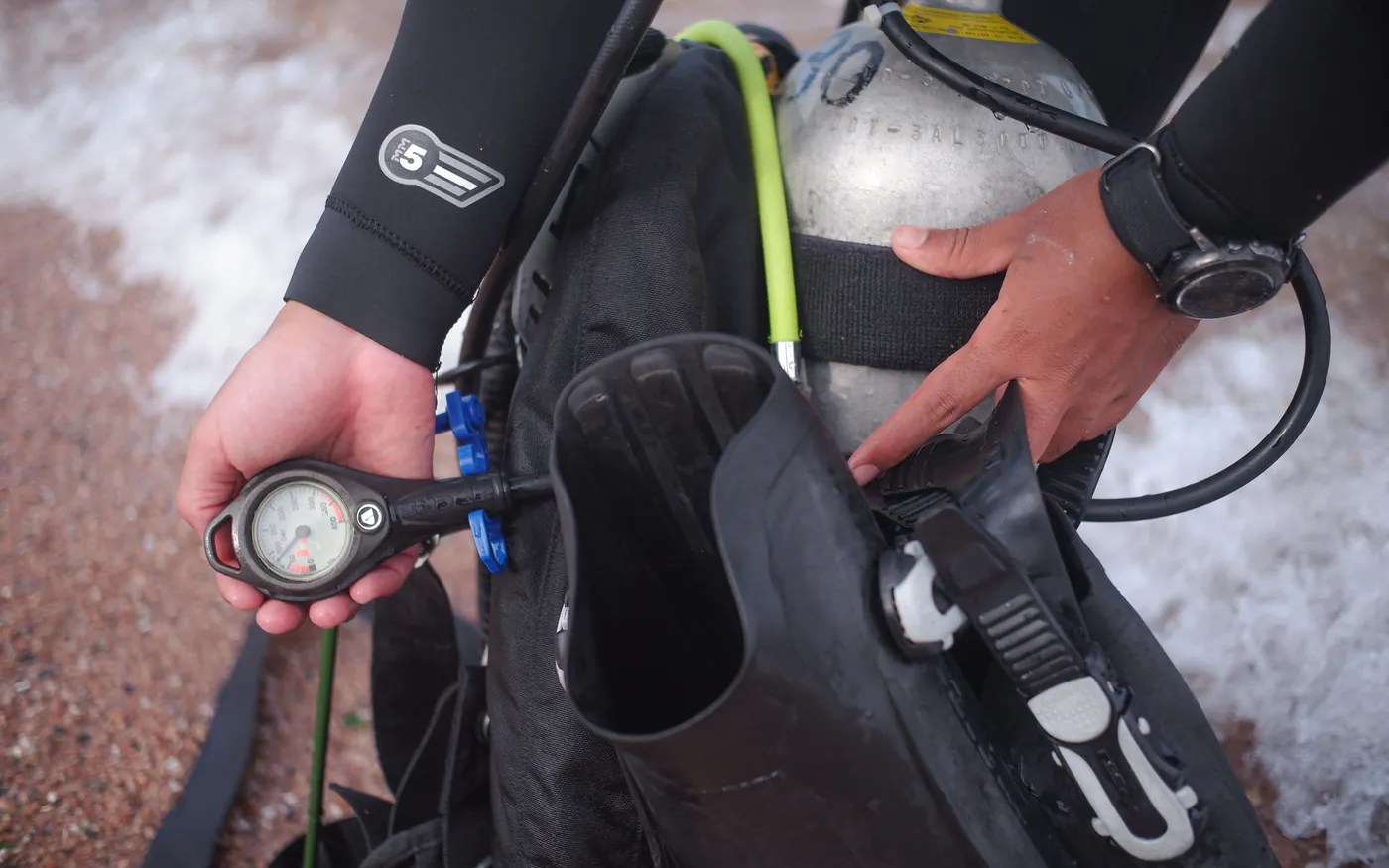
It depends on how much you dive
Dive count matters more than the calendar for anyone in the water regularly. The rough guide most shops work to:
| How much you dive | Interval | Why |
|---|---|---|
| Under 25 dives a year | Annually | Time degrades seals even when the gear is idle |
| 25–100 dives a year | Annually | The standard case; do not stretch it to two years |
| Over 100 dives a year | Twice a year | Wear, not time, is now the limiting factor |
| Barely diving at all | Before each season | An unused regulator still ages |
The last row surprises people. A regulator that sat in a cupboard for two years is not a well-rested regulator — it is one with hardened O-rings.
What your manufacturer requires
Brands set their own intervals, and warranty cover usually depends on meeting them. Always check your own manual, but broadly:
| Brand | Typical interval |
|---|---|
| Most brands, including Sherwood and Aqua Lung | Annually |
| ScubaPro | Every 100 dives or 2 years, whichever comes first |
| Mares | Every 200 dives or 2 years; some models annually |
| Atomic | Every 300 dives or 2 years, whichever comes first |
Two things follow from this. Miss the interval and the warranty typically lapses. And on brands offering free parts for life, that benefit usually ends permanently the first time a service is missed.
The problem with a diving season that stops

Almost every guide to this question assumes year-round diving. In New England the season effectively closes: your regulator is rinsed in October and not touched again until spring.
That layup is when the clock does its quiet damage. Lubricants migrate, seals take a set, and any salt left inside keeps working on metal all winter.
The best month to service a regulator is the one when you are not diving.
It also solves a practical problem. Every shop is busiest in spring, when the whole region remembers its gear at once. A regulator handed in over the winter comes back long before the water is warm enough to want it.
Signs it is already overdue

A regulator rarely fails outright. It degrades, and the symptoms are easy to normalize:
- Breathing feels like work. Increased effort usually means worn seats or tired springs.
- A second stage free-flows. Continuous flow when it should be shut means the valve seat is not sealing.
- Wet breaths. Water getting past a perished exhaust valve or diaphragm.
- Creep on the gauge. Intermediate pressure climbing when the regulator is pressurised and idle.
- Anything audible that was not there before. Hissing, whistling, chatter.
A free-flow underwater ends the dive. Any of these means the regulator goes to a technician before it goes back in the water.
What a service actually includes
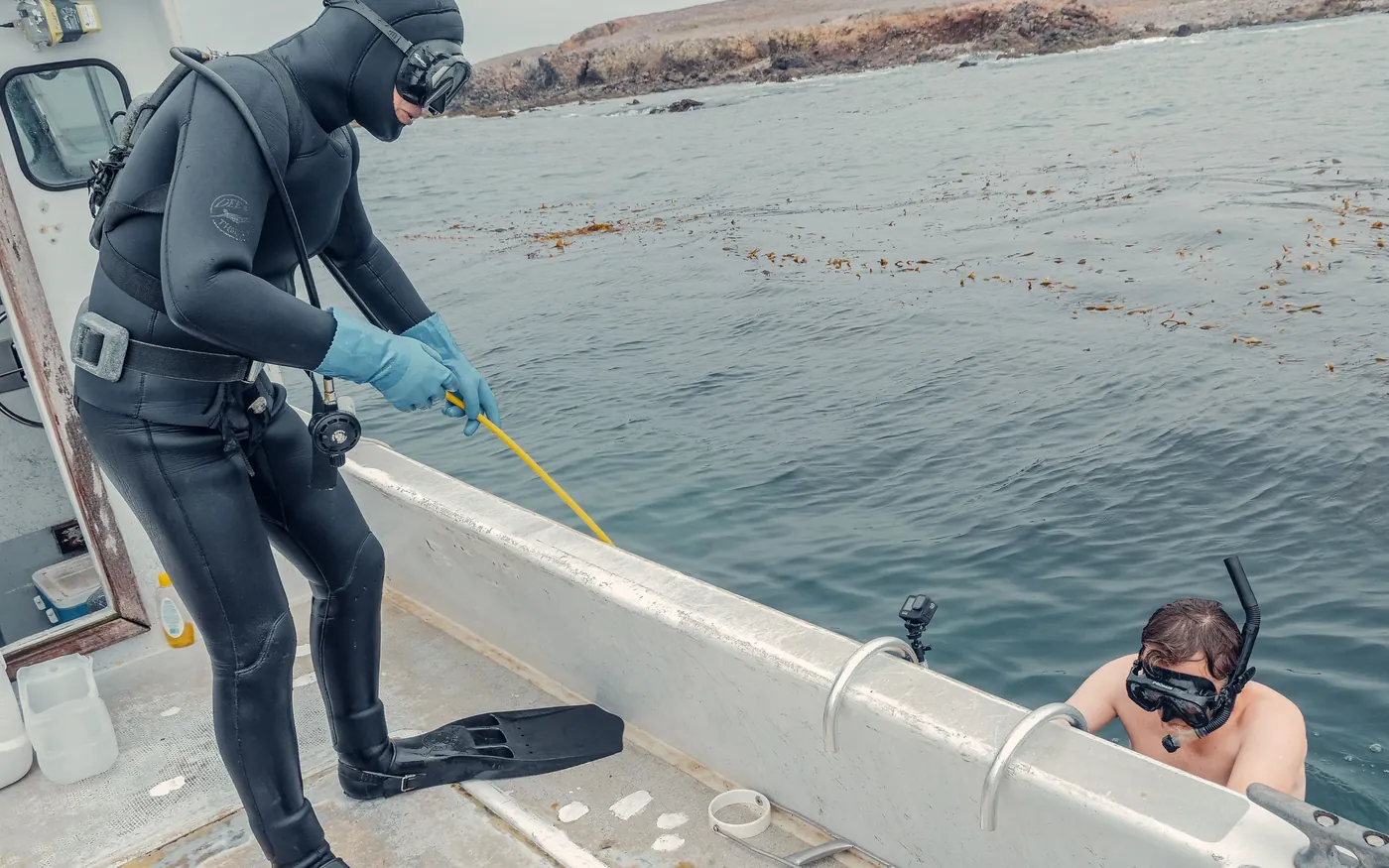
A proper overhaul is not a clean and a look. The regulator is stripped completely, every wear part replaced from the manufacturer’s kit, then reassembled, lubricated and tuned back to specification — intermediate pressure, cracking effort and flow all set on a bench, not by feel.
That tuning is why the whole set goes in together. First and second stages are balanced against each other, so servicing one without the other leaves the pair mismatched. If you dive an inflator-regulator, that counts as a second stage too.
It matters more the deeper you go, which is worth remembering before an Advanced Open Water course.
What you can do between services

Nothing you do at home replaces an overhaul, but how you treat a regulator between services decides how much of that interval it actually survives. Salt is the enemy, and it does its work slowly.
- Rinse with the dust cap on and dry. Water past the first stage inlet is exactly what you are trying to avoid.
- Soak, do not splash. Several minutes in fresh water dissolves salt out of the crevices; thirty seconds under a tap does not.
- Rinse it pressurised if you can. Still on the cylinder, the second stage stays sealed while you work.
- Do not press the purge while it is wet and unpressurised. That pulls water straight into the hose.
- Dry out of direct sun, then store loosely coiled. Tight coils stress hoses at the fittings, and UV ages rubber faster than diving does.
- Never leave it in a hot car. A summer afternoon in a trunk is harder on seals than a season of diving.
This matters more after a season of shore diving on the New England coast or a run of boat charters, where the gear takes salt every outing. It matters most of all after a trip — rinse before the regulator goes into a bag for the winter, not after.
What it costs
Most guides quote $75 to $150 plus parts and leave it there. Here are the actual published service prices at Divers Den, which services ScubaPro, Sherwood and Genesis:
| Service | Price |
|---|---|
| Regulator kit — first stage, second stage, octopus | From $75 + parts |
| BCD — bladder and power inflator | From $25 + parts |
| BCD with integrated regulator (Air 2 type) | From $75 + parts |
| Air 2 alone | From $50 + parts |
| Computer battery change | $29 |
For independent guidance on maintenance and why it matters, Divers Alert Network publishes its own gear maintenance advice.
Frequently asked questions
Does a regulator need servicing if I have not used it?
Yes. Seals dry out, lubricants break down and O-rings take a set whether or not the regulator has been breathed through. Time matters as much as dive count, which is why manufacturers give an interval in years as well as dives.
What happens if I skip a service?
Usually nothing dramatic at first — then breathing effort creeps up, or a second stage starts to free-flow. Skipping service also voids most manufacturer warranties, and on some brands it ends free parts-for-life coverage permanently.
How long does a regulator service take?
It depends on parts availability and the time of year. Spring is the busy season everywhere, so booking a service over the winter usually means a far shorter wait.
Should I service the BCD at the same time?
It is worth it. The bladder and the power inflator wear on a similar schedule, and having both done together means one drop-off rather than two. See what a BCD service covers for what is included.
Can I service a regulator myself?
Manufacturers supply service kits only to authorized technicians, and a regulator is life support equipment. Cleaning, rinsing and visual checks are yours to do; the internal overhaul is not.
Due a service this winter?
Divers Den has factory certified technicians and holds most parts in stock. Preregister your drop-off to speed things up, or call the shop and we will tell you what your setup needs.