
One of these is federal law and one is not, which is exactly why divers get caught out. The hydrostatic test is required every five years. The annual visual inspection is not required by law — but no shop will fill your cylinder without one.
The two tests, and what each one is for
They are not versions of the same thing. One looks inside the cylinder; the other tests whether the metal itself is still sound.
A visual inspection means the valve comes out and someone looks into the cylinder with a light, checking for corrosion, pitting, moisture and damage to the threads. A hydrostatic test is destructive in intent: the cylinder is filled with water and pressurized well beyond its working pressure to measure how much it expands and whether it returns to its original size.
| Visual inspection (VIP) | Hydrostatic test | |
|---|---|---|
| What it checks | The inside surface and threads | Whether the metal still flexes and recovers |
| How often | Annually | Every five years |
| Required by | Shop policy and industry practice | Federal law |
| Cost here | $25 | $55 |
| Turnaround | Quick | Up to two weeks in season |
| If it fails | Cylinder cleaned or condemned | Cylinder condemned |
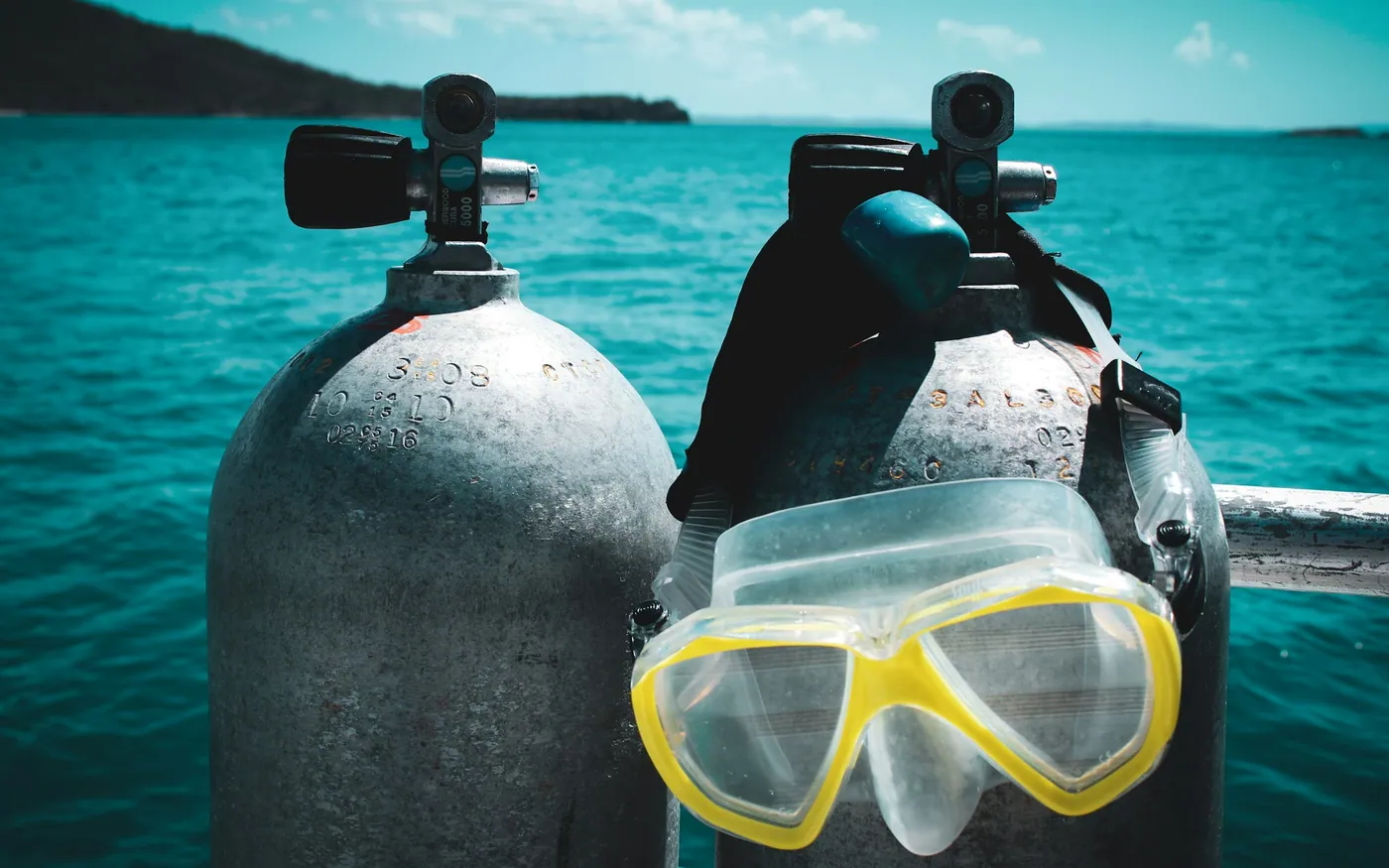
Both are recorded on the cylinder, which is how a fill station knows at a glance whether it can legally take your money.
Why the five-year rule is not negotiable
Scuba cylinders are pressure vessels, and in the United States they fall under Department of Transportation rules rather than any diving agency. That is an important distinction.
It means the five-year requirement is not something a shop can waive for a good customer, and not something that varies between shops. A cylinder past its test date cannot lawfully be filled, and the rule is set out in the federal regulations governing cylinder requalification.
Nobody is being difficult. A shop that fills an out-of-date cylinder is breaking federal law, not bending a house rule.
The annual visual is the one people skip
Because the visual inspection is not federally mandated for the owner, divers sometimes treat it as optional. In practice it is the check that catches almost everything.
Diving is hard on cylinders. Salt water, humid fills and years of handling all work on the inside of a tank you never see, and internal corrosion does not announce itself from the outside.
- Moisture inside the cylinder is the usual culprit, and it is invisible until the valve comes out.
- Thread damage at the neck is the failure that matters most and shows least.
- Pitting and corrosion caught early can often be cleaned; caught late it condemns the cylinder.
- A current visual is required for a fill at essentially every fill station, law or no law.
What it costs, and what happens next

Both services are priced per cylinder and neither is expensive relative to replacing a tank.
Timing is the part worth planning. Hydrostatic testing can take up to two weeks depending on how busy the season is, because cylinders go out to a certified facility rather than being done at the counter.
That is a long time to be out of the water in a short New England season, which is why we run a loaner tank program. Full details, along with fill pricing and air cards, are on our air fills and cylinder service page.
What you are actually paying for in a fill
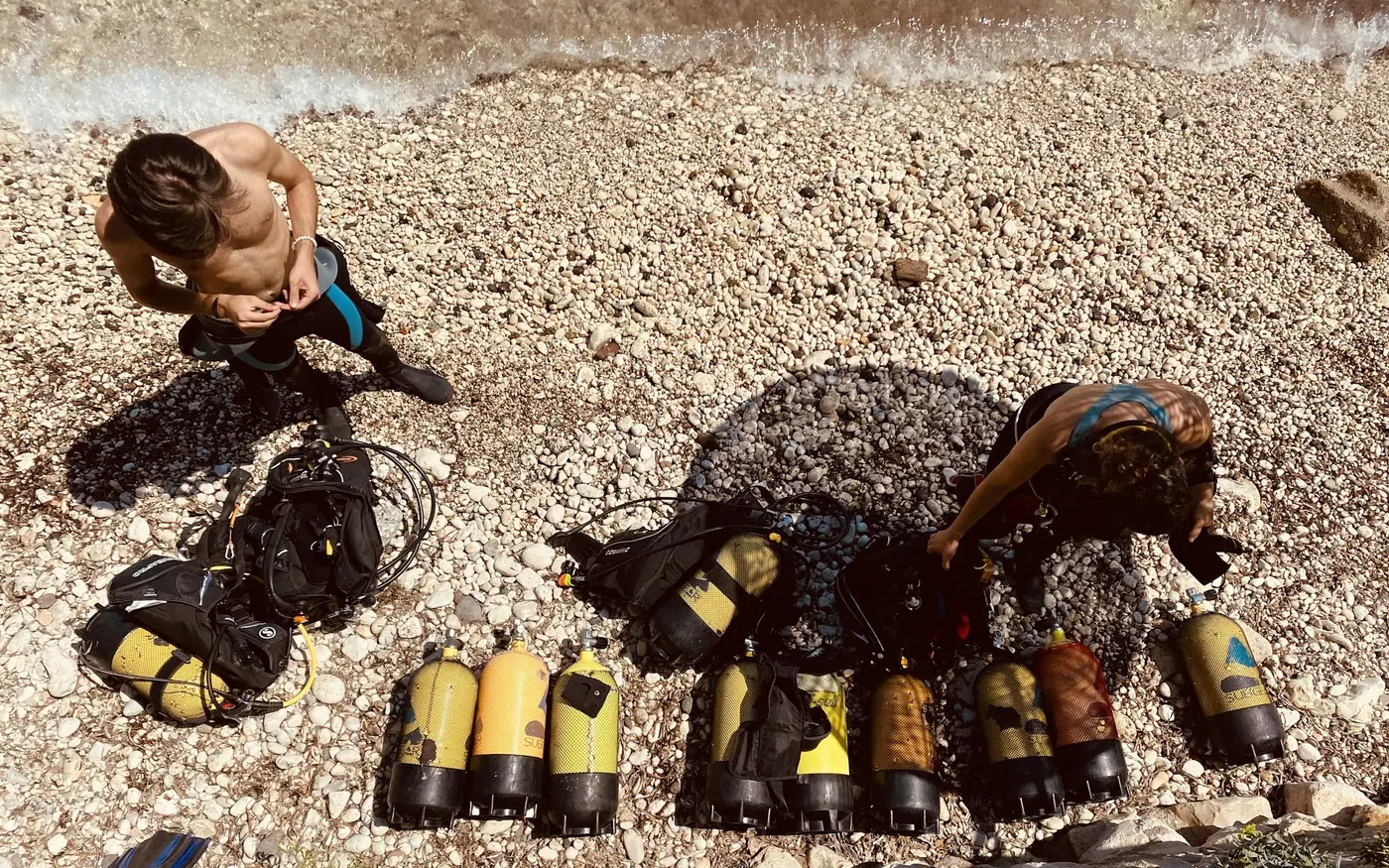
A tested cylinder is only half of it. What goes into the cylinder is the other half, and it is worth knowing whether your fill station can tell you where their air stands.
Ours is tested quarterly by an independent laboratory, and the filling station itself is a Mako BAM 06 running to 5,000 PSI off a four-bank cascade. We are happy to show anyone around it, which is not a sentence every shop can write.
If you dive enriched air rather than compressed air, the analysis and labeling routine is covered in our comparison of nitrox and air.
Buying a used cylinder
Second-hand cylinders come up constantly, and they can be a genuine bargain or an expensive paperweight. The difference is entirely in the stamps.
Before money changes hands, read the shoulder. You are looking for the manufacture date, the working pressure, and the most recent test date. A cylinder sold with an expired hydro is not worthless, but the test is part of the purchase price and should come off the asking price.
- Check the hydro date first. An expired one means $55 before you can dive it.
- Ask when the visual was done. No current visual means no fill.
- Look at the manufacture date. Older aluminum cylinders may need an extra check during inspection.
- Have it inspected before you commit if the price is meaningful. Internal corrosion does not show from outside.
Cylinders sit last on the list of gear worth owning for exactly this reason — they carry an ongoing cost that rented tanks do not. We work through that trade-off properly in our guide to renting versus buying scuba gear.
Getting the timing right
The practical advice is dull and it works: check the stamps in the off season, not the week before a trip.
A cylinder failing its visual in March is an inconvenience. The same cylinder failing on the Friday before a charter is a lost weekend. While you are checking dates, the same logic applies to how often your regulator needs servicing, and both jobs can be dropped off together at the service counter.
Frequently asked questions
Can I get a fill if my hydro is out of date?
No, and not anywhere in the United States. Filling a cylinder past its test date is a federal violation rather than a shop policy, so no fill station can make an exception for you. This is the reason most people discover the problem at the counter.
Where do I find the date on my cylinder?
It is stamped into the shoulder of the cylinder, near the valve, along with the manufacturer and the working pressure. The most recent test date is the one that matters. Bring it in if the stamps are worn or you are not sure what you are reading — that is a two-minute conversation.
What happens if my cylinder fails?
It is condemned and taken out of service, which is the outcome the test exists to produce. It is not common, and a cylinder that fails was already unsafe to fill. Steel cylinders that are looked after routinely last decades.
How long will I be without it?
Hydrostatic testing can take up to two weeks depending on the season, because cylinders go out to a certified test facility. Visual inspections are much quicker. Ask about a loaner tank if the timing falls badly — that is what the loaner program is for.
Do aluminum and steel cylinders get treated differently?
The intervals are the same, but some aluminum cylinders manufactured before the late 1980s used an alloy that calls for an additional check during inspection. If your cylinder is old enough for that to matter, ask us to look at the stamps.
Bring your cylinder in
Divers Den has been filling and testing cylinders in Hampton Falls since 1968. Bring yours in and we will read the stamps with you.