
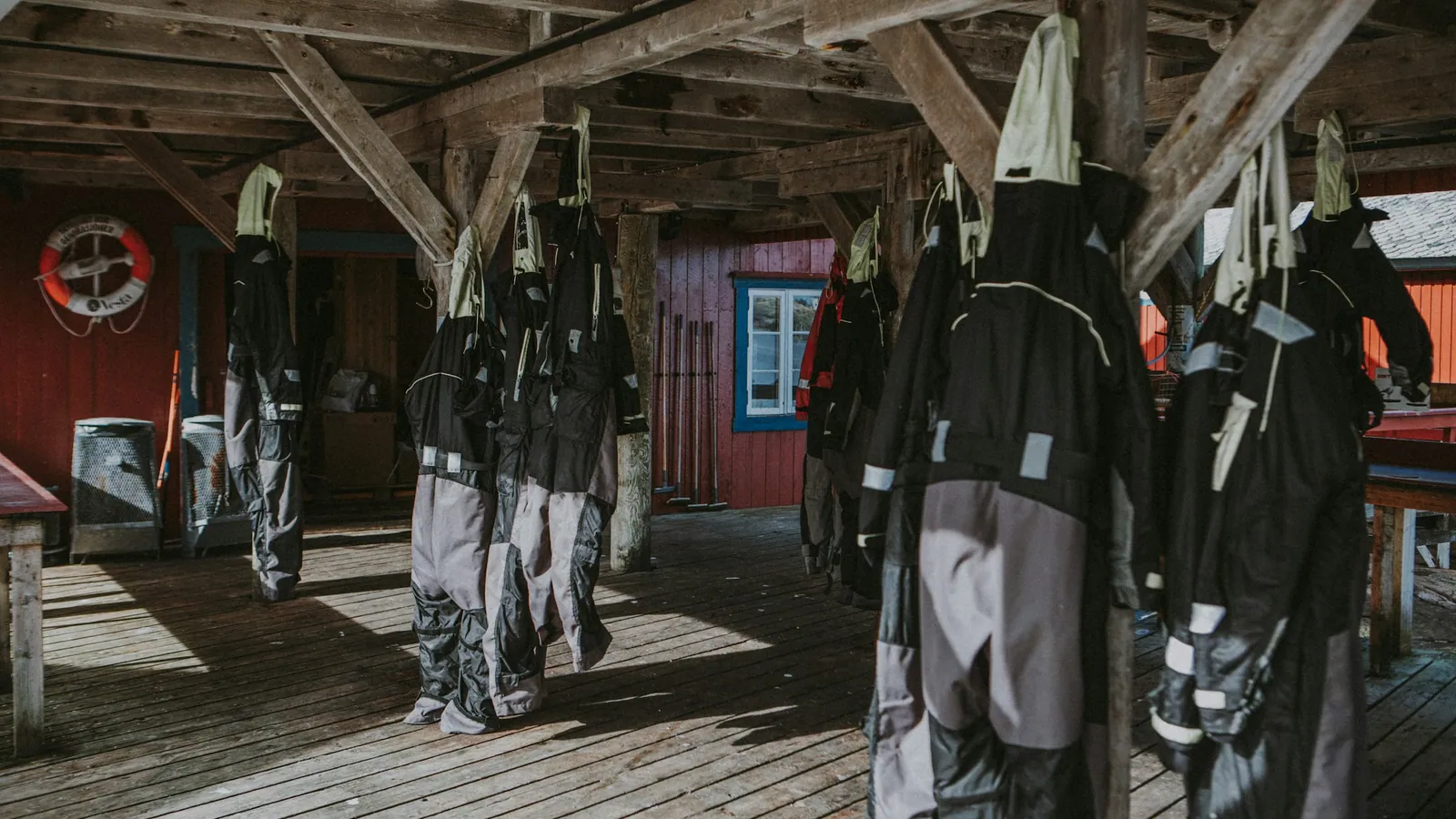
Most dive gear does not wear out. It gets ruined slowly, by salt left in places nobody rinses. The routine that prevents it takes about ten minutes, and almost everybody does half of it.
After every dive
Salt water is the problem, and it does its damage as it dries rather than while it is wet. Everything below follows from that.
Rinse in fresh water, and rinse properly: submerge the item and move it around so water reaches into the folds and cavities. A hose pointed at the outside of something is not the same job.
| Item | What to do | Commonly missed |
|---|---|---|
| BCD | Rinse outside, then flush the bladder | The inside — salt in the bladder degrades the air cell |
| Regulator | Dust cap dry and fitted, then rinse | Water into the second stage through the mouthpiece and exhaust |
| Suit, hood, gloves | Rinse inside and out | Turning the suit inside out at all |
| Mask | Rinse and dry, then case it | Leaving it loose in a bag with heavy gear |
| Fins and boots | Rinse and dry | Nothing, mostly — these are forgiving |
| Cylinder | Rinse the valve and boot | Standing it in salt water in the car |
To flush a BCD, add fresh water through the low pressure inflator while holding the vent button, slosh it around, then drain it and let it dry with the bladder partly inflated.
The regulator rule worth memorizing
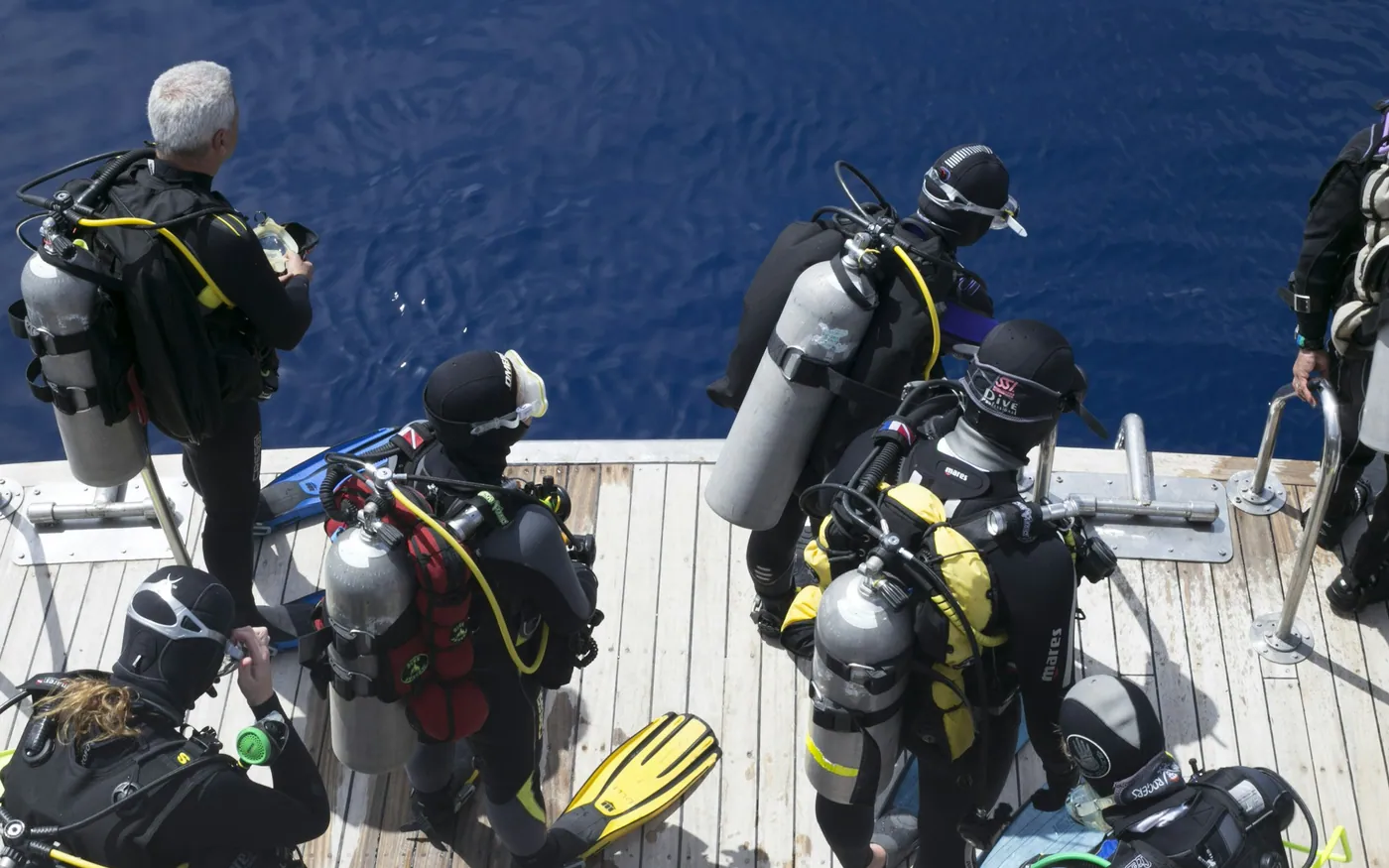
If you remember one thing from this page, make it this: the dust cap on the first stage must be dry and in place before the regulator goes anywhere near water.
Water that gets into the first stage inlet does not rinse out. It sits there, corrodes, and turns a routine service into a repair. Dry the cap on a towel first, seat it properly, and only then rinse.
A wet dust cap turns a rinse into the thing you were trying to prevent.
With the cap on, let water flow into the second stage through the mouthpiece and around the exhaust valve, and rinse the hoses, gauges and console. Do not press the purge button while rinsing: that opens the path you are trying to keep water out of.
Drying, which is where most damage happens
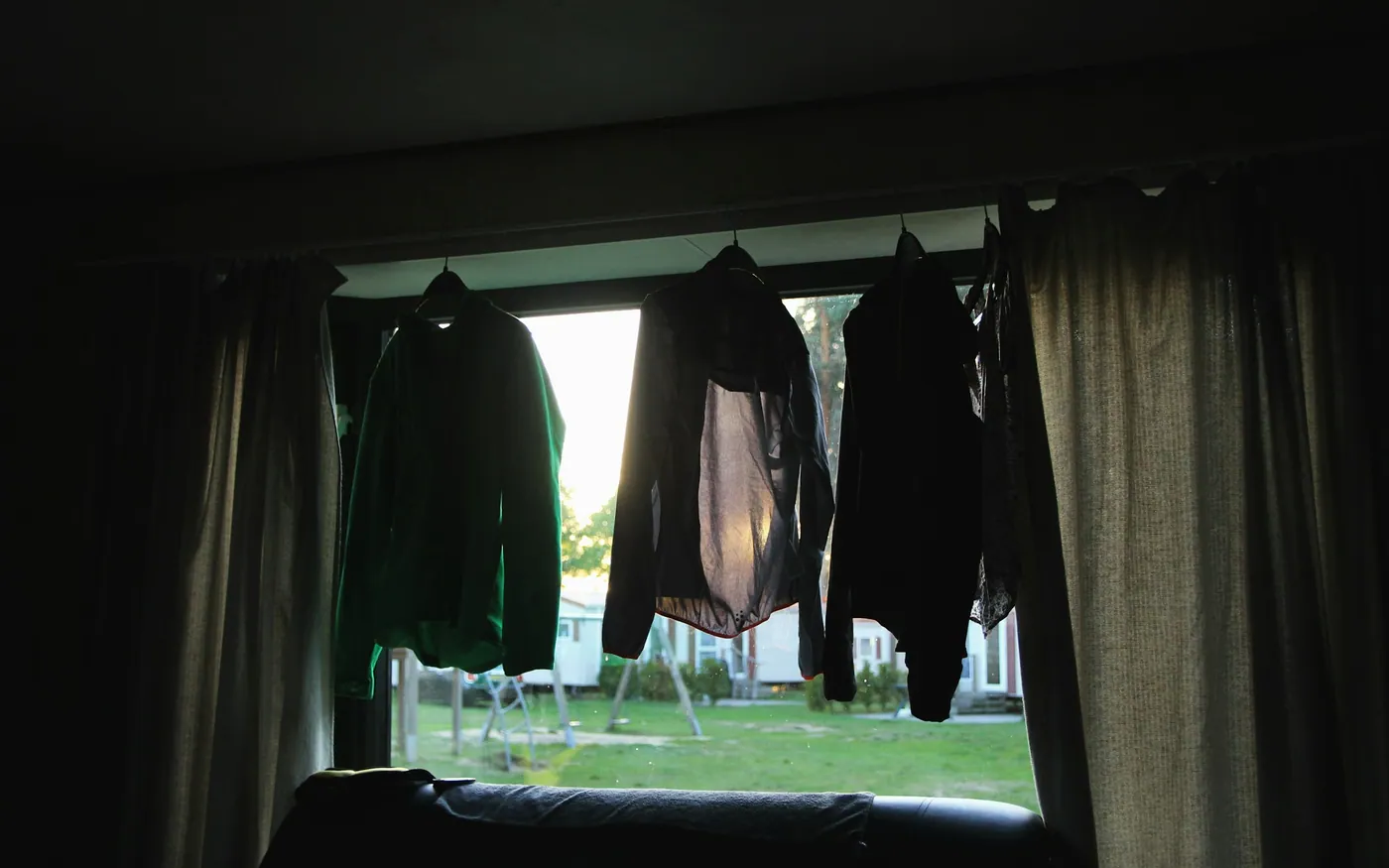
Gear put away damp grows mildew; gear dried in the sun degrades. Both are avoidable and both are common.
Dry everything fully in a shaded, ventilated place. Ultraviolet light breaks down neoprene, rubber and the coatings on suit fabrics, so an afternoon on a sunny lawn is worse for a wetsuit than the dive was.
- Hang suits on wide hangers so the shoulders are not stretched to a point.
- Turn suits inside out to dry the lining, then turn them back.
- Dry the BCD partly inflated so the bladder does not sit stuck together.
- Case masks, computers and regulators once dry, rather than leaving them loose.
Putting gear away for the winter
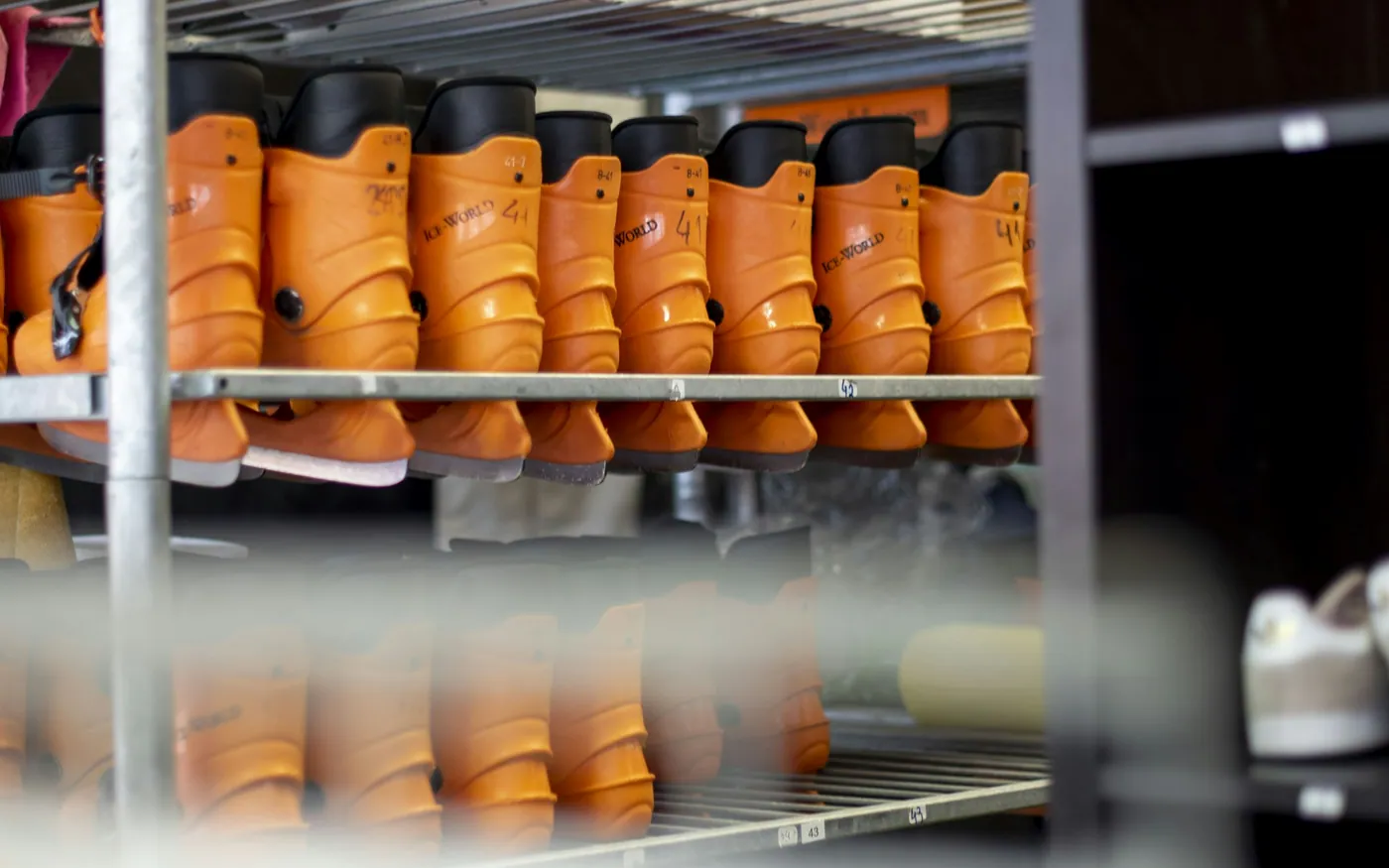
This is the section most maintenance guides skip, because most are written for places where people dive all year. Here, gear sits for months.
Long storage punishes anything that was put away imperfectly. A suit that was almost dry in November is a problem in April; salt left in a BCD bladder has all winter to work on it.
- Clean and dry everything properly first. Not mostly dry.
- Cool, dark and dry. Not an unheated garage that swings between freezing and damp, and not a sealed plastic tub.
- Hang suits rather than folding them. Creases set over months.
- Store cylinders upright and secured, with a little pressure left in them rather than empty.
- Take the batteries seriously. A computer battery that dies in storage can leak.
SDI sets out a fuller guide to cleaning and storing dive gear if you want the long version.
The five-minute version
If none of the above sticks, this is the short list that prevents most of the damage most of the time.
- Dry the dust cap, fit it, then rinse the regulator.
- Flush the inside of the BCD, not just the outside.
- Turn the suit inside out and rinse the lining.
- Dry everything in shade, never in direct sun.
- Hang suits; case masks, computers and regulators.
- Book the annual service in the off season, not in June.
Ten minutes at the sink is the difference between equipment that lasts a decade and equipment that needs replacing in three years.
Rental gear is a useful benchmark
One quiet argument for renting while you decide what to own: rental equipment is maintained on a schedule whether or not anyone remembers to.
A shop rinses, dries, inspects and services its rental fleet because it has to. Privately owned gear depends entirely on whether its owner kept up the routine after a long, cold day when the last thing they wanted was to stand at a sink flushing a bladder.
That is not an argument against owning gear. It is an argument for being honest about whether you will look after it, because a neglected regulator is worse than a well-maintained rental in every way that matters.
What to leave to a technician
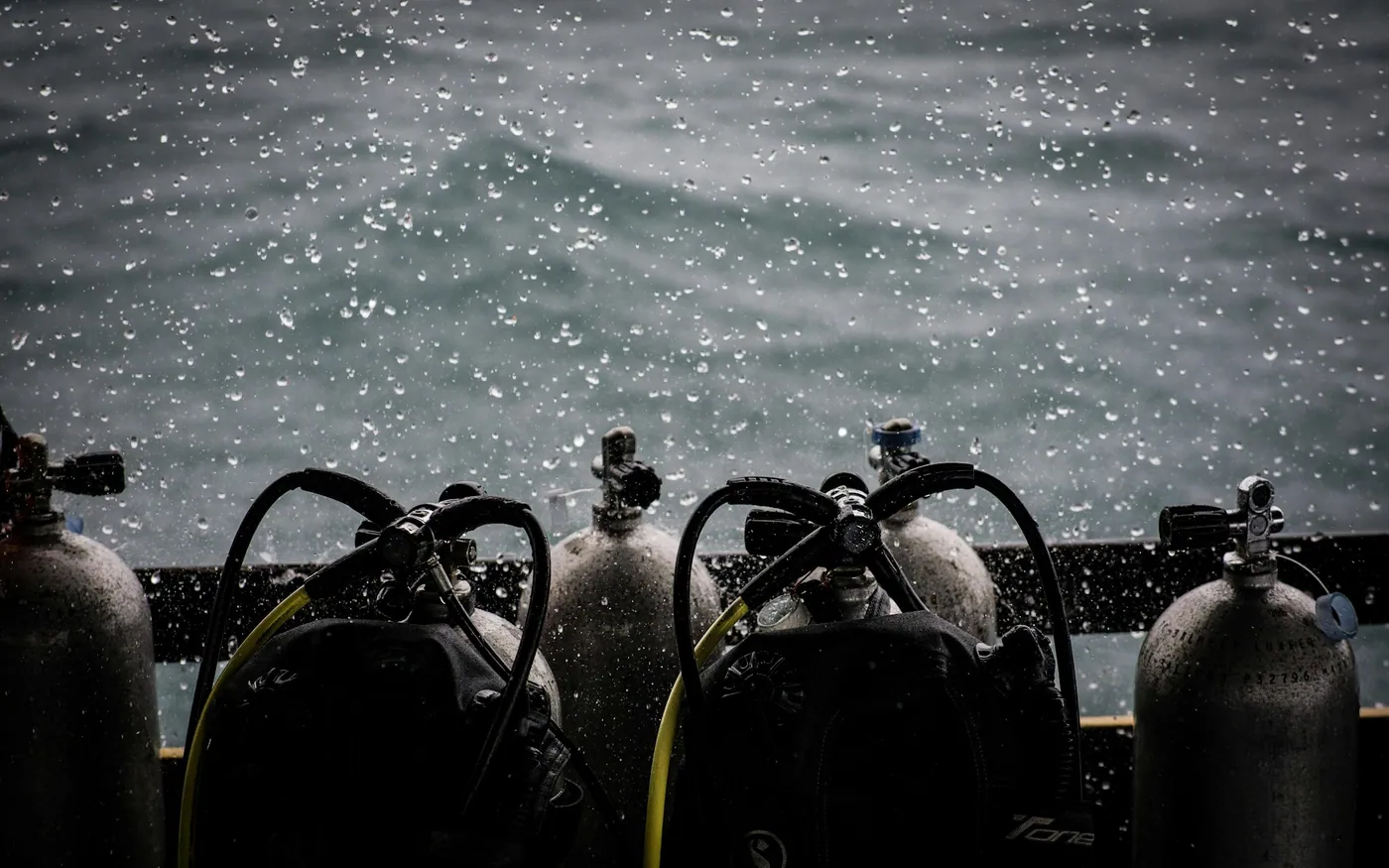
Everything above is yours to do. There is a clear line where that stops.
Do not open a regulator. Do not attempt anything internal on a cylinder or a valve. Both are pressure equipment, and both have failure modes that are not obvious until they matter.
| Job | Interval | Price |
|---|---|---|
| Regulator kit — first stage, second stage, octopus | Annually or per manufacturer | From $75 + parts |
| BCD — bladder and power inflator | Annually | From $25 + parts |
| Computer battery change | As needed | Flat $29 |
| Cylinder visual inspection | Annually | $25 |
| Cylinder hydrostatic test | Every five years | $55 |
The off season is the sensible time for all of it. Booking a service in February costs the same as booking it in June and does not cost you a diving weekend — details on the gear service page. If your own gear is away being worked on, renting covers the gap.
Frequently asked questions
Is rinsing in fresh water really enough?
For the outside, mostly. What it misses is the inside of your BCD bladder and the inside of your suit, both of which hold salt water and both of which get skipped. Submerge and agitate rather than hosing things down.
Do I need to rinse after diving in fresh water?
Yes, though less urgently. Lake and quarry water carries silt and organic material, and chlorine from a pool session is harder on neoprene and rubber than sea water is. Rinse regardless of where you dived.
How should I store a wetsuit over the winter?
Clean, completely dry, and hanging on a wide hanger in a cool dark place. Folding creases neoprene and the creases do not come out. Do not store it in a sealed bag or a car.
Does gear need servicing if it sat unused all winter?
Yes. Seals dry out and lubricants break down on a calendar, not on a dive count, which is why manufacturers specify annual intervals regardless of use. Our guide to how often a regulator needs servicing covers it.
What can I not do myself?
Anything that involves opening a regulator, and anything involving your cylinder. Cylinders need an annual visual and a hydrostatic test every five years — see cylinder testing. Everything else on this page is yours to do.
Book the off-season service
Factory certified technicians, most parts in stock, and no queue in winter. Drop your gear at the shop in Hampton Falls.