
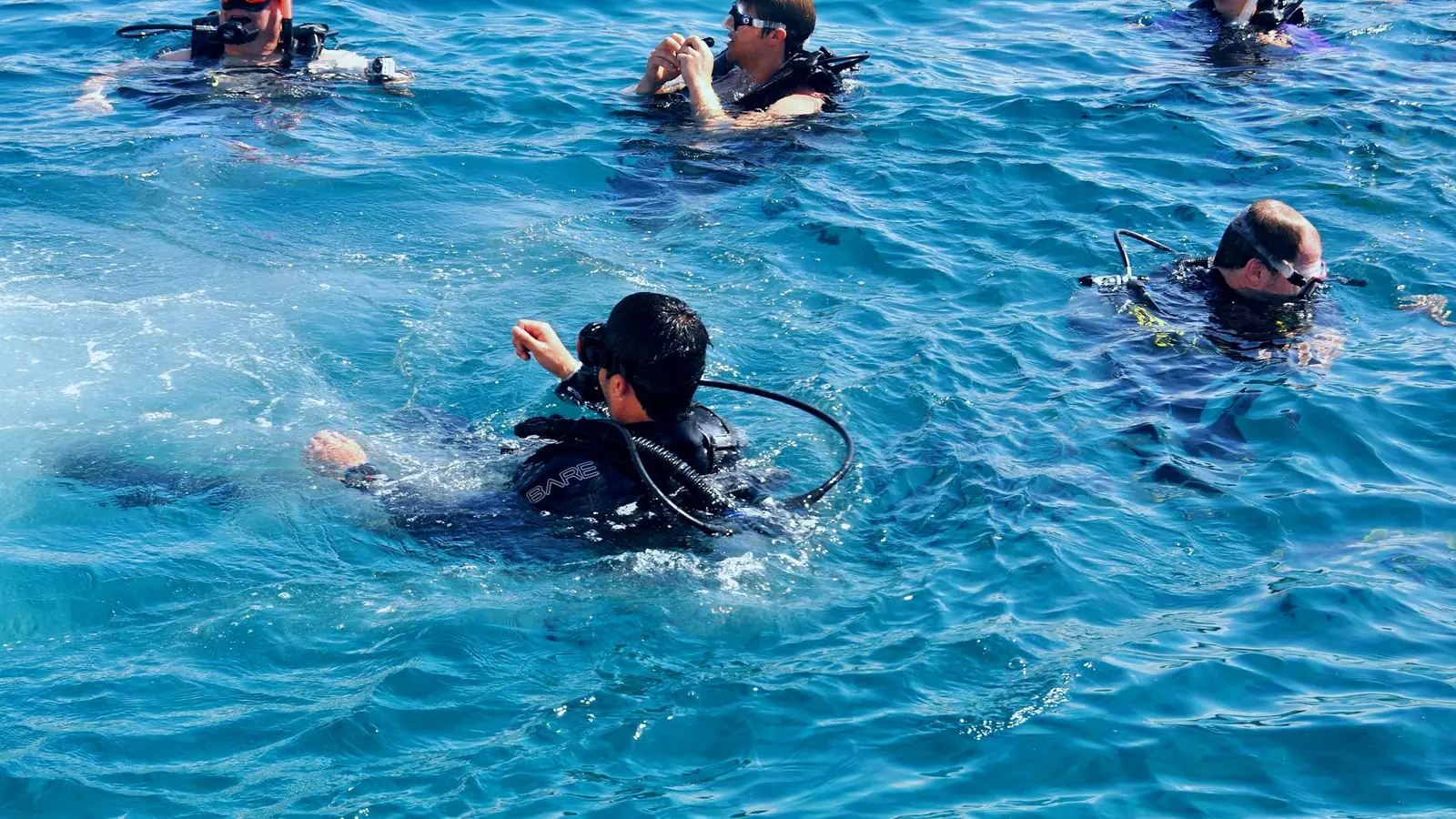
“Plan your dive and dive your plan” is the most repeated sentence in diving and one of the least useful, because almost nobody says what a plan actually contains. It is five decisions, and they take a minute.
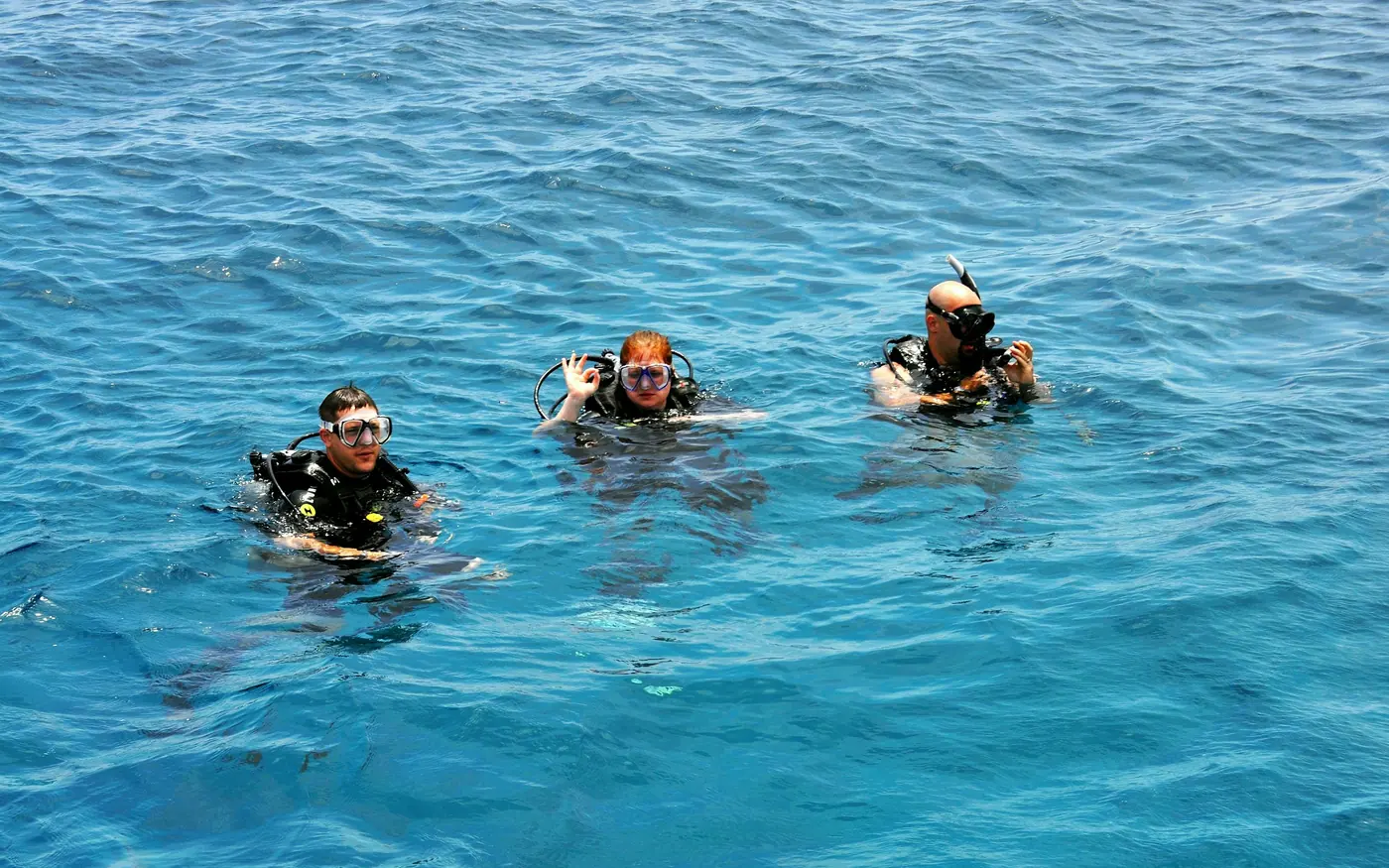
The five decisions
Everything else is detail. These are the things that must be settled before anybody submerges, because none of them can be negotiated afterward.
| Decision | What you are agreeing |
|---|---|
| Maximum depth | A limit, not a target, and the shallower diver’s limit wins |
| Turn pressure | The gauge reading at which you stop going out |
| Direction and route | Where you are heading, and how you get back |
| Who leads | Somebody should, and it should not be worked out at depth |
| What ends the dive | Cold, gas, discomfort, a signal — any of them, from either diver, without discussion |
A plan is a set of decisions you will not have to make underwater.
That is the whole point of it. Thinking is slower and worse at depth, especially cold and busy, so you move the thinking to the surface where it is cheap.
Turn pressure, which is the one that matters
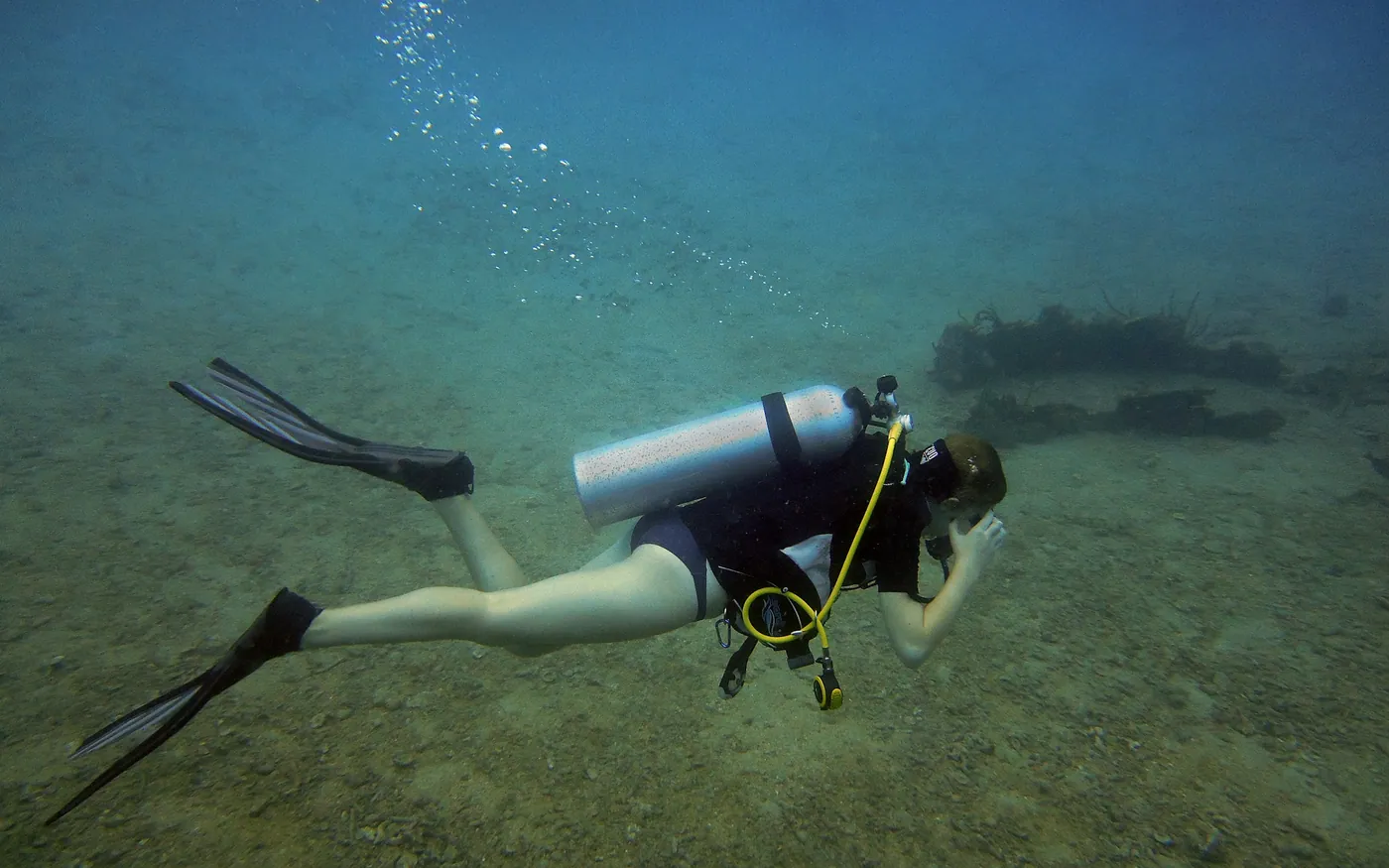
If you take one thing from this, take the habit of agreeing a number before you go in.
Turn pressure is the gauge reading at which the dive turns around. It is not the pressure at which you start worrying and it is not a suggestion. When either diver reaches it, both divers turn, and the diver who reaches it first is the one who sets it — which is a courtesy that costs the other person nothing and prevents most of the awkwardness around gas.
The common framework is the rule of thirds: a third of your gas to get out, a third to get back, and a third untouched. It suits dives that return to a fixed point — an anchor line, a shot, the place you went in — which describes most boat diving and a good deal of shore diving.
What the reserve is actually for
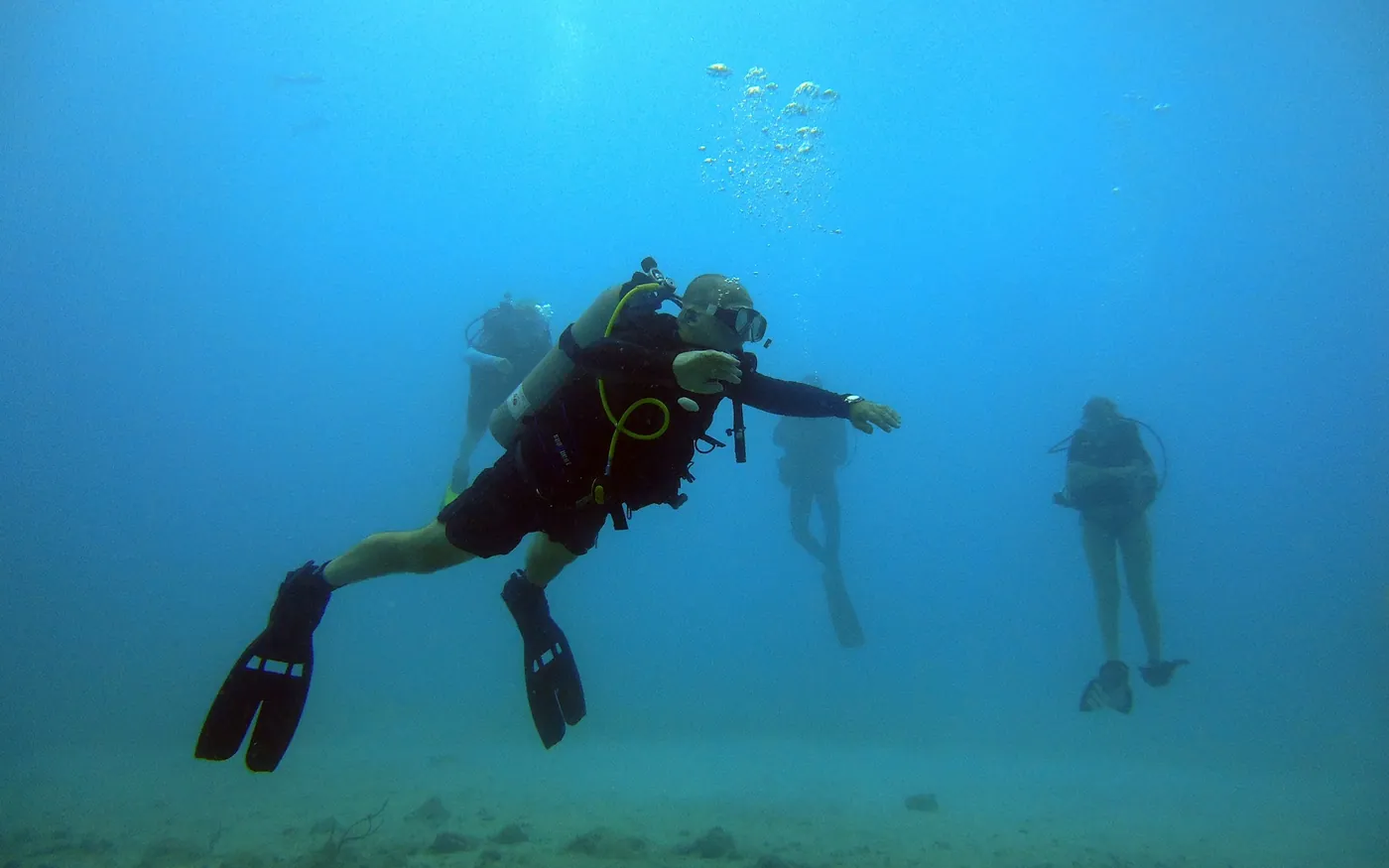
This is the part that gets misread, and misreading it removes the safety margin entirely.
The reserve third is there so that you have gas available when something takes longer than planned: a delayed exit, a snagged line, a buddy who needs help, a current that makes the swim back twice the work. It is not a pool of gas set aside to donate on a shared ascent.
If your plan assumes the reserve will cover a two-person ascent, you have not planned a reserve — you have planned to use all your gas and hoped. TDI sets out the gas reasoning properly if you want the full version.
When thirds is the wrong rule
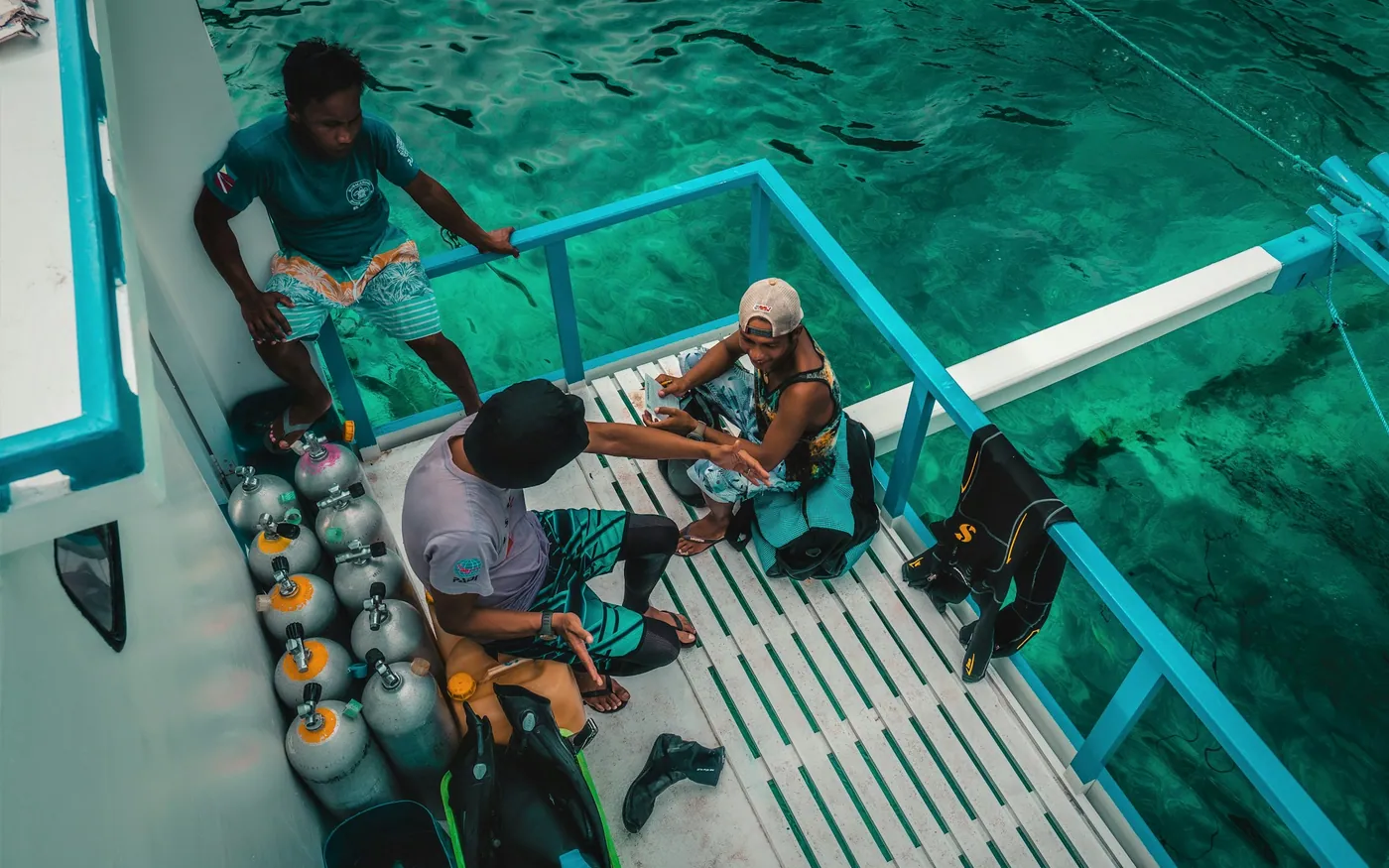
Rules of thumb are useful because they are simple, and dangerous for the same reason. Thirds assumes two things that are not always true.
- That the return costs the same as the outward leg. Into a current, or tired, or towing something, it costs more — the problem in diving in current.
- That you are coming back to where you started. On a drift, or a shore dive with a long surface swim, the arithmetic changes.
- That nothing will need sharing. A shared ascent roughly doubles the consumption for the time it lasts.
- That depth is constant. Gas goes much faster at 80 feet than at 30, so the same pressure buys very different amounts of time.
Where any of those apply, the honest answer is a more conservative turn pressure rather than a cleverer rule.
Knowing your own numbers

A plan built on somebody else’s gas consumption is not a plan. The useful version starts from your own.
The method is simple arithmetic: take your starting pressure, subtract the reserve you have agreed, and divide what is left by how fast you actually breathe at the depth you are diving. That tells you roughly how many minutes you have, which is what a plan needs.
Working out your own rate needs nothing more than a few dives and a habit of writing the numbers down, which is exactly what a dive log is for. Most divers who do this discover their consumption is far more variable than they assumed — cold, current and being slightly anxious all cost gas.
Planning with a stranger
On a charter or a course you will often be paired with somebody you have never dived with, and that is where a plan stops being a formality.
Ask two questions beyond the five decisions: how recently have you dived, and what do you want from this dive. Somebody who wants to photograph one rock and somebody who wants to cover ground will make each other miserable without either saying so — the point made in being a dive buddy worth having.
Agree the signals too, particularly how you will show pressure, since that convention varies — see hand signals that actually get used.
The plan you do not follow
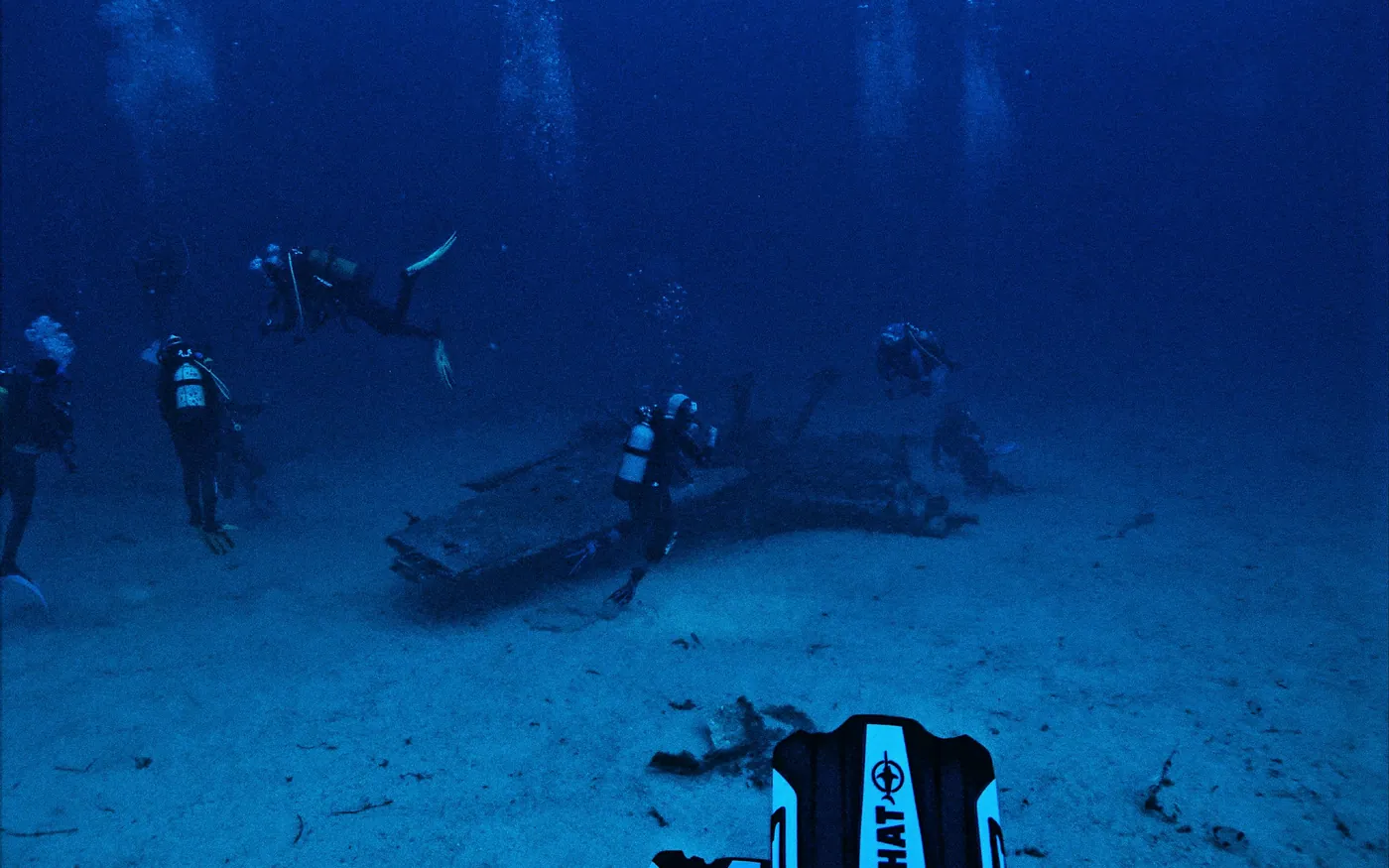
One closing point, because “dive your plan” is often read as an instruction to press on.
A plan is a set of decisions made with the information you had on the surface. If the conditions turn out different, the visibility is worse, somebody is cold, or the current is running harder than expected, the plan was wrong and the right response is to change it or end the dive.
Divers get into difficulty by treating a plan as a commitment rather than as a starting position. Calling a dive early is always available, always free, and never needs justifying.
Frequently asked questions
What is turn pressure?
The cylinder pressure at which you stop going out and start coming back. You agree it on the surface, and when either diver reaches it the dive turns — no discussion, no negotiation at depth.
What is the rule of thirds?
A third of your gas to swim out, a third to swim back, and a third held in reserve. It suits dives that return to a fixed point like an anchor line. It is not universal — a long strenuous swim or a gas-sharing ascent breaks its assumptions.
Is the reserve third for sharing air?
No, and this is widely misunderstood. The reserve exists so that you have gas to deal with a delay or a problem. If you plan to use it for a shared ascent, it is not a reserve.
How do I work out how long my gas will last?
Take your starting pressure, subtract the reserve you have agreed, and divide what is left by your consumption rate. Knowing your own rate is the part most divers skip — see how to use less air.
Do I need to plan a shallow local dive?
Less formally, but yes. Depth, time, turn pressure, direction and what ends the dive still need agreeing, and it takes about a minute on the surface.
Practice planning properly
Gas planning and dive planning are taught properly on the Advanced course and revisited on every one after it. Ask us what fits.