
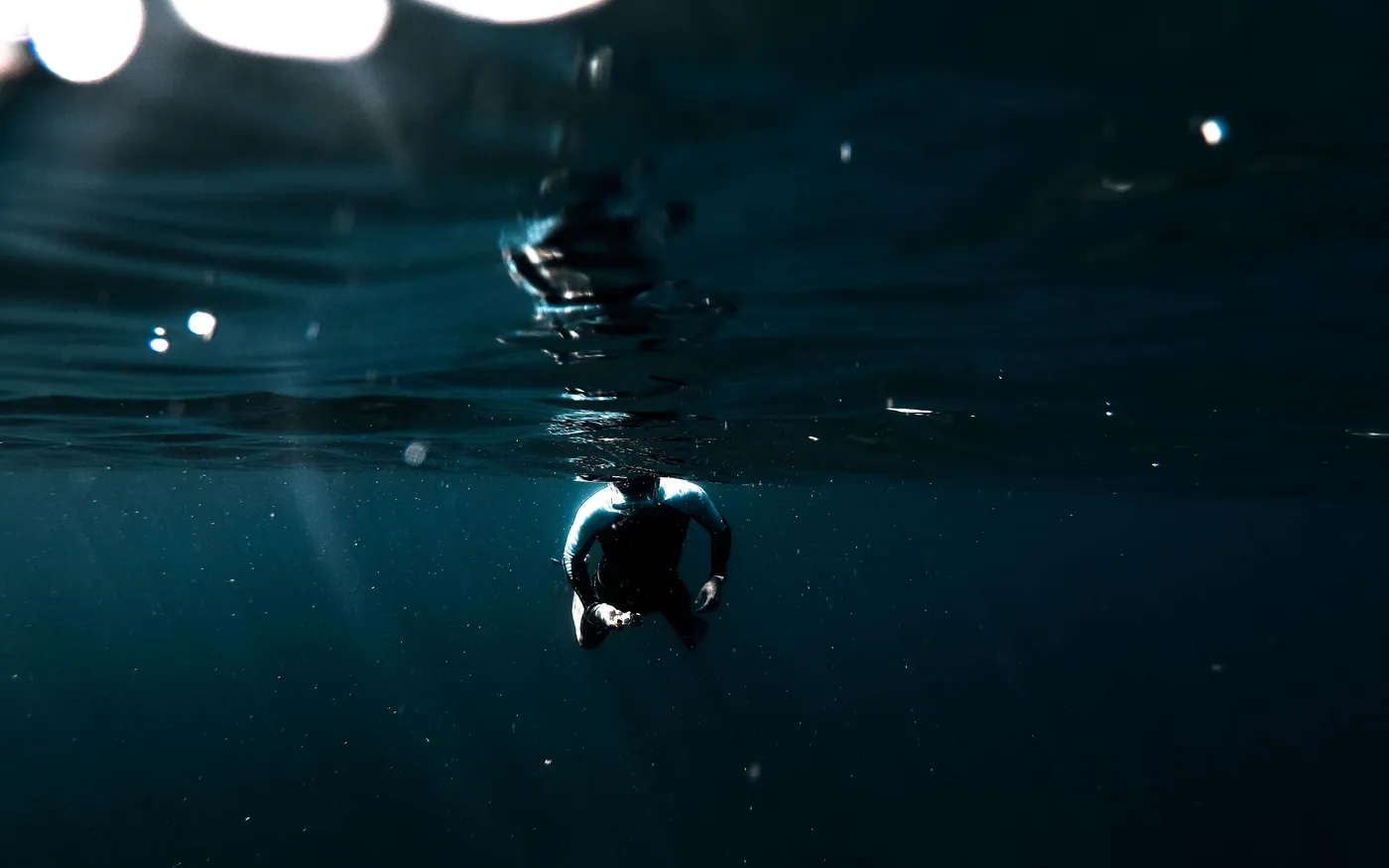
A dive light is daytime equipment on this coast. Not because it is dark down there, but because everything more than a few feet away has already lost its color by the time you see it.
What a light is actually for
New divers think of a light as night equipment. Divers here learn quickly that it is a color-restoration tool, and the dive it improves most is a daylight one.
Water absorbs red first, then orange, then yellow. By moderate depth the reds are gone entirely, which is why a bright anemone looks grey-brown until you put a light on it from a foot away. Nothing about the animal changed — the light reaching it did.
That is also why the same effect ruins photographs, and why the fix is identical in both cases: get close, and bring your own light. It is covered from the camera side in underwater photography for beginners.
You are not carrying a light because it is dark. You are carrying it because the water took the color out.
Lumens, and what they do not tell you

Lumens measure the total visible light a source puts out, and they are the number every product page leads with. They are not the whole story.
How a light actually performs underwater depends on beam angle, color temperature and the clarity of the water it is being used in. A very bright light in particulate water can be worse than a moderate one, because it lights the particles between you and the subject — the same backscatter problem photographers fight.
| Light | Typical output | What it is for |
|---|---|---|
| Backup | 200–500 lumens, though many are brighter now | Getting you out if the primary dies |
| General primary | From about 1,000 lumens | Daytime color, looking into structure |
| High output primary | Several thousand and up | Night diving, and lighting large subjects |
Scuba Diving Magazine goes through the selection question in more detail if you want to compare specifications.
Beam angle matters more than people expect

If lumens are the number everyone quotes, beam angle is the one that decides how the light feels to use.
- A tight beam carries further, punches through murk better, and is far easier to read as a signal.
- A wide beam lights a whole scene evenly, which suits looking at structure and suits photography.
- The compromise most divers reach is a narrower primary and a wider backup, so the second light is genuinely useful rather than just spare.
Signalling is the underrated half of this. In poor visibility or after dark the light is how you talk, and a diffuse beam makes a circle-for-OK signal hard to read at any distance. That set of signals is in the night diving guide.
Why the second light is not optional

Your primary is doing three things at once: letting you see, letting you navigate, and letting you communicate. That is a lot of function in one battery compartment.
The difference between a primary and a backup is burn time rather than brightness. A primary has to run the whole dive; a backup only has to get you out, which is why modern backups can be just as bright while being much smaller. A primary should sit securely in your hand; a backup should stow out of the way until the moment it is needed.
Clip both. Most dive lights are negatively buoyant, and a dropped light in deep water is simply gone.
Using it without annoying everyone
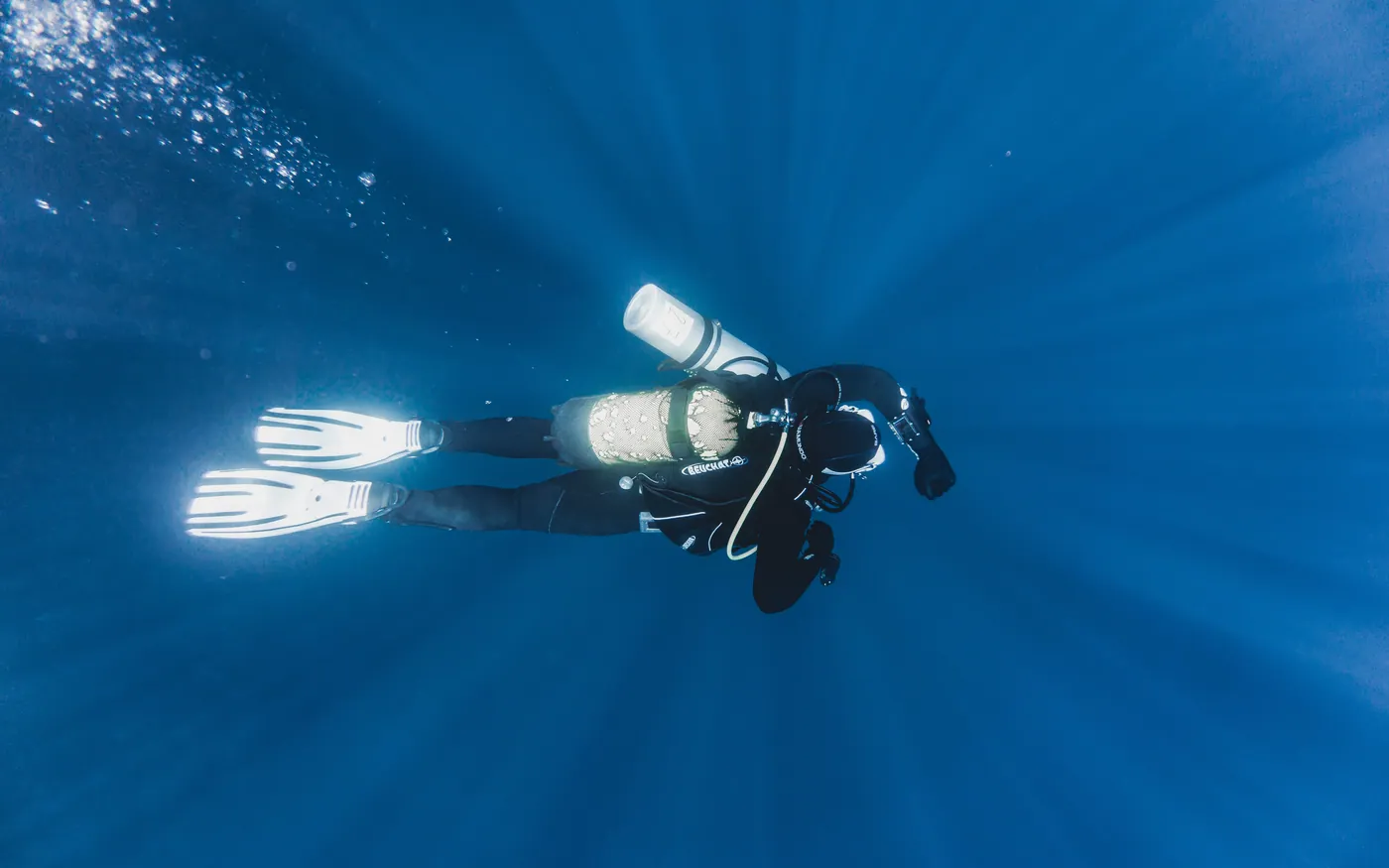
There is a short etiquette to this and it takes about one dive to learn.
Keep the beam forward and reasonably stable. Move it slowly — quick jerky movement is a distress signal, and waving your light about will eventually get you an urgent buddy. And keep it out of other people’s eyes, which is worth more attention at night when everyone’s vision has adapted.
The other habit worth building is looking into things rather than across them. The reason to carry a light on a wreck is to see into the structure where the life is — the point made in wreck diving without going inside.
If you are buying a first light, the one useful piece of advice is to hold it before you commit. Grip matters more than the specification suggests: a light you can hold comfortably in a gloved hand, operate without looking, and clip one-handed is worth more than a brighter one that you fumble every time you need it.
Sharing one light does not work
New divers sometimes reason that if their buddy has a light, they do not need one. It is a false economy and it is worth spelling out why.
A light is not only for seeing. It is how you signal, and it is what makes you visible to your buddy in the first place. Two divers sharing one light are one failure away from a diver with no light at all, in water where they cannot see far and cannot be seen.
It also changes how you dive together. Divers who each have a light spread out to a comfortable distance and keep visual contact; a pair sharing one ends up either uncomfortably close or genuinely separated. In conditions where visibility is already short, that is the difference between an easy dive and a tense one.
Looking after it
Lights are among the easiest pieces of dive equipment to ruin, and almost always in the same way: an O-ring that was not checked, or batteries left in over winter.
Rinse it, dry it, and store it with the batteries out over the off season. A leaked cell can destroy a light that was otherwise fine, and it is entirely preventable — the same logic as everything in looking after gear between seasons.
Frequently asked questions
How many lumens do I need?
A primary of at least 1,000 lumens is the usual recommendation. Backups commonly run 200 to 500, though modern ones are often as bright as primaries — the difference is burn time rather than output.
Why carry two lights?
Because a light failure turns an ordinary dive into a difficult one, and on a night dive it turns it into an ascent in the dark. The backup exists so a dead primary is an inconvenience rather than an incident.
Do I need a light for daytime diving here?
Yes, and that surprises people. Color disappears with depth and distance, so at 40 or 50 feet in green water you are looking at grey shapes. A light puts the color back.
Narrow beam or wide?
A tighter beam carries further and makes light signals easier to read; a wider one lights a scene without hotspots. Many divers carry a narrower primary and a wider backup for exactly that reason.
Where should I not point it?
At other divers’ faces. Night vision takes minutes to build and a second to destroy. Light the water, or your own hand if you are signalling.
Come and hold a few
Beam and grip are the things you cannot judge from a specification. We sell gear in store so you can try it.