
Almost nobody watches anybody else’s dive footage, and there are three reasons why. All three are fixable, and none of them is the camera.
It is a buoyancy skill
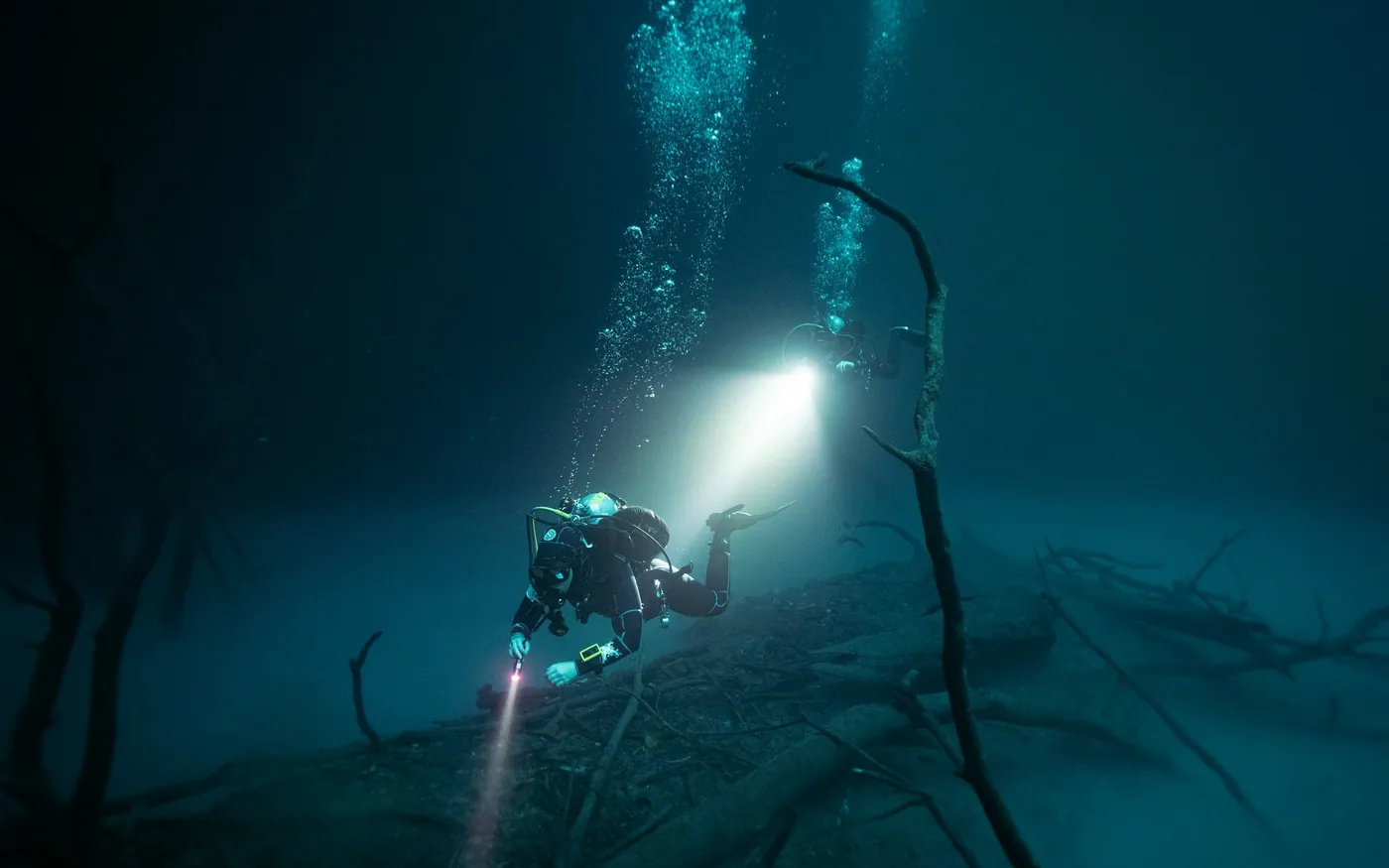
The single largest improvement available to any underwater videographer is not a setting. It is being able to stop moving.
A photograph forgives a wobble; video does not, because it records the whole wobble. Footage from a diver who is finning to hold position, drifting up and down on their breathing, or rolling slightly is unwatchable no matter what it is pointed at. Footage from a diver who can hover motionless looks professional even when the subject is ordinary.
Steady footage is not a camera setting. It is a diver who has stopped moving.
Which means the honest first step is buoyancy and trim, and a kick that lets you creep forward without stirring the bottom — the modified frog in finning techniques. Divers who fix those find their footage improves without touching the camera.
Get closer than feels necessary
The second problem is distance, and it is the one every new shooter underestimates.
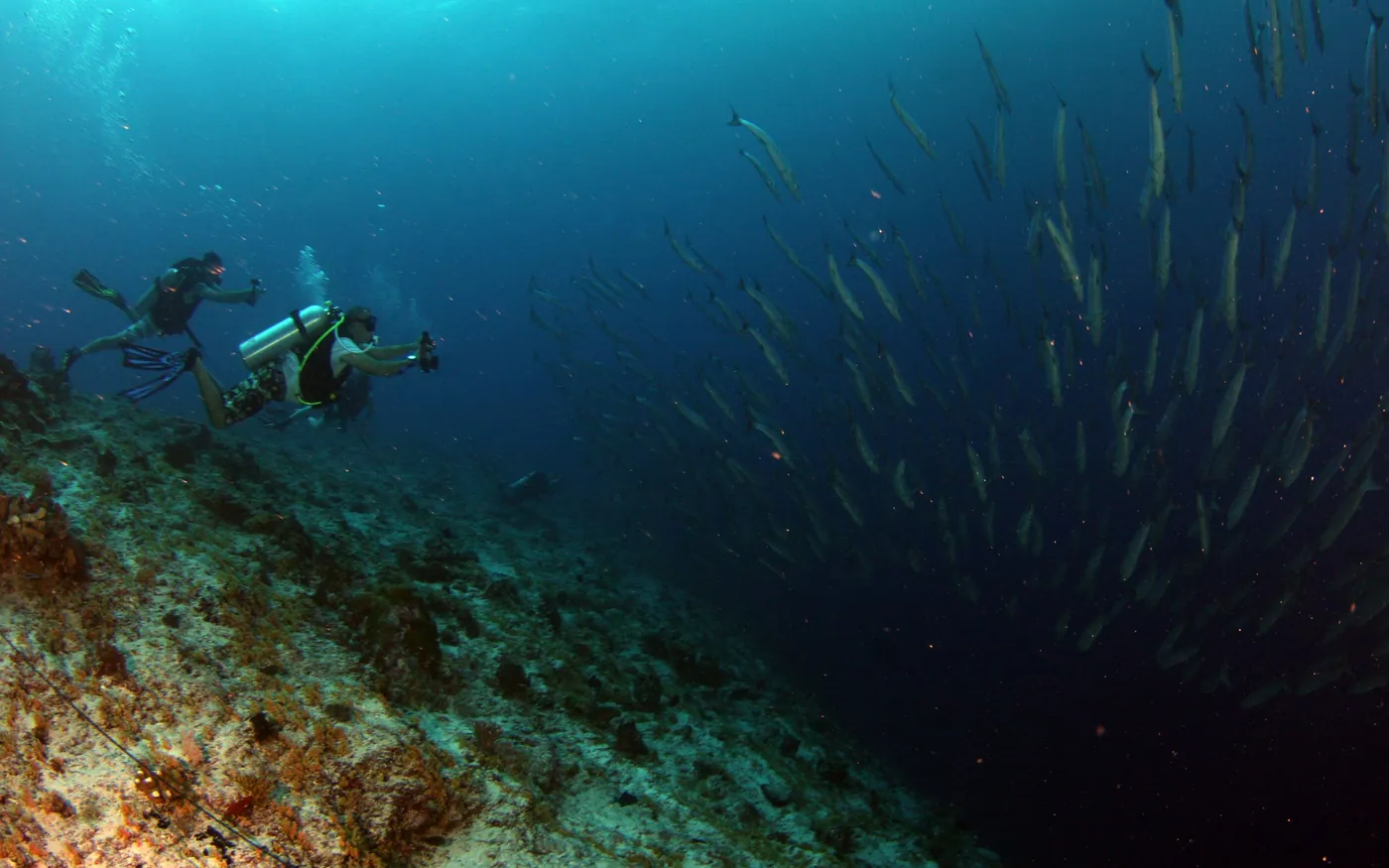
Water absorbs light and scatters it. At three feet a subject looks like itself; at fifteen feet the same subject is a blue-grey shape with no detail. There is no setting that recovers what the water has already taken, so the only fix is to reduce the amount of water between the camera and the thing.
That is harder than it sounds, because getting close without disturbing an animal is a skill in itself — slow, low, at an angle, and stopping before it reacts. The approach is the same one described in diving around wildlife, and the good news is that it is also the ethical approach.
Lights, and when to turn them off
Lighting is where most divers waste money and then get worse results.
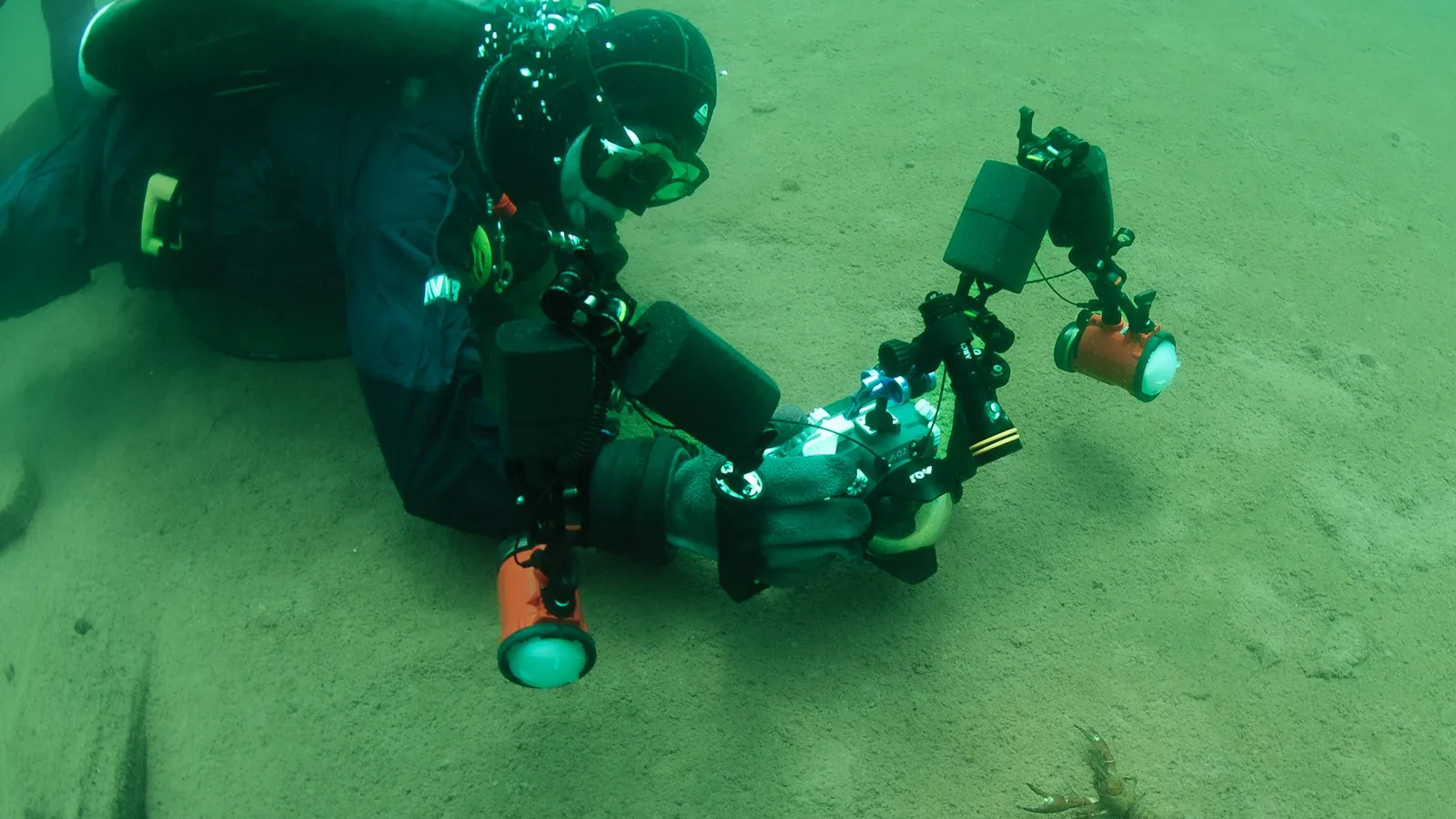
The working rule is that video lights are for subjects within about five feet. Inside that, they restore the color the water removed. Outside it, they mostly illuminate the particles floating between you and the subject, producing backscatter — the snowstorm that ruins otherwise decent footage.
Two practical points. Move the lights out to roughly forty-five degrees rather than pointing them straight ahead, which lights the subject without lighting the column of water directly in front of the lens. And for anything wider than a few feet, switch them off entirely and set a manual white balance instead — ambient light with a correct white balance beats a badly lit close-up of nothing. SSI covers the technique in more detail.
Shoot less, and hold it longer
The commonest structural mistake is filming continuously while swimming, which produces a long unusable pan of the whole dive.
The alternative is to think in shots. Find something, settle, frame it, hold still for eight or ten seconds without moving the camera at all, then stop recording and move on. If you must pan, pan slowly enough that it feels absurd — on playback it will look about right.
You will come back with four minutes of footage instead of forty, and the four minutes will be watchable. That is a much better trade than it sounds, and it also means less time staring at a screen and more time diving.
Settings, briefly
This is the part most tutorials start with and it belongs near the end, because it matters least.
If you are shooting without lights, set a manual white balance rather than leaving it automatic, and reset it whenever your depth changes significantly. That single change does more for ambient-light footage than anything else available in a menu, because it puts back the red the water removed.
Beyond that: shoot at the widest setting you have and get closer rather than zooming, because zoom magnifies both the water in between and every tremor in your hands. And resist the temptation to shoot everything at the highest frame rate and resolution the camera offers — you will fill the card, flatten the battery, and still be limited by how steady you were.
The part about being a buddy
This needs saying plainly, because camera divers are the classic cause of separation and most of them do not realize it.
A camera absorbs attention completely. You stop to film something, your buddy keeps going, and neither of you notices for two minutes. Gas checks slip. Depth creeps. The dive plan quietly stops being the thing you are doing.
The fixes are small and they work: tell your buddy before the dive that you will be stopping, agree that they wait rather than circle, signal before you settle on anything, and set yourself a rule about checking gas on a schedule rather than when it occurs to you. It is the conversation in being a dive buddy worth having, applied to a specific and predictable problem.
It also helps to decide before the dive what you are trying to come back with. A diver hunting for one good sequence behaves completely differently from a diver filming continuously in case something happens, and only one of them is still paying attention to their gas.
And the thing nobody says

Most dives do not contain anything worth filming, and that is fine.
A great deal of poor footage exists because somebody felt obliged to justify carrying the camera. On a green-water dive over a rocky bottom in twelve feet of visibility, the honest answer is often that the light and the subject are not there today, and that filming it anyway produces four minutes nobody will watch, including you.
The divers who come back with good footage are the ones who leave the camera off most of the time, and occasionally on a trip leave it on the boat entirely. It is also worth remembering that a camera changes what a dive is: some dives are worth having rather than recording.
Frequently asked questions
Why does my footage look so bad?
Almost always movement and distance. The camera is not steady because you are not steady, and the subject is too far away, so the water between you eats the color and the detail. Both are diving problems rather than camera problems.
Do I need lights?
Only for close subjects. Video lights work on things within about five feet; beyond that they mostly light up the particles in the water. For wider shots, switch them off and set a manual white balance instead.
What is backscatter?
The snowstorm effect you get when your light illuminates particles between the camera and the subject. Moving the lights out to roughly 45 degrees, rather than pointing them straight forward, removes most of it.
Is video harder than photography?
Different. A photograph can be one lucky moment; video needs you to hold everything steady for several continuous seconds, which is a much higher bar for buoyancy.
Will a camera make me a worse buddy?
It can, and it is worth being honest about. Photographers and videographers are the classic cause of separation — see being a dive buddy worth having.
Fix the buoyancy first
Steady footage comes from a steady diver. Ask an instructor at Divers Den to look at what you are doing in the water.