
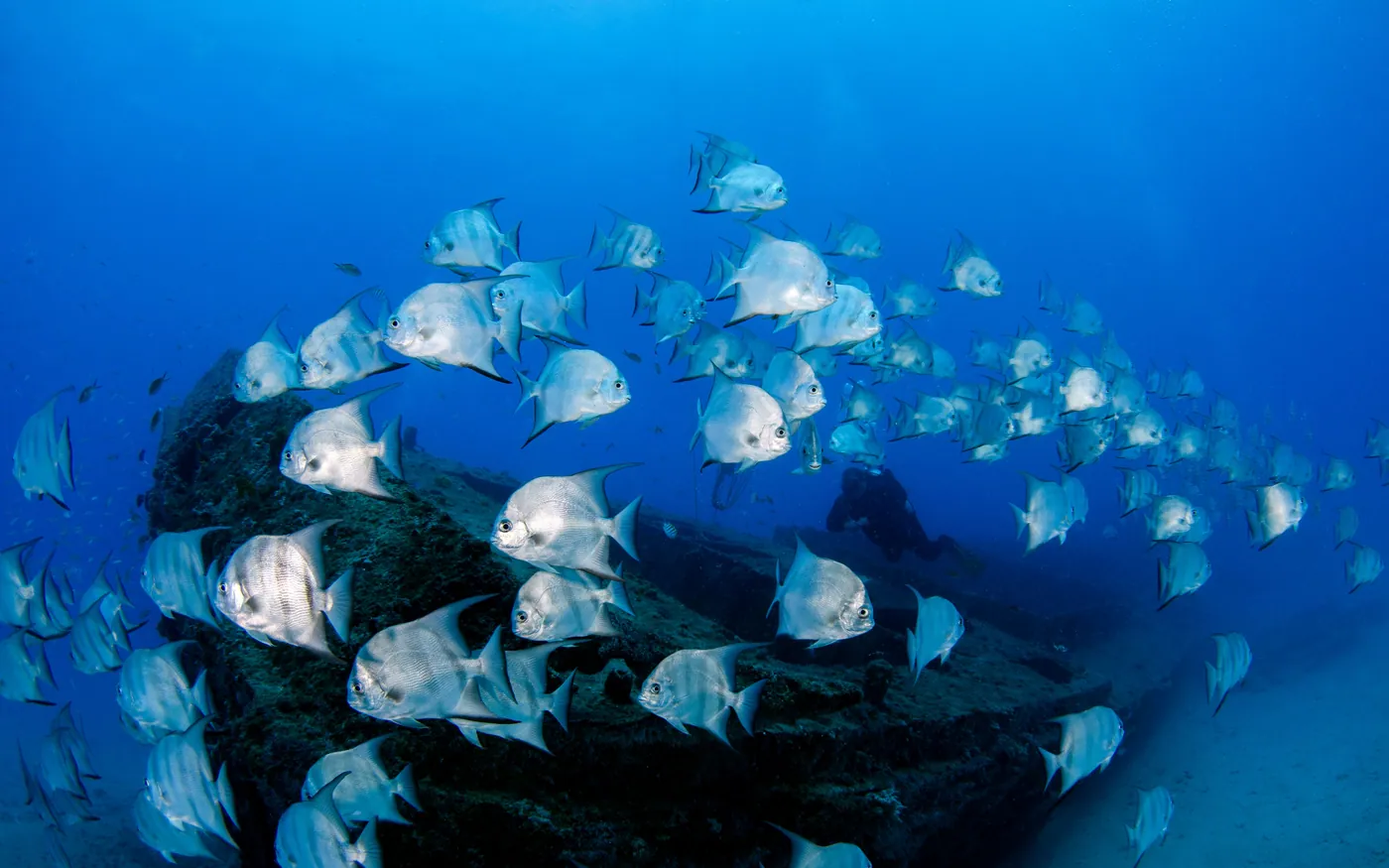
Do not touch, do not chase, do not feed. Everybody knows the three rules. What is less often said is that keeping them is mostly a matter of skill rather than of virtue.
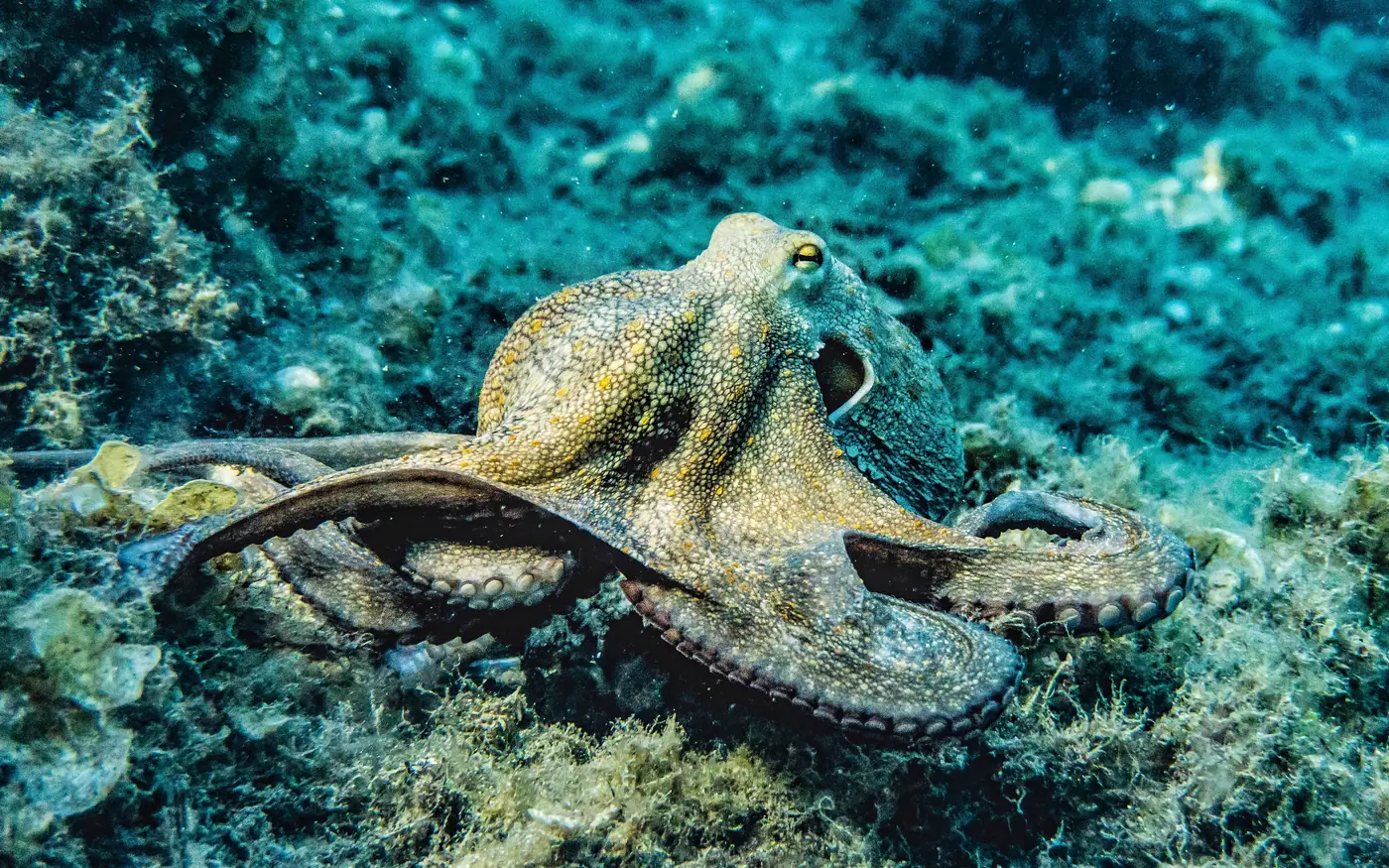
The three rules, and the reasons behind them
These are taught in every entry-level course and repeated so often that the reasoning gets lost. The reasoning is the useful part.
| Rule | The actual reason |
|---|---|
| Do not touch | Many animals carry a protective mucus layer that handling wears away, leaving them open to infection |
| Do not chase | Pursuit is stress. Repeated disturbance costs animals energy they need for feeding, rest and avoiding predators |
| Do not feed | It changes behavior permanently. Fed animals stop foraging normally and concentrate where the food appears |
| Do not kick the bottom | A single accidental fin strike can destroy growth that took decades to form |
If the animal changed what it was doing, you were too close.
That last line is the most useful working definition of “too close” there is, and it does not require you to know anything about the species.
It is a buoyancy problem first
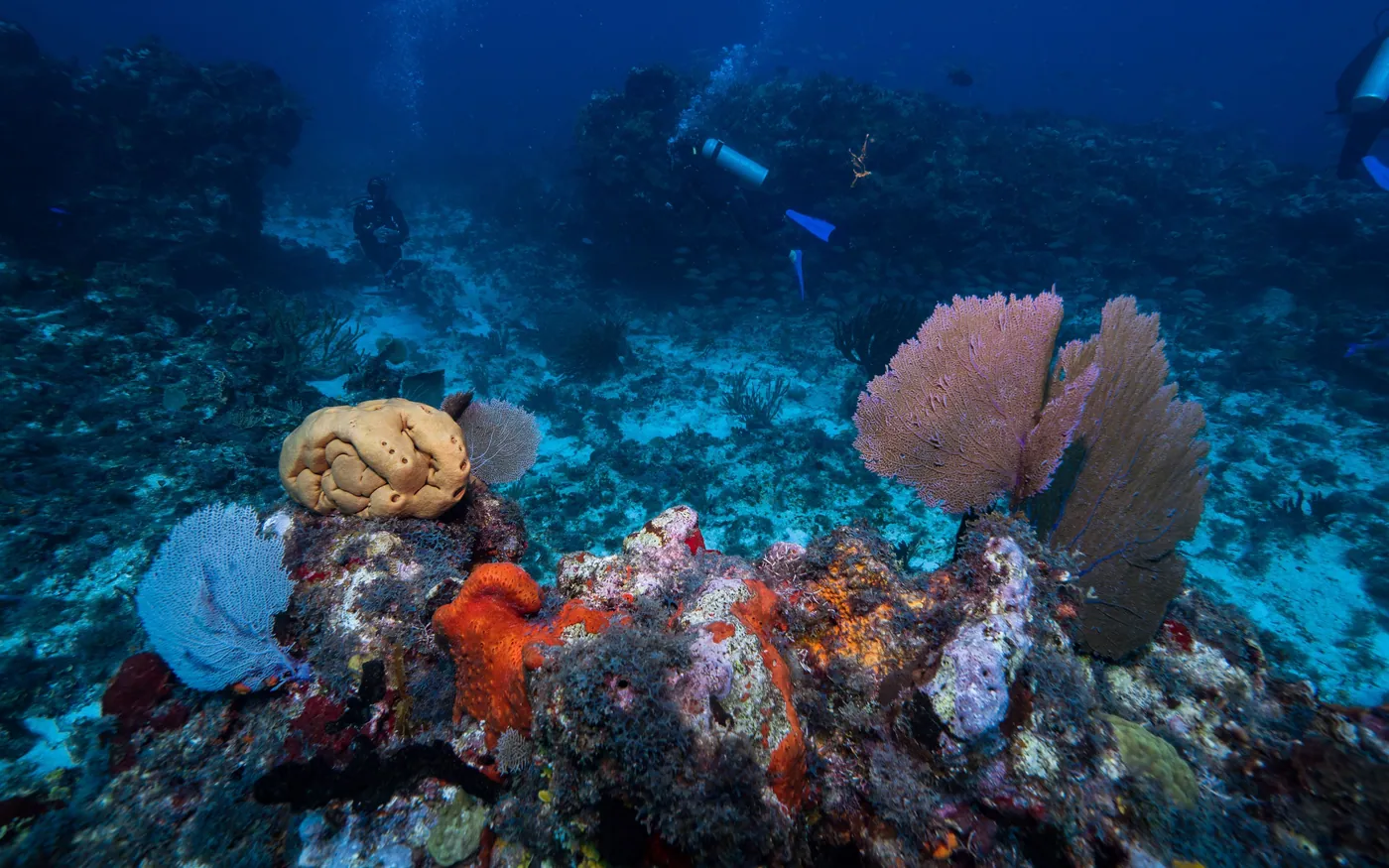
Here is the part that conservation messaging usually leaves out: most divers who damage things are not careless, they are unstable.
A diver who cannot hold a position reaches out to steady themselves. A diver who is finning hard to stay level puts their fins into the bottom. A diver who is slightly negative sinks onto whatever is below them while looking at something else. None of that is a moral failure and all of it does damage.
Which means the single most effective thing you can do for the site you dive is work on buoyancy and trim, and learn a kick that does not blast the bottom — the case made in finning techniques. Good behavior around wildlife is largely downstream of both.
How to actually get close
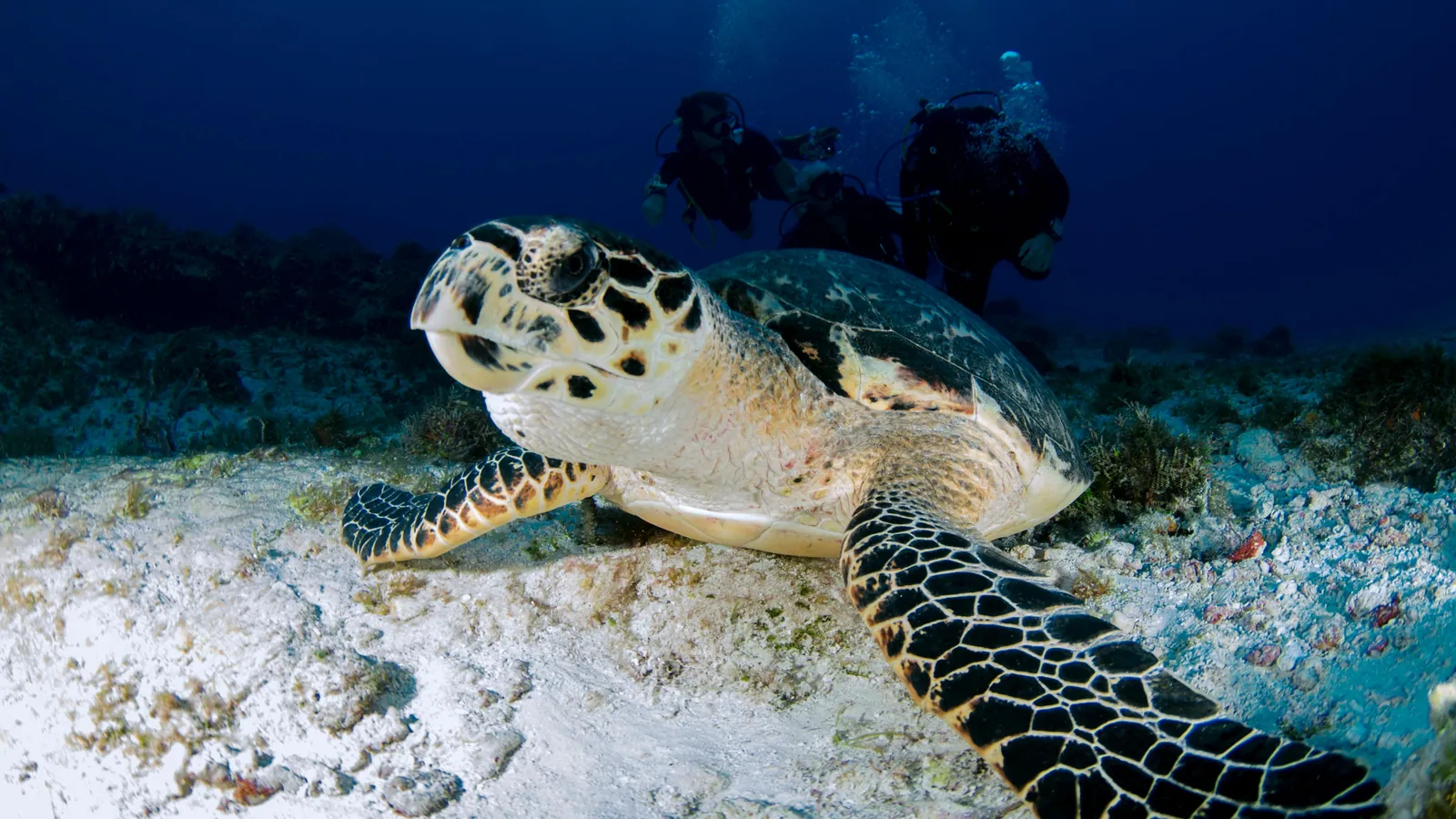
The irony of the three rules is that keeping them gets you closer than breaking them does.
- Approach slowly and at an angle, not straight at the animal. Head-on and fast is what a predator looks like.
- Stop and wait. Curiosity works in your favor far more often than pursuit does, and a stationary diver stops being interesting quite quickly.
- Stay low and level, rather than looming above.
- Breathe slowly. Bubbles and noise move animals more than shape does.
- Let it leave. Following something that is trying to get away is chasing, whatever you call it.
Photographers learn this faster than anyone because the results are immediate — the animal that tolerates you is the one you get a picture of, which is the point made in underwater photography.
Where the rules come from
It is worth knowing that the three rules are not sentiment. They come out of what happens to populations when divers ignore them.
Feeding is the clearest case. Animals that are reliably fed stop foraging normally, concentrate in unnatural numbers where the food appears, and become bolder around people in ways that are frequently bad for them. Studies of heavily visited sites have found animals whose feeding and resting patterns are measurably disrupted by the presence of divers and snorkellers, which is a long way from the harmless-looking act of emptying a bag of bread.
Handling is the second. A protective mucus layer is a working part of an animal, not a coating, and wearing it away with dry hands or gloves leaves the animal open to infection days after the diver has gone home and forgotten about it.
The awkward one: what if the guide does it
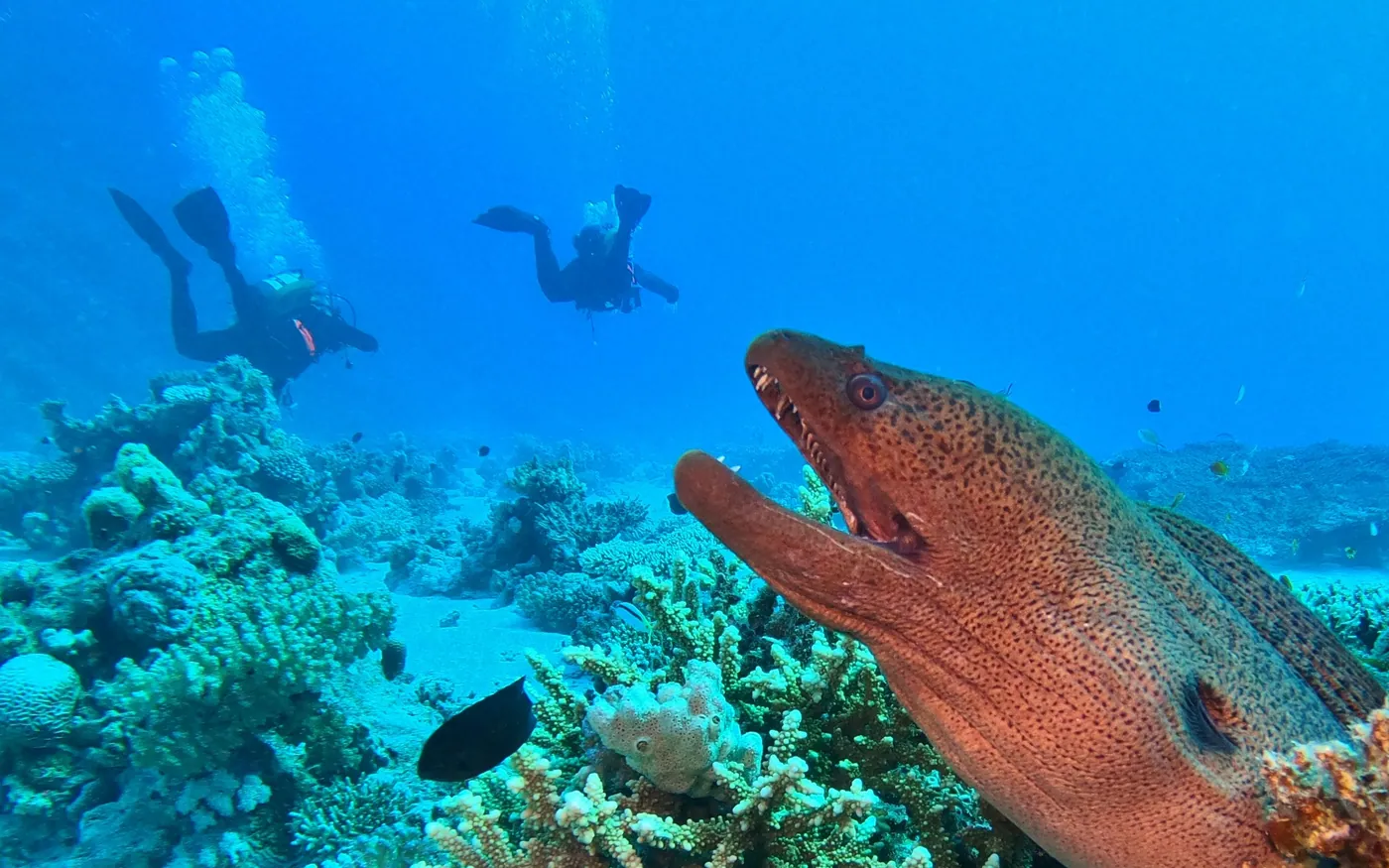
Sooner or later you will dive with somebody who pulls an octopus out for the group, or holds a ray, or feeds fish to gather them.
The practical advice is to raise it on the boat rather than underwater, and to raise it as a preference rather than an accusation. Many operations publish a code of conduct and ask divers to sign it, which exists precisely so this is a shared expectation rather than an individual confrontation. PADI sets out the do’s and don’ts clearly enough to point at.
And if the answer you get is unsatisfactory, the meaningful response is where you book next time.
It applies here too
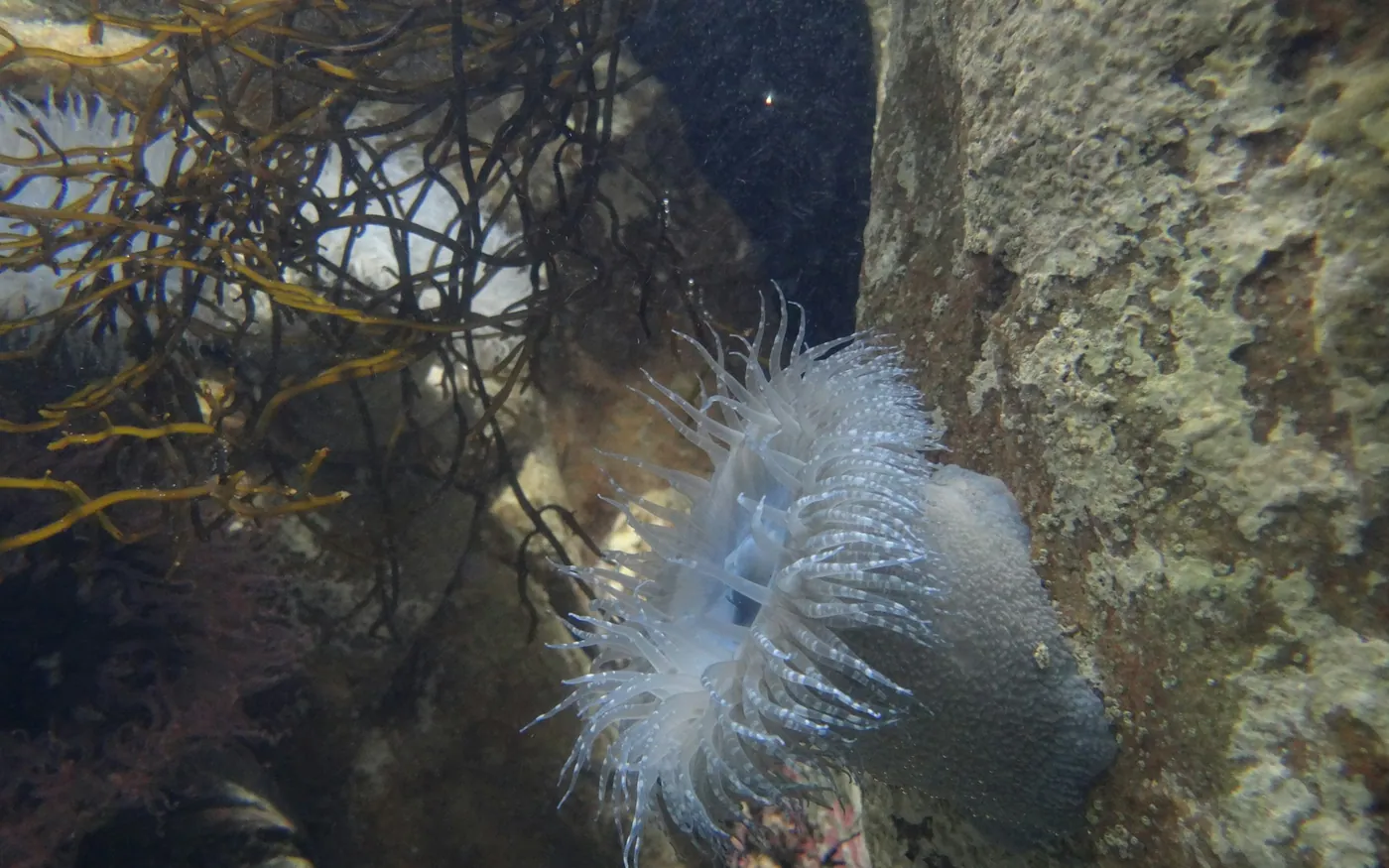
Wildlife etiquette gets discussed as a tropical reef subject, and cold-water divers can quietly assume it does not apply to them. It does.
Temperate rock is covered in animals that look like scenery — anemones, sponges, hydroids, tunicates — and they grow slowly in cold water. The visibility that makes local diving what it is also means divers spend more time close to the bottom, which is where the damage happens. And there is rarely a guide reminding anybody.
What lives on that rock is the subject of New England marine life. This post is about leaving it there.
There is a practical dimension too. Animals that have learned to associate divers with food behave unpredictably around them, and an animal that approaches a diver expecting to be fed is a problem for the next diver as much as for itself.
Taking things, and leaving things
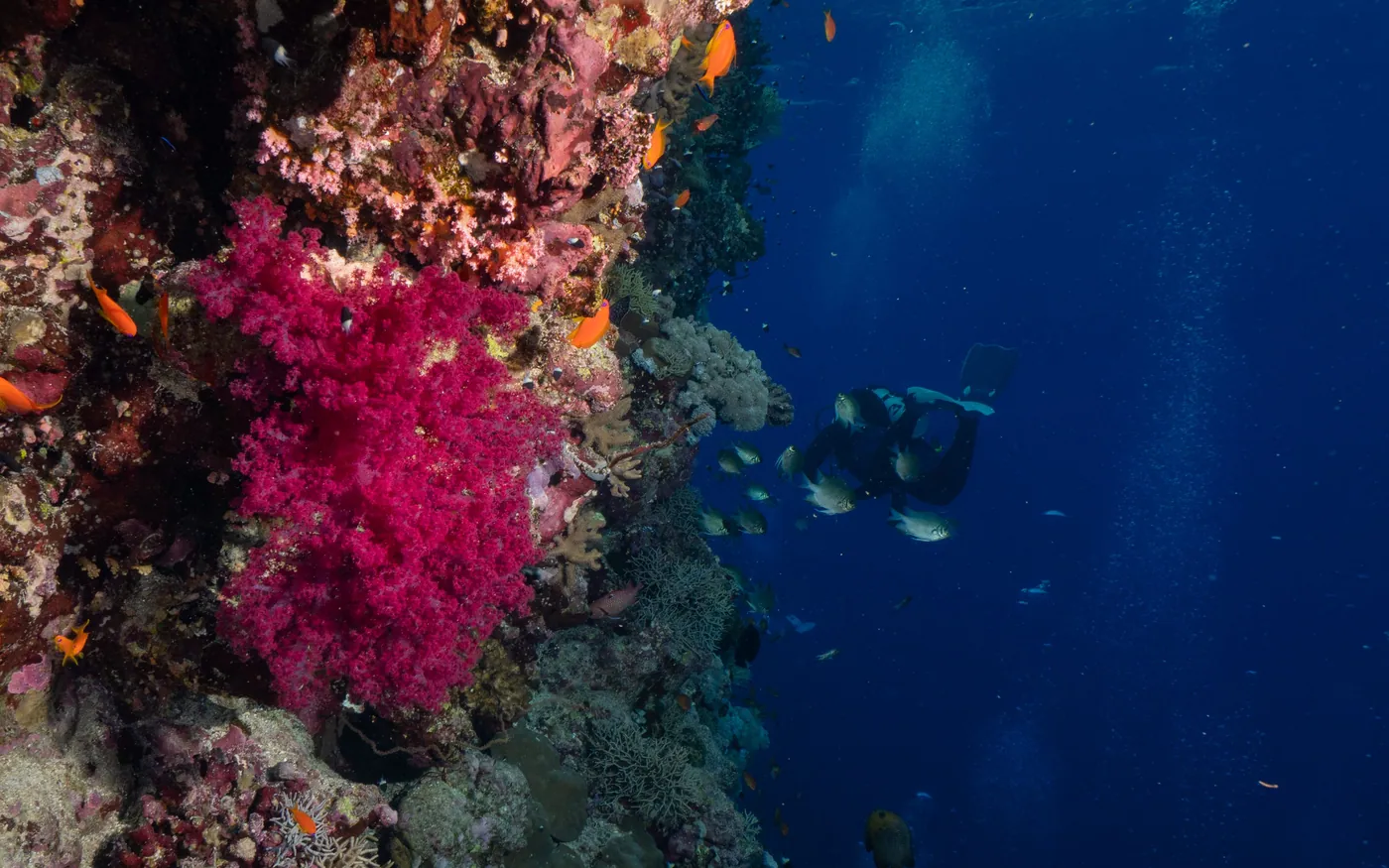
Two related habits worth settling early.
Do not collect. Shells with animals in them, urchins, sea stars and anything attached to rock are all alive, and a pocketful of souvenirs is a small amount of a site removed permanently. Where taking anything is regulated — and in New England a good deal of it is, by species and season — that is a matter for state regulations rather than for a dive shop blog, and worth checking before rather than after.
Do take rubbish out, within reason. Line, plastic and lost gear are all fair to remove, with the caveat about active fishing gear in diving against debris. It is the one form of interference with a site that improves it.
Frequently asked questions
Can I touch marine life?
No, and the reason is more concrete than etiquette. Many animals carry a protective mucus layer that handling wears away, leaving them open to infection, and a single accidental kick can break growth that took decades.
Why is feeding fish a problem?
It changes behavior. Fed animals associate divers with food, stop foraging normally, and concentrate where they are fed. The dive looks spectacular and the population is worse off for it.
How close is too close?
Close enough that the animal changes what it was doing is too close. If it stops feeding, backs away, or turns to face you, you have already arrived.
What if my dive guide handles animals?
Say something, politely, on the boat rather than underwater. Many operations publish a code of conduct precisely so that this is a shared expectation rather than an awkward conversation.
Does this matter as much in cold water?
Yes, and arguably more. Temperate growth is slow, the visibility means divers are closer to the bottom, and there is no guide reminding anybody — see what lives here.
Learn to hold your position
The most effective conservation skill is being able to hover. Ask an instructor at Divers Den to work on it with you.