
The water is green because it is full of life. The Gulf of Maine is one of the most biologically productive seas on earth, and the murk that frustrates divers is the same thing that makes the diving worth doing.
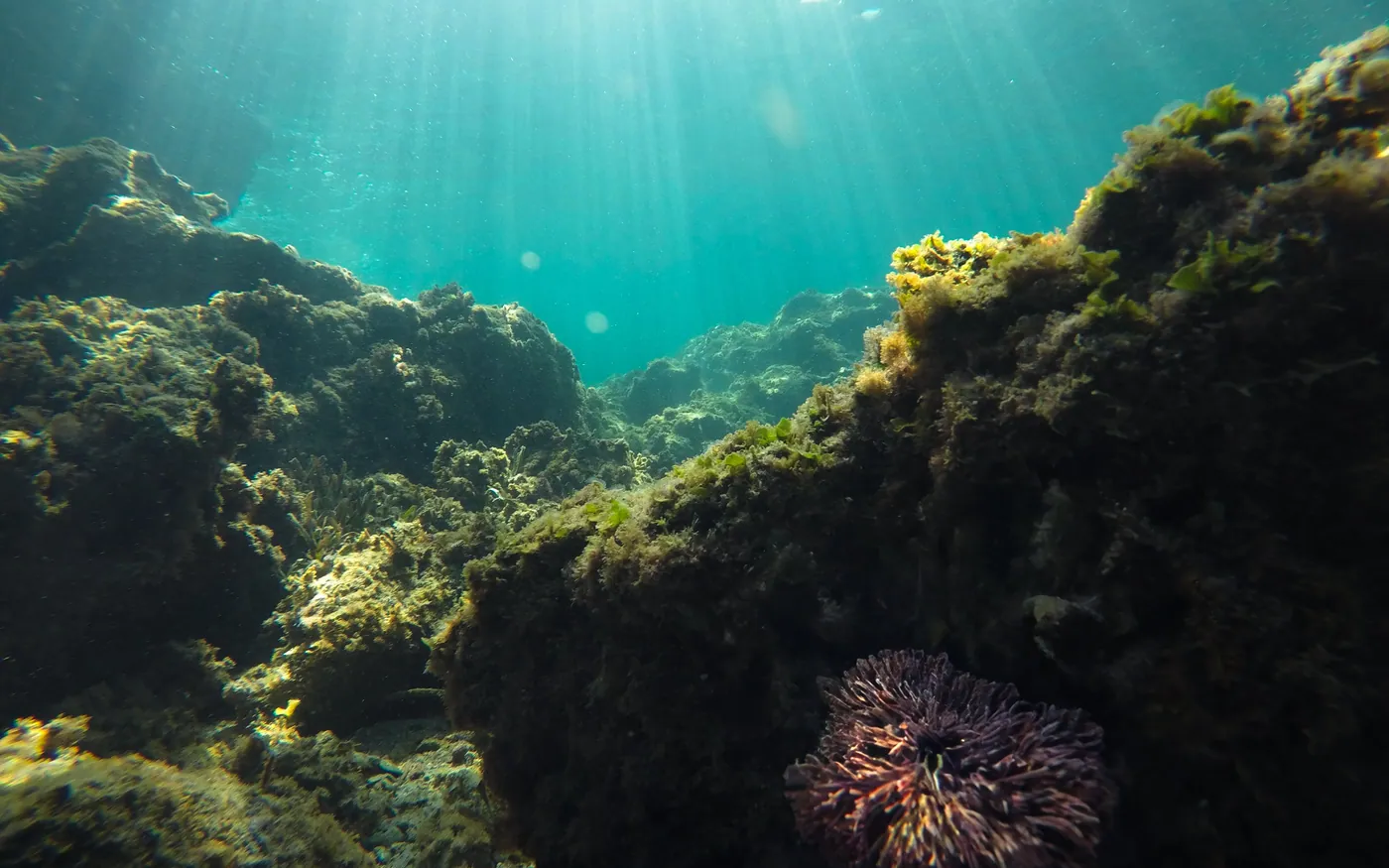
Why cold water is not a consolation prize
Divers who learn in warm water often treat New England as somewhere you dive because you happen to live here. That gets it backwards.
Cold, nutrient-rich water carries far more life per cubic foot than clear tropical water does. The trade-off is that you see less of it at once, which is a genuine cost — but there is more down there, not less.
Blue water is clear because there is nothing in it. Green water is green because there is.
What lives on the rock
Almost everything interesting here is attached to something, and rocky ground is where you should spend the dive.
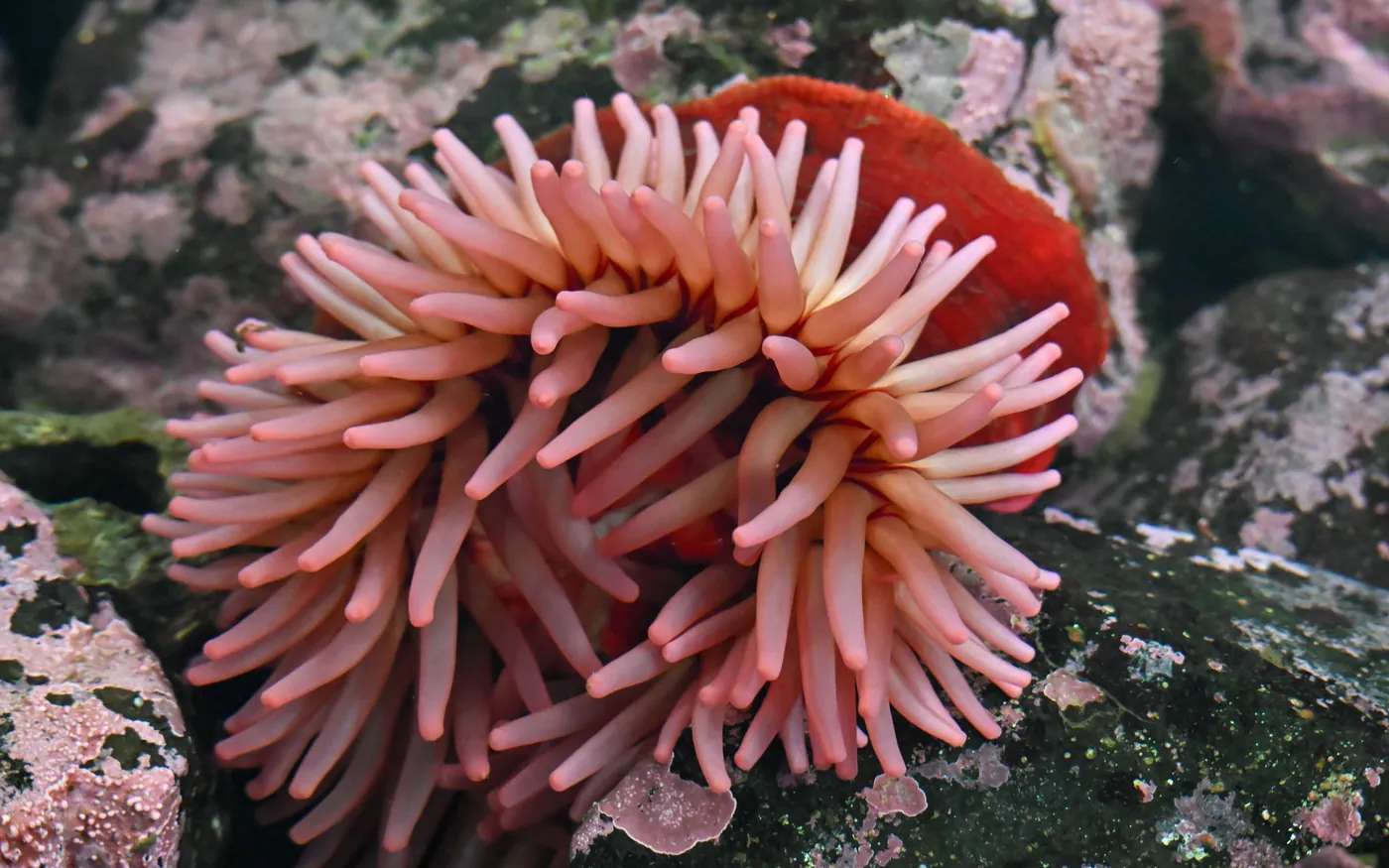
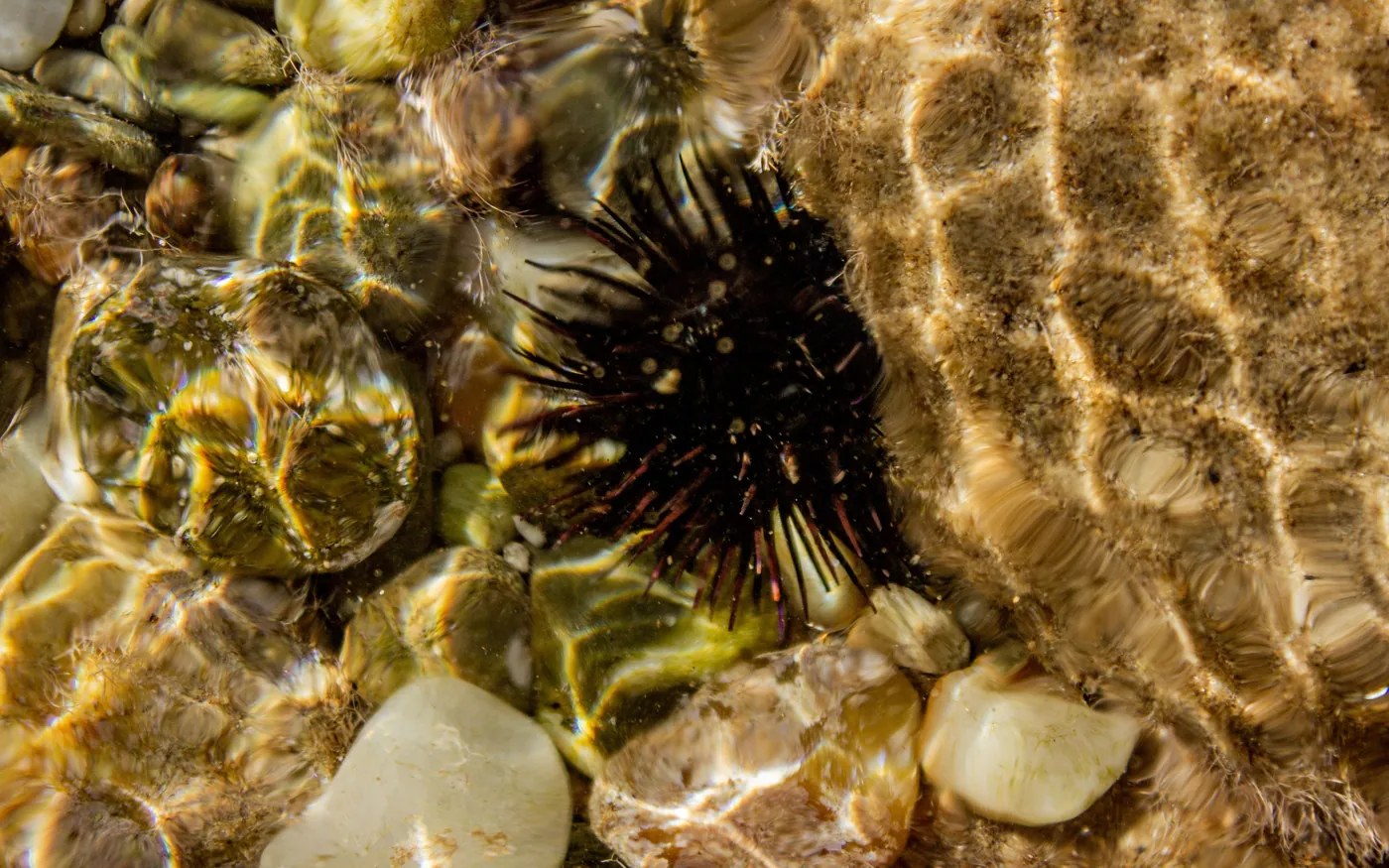
Subtidal rock outcrops carry anemones, bryozoans, mussels, tunicates and soft corals fixed directly to the substrate. On a wall like the one at Folly Cove, frilled anemones cover the vertical rock alongside urchins and sea cucumbers.
| What | Where to look |
|---|---|
| Lobsters | Gaps in cobble, and rock with kelp and mussels over it |
| Anemones | Vertical faces and overhangs |
| Green sea urchins | Open rock and kelp holdfasts |
| Sea stars and whelks | Boulder tops and sand-rock margins |
| Mussels and tunicates | Anywhere current runs over hard bottom |
| Cunner and redfish | In and around kelp, and structure of any kind |
The pattern is consistent: structure holds life, and open sand mostly does not.
Lobsters, which are the ones everybody wants
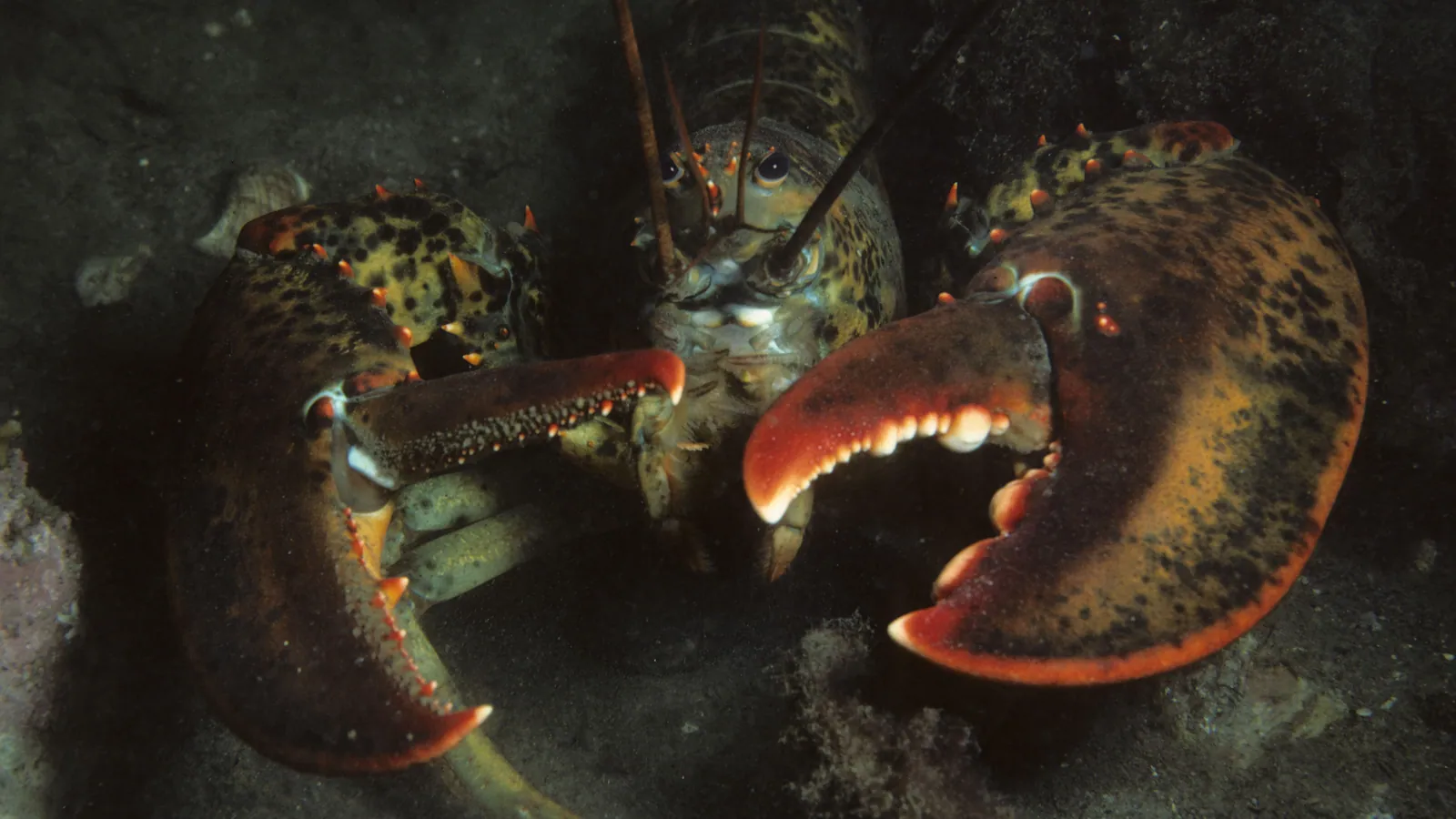
The American lobster is the animal most new divers here are hoping for, and the good news is that they are genuinely common on the right ground.
They actively select shelter, favoring shallow cobble beds and rocky bottom with kelp and mussels over it, because both give protection from predators. That means you find them by looking into structure rather than across it. NOAA Fisheries has a detailed profile of the species and its habitat.
One caution: taking anything is governed by state fishing regulations, and those differ between New Hampshire, Maine and Massachusetts. Look, and check the rules before you do anything else.
It is also worth knowing that almost nothing here is aggressive. The animals are small, well camouflaged and busy avoiding being eaten by something else, so the risk on this coast comes from cold, surge and visibility rather than from anything living. Divers arriving from warm water sometimes expect the opposite and spend their first few dives watching the wrong things.
The one habit worth building early is to look closely at a small area rather than scanning a wide one. Most of what is here is under a foot long, attached to something, and the same color as the rock it is sitting on.
The kelp, which is the whole system
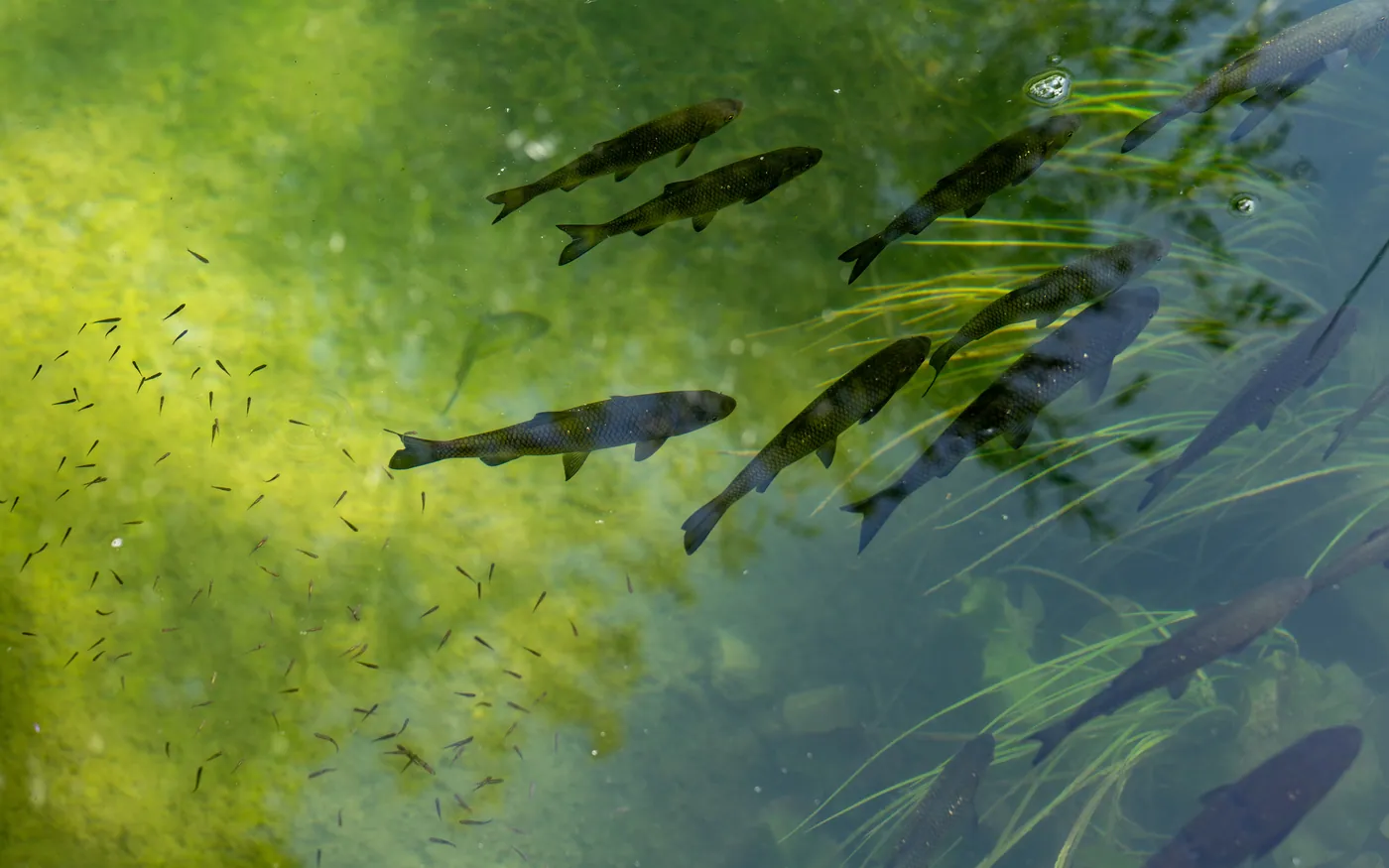
If the rock is the foundation, the kelp is the architecture, and it is worth diving into rather than over.
Kelp beds shelter fish such as cunner from predators, from ultraviolet light and from current. Swim slowly along the edge of a bed and you will see more in ten minutes than you will crossing open bottom for the whole dive.
It also moves. On any day with swell running, the whole bed sways, which is disorienting the first time and one of the better things about diving here once you stop fighting it.
The fish are there, you just have to slow down
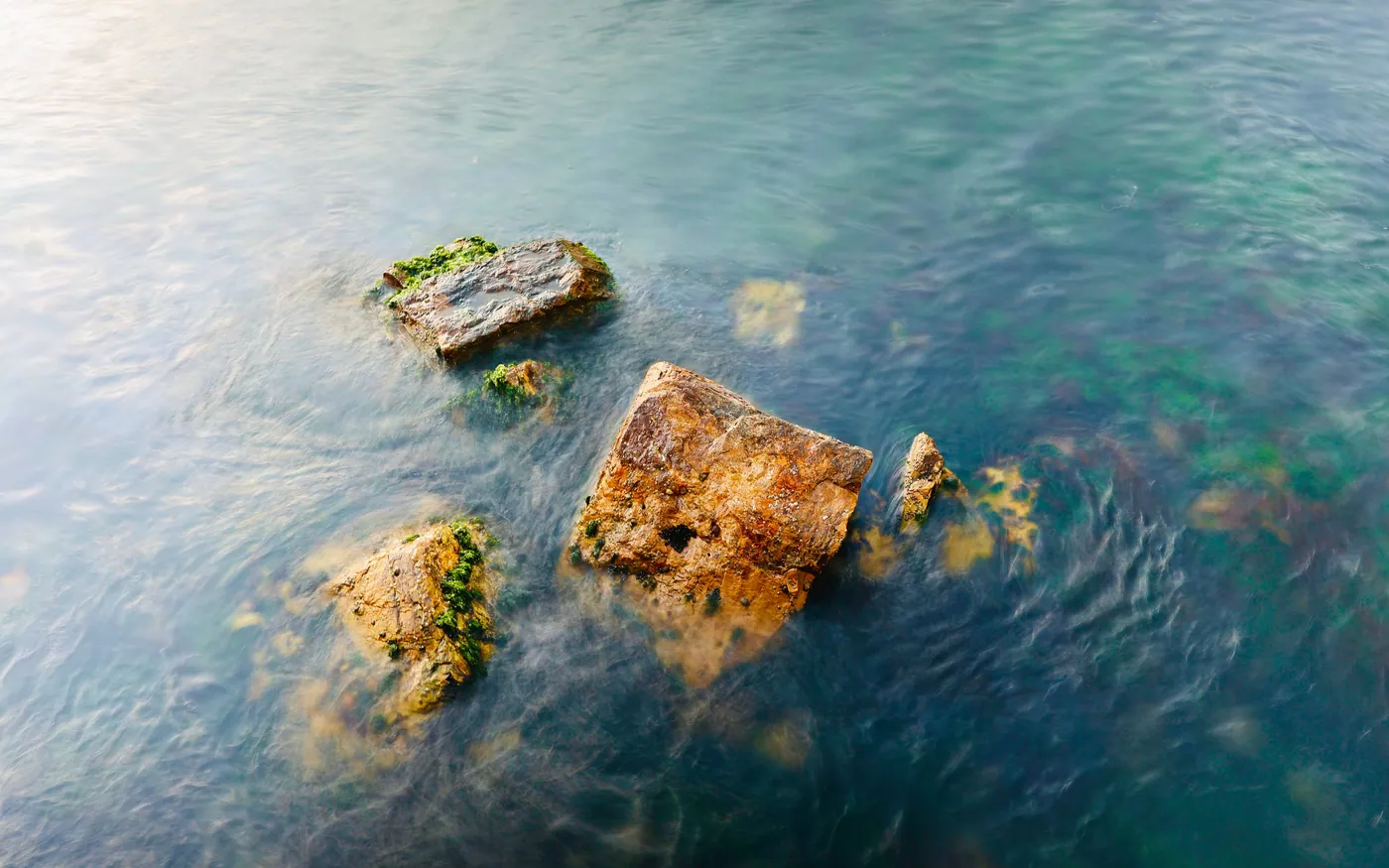
New divers often report seeing no fish here, and then see plenty on their tenth dive. Nothing changed except the speed they were swimming.
Cunner are everywhere around structure once you notice them. Acadian redfish and cod use the same rocky ground. Atlantic wolffish — a heavy, blunt-headed groundfish distributed through this region — is the one that makes a diver’s year, and it is uncommon enough to stay a genuine event.
The technique is simply to stop. Pick a patch of rock, hover, and wait a full minute. Things that vanished when you arrived will come back out.
The seasons change what is there
The same site is not the same dive in May and September, and it is not only the visibility that shifts.
The spring bloom is what turns the water green in the first place, and it feeds everything that follows. Later in the season the water clears as that settles out, which is why the best-looking dives here tend to come after the most productive months rather than during them.
Kelp changes through the year too, growing dense and then thinning and tearing through the winter storms. A bed you swam along in August can be noticeably sparser the following spring, which is normal rather than a sign of damage.
The practical consequence is that it is worth diving the same site repeatedly rather than always chasing a new one. Divers who know a site well see far more on it than visitors do, because they notice what has changed. Our comparison of boat and shore diving covers which of those is easier to repeat cheaply.
Seeing more of it
Two practical things change how much you see, and neither is equipment.
The first is buoyancy: a diver who is not stirring up the bottom keeps their own visibility, which matters enormously here. The second is patience, which is mostly a matter of gas consumption — the calmer you are, the longer the dive, and the more the dive gives back.
If you are working out where to go, our guide to shore diving sites in New England and our notes on the Massachusetts North Shore cover the ground within reach of the shop. If low visibility is what puts you off, it is a skill rather than a barrier.
Frequently asked questions
Will I actually see a lobster?
On a rocky site, very likely. Lobsters shelter in cobble and in rock with kelp and mussels, which describes most of the diving here. Look into the gaps between boulders rather than across the open bottom.
Is there anything dangerous?
Nothing that is interested in you. The animals here are small, well camouflaged and mostly trying to avoid being eaten by something else. The hazards on this coast are cold, surge and visibility, not wildlife.
Why is the water green rather than blue?
Because it is full of life. The green is plankton, and that productivity is the reason there is so much to look at. Clear blue water usually means comparatively little in it.
Can I take a lobster while diving?
Only under state fishing regulations, which differ between New Hampshire, Maine and Massachusetts and require the right license. Check the rules for the state you are diving in before you touch anything.
What is the best time of year to see things?
Later in the season generally brings better visibility as the spring plankton bloom settles. That is also when most local diving happens — see our shore diving guide.
Come and see it
Divers Den has been diving this coast since 1968. Ask us what has been showing up lately and where.