
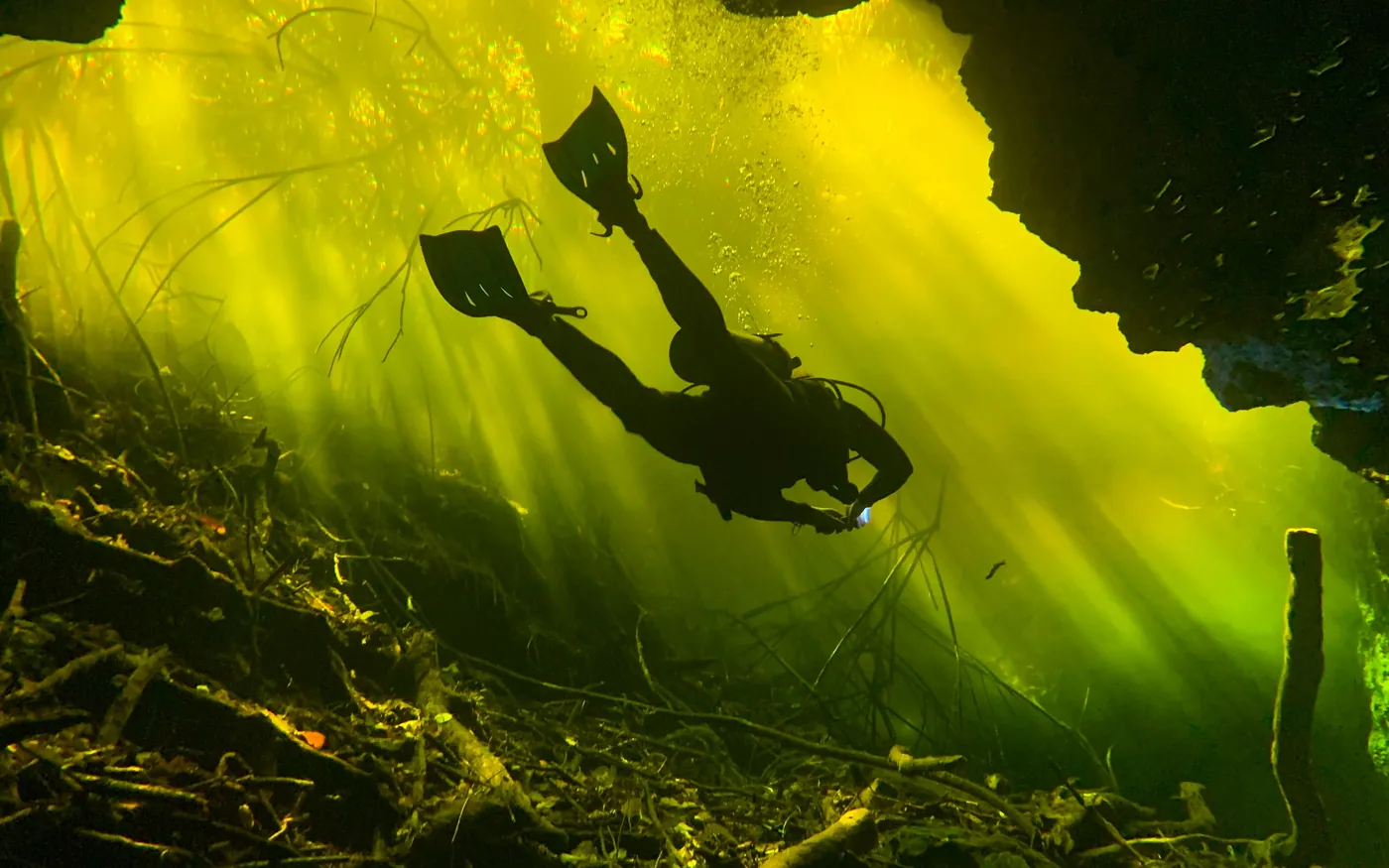
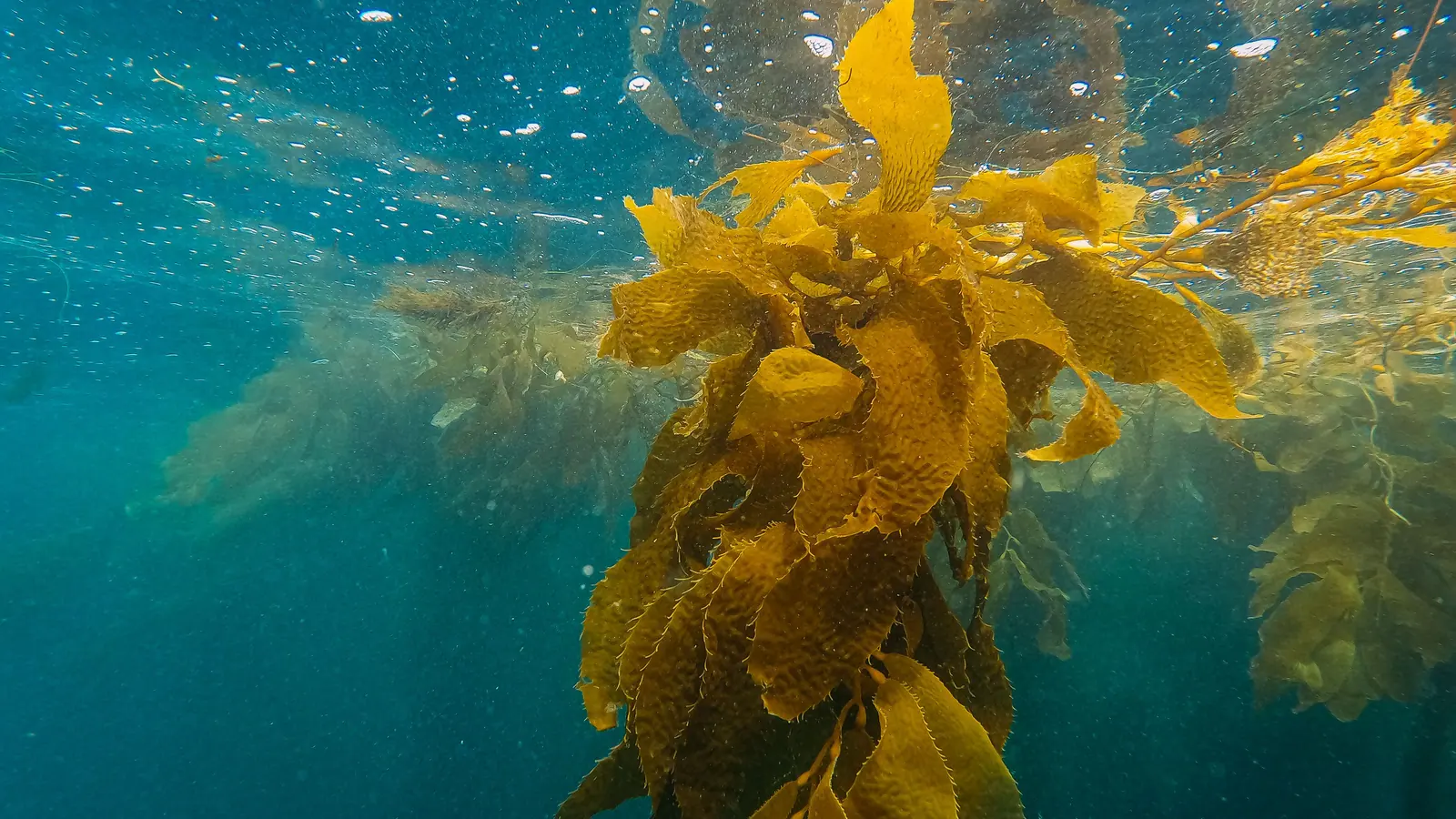
Kelp is not a hazard you avoid. It is the habitat, and almost everything worth seeing here is in it or beside it. Entanglement is common, rarely dangerous, and made worse almost exclusively by struggling.
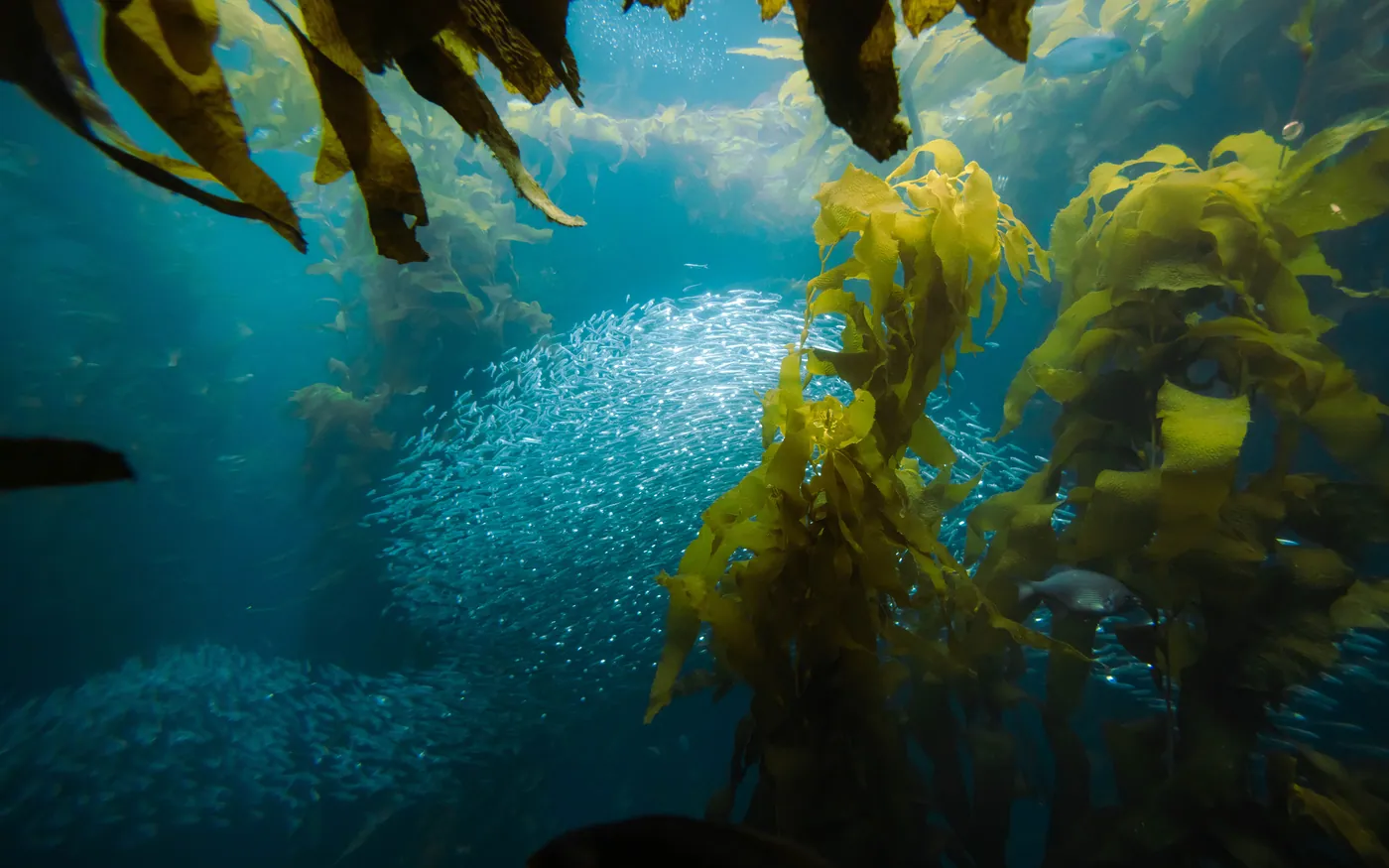
Why the kelp is the point
New divers here treat kelp as an obstacle between them and the interesting part of the dive. It is the interesting part.
Kelp beds shelter fish from predators, from current and from ultraviolet light, which is why fish are in them. A diver who swims over the top of a bed sees nothing; a diver who works along its edge slowly sees a great deal.
It also moves, which takes getting used to. On a day with any swell the whole bed sways, and the disorientation of that is real for the first few dives and then becomes one of the better things about diving here.
Getting in without getting wrapped
Most entanglements happen in the first minute, because of how the diver got in.
Enter feet first with your feet together, rather than headfirst or with a back roll. Then descend vertically, looking down. A vertical diver presents very little for the fronds to catch on; a horizontal one presents everything at once.
Vertical going down, horizontal once you are through. In that order.
Once you are below the canopy the water is usually open, which surprises people. The dense part is the top few feet.
Moving through it
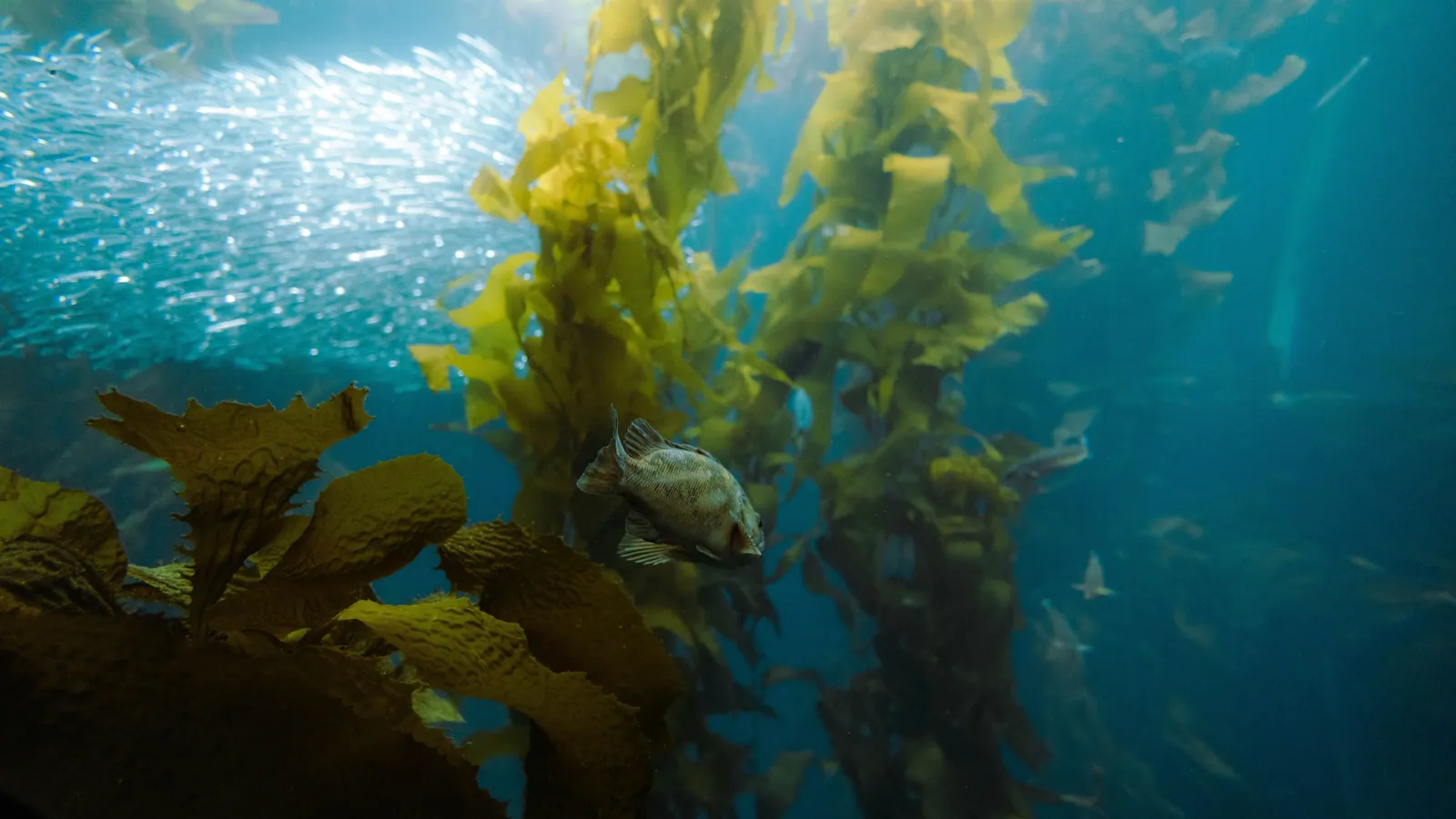
The technique is closer to walking through undergrowth than to swimming.
- Go slowly. Speed is what turns a frond across your valve into three fronds.
- Follow the natural pathways. There are gaps and channels through any bed, and using them is easier than forcing a line.
- Sweep with your hands. Push kelp aside and behind you, the way you would move branches.
- Stay streamlined. Anything dangling is something for kelp to catch, which is the same argument made in how to use less air.
- Swim single file with a buddy, close enough to help.
When you do get caught
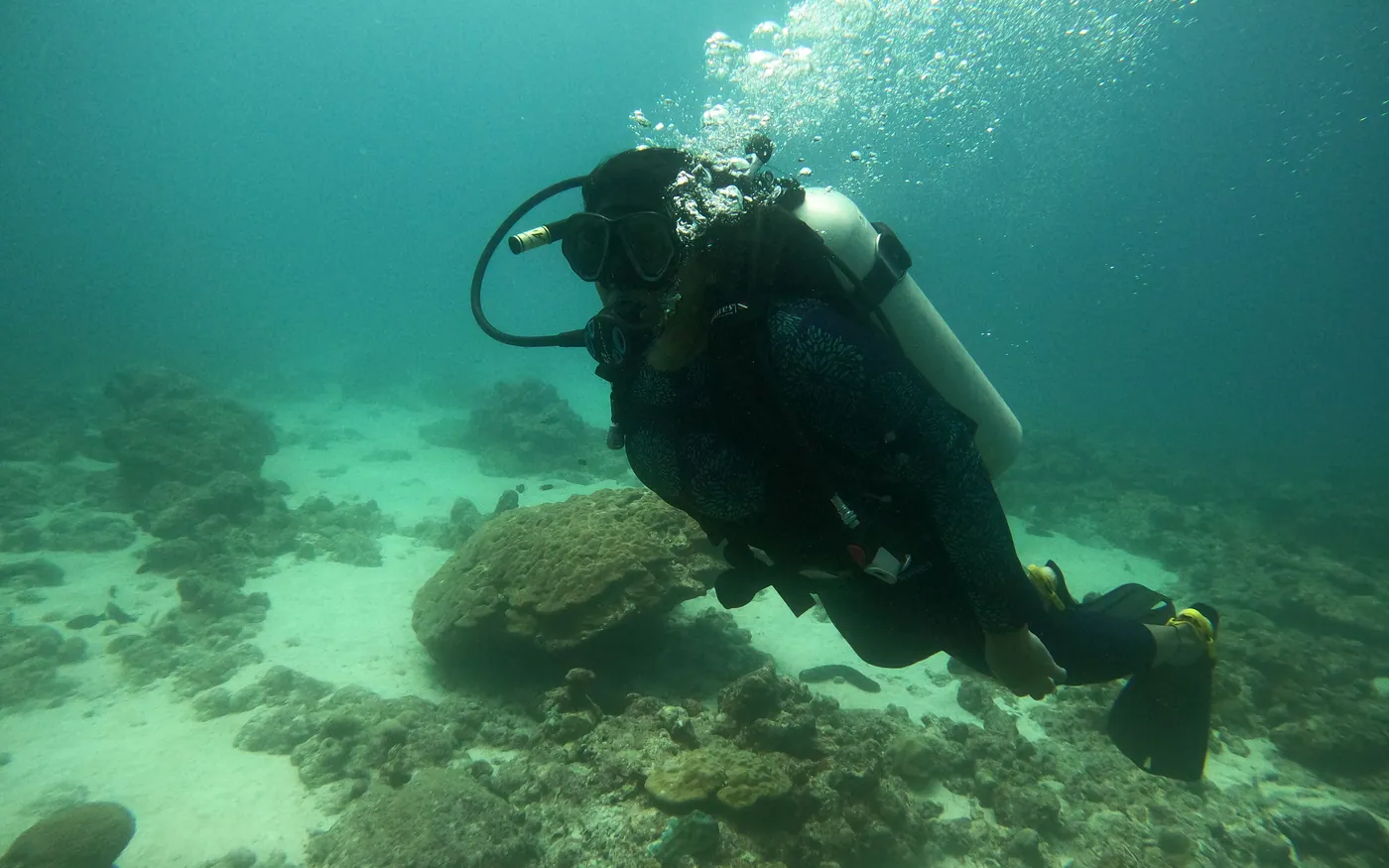
You will get caught. It happens to everyone who dives here and it is not the emergency it feels like the first time.
The response is to stop moving. Kelp does not tighten on its own, and nothing about the situation deteriorates while you are still. Then work out what is caught — usually the valve, a fin, or the gauge console — and clear it deliberately, or have your buddy do it, which is far easier because they can see your back.
Cutting is the last option rather than the first, but it is why you carry a tool you can reach with either hand. Struggling is what turns a minor snag into something worth writing about.
The kelp crawl
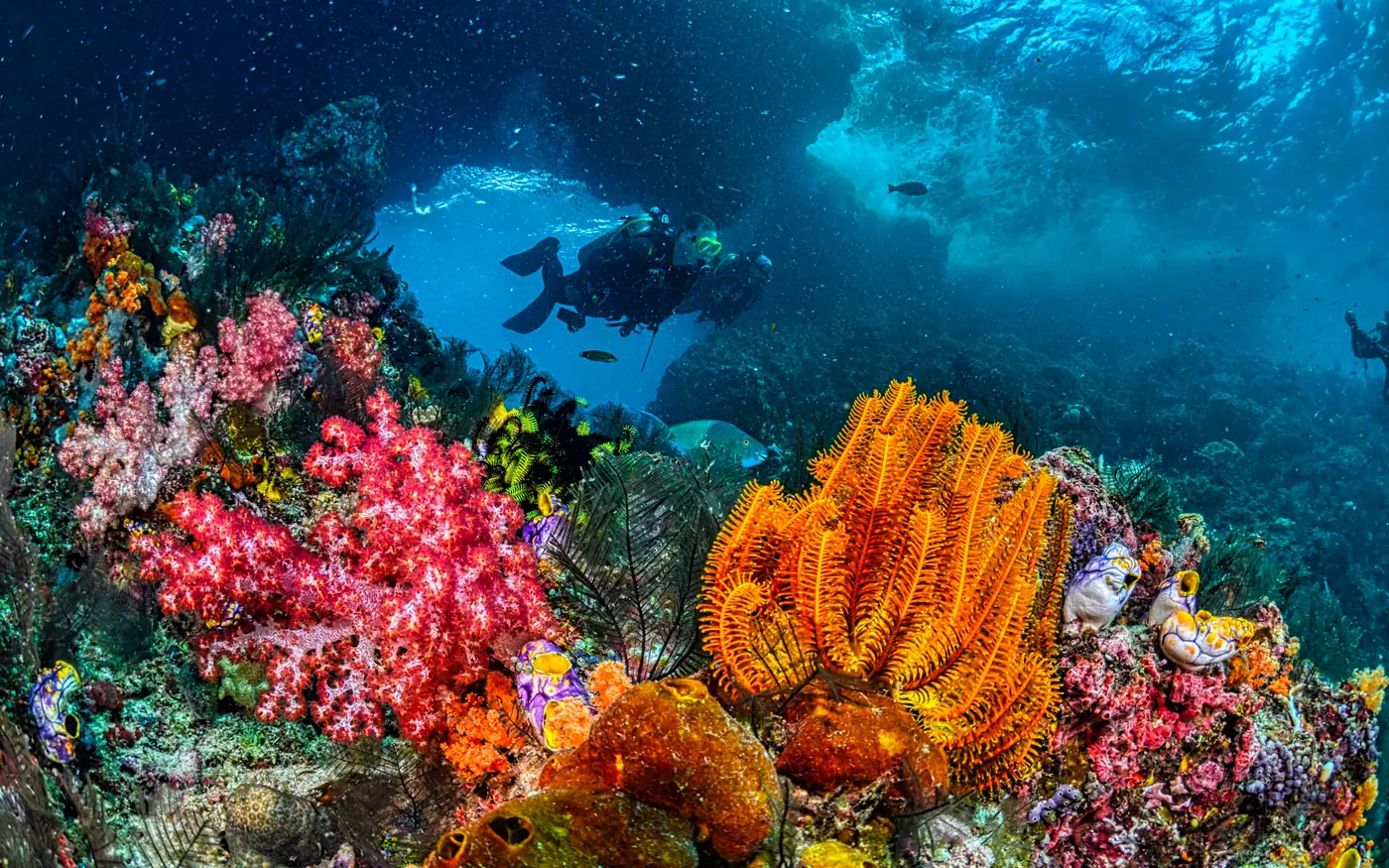
There is a specific technique for the situation where you surface into a canopy too thick to swim through, and it is worth knowing before you need it.
Inflate your BC fully so you are as high in the water as possible, and clear yourself of kelp as best you can. Then reach forward with both arms, push the kelp down and behind you, and pull yourself across the top of it. Trail your fins rather than kicking — kicking is what tangles them.
It is ungainly and it works. Scuba Diving Magazine sets out the technique and the reasoning in more detail.
The better answer, of course, is to descend and swim under it instead. The crawl is for when redescending is not an option.
It is worth saying that the fear is disproportionate. Divers who have never dived kelp imagine being held under by it; divers who dive it every week think of it as scenery that occasionally needs brushing aside. The gap between those two pictures closes after about three dives, and the fastest way through it is to go in with somebody who is bored by the whole idea.
The gear that makes it easier
Kelp punishes untidy equipment more than any other environment on this coast, and the fix is configuration rather than purchase.
- A cutting tool you can reach with either hand. On the harness or a thigh pocket, not strapped to a calf you cannot get to.
- Nothing trailing. Clip the octopus and console close, and route hoses against your body.
- A snug hood. A loose hood edge catches fronds and drags them across your face.
- Fins you can reach. Most snags end up at the fins or the valve, and one of those you can sort out yourself.
None of that is kelp-specific. It is the same streamlining that helps everywhere else, which is why divers who dive kelp regularly tend to have very tidy rigs.
Kelp as a navigational feature
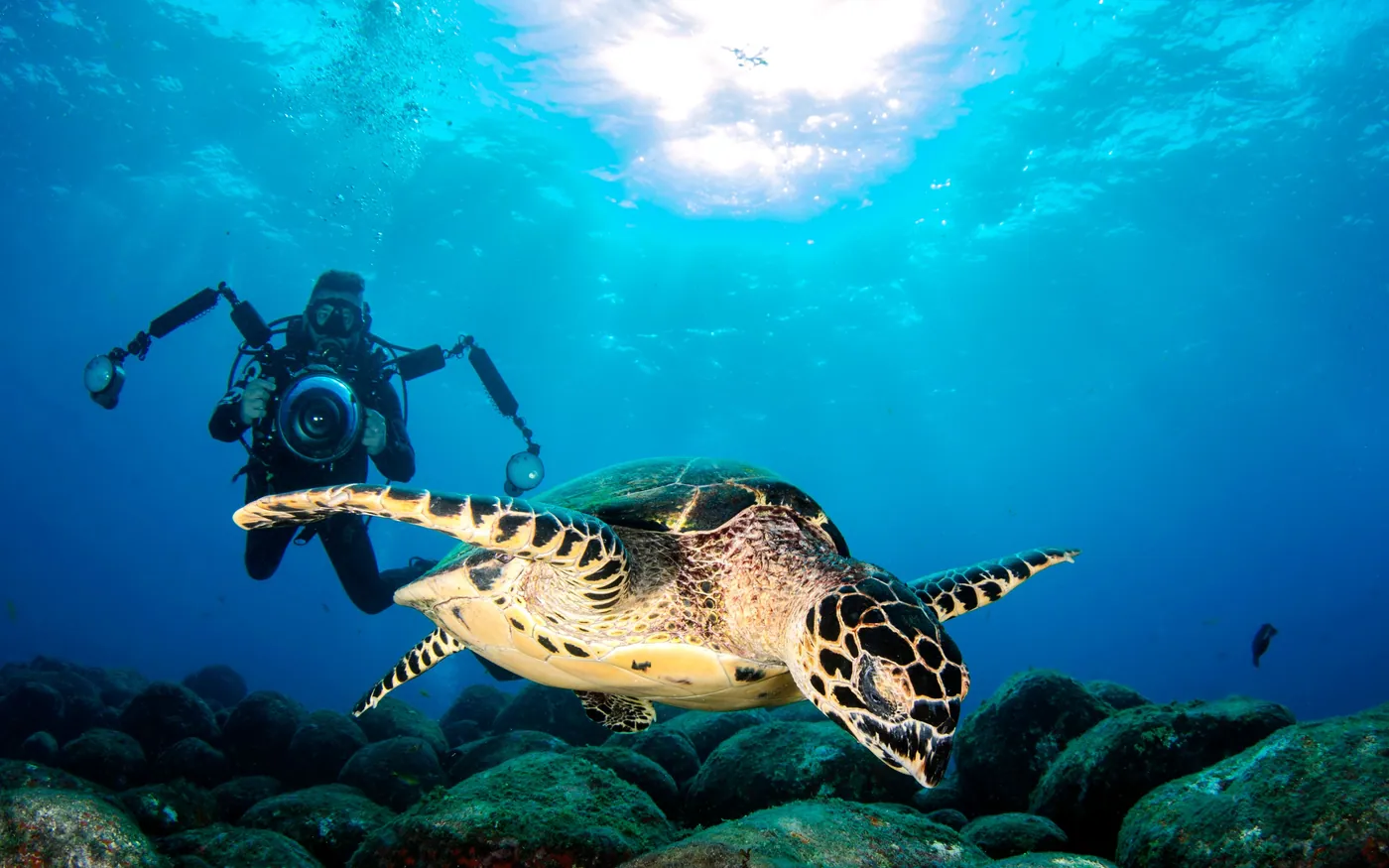
One underrated advantage: a kelp bed has an edge, and an edge is something you can navigate along.
Where kelp meets sand is a boundary as followable as a wall, and it usually runs parallel to something useful. In water where you cannot see far, following that line out and back is more reliable than any compass heading — the argument made properly in finding your way back.
It changes through the year, though. Beds grow dense through the season and thin out through winter storms, so a bed you learned in August may be noticeably sparser the following spring — one of the seasonal shifts covered in the diving year in New England.
Frequently asked questions
Is getting tangled in kelp dangerous?
Rarely, if you stop and deal with it deliberately. Kelp is strong but it is not a net, and it comes off readily when you stop moving and clear it. What turns it into a problem is thrashing, which wraps more of it around you.
Should I carry a knife?
Yes, and it should be somewhere you can reach with either hand. You will rarely use it, and the one time you want it you want it immediately. A cutting tool is standard equipment on this coast anyway — see wreck diving for the other reason.
What is a kelp crawl?
A way of getting across the surface when the canopy is too thick to swim through. You inflate your BC fully, clear yourself of kelp, then reach forward and push the kelp down and behind you while pulling yourself over the top of it. You trail your fins rather than kicking.
How do I get in through kelp?
Feet first, feet together, and descend vertically looking down. A headfirst entry or a back roll into kelp is how divers end up wrapped before the dive has started.
Why dive kelp at all?
Because that is where everything is. Kelp shelters fish from predators, current and light, and a bed edge is one of the most productive places to spend a dive here — see what you actually see diving in New England.
Learn it with someone who knows the beds
Kelp is much less intimidating with a divemaster who dives it every week. Ask about a guided local dive.