
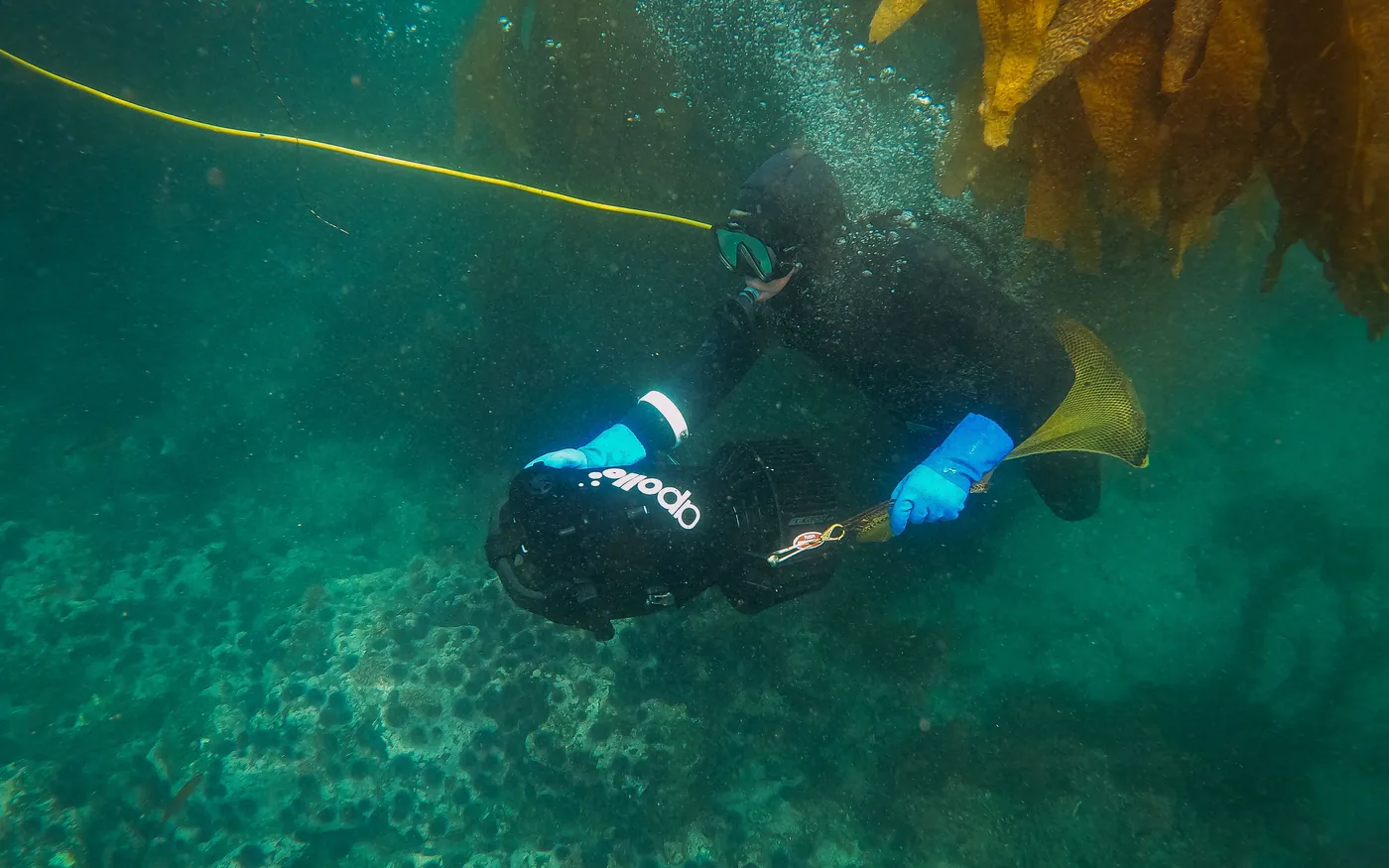
Almost every entanglement gets worse because the diver moved. The tool matters, and it matters much less than the ten seconds before you reach for it.
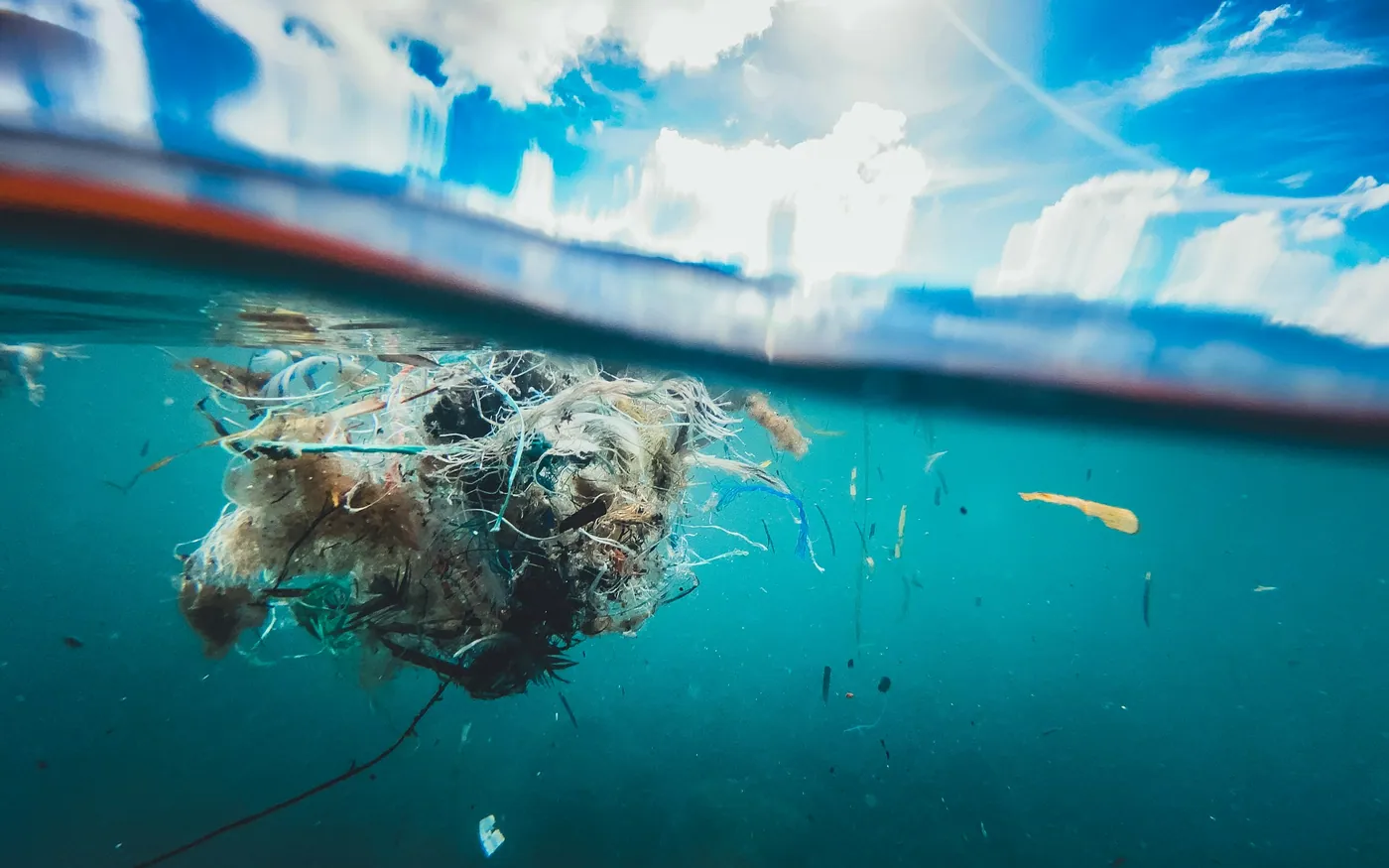
Stop moving
This is the whole first response and it is completely counter-intuitive.
Kicking, pulling and twisting are what turn a single strand across a fin into a wrap around three things. Monofilament in particular tightens beautifully when you struggle against it, and the diver doing the struggling is almost always the one who cannot see what they are caught on.
You cannot see your own tank valve. Your buddy can.
So: stop, breathe, and signal. The person two feet away can see the whole thing and can usually free you in seconds without any tool at all — which is one more reason to dive close enough to be reached, as being a dive buddy worth having argues.
What actually catches divers here
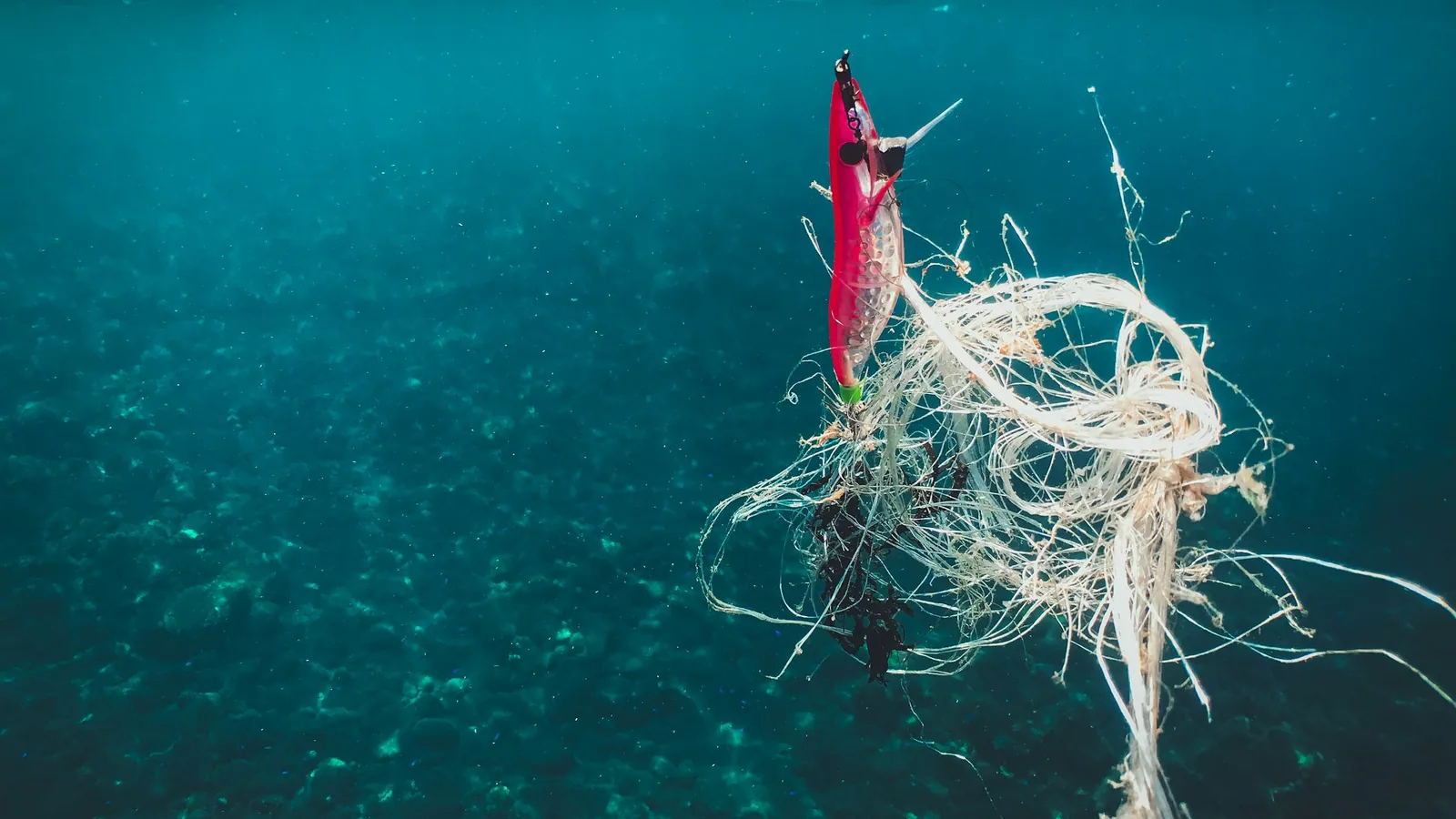
The hazard is specific to the coast, and it is not exotic.
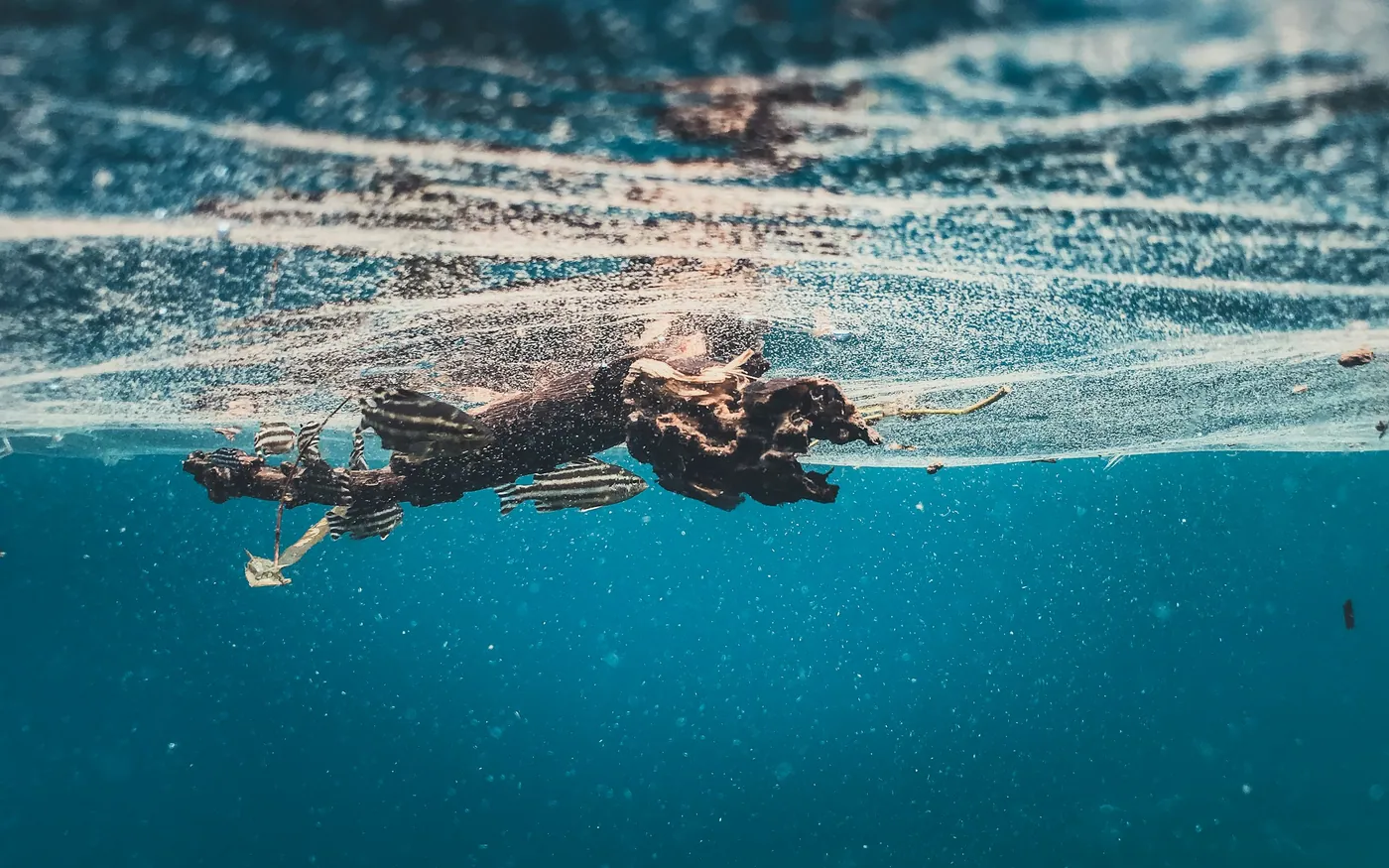
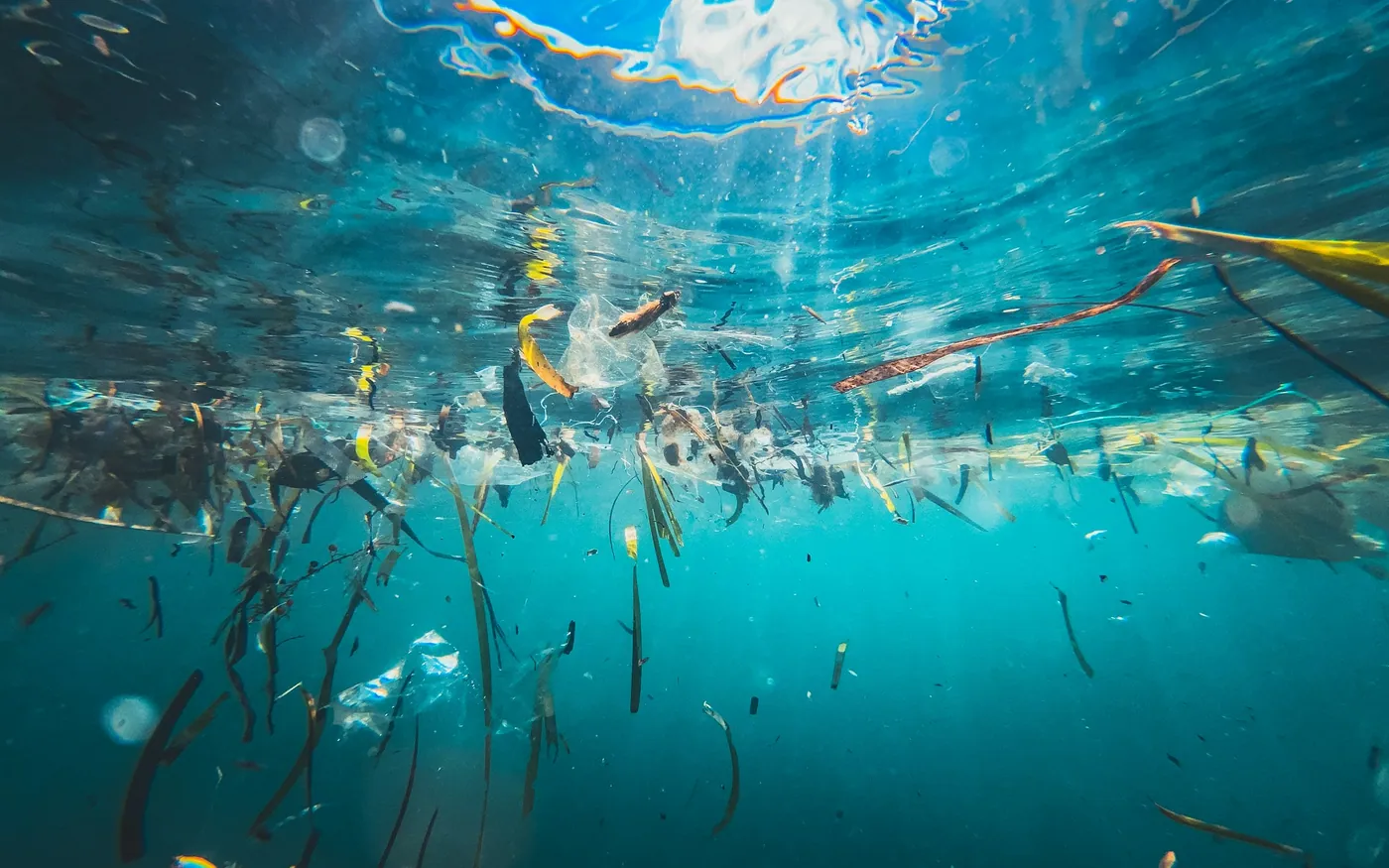
- Monofilament. Effectively invisible underwater, extremely strong, and it stays where it is lost for years.
- Pot and trap lines. Vertical line in the water column is exactly what a diver ascending in poor visibility meets first.
- Lost netting. Less common than line and far worse when you find it, because it wraps rather than catches.
- Kelp. Usually a nuisance rather than a hazard, and it can hold a tired diver — the subject of diving in kelp.
- Your own equipment. A dangling gauge, a long hose, an unclipped light. A surprising share of entanglements are self-inflicted.
The tool most divers should carry
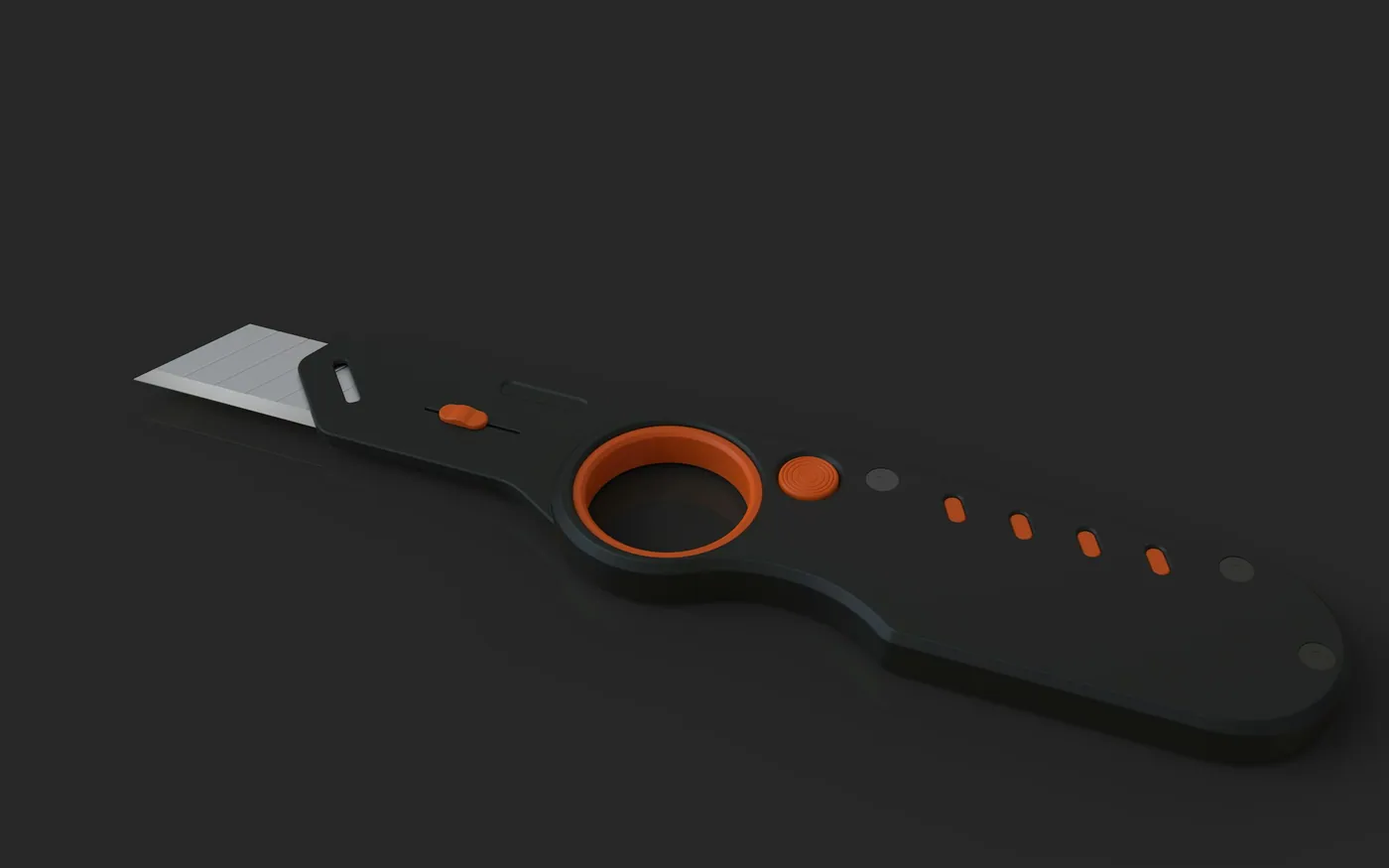
The default answer is a line cutter, and it is a better default than the knife most people picture.
A line cutter is a hooked tool with a recessed blade. You slide the hook over the line and pull. It is very sharp, it is safe because the blade is protected, it cannot be dropped as easily as a knife, and it will get the large majority of divers out of the large majority of entanglements — including webbing, if it comes to that.
What it will not do is cut thick rope, heavy netting or substantial wire. For those you want shears or a short serrated knife, and shears have the practical advantage that you can work them one-handed, which is the situation you will actually be in.
Where you put it matters as much as what it is
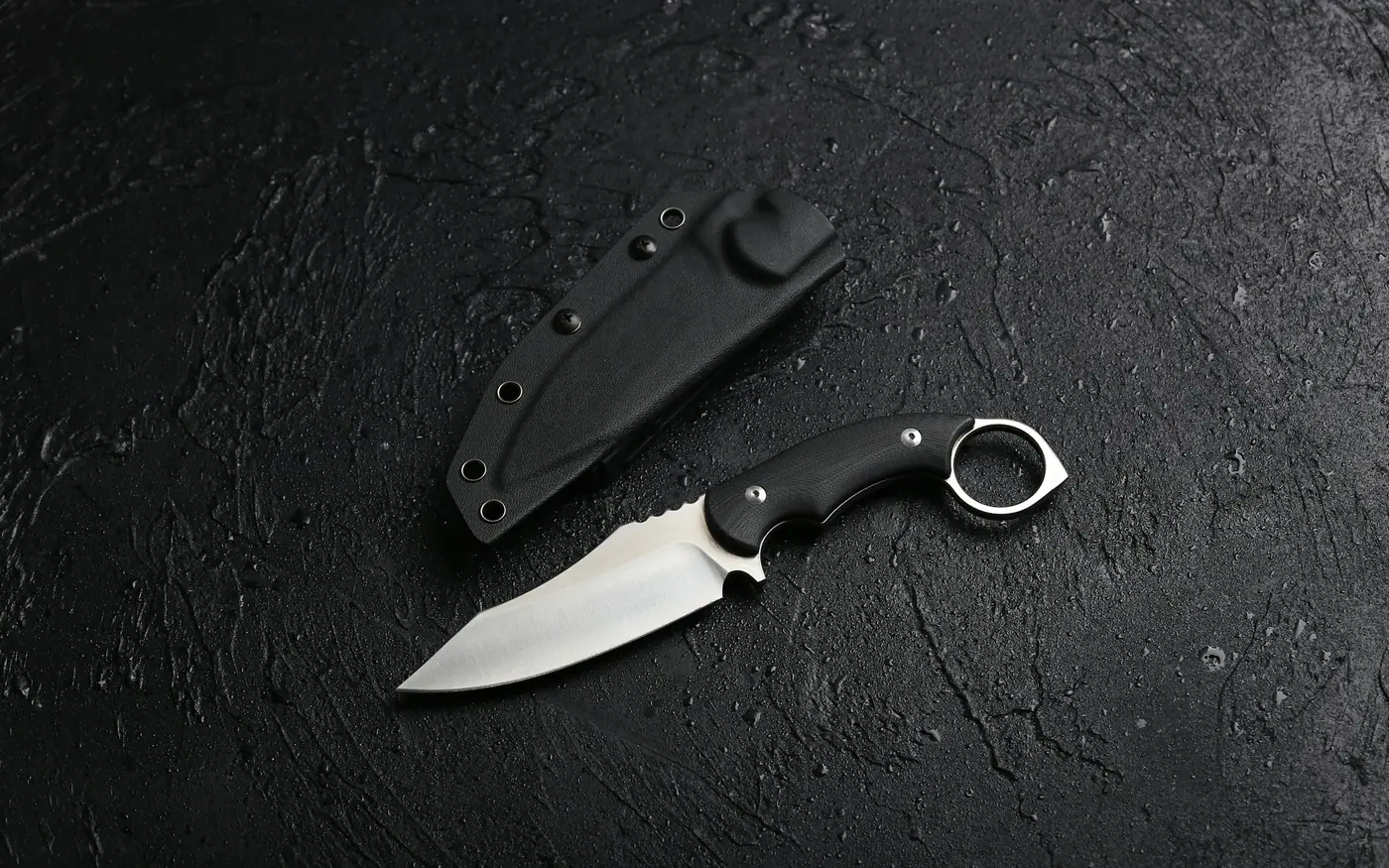
This is the part that experienced divers are opinionated about and new divers get wrong, usually by copying films.
Carry it on your upper body: a BC shoulder strap, the waist belt, or alongside a wrist instrument. The test is whether you can find it and use it with either hand, wearing thick gloves, without looking.
The outside of the calf is the classic wrong answer. It looks the part, and it fails on two counts — you cannot reach it if your upper body is held, and a sheath strapped to your leg is itself something for line to catch on. DAN is clear about placement and redundancy, and the standard advice is two tools in two different places, because the entanglement may be precisely what stops you reaching the first.
The other half: not getting caught
Every entanglement discussion is about escape, and rather less is said about the much easier problem of not presenting anything for line to catch on.
A diver with a gauge console swinging below them, a long octopus hose looping free, a light dangling on a lanyard and a knife strapped to one calf is carrying four hooks through the water. A diver with everything clipped close to the body is carrying none. That difference costs nothing and it removes most of the ordinary entanglements before they happen.
Position matters too. Swimming a foot above a bottom strewn with old line is asking for it; swimming four feet above it is not, which is one more thing that follows from decent trim. And in poor visibility, ascending slowly with a hand up is worth doing for exactly this reason: it is how you find a vertical line before it finds your tank valve.
Practicing it, which nobody does
Cutting is a skill, and it belongs in the same category as regulator recovery: something you rehearse when it does not matter.
On an ordinary shallow dive, take the tool out and put it back, with gloves on, without looking down. That alone tells you whether your placement works. If you want to go further, cut a piece of scrap line at the safety stop and discover how awkward it is to do one-handed while holding your position.
It is also worth streamlining while you are thinking about it. Clipping off a dangling gauge and shortening a loose hose removes a whole category of self-inflicted problem, and it improves your trim at the same time.
Cutting the thing, and knowing when not to
When you do cut, cut deliberately and cut the minimum.
Work out what is actually holding you before you start sawing, and cut that. Divers who begin cutting everything they can reach tend to remove a line that was not the problem and drop the tool while doing it. Keep hold of it — a lanyard is not a bad idea — and get your buddy to hold the loose end where that helps.
And there is a limit worth naming: if you are inside netting rather than caught on line, this is a serious situation and the honest answer is that it needs a buddy, a clear head and a slow approach rather than heroics. That is also part of what Rescue Diver exists to prepare you for.
Finally, if you cut somebody free of active fishing gear, leave the gear alone otherwise. Removing lost gear is a legitimate activity, covered in diving against debris; interfering with gear that is in use is a different thing entirely.
Frequently asked questions
What do I do if I get caught?
Stop moving. Kicking, pulling and twisting all make it worse, and most entanglements tighten because the diver struggled. Stop, signal your buddy, and let them look at the thing you cannot see.
Knife or line cutter?
A line cutter, for most divers and most situations. It is small, extremely sharp, protected so it will not cut you or your gear, and it handles monofilament and rope that fit through the opening. A knife or shears is the better tool for thick net and heavy rope.
Where should I carry it?
On your upper body — a BC shoulder strap, the waist belt, or beside a wrist instrument. Somewhere you can reach with either hand. The outside of the calf looks the part and is one of the worst places: you cannot reach it if you are held, and it is a snag hazard itself.
Should I carry two?
It is the standard recommendation, in two different places. The reason is simple — the entanglement may be exactly what stops you reaching the first one.
Is this really a problem in New England?
It is the local hazard most worth preparing for. Between pot lines, monofilament and kelp there is more to catch on here than on a sand-bottomed tropical reef — see diving in kelp.
Get a tool you can actually reach
Bring your BC in and we will work out where a cutter should live on it. It takes ten minutes and it is worth doing once.