

The second dive of the day is not a second first dive. You start it with nitrogen already in you, and everything about how it is planned follows from that one fact.
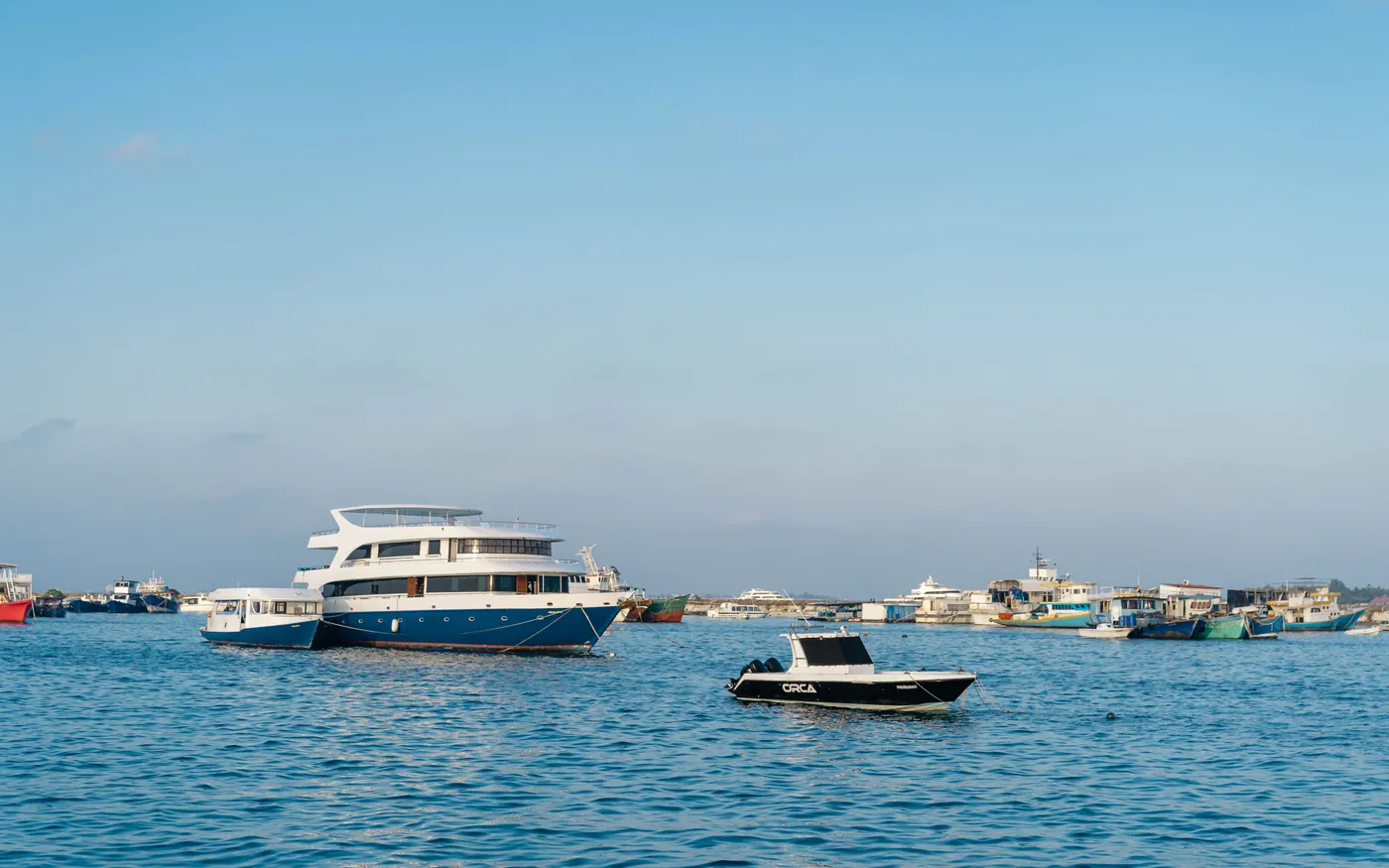
This explains the shape of a multi-dive day. It is not a substitute for your computer or tables, and no limits or intervals are given here on purpose.
What is actually going on
The mechanism is the same one behind decompression sickness, viewed across a day rather than a single ascent.
Under pressure you absorb nitrogen. On the way up and at the surface you offload it, but not instantly — it leaves over hours, not minutes. So when you go back in an hour later, you are not starting from zero. That residual nitrogen reduces the time available to you at any given depth on the next dive.
The surface interval is not a break. It is part of the dive plan.
It is worth being clear that this is a limit on time rather than a hazard in itself. Repetitive diving is completely ordinary; it just has to be planned as a day rather than as two unrelated dives.
Deep first, shallow second

This is the convention every charter follows and the reason is straightforwardly practical.
Depth costs you time much faster than shallow water does. Doing the deeper site first, while you are cleanest, and the shallower site second, when you are carrying residual nitrogen, produces more usable bottom time across the day than the reverse order. Reverse it and the second dive becomes very short.
It also means the deep dive happens when you are freshest and have the most gas, which matters for the reasons in nitrogen narcosis and planning a dive. If a boat proposes that order, that is why.
What to do with the interval

An hour on a boat deck is not dead time, and how you spend it changes the second dive.
- Drink water. Dehydration is one of the few decompression risk factors entirely in your hands, and a dive dehydrates you.
- Eat something. Being cold and hungry on the second dive is how people cut it short.
- Get warm and get out of the wind, which matters far more here than in the tropics — see cold water diving.
- Avoid heavy exertion, which is the timing point in fitness for diving.
- Sort your gear and your plan for the next dive rather than in the last two minutes.
- Write down the first dive while you remember it — the numbers that make a log useful.
And resist the pressure to shorten it. A surface interval trimmed to fit a schedule is time taken directly off the second dive.
The computer does not remove the problem

Dive computers have made all of this invisible, which is convenient and slightly misleading.
A computer tracks your loading continuously and tells you what you have left. What it does not do is decide anything. It will happily present you with a very short second dive because you spent forty minutes deep on the first, and it has no view about whether that was a sensible way to spend the day.
It also cannot see how you feel, how cold you are, how hard you worked, or how well you slept. DAN’s piece on what does and does not happen to nitrogen in a diver is a good corrective to the folk models divers carry around about all this.
Where nitrox earns its keep
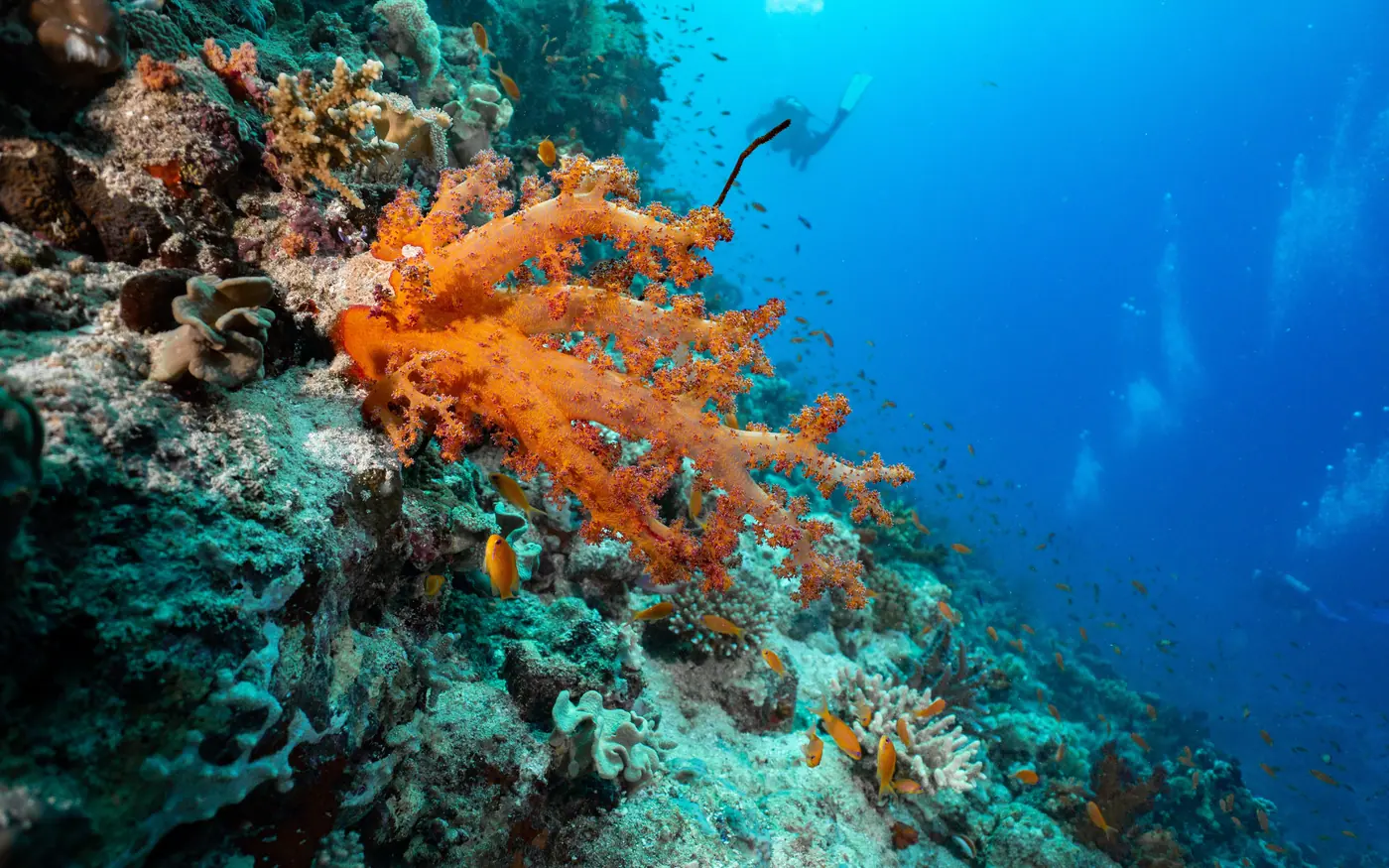
If you have ever wondered what enriched air is actually for, this is it.
Breathing a mix with less nitrogen in it means absorbing less nitrogen on each dive, which leaves more time available on the ones that follow. On a single shallow dive the benefit is marginal; on a three-dive day, or a week of them, it is the difference between full dives and truncated ones.
What it is not is a license to go deeper or a safety guarantee, and the honest accounting is in nitrox vs air. The course is short and needs no dives, which is why it tends to be the first specialty divers take.
The second dive is often the better one
Worth saying, because the constraints above make the second dive sound like a consolation.
In practice it frequently is not. You are warmed up, your weighting is settled from the first dive, the group has sorted itself out, and the nerves that came with the first entry are gone. Divers routinely report their second dive as more relaxed and lower on gas consumption than the first, which is the pattern in how to use less air.
It is also usually shallower, which means longer. A shallow second dive on a reef or a rocky bottom, with time to look properly at a small area, is often the dive people remember from the day.
Days, not just dives

The same accumulation happens across days, and it is the part local divers meet least often and trip divers meet hardest.
Two dives on a Saturday is a modest loading. Three dives a day for six days is not, and it is the standard shape of a dive vacation. Build in conservatism as the week goes on, consider a day off in the middle, and be aware that the last day is both the most loaded and the one before you get on an aeroplane — which is the whole point of flying after diving.
It is also worth diving the week more gently than you think you need to. Nobody has ever regretted a slightly shallower last dive, and the extra ten minutes at depth is never worth what it can cost.
Frequently asked questions
Why is the second dive usually shallower?
Because you start it with nitrogen still in you from the first, which reduces the time available at any given depth. Diving the deeper site first and the shallower one second gets you more usable bottom time across the day.
How long should the surface interval be?
Longer than you want it to be, and the number comes from your computer or tables rather than from a rule of thumb. Time on the surface is what lets you offload nitrogen, so shortening it costs you time on the second dive.
Does my computer handle all this for me?
It tracks it and it does the arithmetic, which is not the same as removing the constraint. It will happily show you a short second dive if you gave it a long first one.
Does nitrox help on a multi-dive day?
That is precisely what it is for. Less nitrogen absorbed on each dive means more time available on the later ones — the honest accounting is in nitrox vs air.
What about several days in a row?
The loading accumulates across days as well as across a day, which is why trips are worth planning conservatively and why a day off partway through is a reasonable idea.
Make the second dive count
Enriched air is the specialty that changes multi-dive days, and it takes an evening. Ask us when the next one runs.