
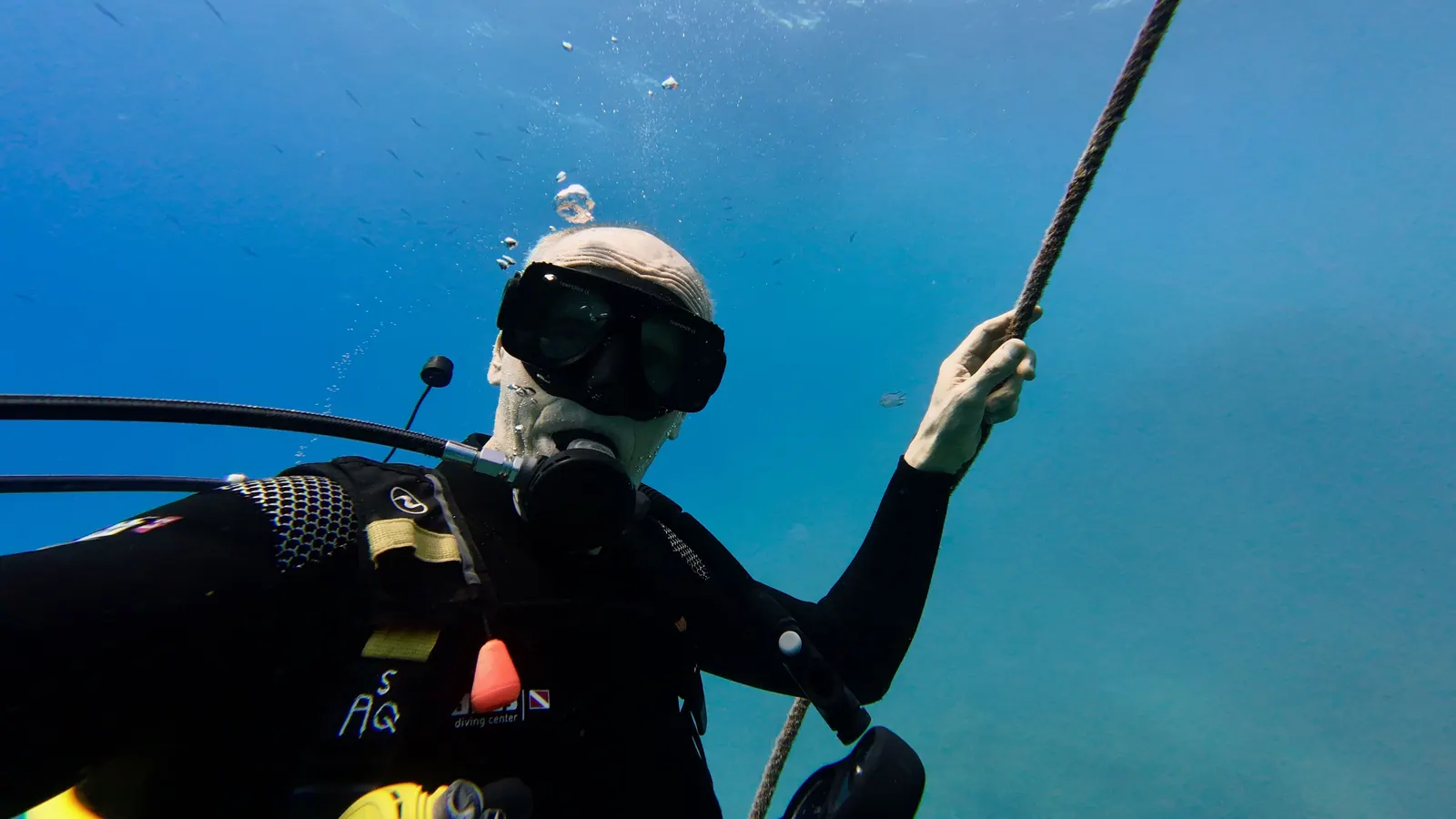
Four dives, usually over two days, in cold water you cannot see very far through. It sounds worse written down than it feels on the day, and knowing the shape of it in advance takes most of the sting out.
You have already done the hard part
By the time you reach open water you have finished the theory and spent hours in a pool. Every skill you will be asked for — clearing a mask, recovering a regulator, controlling a descent — is one you have already done, in warmer water, more than once.
What changes is the setting, not the task. That is the whole design of the course: move a familiar skill into an unfamiliar place, one step at a time.
It helps to know that in advance, because the first few minutes are when the setting feels loudest.
The four dives, one at a time
The dives are not four repeats of the same thing. Each one hands you a little more of the dive to run yourself.
| Dive | What it is mostly about | How it feels |
|---|---|---|
| One | Getting in, getting down, basic skills | The busiest and the most nervous |
| Two | Repeating skills with less prompting | Noticeably easier than dive one |
| Three | More depth, navigation, buoyancy | You start looking around |
| Four | Diving, with skills checked along the way | This is the one people enjoy |
Most people report the same arc: dive one is a blur, and by dive four they are genuinely diving rather than performing.
What actually surprises people
The surprises are rarely the ones people brace for. Nobody is bothered by the things they worried about in the car on the way over.
- The gear is heavy out of the water and weightless in it. The walk to the entry is the hardest physical part of the day.
- You cannot see far, and it does not matter. Local visibility means you stay close to your buddy and your instructor, which is what you should be doing anyway.
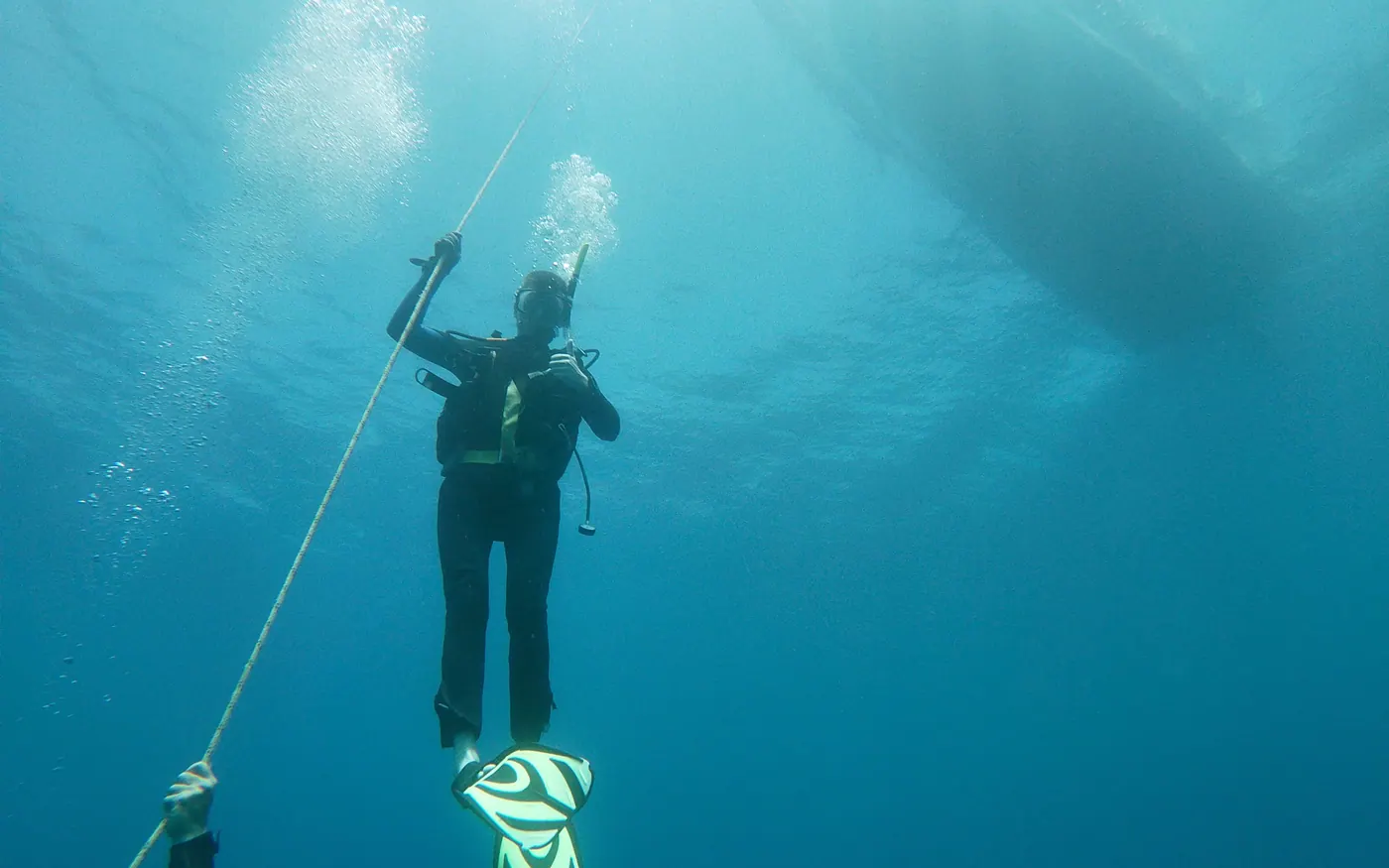
- Descending is the bit that takes practice. Most first dives use a line, and going down it slowly, equalizing as you go, is a skill in itself.
- The cold arrives late. You will be fine for the first stretch and start noticing it towards the end. That is normal and it is why dives are kept short.
The descent line is not a safety net. It is a handrail, and everybody uses it.
Being nervous is not a problem to hide
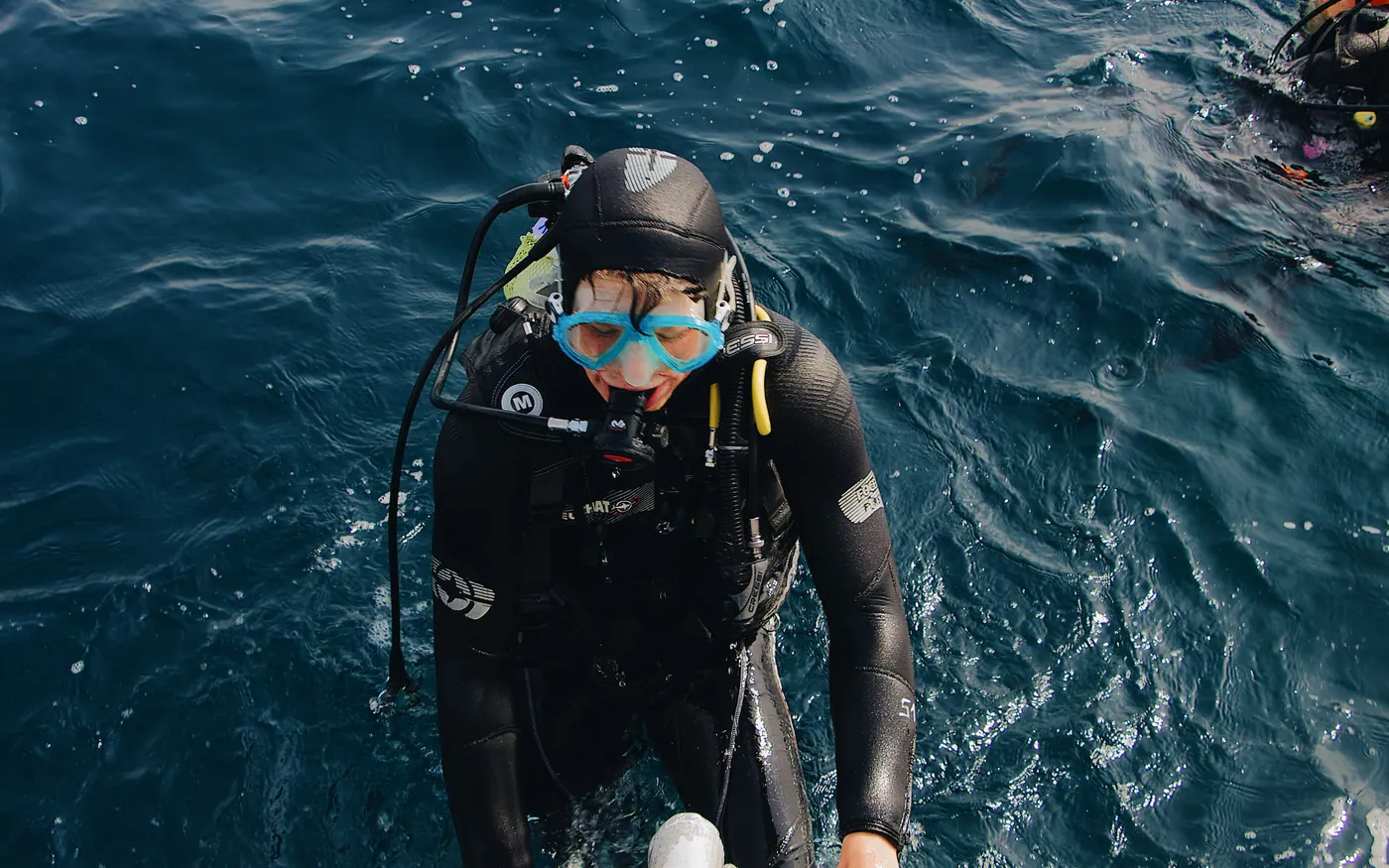
The single most useful thing you can do is tell your instructor how you are feeling before you get in the water.
It changes the dive. An instructor who knows you are anxious will stay closer, slow the descent, and check in more often. An instructor who does not know is working blind.
If nerves are the main thing standing between you and booking, a Discover Scuba session in the pool is a low-commitment way to find out how you react before any of this is on the calendar. SSI has a first-hand account of working through a fear of diving that is worth reading if this is where you are.
What happens between the dives
Nobody talks about the surface interval, and it is a surprisingly large part of the day.
You get out, get your cylinder swapped, and spend the next hour warming up and talking about what just happened. Your instructor will debrief the dive, which is where most of the actual learning lands, and you will log it.
Staying warm during that hour is the single thing that most affects how the second dive feels. Divers who stand around wet in the wind are the ones who cut the afternoon short. Dry clothes, something hot to drink and getting out of the breeze all matter more than they sound like they should.
It is also the best time to ask questions. Whatever went sideways on the first dive is fresh, and there is an instructor standing next to you with an hour to spare.
How to make the day easier
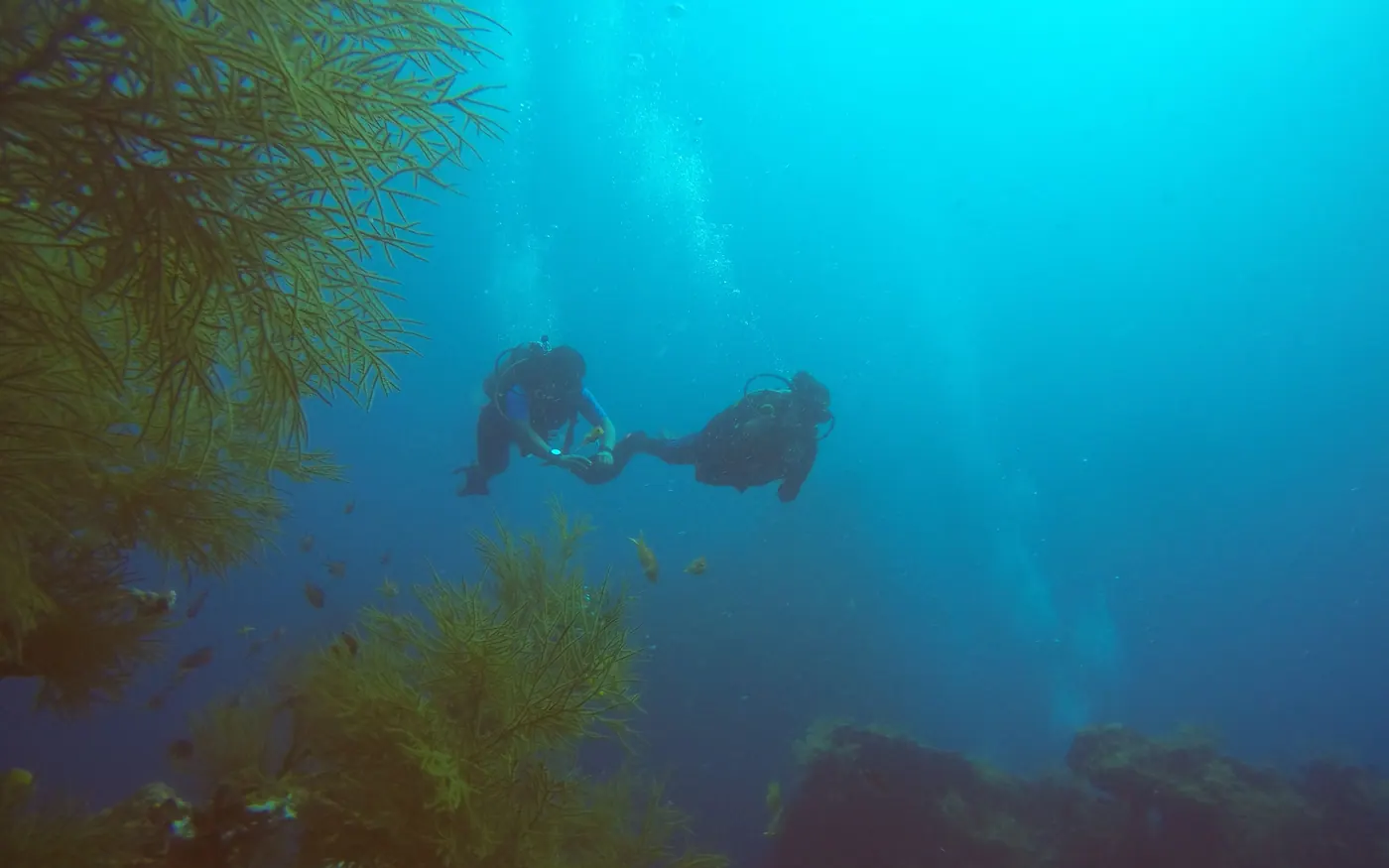
None of this is complicated, and all of it makes a real difference on the day.
- Sleep properly the night before and eat something light in the morning.
- Drink water. Being cold and dehydrated is a worse combination than either alone.
- Arrive early enough that you are not rushing to assemble gear.
- Bring more warm clothing than you think you need for between dives.
- Ask every question you have while you are still on dry land.
Your exposure protection and scuba equipment come with the course, so the kit you are responsible for is the personal set — mask, fins and snorkel. If you have not bought those yet, get fitted rather than guessing a size.
Finally, resist the urge to compare yourself to whoever else is on the course. People arrive with wildly different amounts of water time behind them, and the person who looks relaxed on dive one is often the one who has been snorkeling since childhood. By dive four the gap has usually closed, and none of it appears on the certification card.
After the fourth dive
You are a certified diver, which mostly means you can now go diving without an instructor booking it for you.
The obvious next step is to actually use it. The sites in our guide to shore diving in New England are within reach of the shop, and renting gear is the sensible way to dive while you work out what you want to own. When you are ready to go further, Advanced Open Water is the course that takes you past 60 feet.
Frequently asked questions
Is it normal to be nervous?
It is close to universal, and instructors expect it. The useful thing is to say so out loud before you get in, because an instructor who knows you are anxious will change how they run the dive.
How deep is the first open water dive?
Shallower than people imagine. The first dives stay well within the limits you trained to, and depth builds across the four. Your certification tops out at 60 feet, or 18 meters.
What if I panic underwater?
You go up, slowly, with your instructor beside you, and nothing else happens. Every skill you practiced in the pool exists so that a bad moment has a procedure attached to it.
Can I fail an open water dive?
You are not really being examined so much as asked to demonstrate skills you have already done in a pool. If something does not go cleanly you repeat it. People do extra dives all the time and still finish certified.
Do I need to do all four dives in one weekend?
Usually they run over two days, two dives a day. If the weather closes in or you want more time between them, the dives can be rescheduled — see our open water dive information.
Ask before you book
If something about the open water dives is worrying you, ask. Divers Den has been walking people through their first dives on this coast since 1968.