
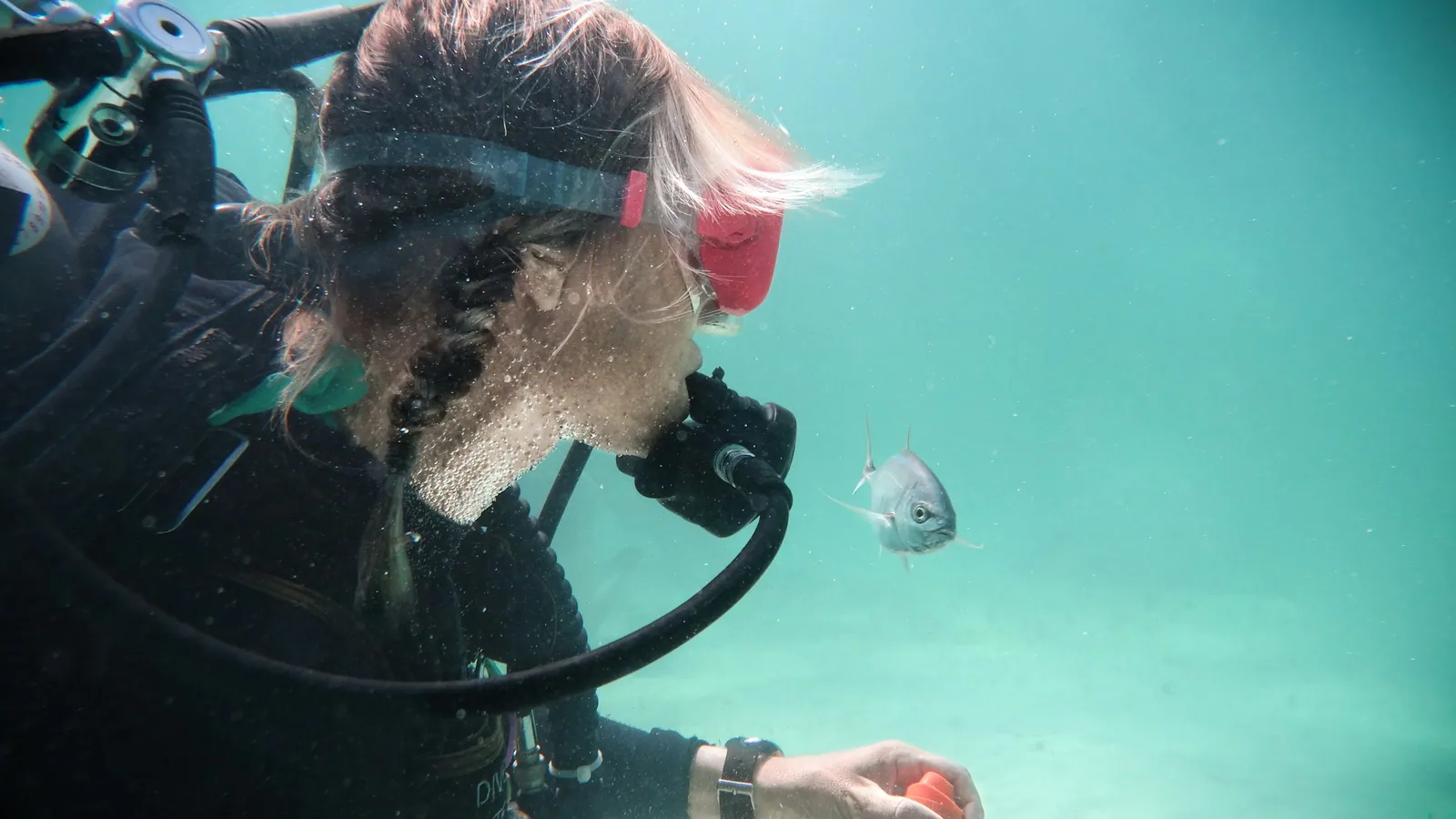
Almost every diver has felt it and almost nobody mentions it. The tightness before a descent, the moment the visibility closes in, the sudden certainty that you would like to be on the surface now.

This is about ordinary diving nerves. Diagnosed panic disorder is a medical question and belongs with a physician, not with a dive shop.
Nerves and panic are different problems
Worth separating at the start, because they need different responses and get lumped together constantly.
Nerves are the ordinary tension before and early in a dive. They are extremely common, they fade a few minutes in, and they are not dangerous. Panic is the state where thinking stops and the body takes over — and it is dangerous underwater, because the reflex it produces is to bolt for the surface.
The danger is never the feeling. It is what an unprepared diver does with it.
The useful goal is not to feel nothing. It is to have a response so well rehearsed that the feeling never gets as far as panic.
Breathing, which is the actual mechanism
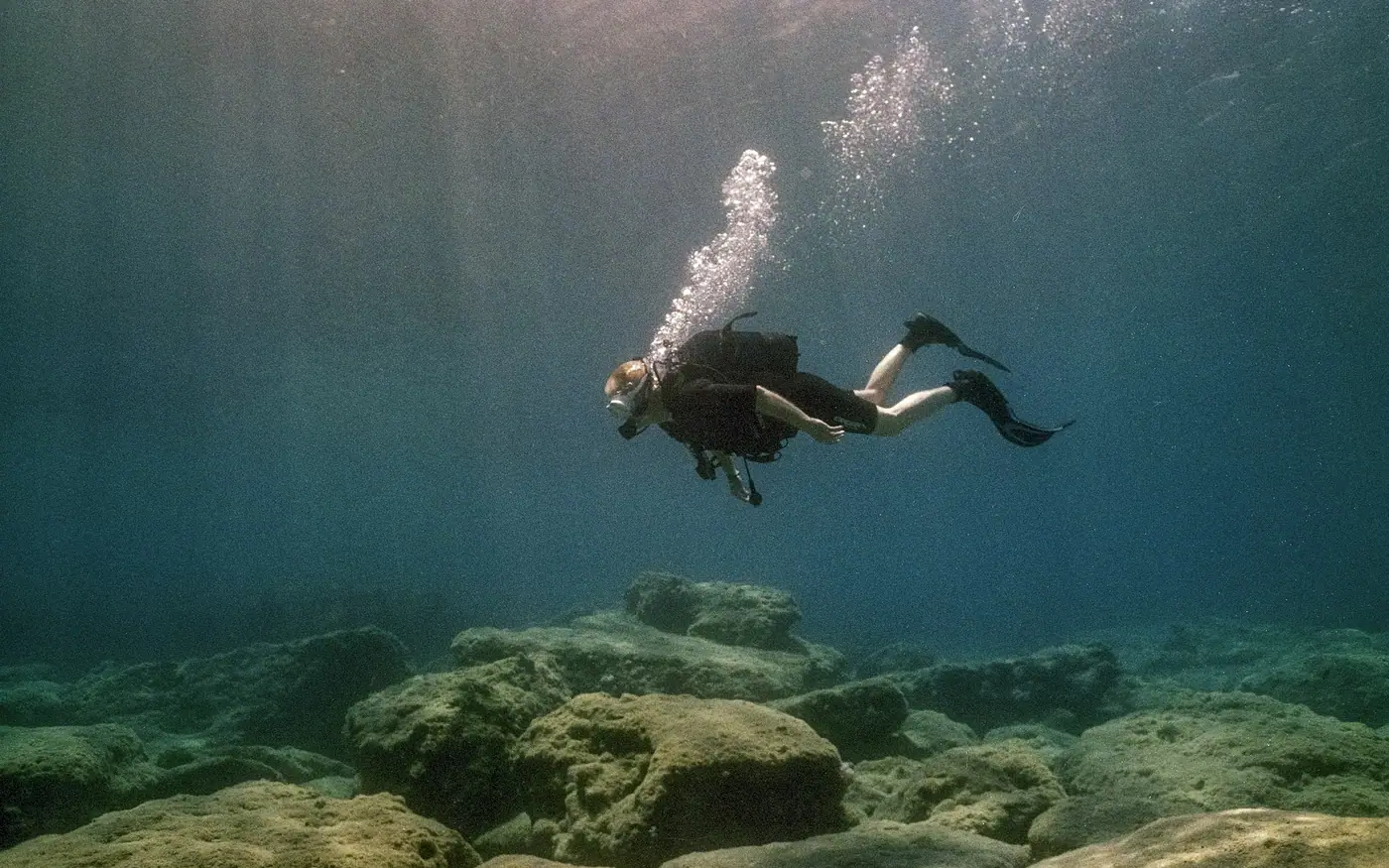
“Just relax” is useless advice. “Breathe out slowly for eight seconds” is not, and the difference is physiological.
Slow diaphragmatic breathing — roughly six breaths a minute, with the exhale longer than the inhale — acts directly on the body’s alarm response. It is not a distraction from the feeling; it is the off switch. Divers who practice it deliberately can bring themselves down in under a minute.
The practical version underwater is: stop finning, get neutral, and put all your attention on making the next three exhales long and complete. Everything else waits. This is also, not coincidentally, the same habit that lowers gas consumption — the connection made in how to use less air.
Stop, breathe, think, act
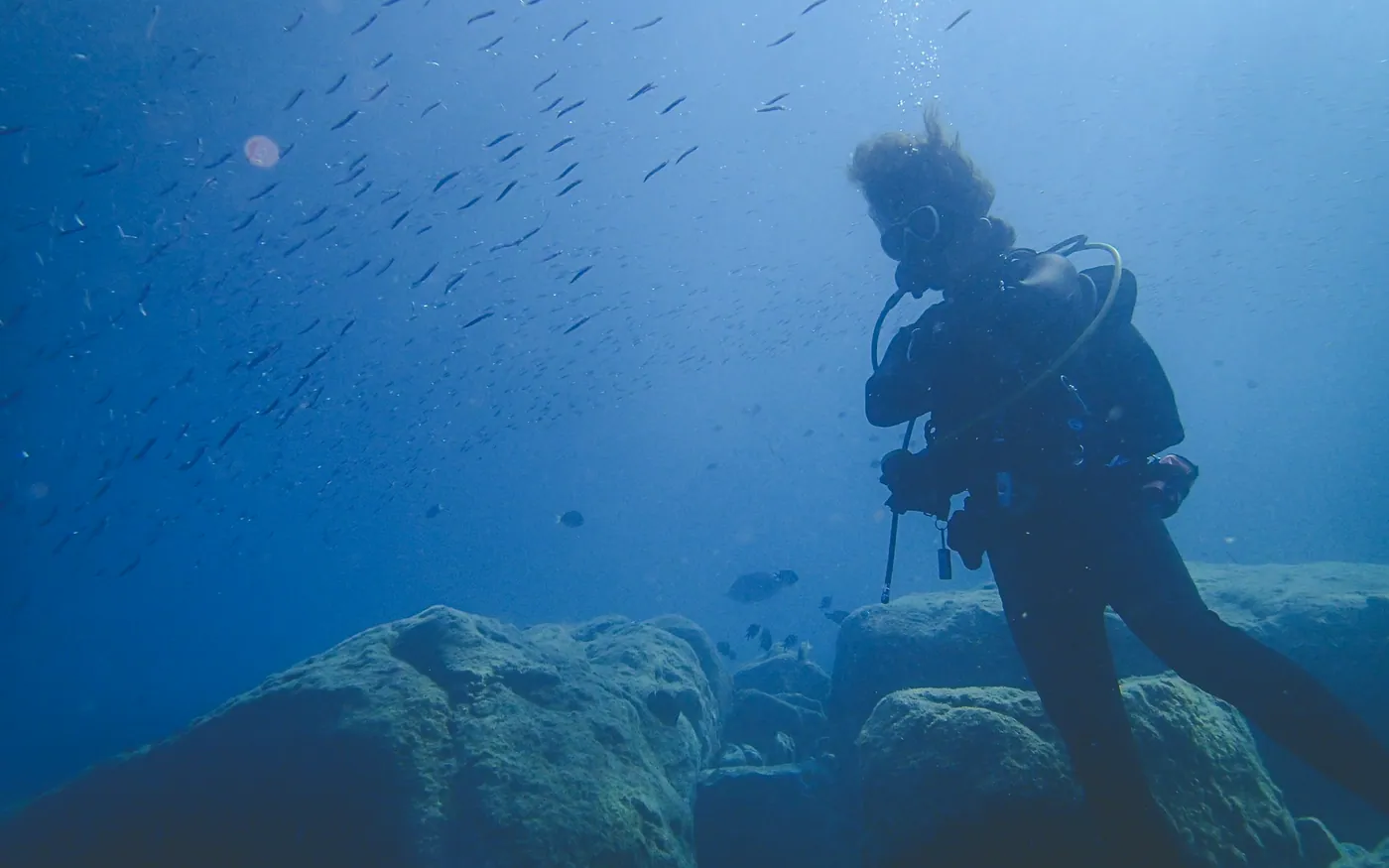
The standard sequence exists because the instinctive order is exactly wrong.
Under stress the instinct is to act first — to swim, to reach, to head up — and thinking arrives afterward, if at all. Stopping first is unnatural and it is the whole skill. A diver who can hold still for five seconds has already solved most problems that diving produces, as when something goes wrong underwater sets out.
It is worth rehearsing it on land, dull as that sounds. The sequence needs to be available without being retrieved.
Most anxiety is a preparation problem
This is the most useful idea in the whole subject: panic tends to happen when a diver is not prepared for the dive they are actually on.
Which means the fix is rarely psychological. It is concrete, and it is usually one of a short list:
- Gear you are not used to. A borrowed BC with releases you cannot find is a genuine reason to feel uneasy.
- A skill that has gone quiet. If you are quietly dreading a mask flood, practice mask floods — the point of a refresher.
- A dive beyond where you are. Depth, current or conditions past your experience produce entirely rational nerves.
- Being cold, tired or rushed. All three lower the threshold, and all three are avoidable.
- Not knowing the plan. Uncertainty about depth, route and turn pressure is its own low-grade stress — see planning a dive.
SSI has a good breakdown of the usual causes, and almost all of them are fixable rather than temperamental.
Say it out loud
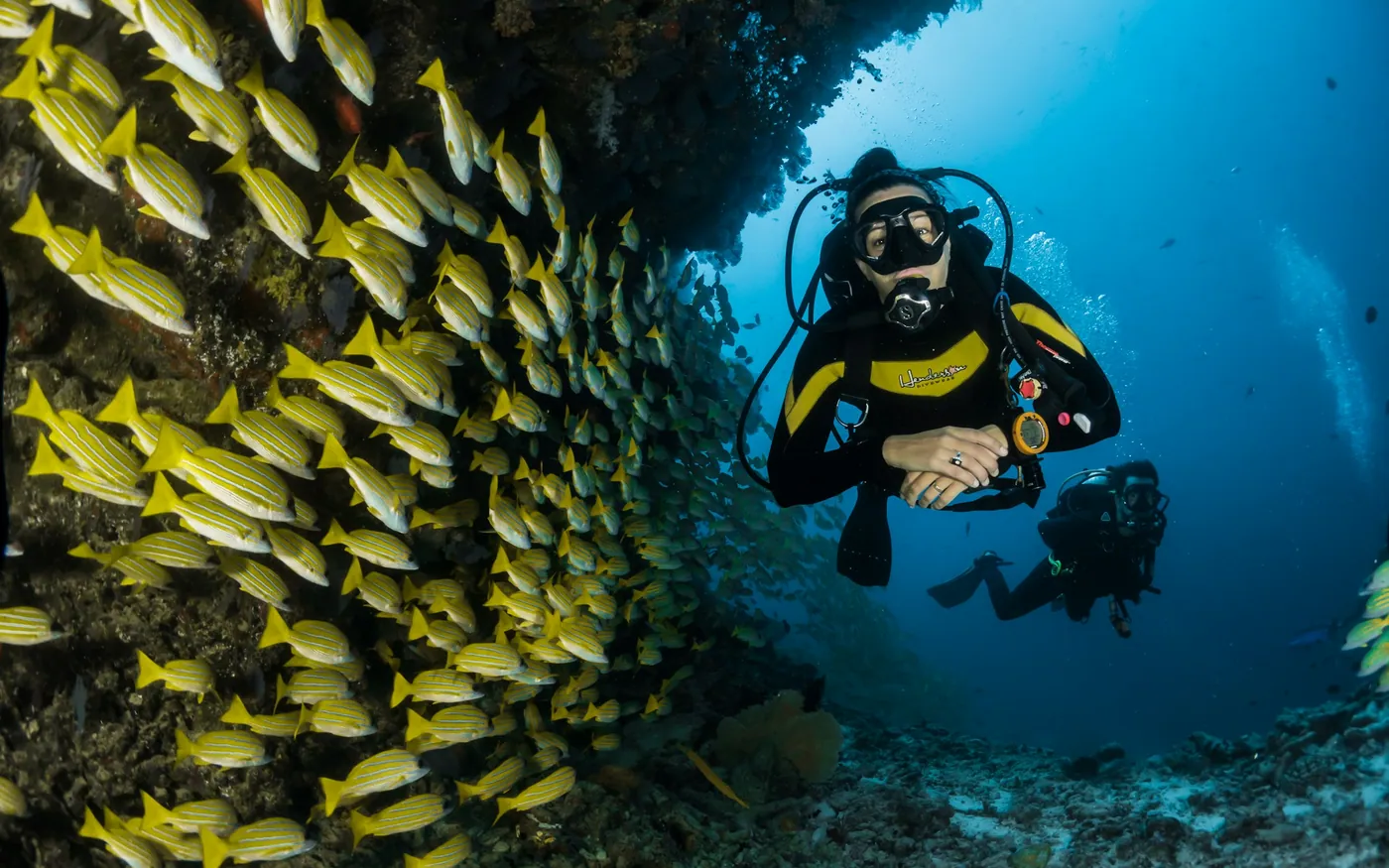
The single most effective intervention is also the one divers find hardest: telling somebody.
A buddy who knows you are uneasy stays closer, goes slower, checks on you more often and does not lead you somewhere you did not agree to. That removes most of the actual content of the anxiety. An instructor who knows will change the dive. Nobody thinks less of you; a very large proportion of the people you are reluctant to tell have felt the same thing.
And it is worth agreeing in advance that either of you can end the dive without explaining — the agreement in being a dive buddy worth having. Knowing you can leave is often what makes it possible to stay.
The triggers worth knowing about
Anxiety underwater is rarely free-floating. It usually attaches to something specific, and naming the thing is most of the way to handling it.
The common ones are predictable: the descent, particularly if equalizing is slow — see equalizing your ears. Losing sight of the bottom or the surface in green water. A mask that keeps flooding. Being cold. Watching the gauge fall faster than expected. Something touching you unexpectedly.
Each of those has a concrete fix, and none of the fixes is about being braver. A diver who dreads descents can descend a line, slowly, feet first, and stop whenever they need to. A diver who dislikes losing the surface can dive shallower until it stops mattering. The trigger tells you what to do next.
Building the tolerance
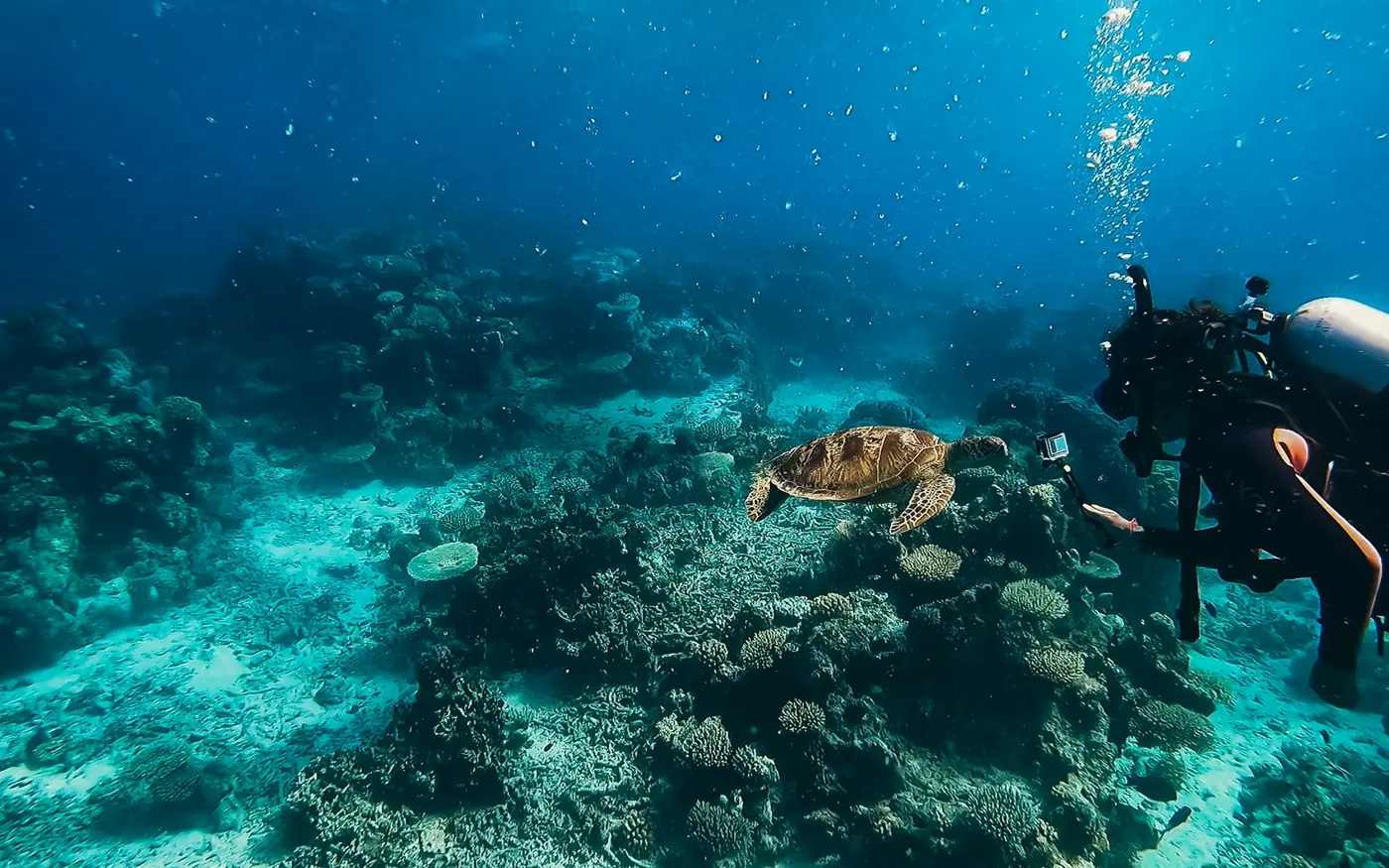
Comfort in the water is built rather than decided, and it is built unglamorously.
Dive often, in easy conditions, until easy conditions are boring. Rehearse the things you dislike where they cost nothing — flood the mask at the safety stop, take the regulator out and recover it, hover motionless for a minute. Sort your weighting and trim, because feeling out of control in the water is itself a large source of unease.
Some divers also find it helps to rehearse the dive mentally beforehand — picturing the entry, the descent, and responding calmly to the thing they are worried about. It sounds like a gimmick and it is a documented technique.
And the last rule, which overrides everything above: if a dive does not feel right, do not do it. Not every uneasy feeling is irrational, and a diver who trusts their own judgment enough to walk away is a safer diver than one who never admits to doubt.
Frequently asked questions
Is it normal to feel nervous before a dive?
Completely, and far more divers feel it than say so. A degree of nerves before dropping into cold green water is a reasonable response to the situation rather than a sign that diving is not for you.
What do I do if I start to feel panicky underwater?
Stop moving, hold something solid if there is anything, and breathe out slowly and completely. A long exhale is the fastest physiological route to calming down. Then think, then act — in that order.
Why does breathing help?
Slow diaphragmatic breathing, around six breaths a minute, works directly on the physical side of the anxiety response. It is not a distraction technique; it makes it genuinely difficult for the body to stay in an alarmed state.
Should I tell my buddy I am nervous?
Yes, and it is the single most useful thing you can do. A buddy who knows will stay closer, go slower and check on you, which removes most of what you were worried about.
When is it not just nerves?
If you have a history of panic attacks or panic disorder, that is a medical question rather than a diving one and belongs with a physician — see are you fit to dive?.
Rebuild the comfort
If nerves are keeping you out of the water, a refresher session in a pool fixes more of it than people expect. Ask us how it runs.