
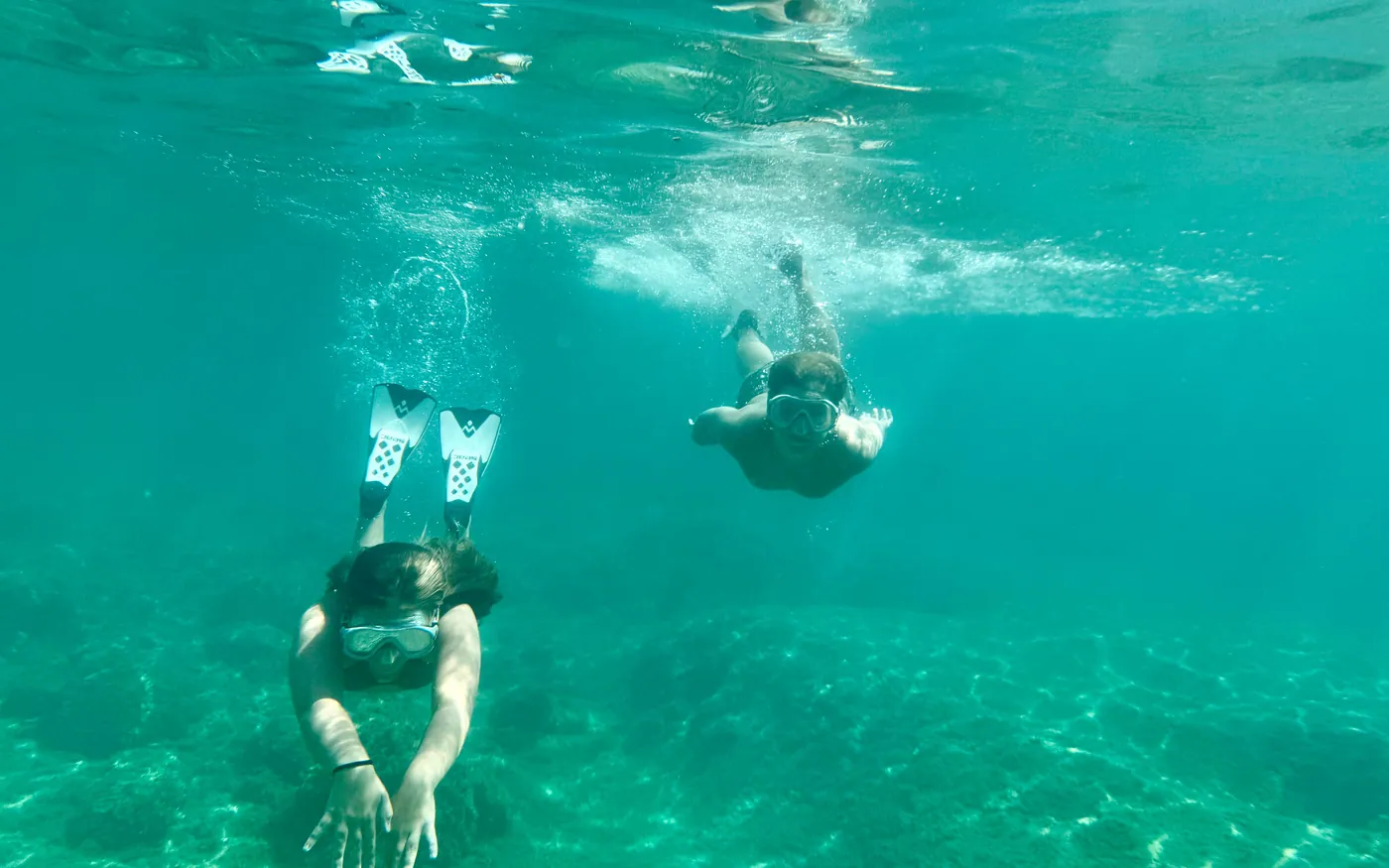
Snorkeling looks like the gentle option and is not always. If the thing worrying you is being underwater, scuba is often the calmer experience — because you never have to hold your breath.
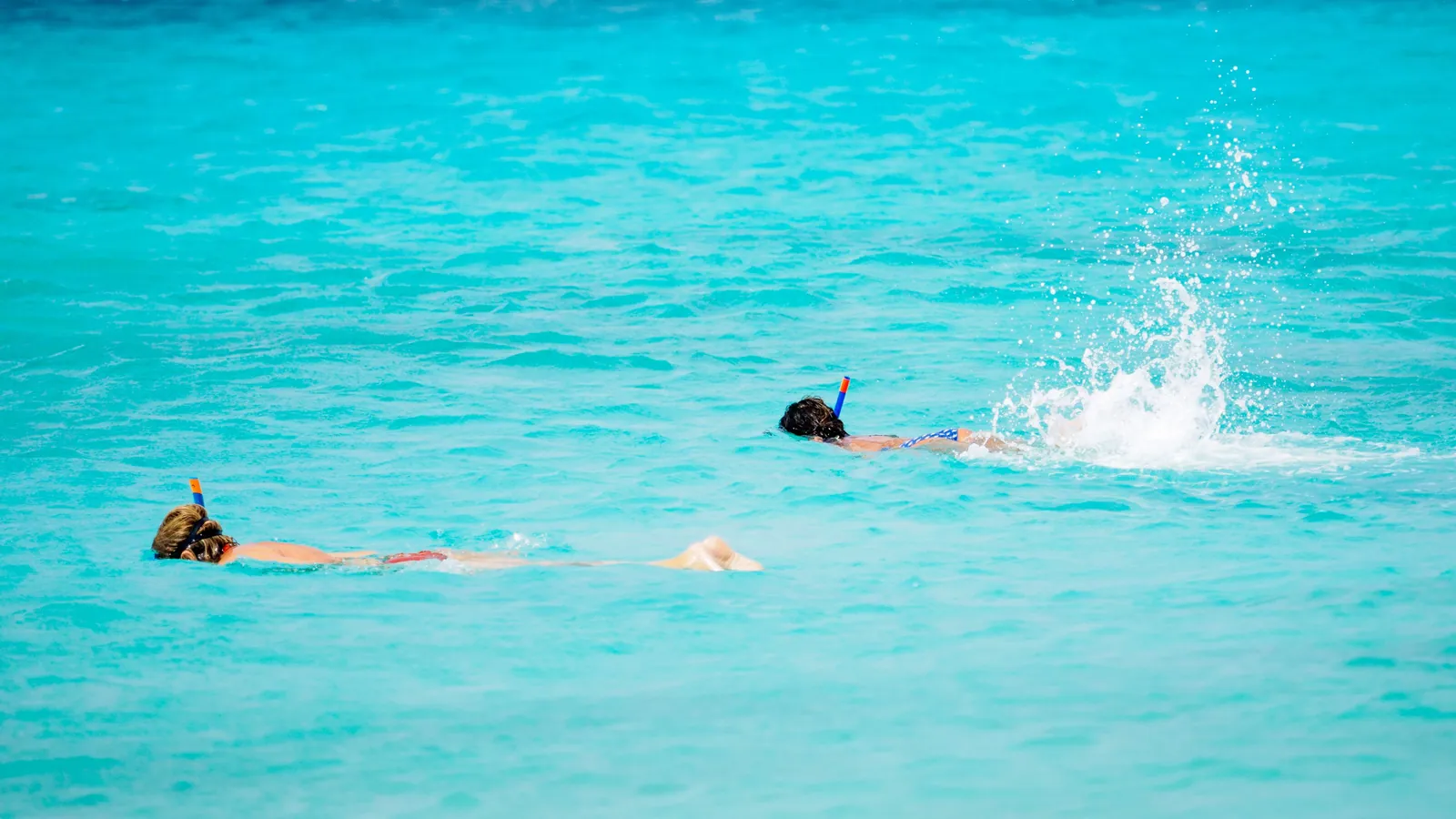
They are not the same activity
People treat these as two rungs on one ladder. They are two different things that happen to involve a mask.
Snorkeling is a surface activity. You float, you look down, and to get closer to anything you hold your breath and go. Scuba is the opposite arrangement: you are underwater the whole time, breathing continuously, and the surface is where you go at the end.
| Snorkeling | Scuba | |
|---|---|---|
| Where you are | At the surface, looking down | Underwater, throughout |
| Breathing | You hold it to go deeper | Continuous, from a regulator |
| Cost to start | Mask, snorkel, fins | A session or a course |
| Training needed | None | A supervised session at minimum |
| Depth you reach | As far as one breath takes you | To 60 ft once certified |
| Suits | Warm, clear, shallow water | Anywhere, including here |
The row that decides it for most people is the second one.
Why scuba is often the calmer option
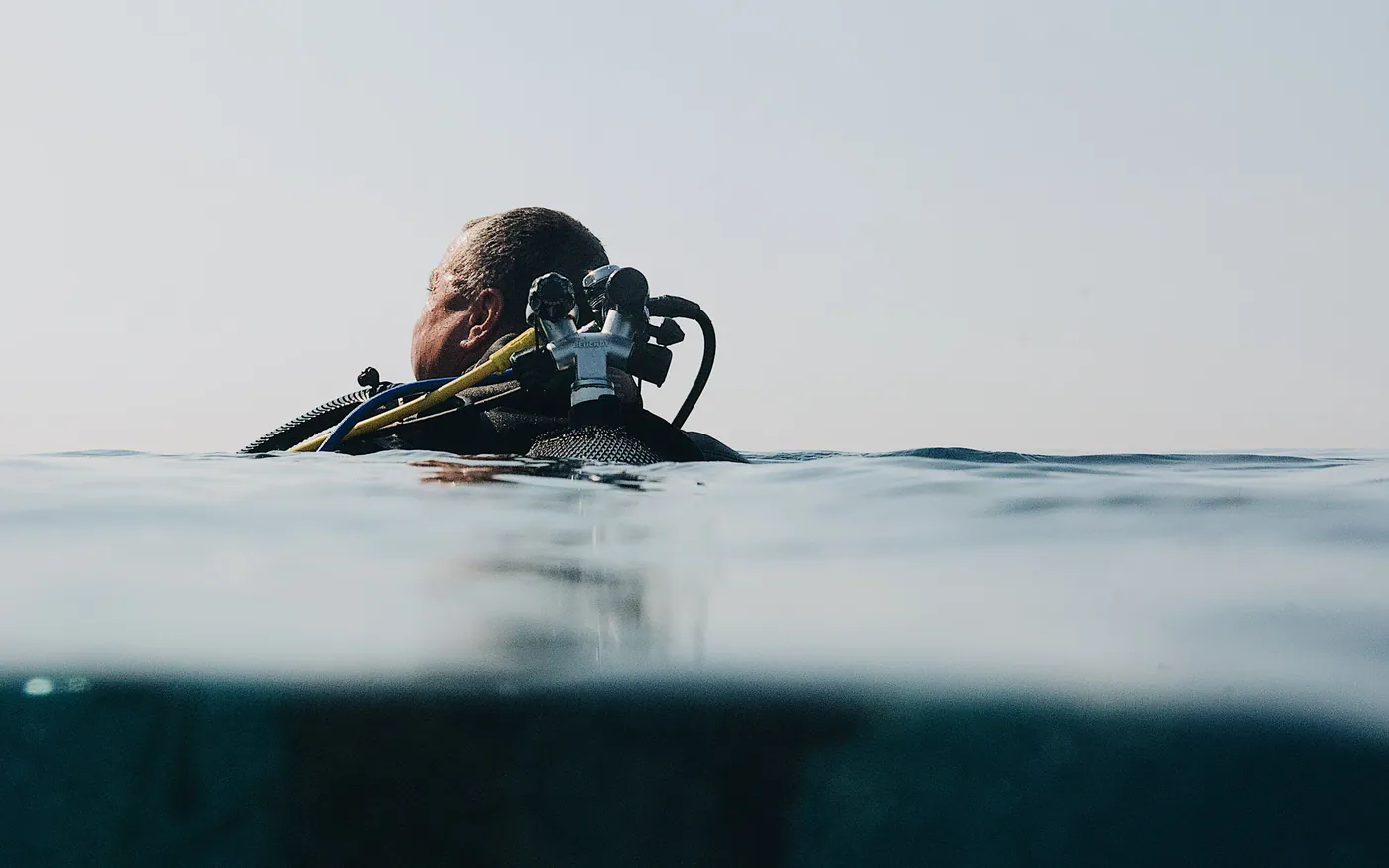
This is counterintuitive, and it is the most useful thing in this article.
People who are anxious about water are usually anxious about not being able to breathe. Snorkeling asks you to hold your breath, deliberately, repeatedly, in order to see anything — which is precisely the thing that worries them. Scuba asks you never to hold your breath at all.
The rule in scuba is that you never stop breathing. For a nervous beginner that is reassurance rather than a rule.
Add an instructor within arm’s reach and confined water you can stand up in, and the supposedly intimidating option turns out to be the controlled one. That is the shape of a Discover Scuba session.
Where snorkeling genuinely wins
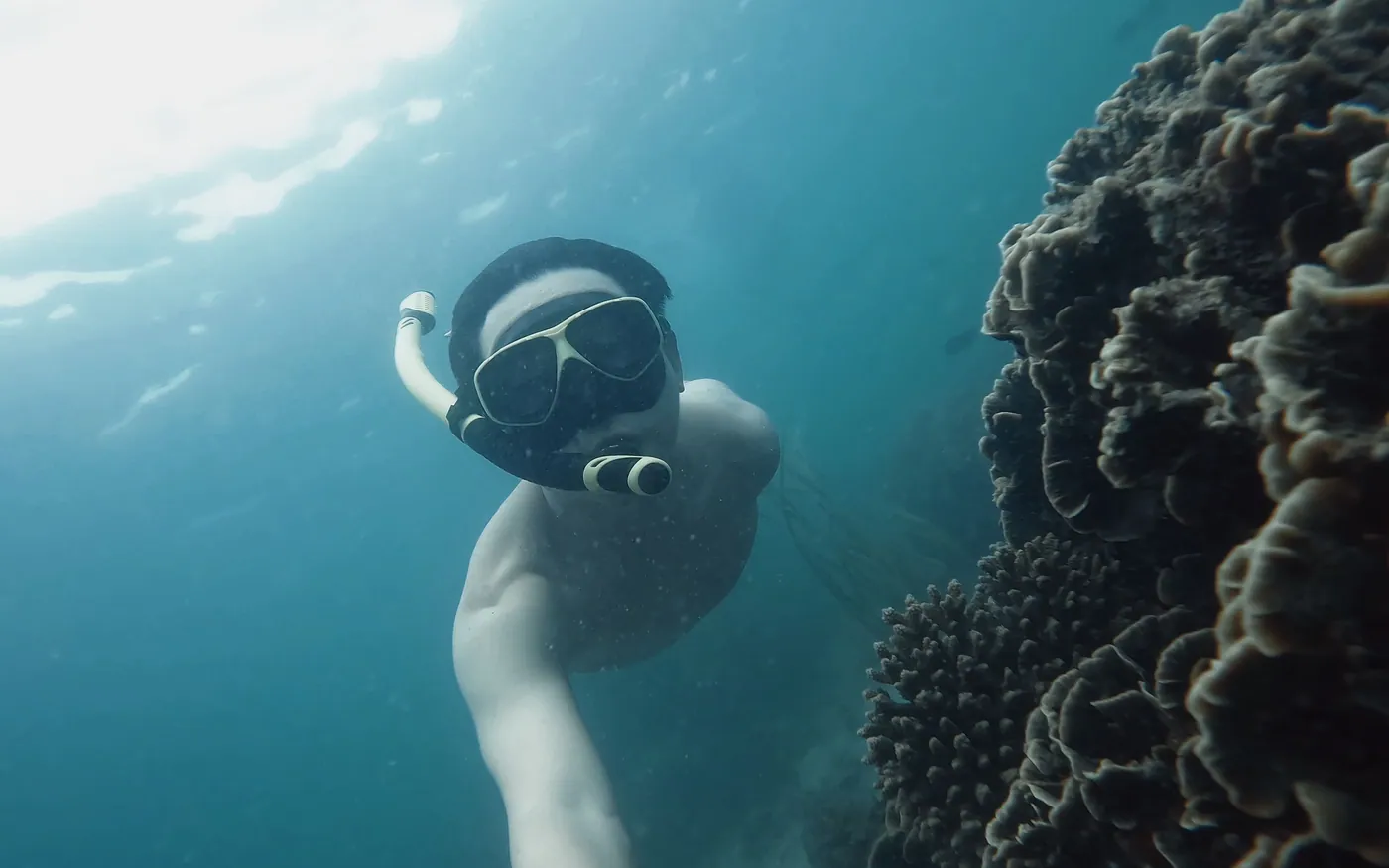
None of that makes snorkeling the lesser activity. It has real advantages and they matter.
- It costs almost nothing. Mask, snorkel and fins, and no course.
- It is spontaneous. No cylinder, no fill, no buddy check, no planning.
- It suits shallow clear water perfectly. If everything worth seeing is in fifteen feet, scuba adds complication rather than access.
- Children can do it long before they can dive.
- You can do it all day. There is no gas supply to end the session.
For a warm-water vacation over a shallow reef, snorkeling is often the better choice, and divers who pretend otherwise are being precious about it.
Why it works less well here
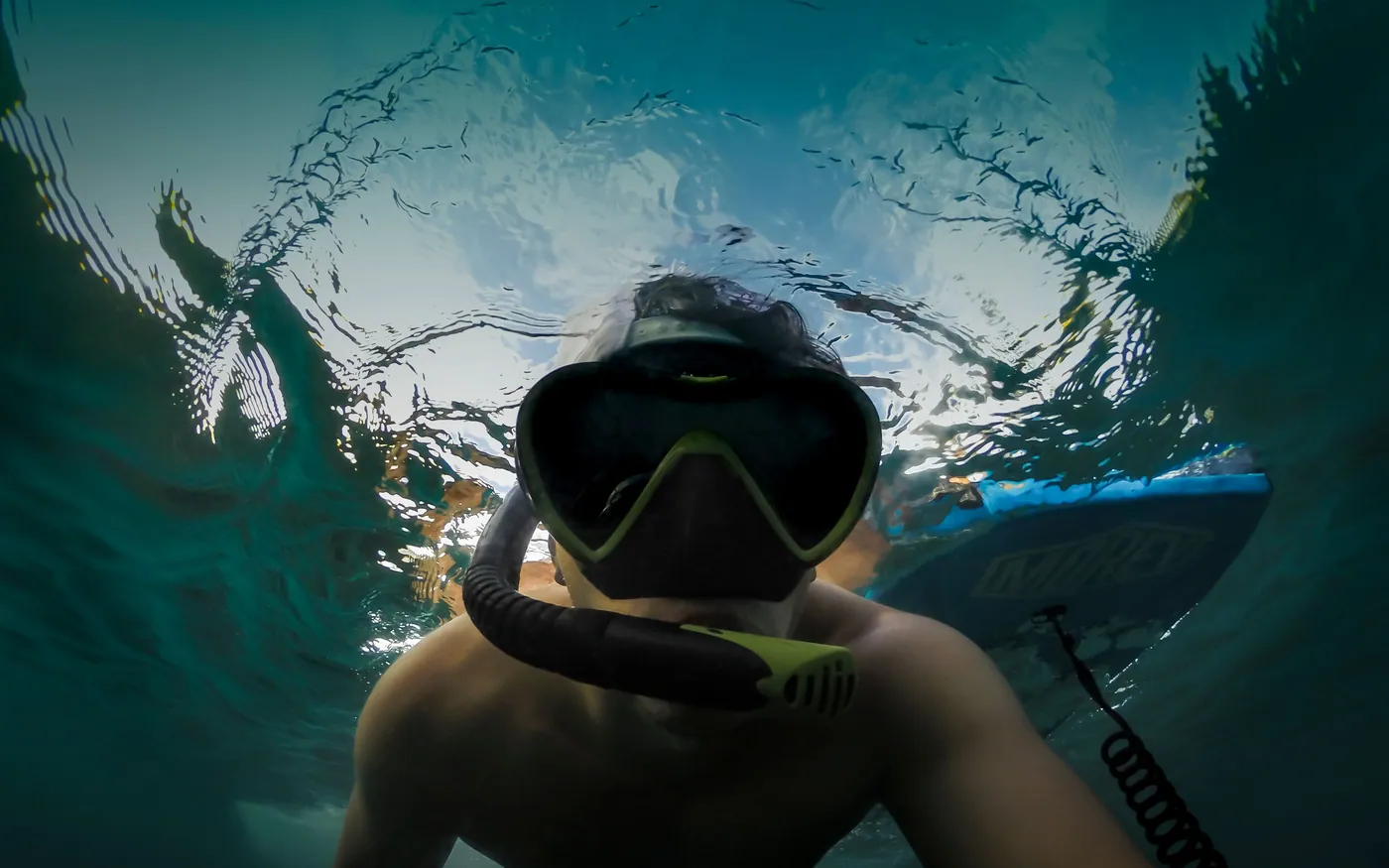
New England is where the comparison stops being close.
The interesting ground here is rock, kelp and structure at depths a breath-hold does not reach comfortably, and the water is cold enough that floating still at the surface gets unpleasant faster than swimming does. Visibility is often short enough that being ten feet above something means not seeing it at all.
Snorkeling here is a summer activity for shallow rocky shorelines, and it is genuinely enjoyable on the right day. It is not the way to see what this coast has, which is the argument made in what you actually see diving in New England.
There is one practical overlap worth mentioning: the mask. It is the same piece of equipment for both, it is the one item where fit genuinely decides whether you enjoy yourself, and it is worth buying properly whichever you end up doing. A mask that leaks makes snorkeling irritating and scuba tiring, and no amount of strap tension fixes a bad fit — the subject of choosing a mask that actually fits.
If you are trying to decide
The decision is usually simpler than it looks once you separate the two questions being asked.
If the question is “which will I enjoy on a beach vacation”, the answer is often snorkeling, and you can buy the kit this afternoon. If the question is “am I someone who could dive”, snorkeling will not tell you — the experiences are too different for one to predict the other.
And if the real question is whether you would panic underwater, the honest way to find out is a supervised confined-water session where you can stand up. PADI describes the Discover Scuba program; what differs between shops is where it happens and who is next to you.
What about children?
This is where the two genuinely diverge, and it is worth stating plainly for families deciding what to do together.
Snorkeling has effectively no age floor beyond being a confident swimmer and being supervised. Scuba does: agencies set minimum ages, and they differ between programs, so a family with young children will find snorkeling is the option that includes everybody now and scuba the one that waits a few years.
The ages are set by the agency rather than by the shop, and they vary by course, so it is worth asking about the specific program rather than assuming. What is reliable is that there is usually something available earlier than parents expect.
You can also do neither yet
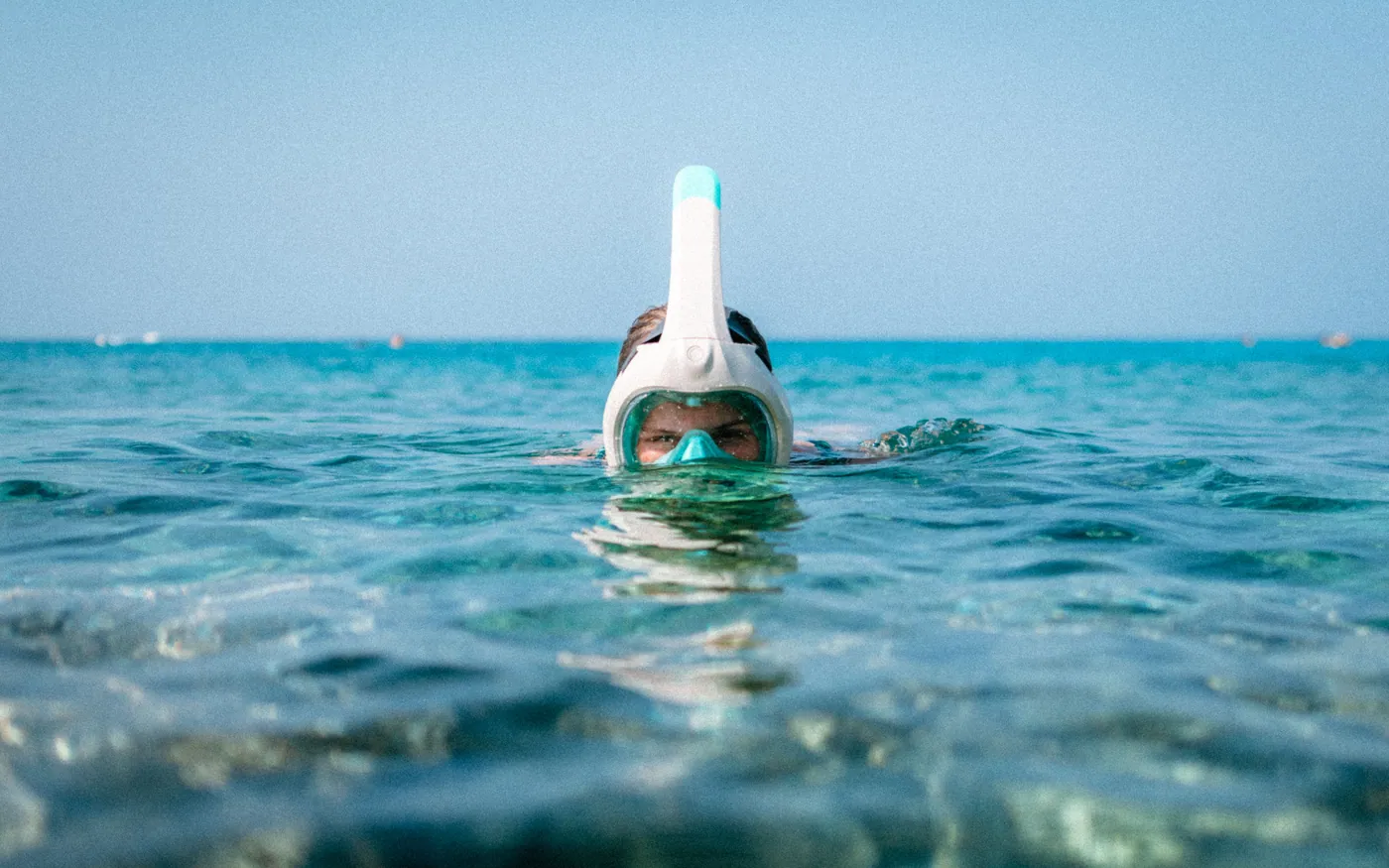
There is a third answer that gets left out: get comfortable in water first, and decide afterwards.
Neither activity requires you to be a strong swimmer, but both are better when water itself is unremarkable to you. Time in a pool, without equipment and without a goal, does more for a nervous beginner than either.
When you are ready, everything else follows quickly. Our guide to learning to scuba dive in New Hampshire sets out what certification actually involves, and the costs are published rather than quoted on request.
Frequently asked questions
Do I have to snorkel before I learn to scuba dive?
No. There is no progression from one to the other, and plenty of people start with a Discover Scuba session having never snorkeled. Being comfortable in water helps; snorkeling specifically is not a prerequisite.
Which is easier if I am nervous about water?
Often scuba, which surprises people. A snorkeler holds their breath and manages the surface; a scuba diver breathes continuously with an instructor beside them in confined water. The thing that frightens people about scuba is the thing that makes it calm.
Is snorkeling cheaper?
Yes, considerably, and that is a genuine advantage. Mask, snorkel and fins and you are done, with no course, no certification and no cylinder.
Can you snorkel in New England?
You can, though it suits the warmer months and shallow rocky sites, and you will want a wetsuit for anything beyond a short session. Most of what is worth seeing here is deeper than a breath-hold — see what actually lives down there.
What if I try scuba and hate it?
Then you have spent an afternoon finding out something useful, which is exactly what a Discover Scuba session is for. It is not a certification and it commits you to nothing.
Find out in an afternoon
A Discover Scuba session is confined water at the shop with an instructor beside you. No certification, nothing to bring, and no commitment afterwards.