
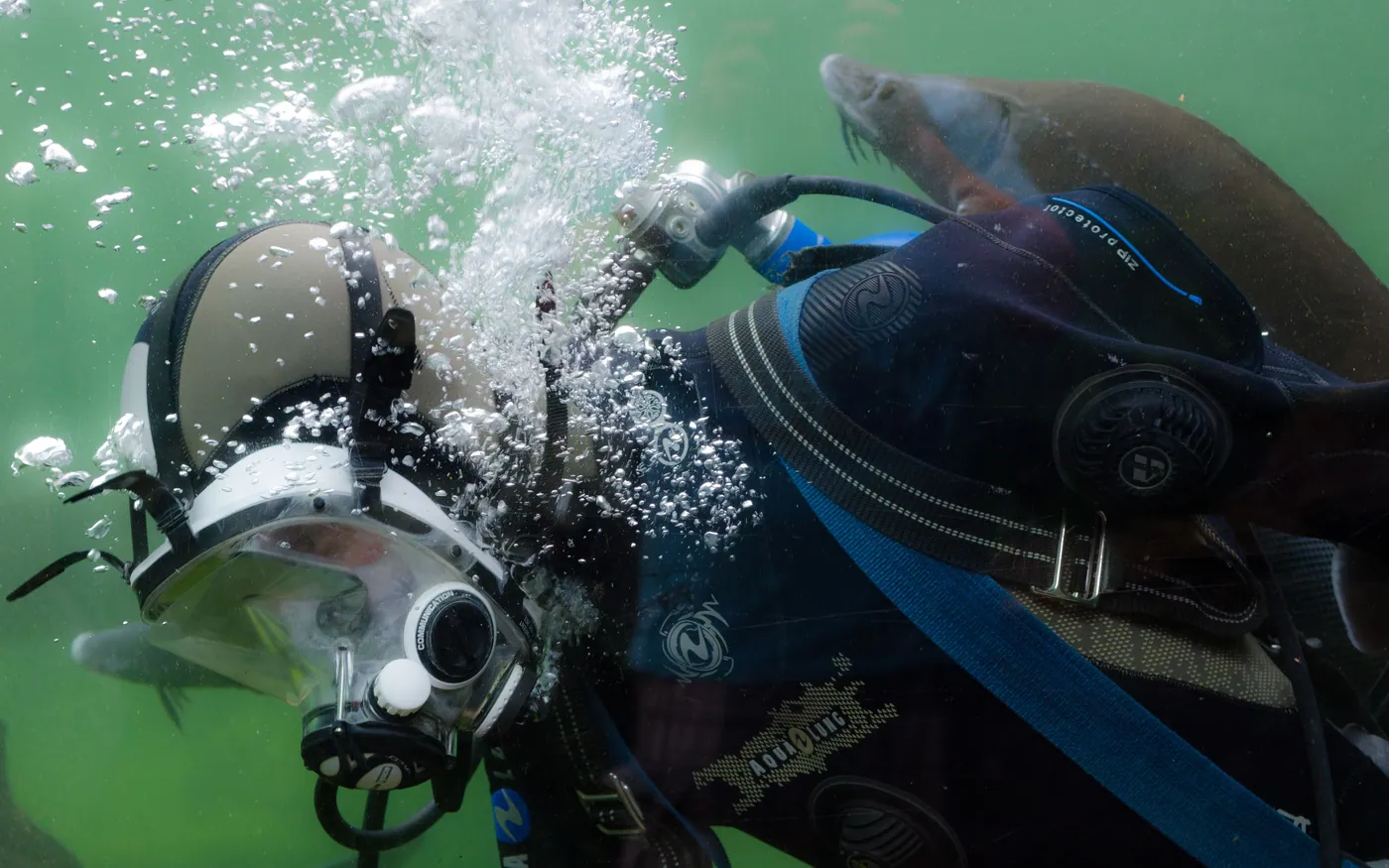
A mask is the cheapest thing you will buy and the only one that can ruin a dive entirely. A leaking mask is not an inconvenience — it is forty minutes of stopping every two minutes to clear it.
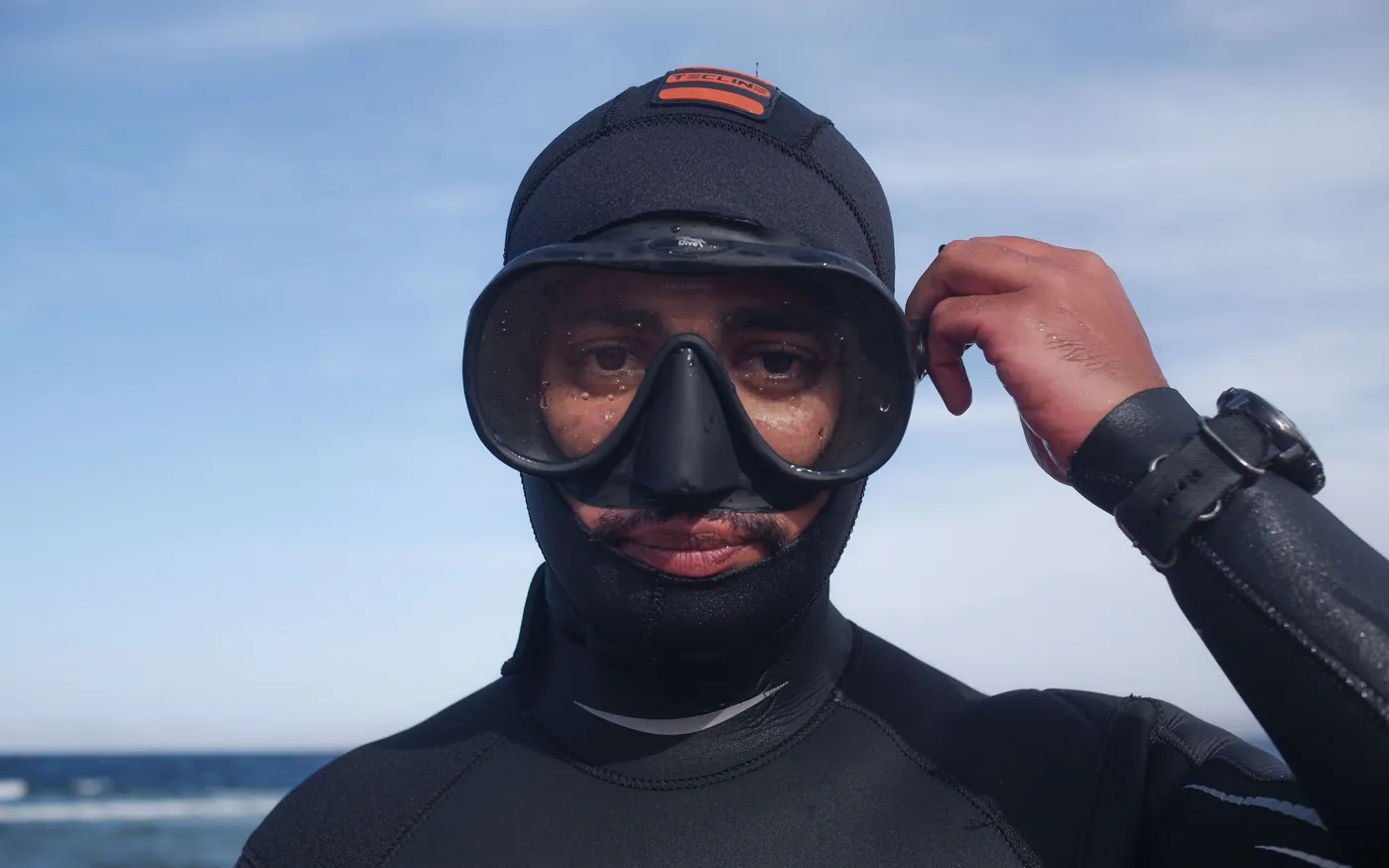
Fit is not one of the factors, it is the factor
Buying guides usually list fit alongside lens type, color and volume, as though they were comparable. They are not.
Everything else on a mask is a preference. Fit is a pass or fail, because human faces vary enormously in nose bridge height, cheekbone width and brow shape. A mask that seals beautifully on one person will leak continuously on another, and no amount of strap tension fixes it — overtightening usually makes it worse by distorting the skirt.
If it does not seal, nothing else about the mask matters.
The fit test, done properly
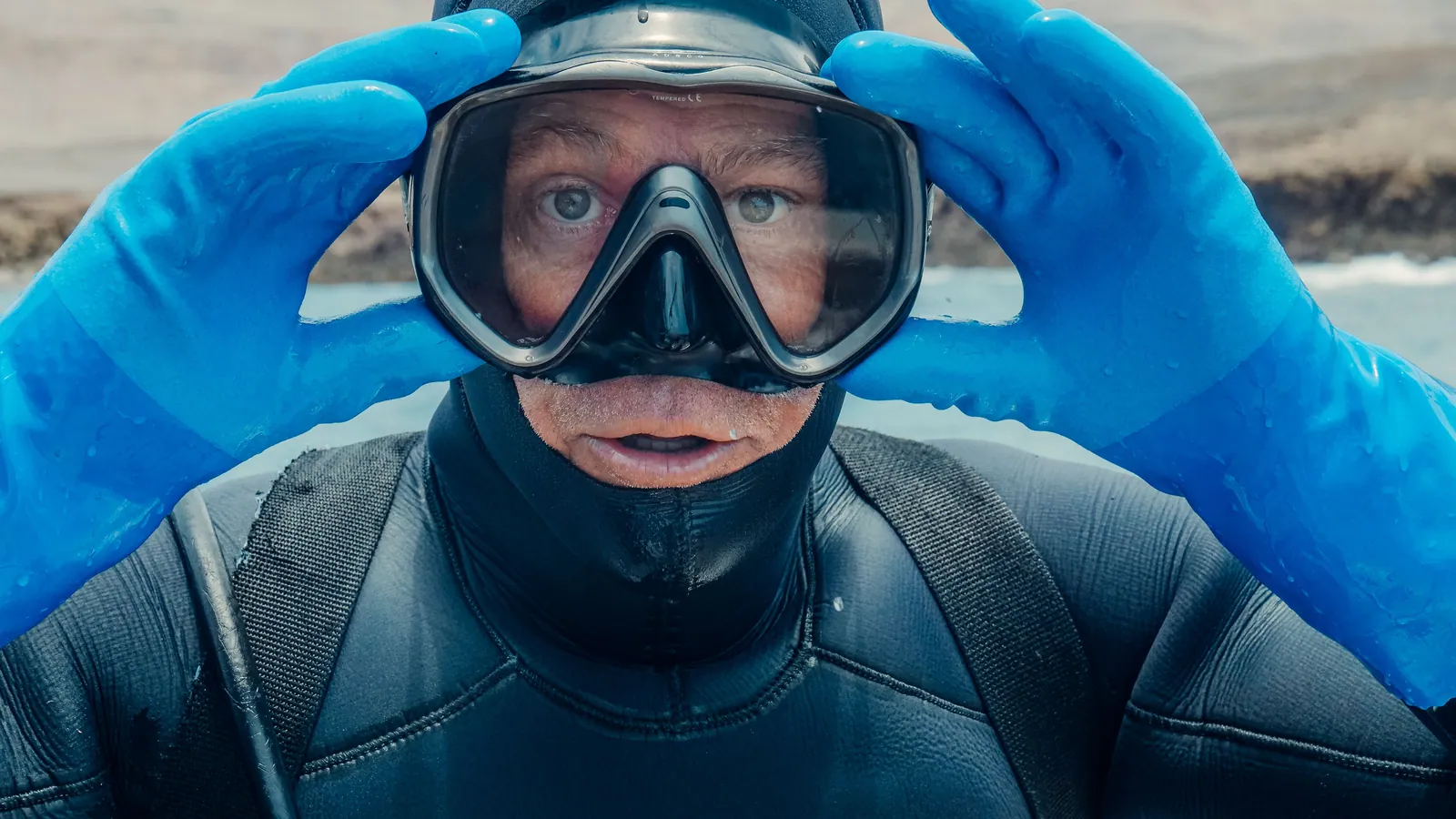
Most people do a version of this test. Most people do it wrong in the same two ways.
- Move the strap forward over the front of the lens so it is not helping.
- Clear your hair out of the way. A few strands under the skirt will break the seal and give you a false result.
- Put a mouthpiece in. This is the step almost everyone skips, and it matters: your face changes shape with a regulator in your mouth, which is how you will actually be wearing it.
- Place it on your face and inhale gently through your nose. It should hold itself there without help.
- Check the skirt is flat all the way round, with no folded edges and no pressure points.
Then look for the failure modes: a gap at the bridge of the nose, the skirt riding on the corner of your eye, or the frame resting on your upper lip. Any of those is a no, however good the mask is otherwise.
Why low volume is worth caring about
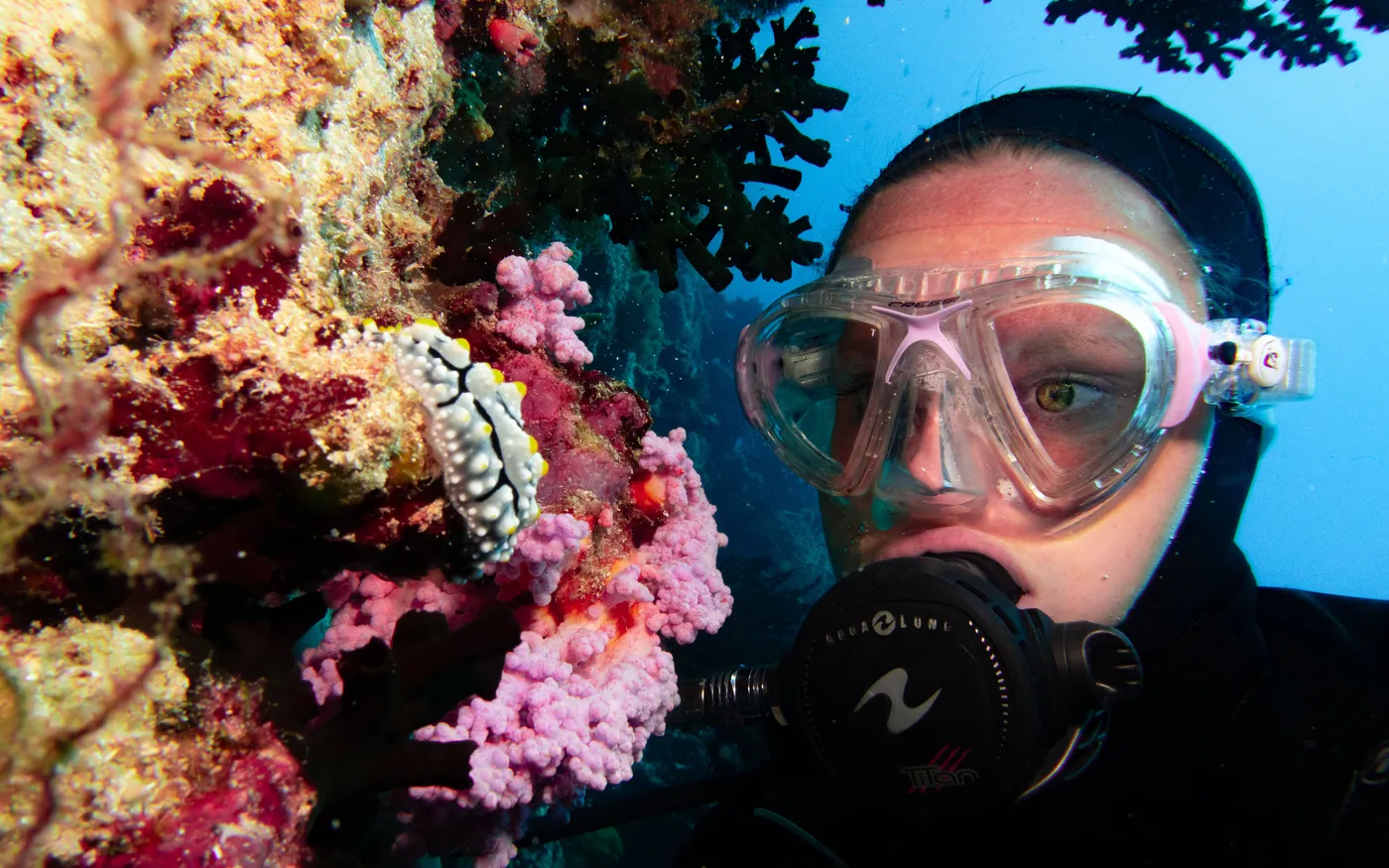
Volume means the amount of air between the lens and your face, and a close fit gives you a small one.
That has three practical effects. It takes less breath to clear, which matters every time you get water in it. It is less buoyant, so it pulls at your face less and sits better. And it puts less strain on your neck over a long dive.
The trade-off is that low volume masks often have stiffer skirts to make up for the reduced structure, which makes fit even more critical rather than less. It is not automatically the right choice — it is the right choice if it fits you.
Skirts, lenses and the things that matter less
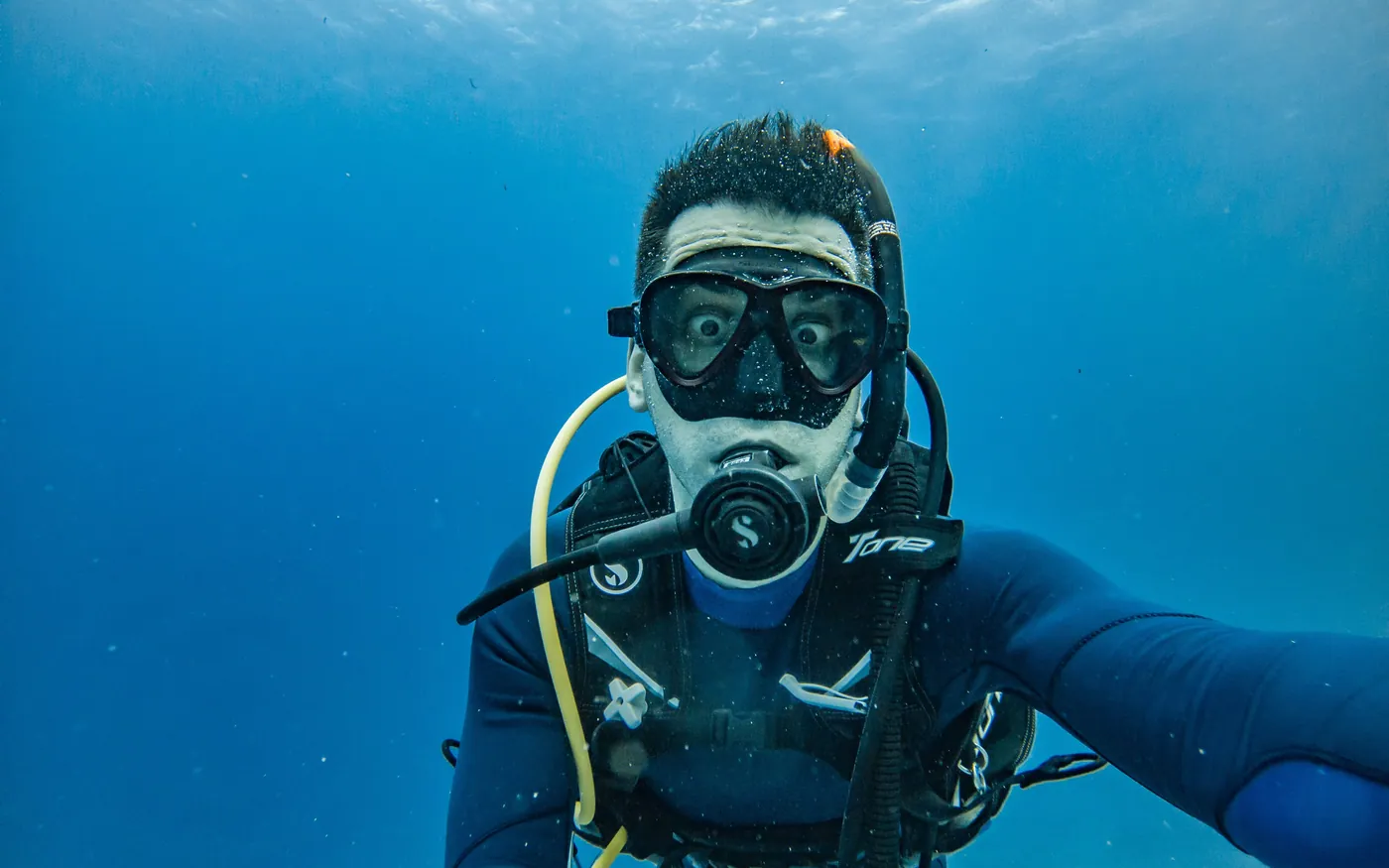
Once fit is settled, a few genuine differences remain, and a lot of marketing noise.
| Feature | What it changes | How much it matters |
|---|---|---|
| Skirt material | Silicone conforms better and resists UV better than rubber | Settled — almost everything is silicone now |
| Skirt color | Clear lets in side light; black cuts glare and reflections | Preference, though photographers tend to prefer black |
| Single vs twin lens | Twin lens can take prescription lenses | Matters a great deal if you need correction |
| Volume | Effort to clear, buoyancy, neck strain | Real, but secondary to fit |
| Field of view | How much you see without turning your head | Modest differences, oversold |
Scuba Diving Magazine covers the fit question in more detail if you want a second account before you come in.
Why a new mask fogs, and how to stop it
Almost every new mask fogs relentlessly on its first few dives, and almost every new diver assumes they have bought a bad one.
The cause is residue left on the lens by the manufacturing process, which traps water and holds a fine film of condensation. It has to be physically scrubbed off before anti-fog will work at all.
- Scrub the glass inside and out with toothpaste — plain paste, not gel — and rinse. Repeat until it stops fogging.
- Then use anti-fog on every dive. Commercial solution works; saliva often works just as well.
- Rinse and store it properly. Our guide to looking after gear covers keeping it in a case rather than loose in a bag.
When to replace one
Masks last a long time, and most are replaced because they were the wrong mask rather than because they wore out.
The genuine failure modes are a perished or hardened skirt that no longer conforms to your face, a strap that has lost its elasticity, and scratched glass that scatters light. A hardened skirt is the one to watch for, because it happens gradually and you adapt to the leaking without noticing.
Most of that is a storage problem rather than an age problem. Ultraviolet light and heat are what harden silicone, which is why a mask left on a car dashboard ages faster than one kept in a case.
Buy it in person
This is the item where the internet is genuinely worse than a counter, and it is why we sell gear in store only rather than shipping it.
You cannot test a seal against your own face through a screen, and a mask that is wrong is not a small problem — it is the difference between a dive you enjoyed and one you spent clearing. Come in, try several, and take the one that holds itself on. If you are not certified yet, a Discover Scuba session uses shop equipment, so there is no rush to buy anything first.
Frequently asked questions
How do I test a mask without water?
Move the strap forward out of the way, hold the mask against your face without the strap, and inhale gently through your nose. It should hold itself in place. Do it with a regulator or snorkel mouthpiece in, because your face changes shape when you have one.
Why does my brand new mask fog so badly?
Manufacturing residue on the lens. Scrub the inside and outside of the glass with toothpaste before the first dive and repeat until it stops. This is normal for a new mask and is not a fault.
What is a low volume mask, and do I need one?
One that sits close to your face with less air space inside. It takes less breath to clear, sits better in the water and strains your neck less. The trade-off is a stiffer skirt, which makes fit matter even more.
Can I just buy one online?
You can, and it is the single worst item to buy that way. Faces differ enormously and a mask that fits a friend perfectly may leak on you all dive. We sell gear in store only for exactly this reason.
Do I need my own mask for a course?
Yes. Course fees include the BCD, regulator, tank and weights; students supply mask, fins and snorkel. That split exists because the mask is the item where fit matters most — see learning to dive here.
Come and try masks on
We fit masks in person because it is the only way that works. Bring your own regulator mouthpiece if you have one.