
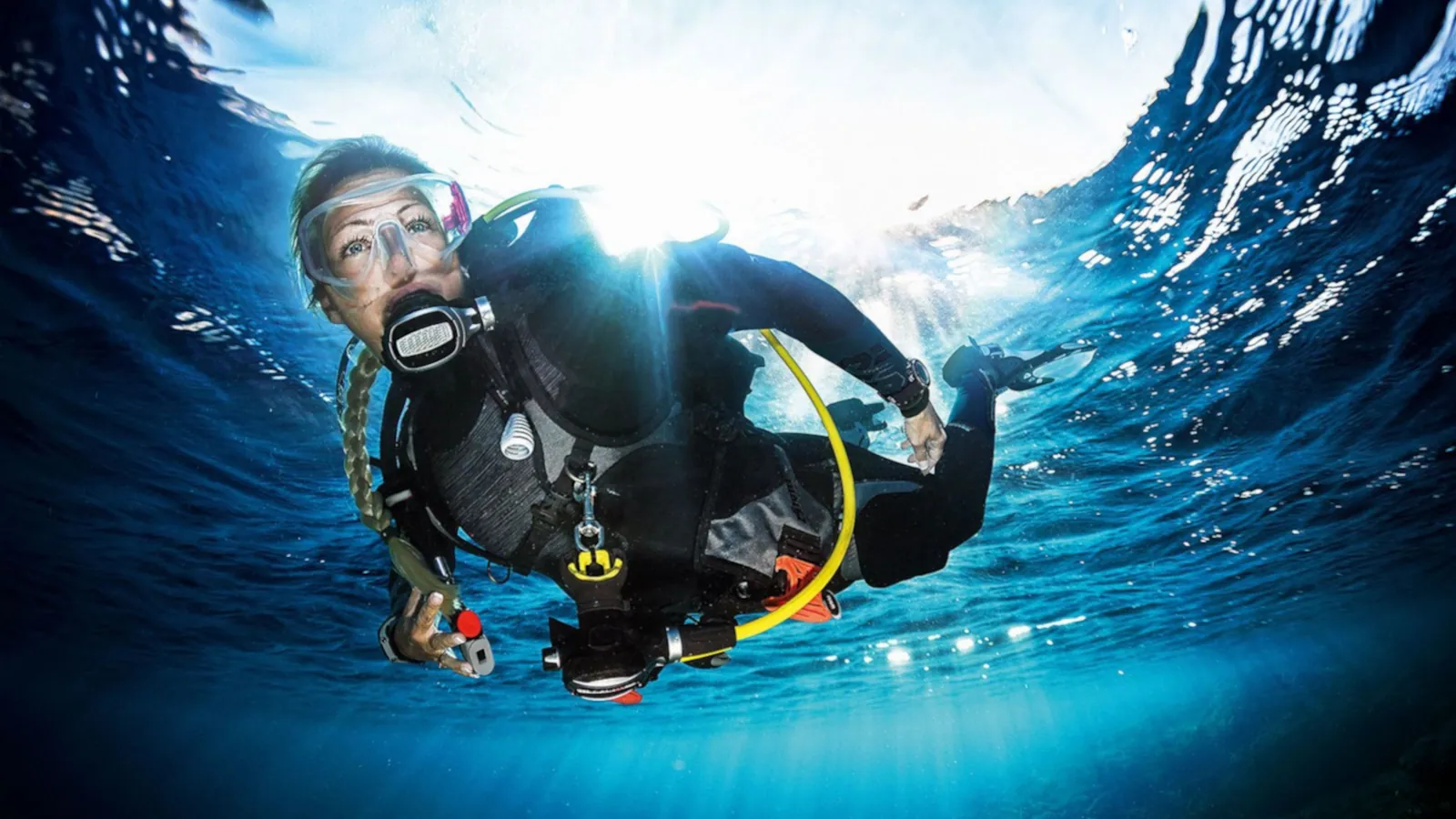
You breathe underwater for the first time in a pool, with a PADI Instructor an arm’s length away, wearing gear somebody else fitted for you. There is no exam, no certification, and nothing you have to do afterwards.
What it is, and what it is not
Discover Scuba Diving gets misunderstood in both directions. Some people think it is a certification course; others think it is a gimmick.
It is neither. It is a supervised introduction that answers one question: what is it actually like down there? You cannot know that from reading, and it is a poor reason to commit to a full certification course you might not enjoy.
| Discover Scuba | Open Water Diver | |
|---|---|---|
| Certification | None | PADI Open Water Diver, for life |
| Where | Confined water at the shop | Pool, then four ocean dives |
| Equipment | All provided and fitted | Scuba gear provided; you supply mask, fins, snorkel |
| Prior experience | None | None |
| Time | Part of a day | eLearning, pool sessions, two days of dives |
| What it leads to | Open Water Diver, if you want it | Diving anywhere, with a buddy |
The row that matters most is the last one. Discover Scuba commits you to nothing.
What happens on the day
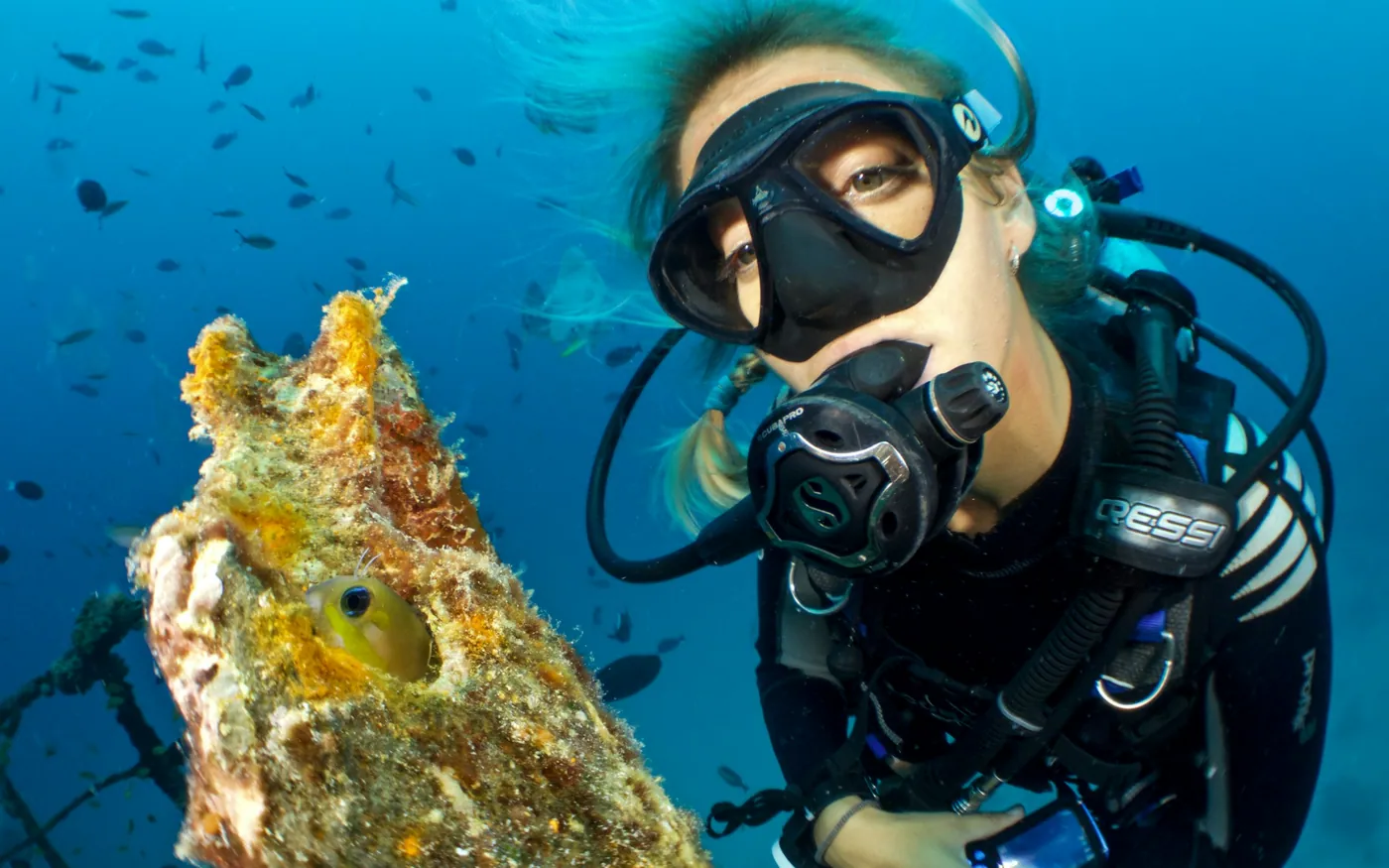
The session has a shape, and knowing it in advance removes most of the nerves people arrive with.
- A short briefing. How the equipment works, the handful of safety rules that matter, and the few hand signals you will actually use.
- Getting kitted. Our staff fit everything to you — mask, buoyancy compensator, regulator, weights. You are not expected to know what any of it does yet.
- Into the water. Shallow first, with the instructor beside you. You breathe through a regulator on the surface before your face is ever under it.
- The dive itself. A few simple skills, then time to swim around and get used to the feeling of being weightless.
The instructor is not supervising from the side. They are next to you, the whole time.
The bit people worry about
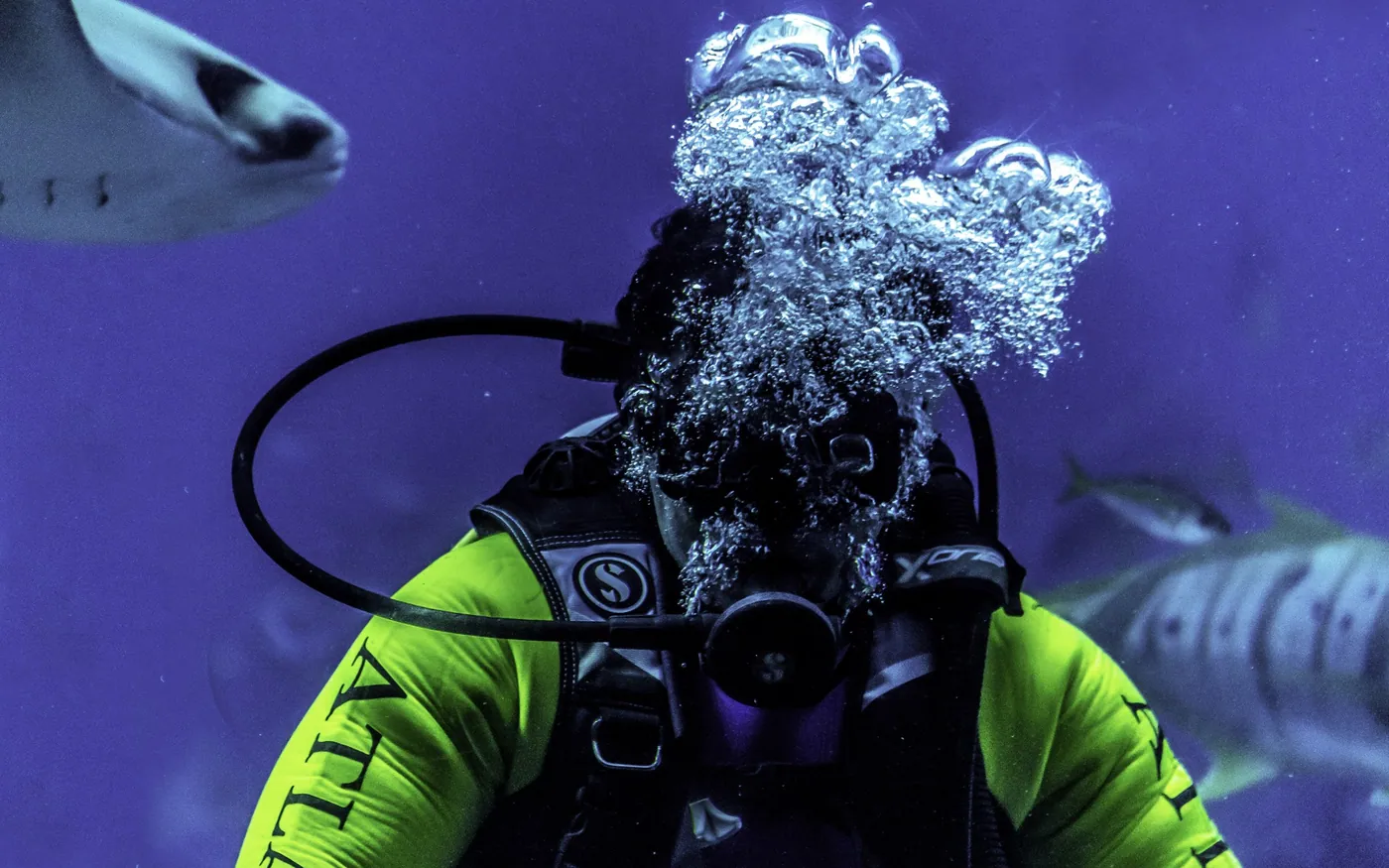
Almost everyone has the same worry, and almost nobody says it out loud: what if I cannot breathe, or I panic?
The honest answer is that breathing from a regulator feels strange for the first half-minute and then stops feeling like anything at all. Your body objects to the idea rather than the reality. In confined water you can stand up at any moment, which is a bigger reassurance than it sounds.
If you do want to stop, you stop. Nobody is going to talk you into staying in the water, and plenty of people take a minute at the surface before going back down.
Why doing it here rather than on vacation
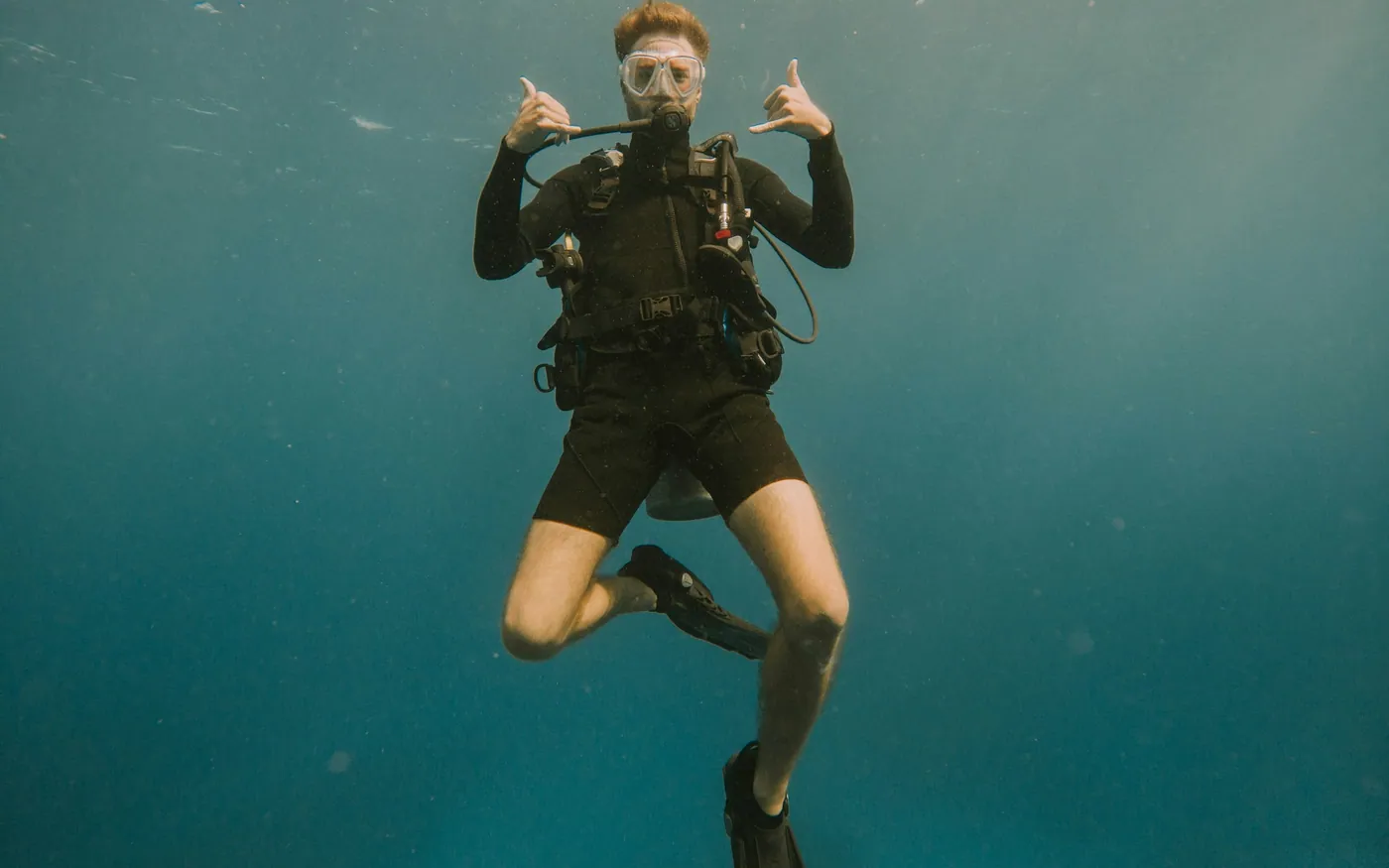
Most people first try scuba on vacation, squeezed into a morning between other plans, in warm clear water. That is a pleasant experience and a poor test.
Trying it at home has practical advantages. You are not spending vacation time on it, you can do it in the off season, and you are talking to the shop that would actually teach you afterwards rather than one you will never see again.
PADI describes the Discover Scuba Diving program in general terms; what differs between shops is where the session happens and who is standing next to you.
If you enjoy it
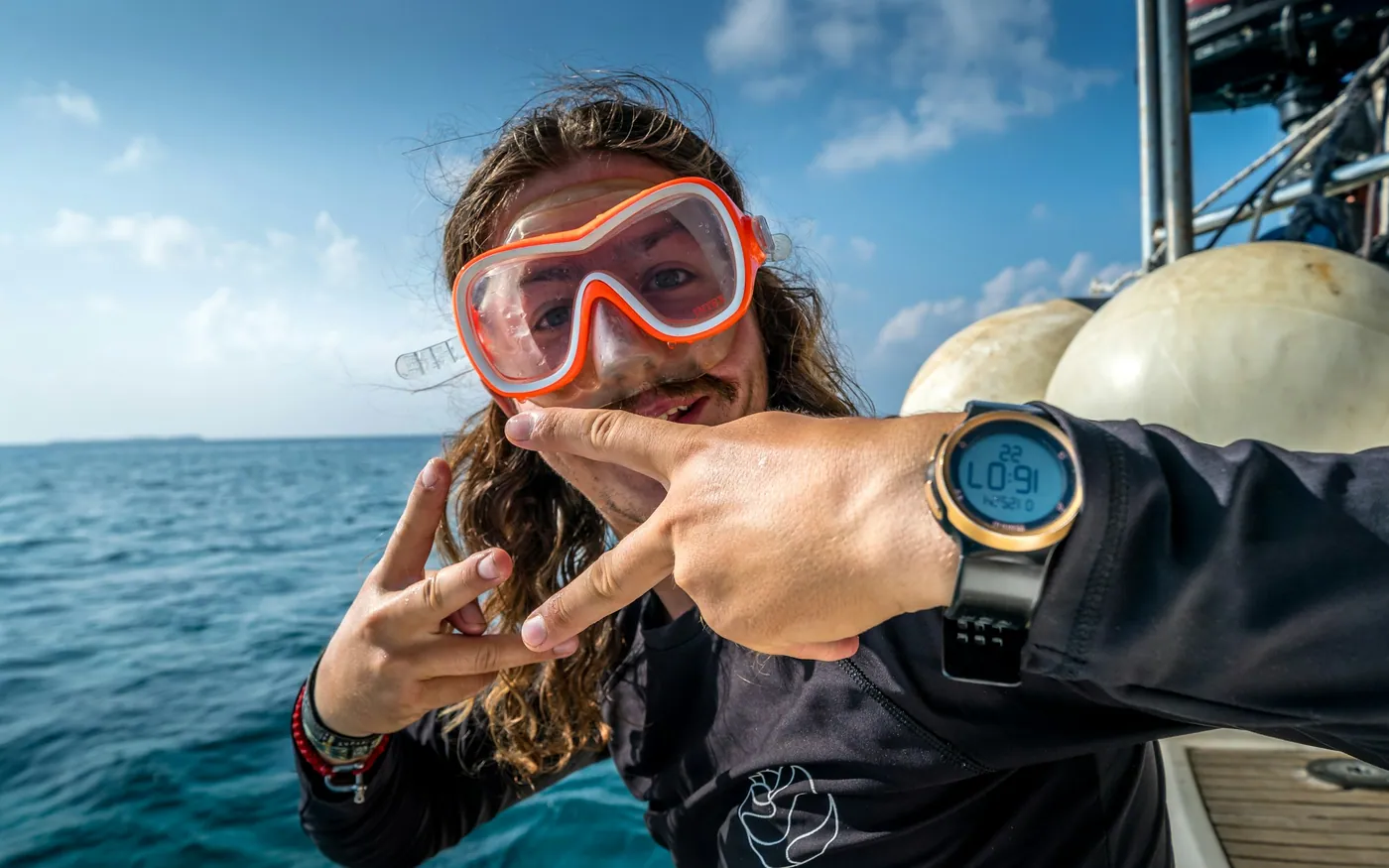
Most people do, and the sensible next question is what it would take to certify.
The skills you practice in a Discover Scuba session are the same ones you repeat in the confined water phase of the full course, so nothing is wasted. From there, certification is the theory, the pool sessions and four ocean dives — laid out in our guide to learning to scuba dive in New Hampshire, with the numbers in what certification actually costs.
And if you decide diving is not for you, that is a genuinely useful answer for the price of an afternoon.
One more thing that surprises people: how quiet it is. Sound behaves differently underwater, and once you stop noticing the sound of your own breathing there is very little else. Divers who expected the experience to be intense often describe the opposite — a kind of enforced calm, because moving slowly and breathing steadily is the only way it works.
What it does not include
Worth being clear, because the difference between this and the full course is not obvious from the outside.
There is no certification card at the end, no logbook entry that counts toward anything by itself, and no permission to go and rent a tank afterwards. Renting equipment and buying air fills both require a certification, which is a different thing entirely.
There are also no ocean dives. Everything happens in confined water at the shop, which is deliberate: the point is to find out how you feel about breathing underwater, not to test how you handle cold water and limited visibility on the same afternoon.
If you want either of those things, you want the certification course, and the session you did here counts as a head start on it rather than a step of it.
Who it suits
It suits anyone who is curious and has not done it. That is not a marketing line: there is no fitness threshold to clear and no equipment to buy first.
It is particularly worth doing if you are the hesitant half of a couple where one person already dives, if you are considering a course but not sure you will like it, or if you have a trip booked and want to know before you get there. What you find out in an afternoon here saves guessing later, and what the first open water dive is like becomes a much easier read afterwards.
Frequently asked questions
Do I need to know how to swim?
You need to be comfortable in water rather than a strong swimmer. The session is in confined water with an instructor beside you throughout, and you are never out of their reach. Tell the instructor beforehand if water makes you anxious — it changes how they run the session, for the better.
Is this a certification?
No, and that is the point. It is a supervised introduction. If you want the certification afterwards, the skills carry directly across into the PADI Open Water Diver course.
What do I need to bring?
Nothing but a swimsuit and a towel. All the scuba equipment is provided and fitted by our staff, which is different from the full course, where you supply your own mask, fins and snorkel.
How long does it take?
Plan on part of a day rather than a full one. The briefing is short, the water time is the bulk of it, and there is no exam or paperwork to sit through afterwards.
Can I do it in winter?
Yes. Sessions run throughout the year because they are in confined water at the shop rather than in the ocean. That is one of the better arguments for trying it in January.
Come and try it
Divers Den has been introducing people to diving in Hampton Falls since 1968. Ask us when the next session runs.