
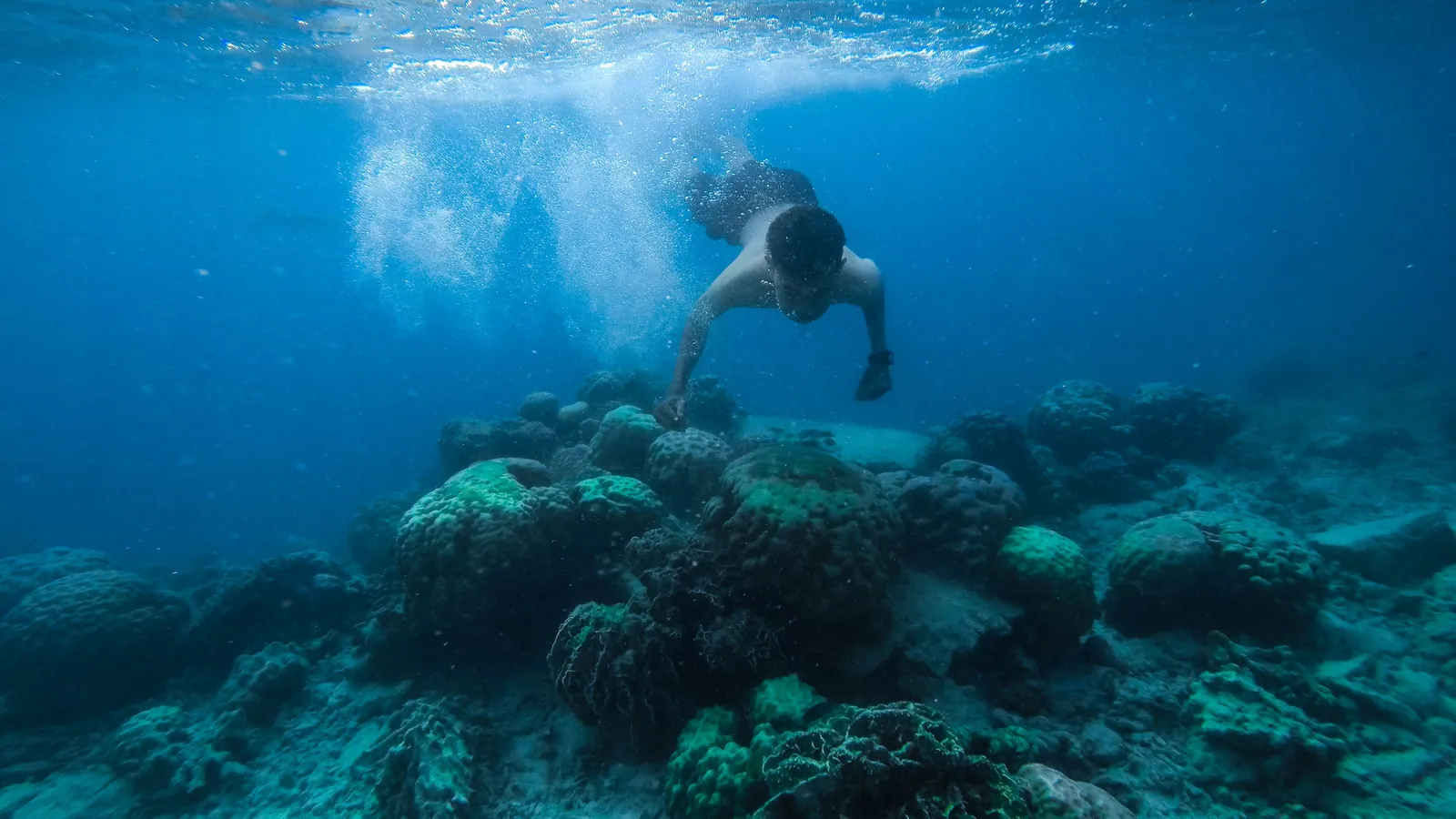
Almost nobody is taught to snorkel. You are handed a mask and a tube and left to work it out, which is why so many people conclude they do not like it.
The mask is the whole thing
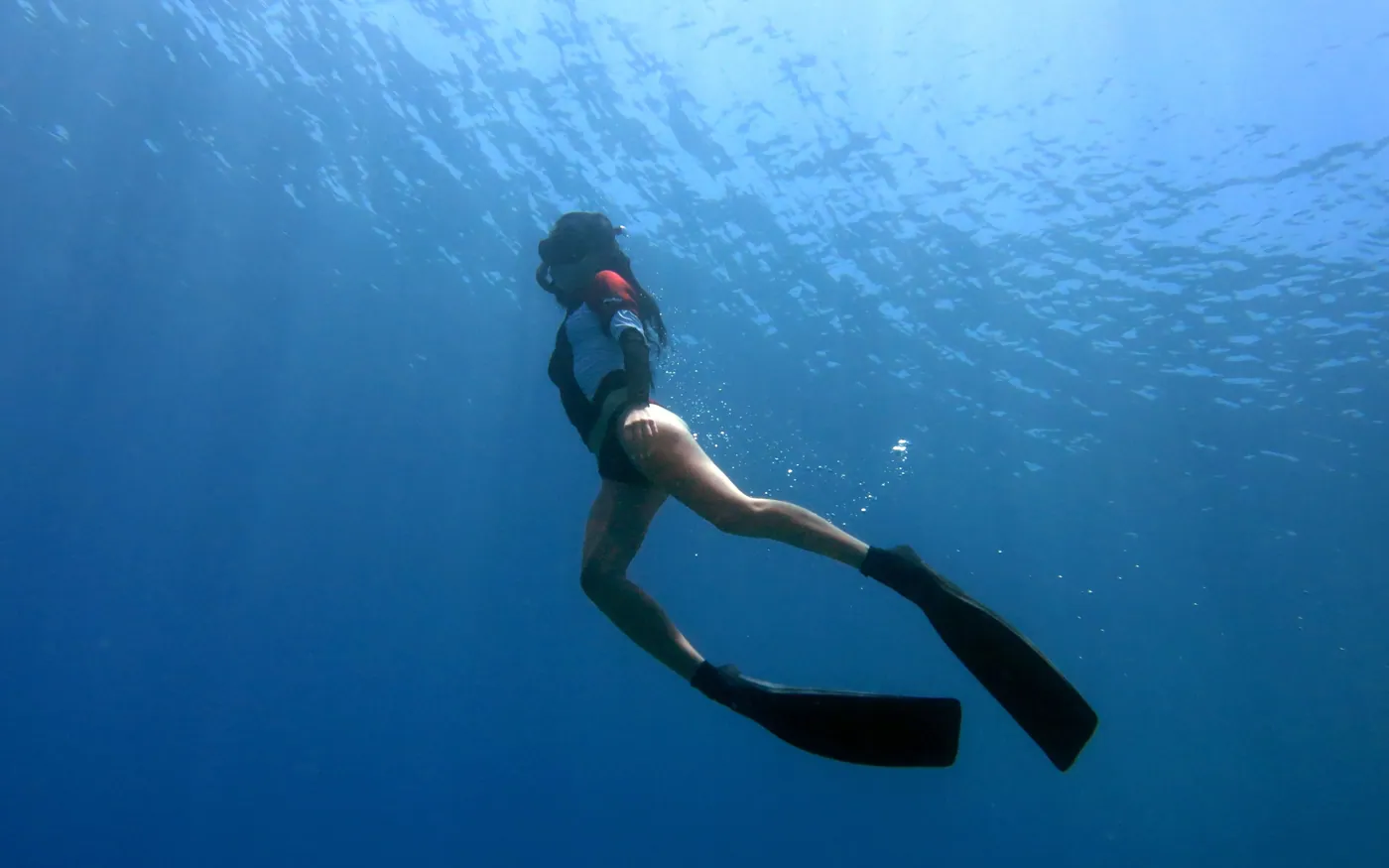
If snorkeling has been unpleasant for you, it was almost certainly the mask, and almost certainly the fit rather than the price.
The test takes five seconds. Hold the mask against your face without putting the strap behind your head, and inhale gently through your nose. If it stays there on its own for a moment, it seals on your face. If it falls away, it does not, and tightening the strap will not fix it — it will just press the leak against you harder.
A mask that fits is held on by the seal. The strap only stops it falling off.
That is the same test used for a dive mask, and it is set out at more length in how to choose a dive mask that fits. Bring your own if you can; rental masks are a lottery.
Fogging, which is not inevitable
The second most common complaint, and the easiest to fix.
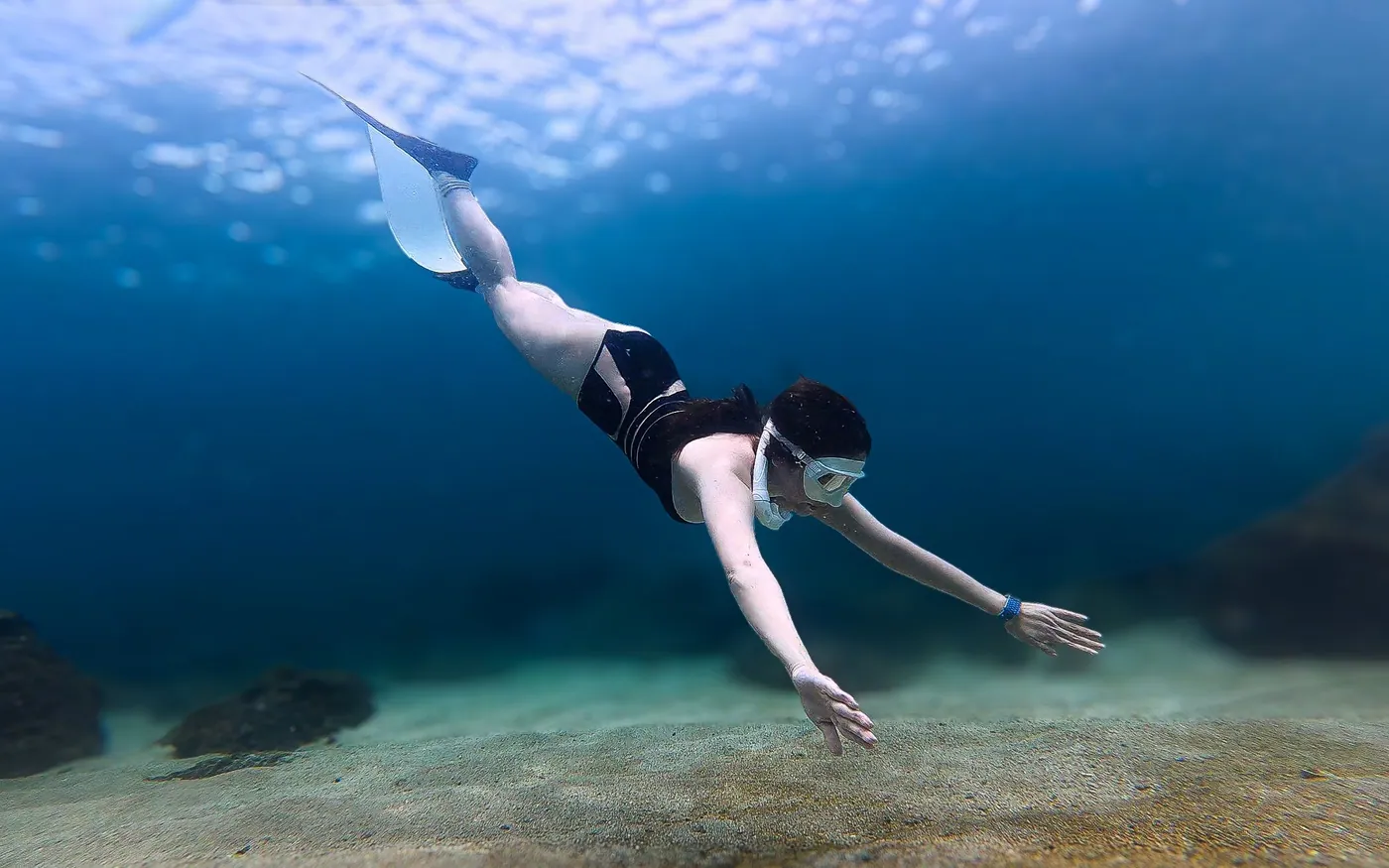
A brand new mask carries a film from manufacturing on the inside of the lens, and until that is removed it will fog no matter what you do. After that, a little defog rubbed around the lens and rinsed — or saliva, which works and which everybody eventually resorts to — deals with it.
The other cause is a mask sitting so loosely that warm breath gets in around the nose, which brings you back to fit.
Breathing and clearing
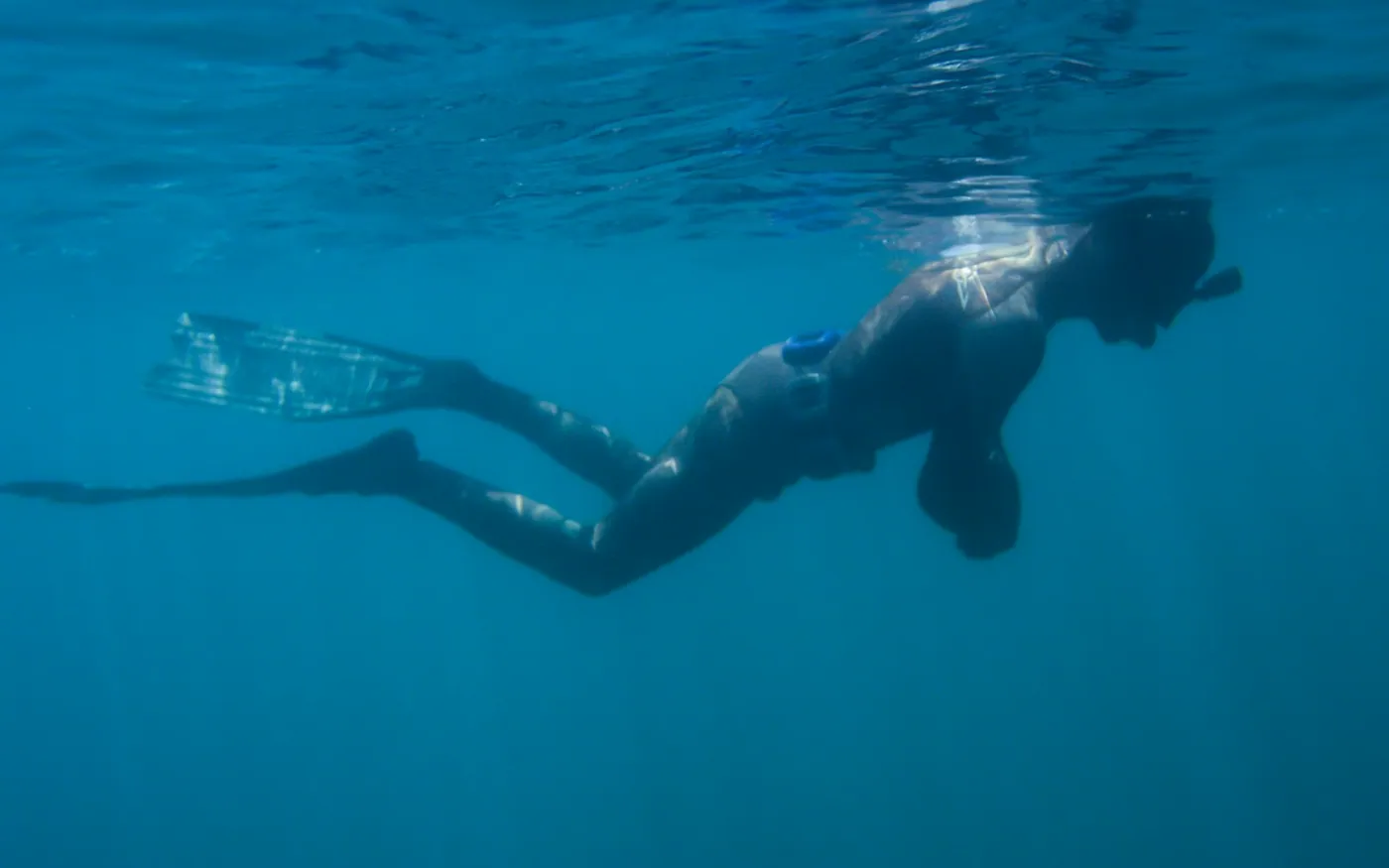
Breathing through a tube feels odd for the first few minutes and then stops feeling like anything.
Give it those minutes deliberately: stand or float in shallow water with your face in, and breathe slowly, with long relaxed exhales, until it is boring. Rushing this is why people spend the first twenty minutes tense.
Clearing is one sharp, forceful breath out, which blows the water up and out of the tube. The part people get wrong is the breath afterward: take it cautiously, because there may be a little water left and inhaling it is what produces the coughing fit that ends the session. SDI has a short guide to using a snorkel if you want it laid out step by step.
Fins, and going slowly
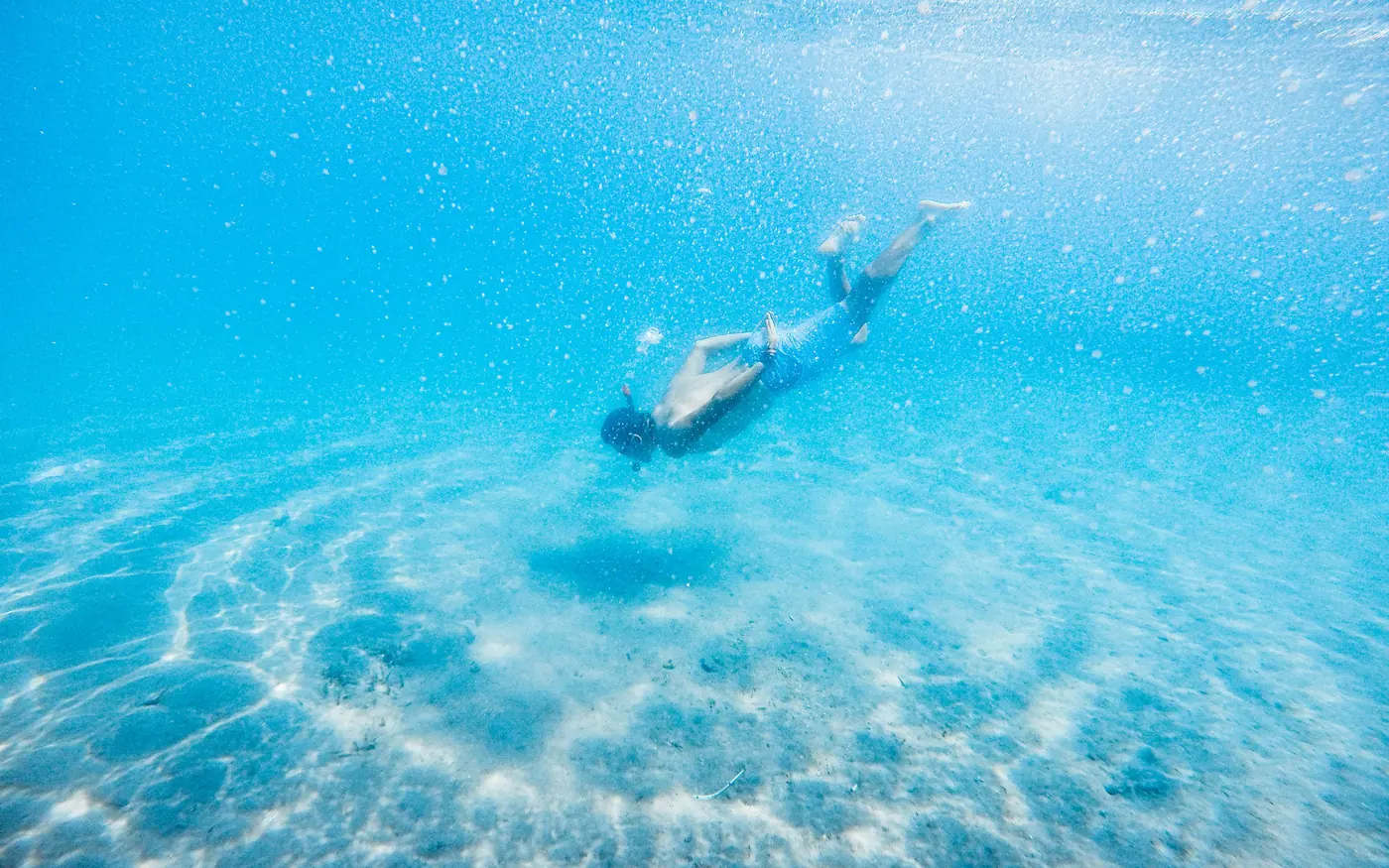
Fins should be snug without pinching, and for snorkeling a shorter, softer fin is easier than a long stiff one.
The technique is the same one that serves divers: long, slow, unhurried kicks coming from the hip with only a slight bend at the knee, and your legs mostly below the surface rather than splashing above it. Almost everybody kicks too fast at first, which is tiring and gets you nowhere, and it is the same fault described in finning techniques.
Keep your arms at your sides. Hands do nothing useful and using them is a sign you are working harder than the situation requires.
The safety part nobody says
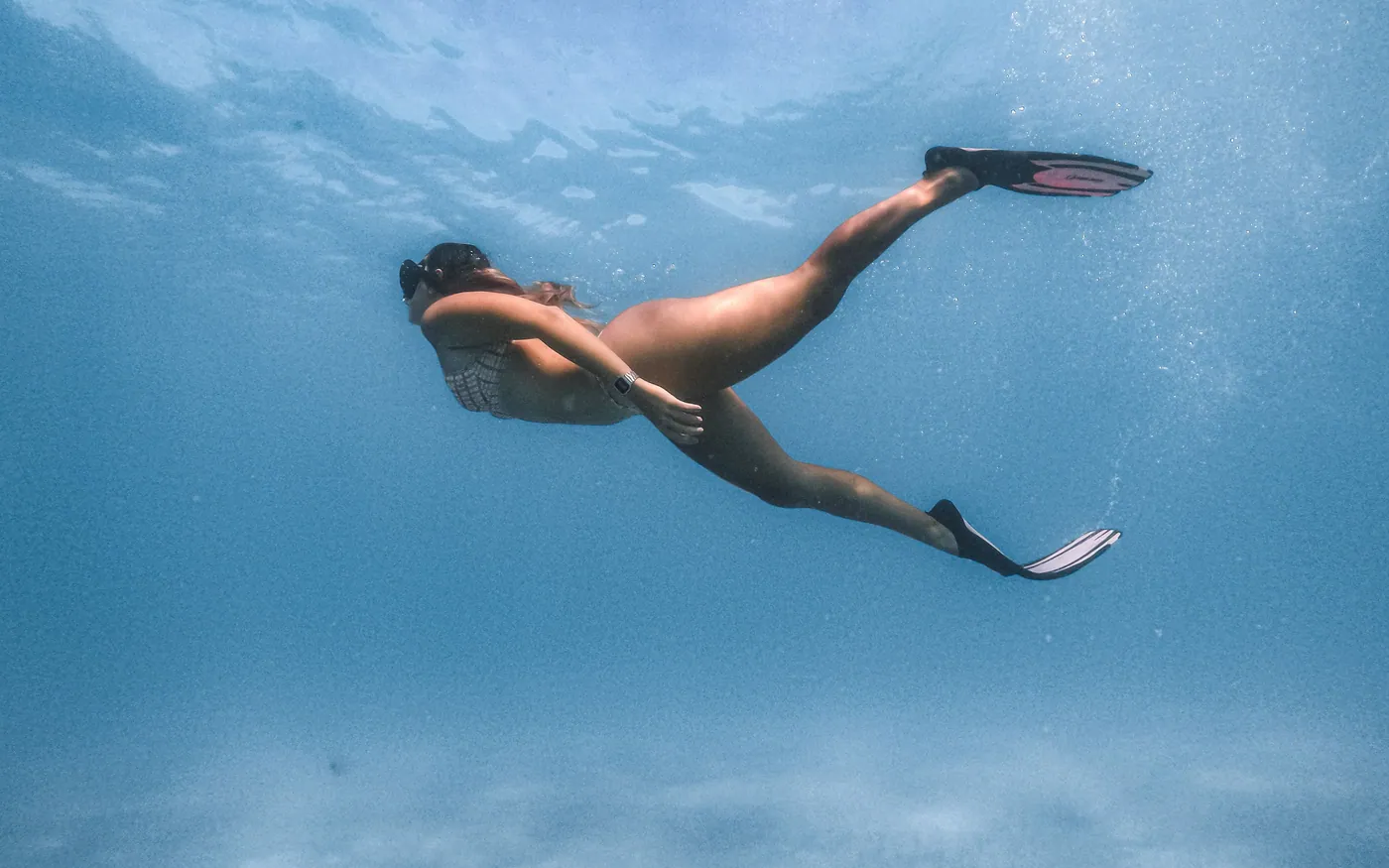
Snorkeling looks so simple that the ordinary water-safety points get skipped, and they are the ones that matter.
- Go with somebody, and preferably somebody who knows the water. The same logic as diving with a buddy.
- Check the conditions — wind, tide and where a current would take you — using the same judgment as reading conditions before a shore dive.
- Be visible. A float or a brightly colored top matters to boat traffic, which is the argument in dive flags and surface markers.
- Wear something for warmth in this water, and something for sun everywhere else — a back facing up for two hours burns badly.
- Do not push breath-hold depth. Dipping down for a closer look is fine; repeated deep breath-holding is freediving, which is a trained discipline with real risks and is not something to improvise.
Comfort at the surface
The part that separates people who enjoy snorkeling from people who endure it is not technique. It is being genuinely relaxed floating face-down.
That takes a few sessions and it is worth giving it them deliberately, in water you can stand up in, before going anywhere interesting. Float on your front. Float on your back. Get used to the sound of your own breathing through a tube, which is louder than people expect and which is most of what feels strange at first.
A wetsuit or a flotation aid helps here more than pride allows people to admit. Both make floating effortless, which lets you stop working at staying up and start looking down — which was the entire point of getting in.
Where it fits alongside diving
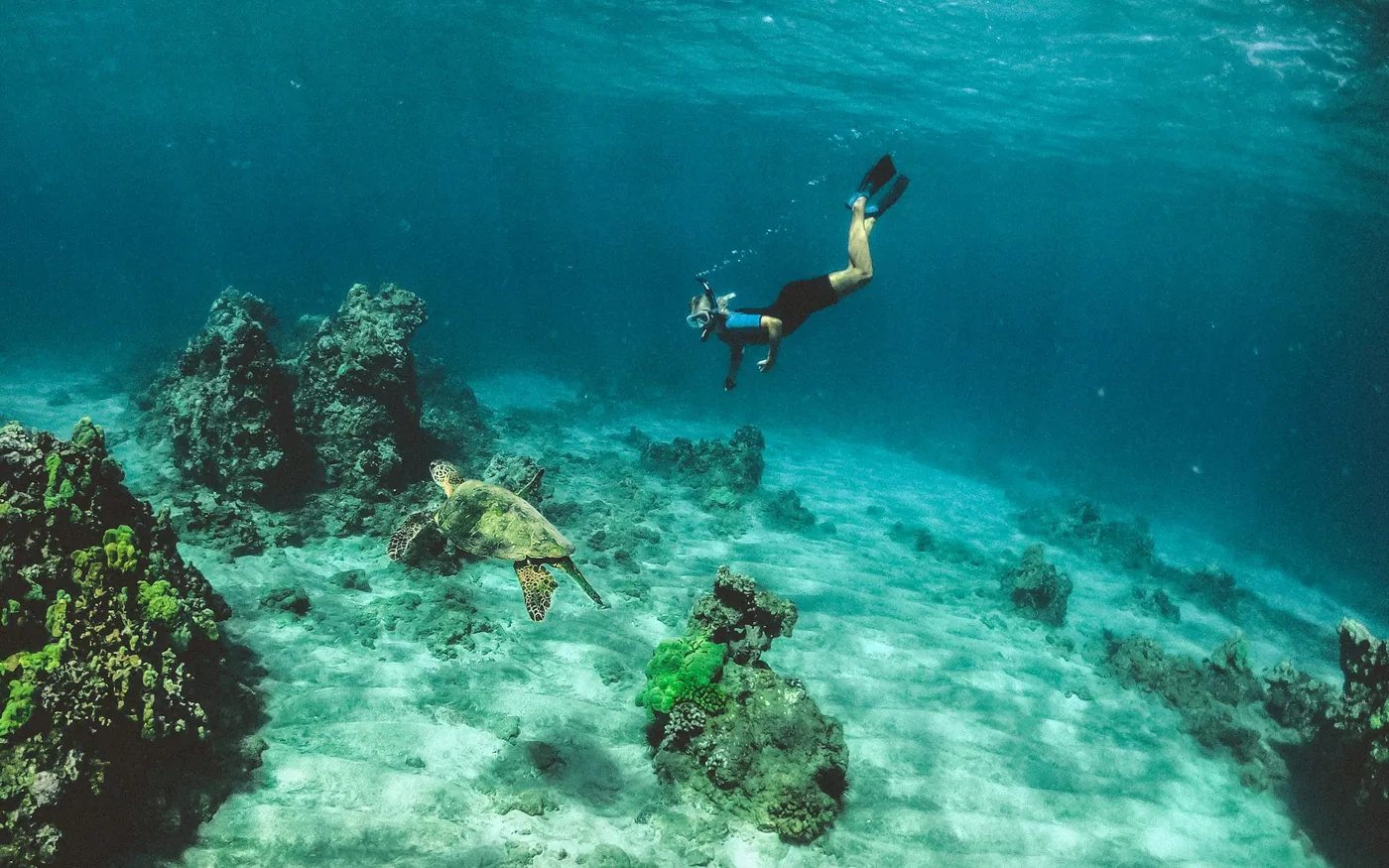
Snorkeling gets treated as what you do if you have not learned to dive, which undersells it.
In shallow, clear water over a reef, a snorkeler sees a great deal of what a diver sees, with no cylinder, no certification and no depth limit worth discussing. It also has no surface interval, no gas to run out of and no decompression to think about. On a family trip it is often the format that suits the day.
It is also the honest first step for anybody unsure about diving. Being comfortable with a mask on your face and your breathing settled removes most of what makes a first scuba experience daunting — which is why snorkeling or scuba is a real question rather than a ladder, and why a Discover Scuba session is the easy next step when you want one.
Frequently asked questions
How do I know if a mask fits?
Hold it against your face without the strap and inhale gently through your nose. If it stays put on its own for a moment, the seal is good. If it drops off, it does not fit you, and no amount of strap tension will fix that.
Why does my mask keep fogging?
New masks have a film from manufacturing that has to be removed, and after that a little defog or even saliva rubbed round the lens and rinsed will usually deal with it. Fogging is almost always preventable rather than inevitable.
How do I clear water out of the snorkel?
One sharp forceful breath out. Then take the next breath in cautiously, because there may be a little water left and you do not want to inhale it.
Do I need to be a strong swimmer?
You need to be comfortable, not fast. A flotation aid is entirely reasonable and plenty of people snorkel wearing one. Being comfortable in the water matters far more than technique.
Is snorkeling the same as freediving?
No. This is about swimming at the surface and occasionally dipping down on one breath. Freediving is a separate discipline with its own training, and breath-hold depth is not something to improvise.
Get a mask that actually fits
Five minutes in the shop settles it, and it is the difference between enjoying snorkeling and giving up on it.