

A diver trained in New England arrives in the tropics enormously overqualified and carrying about twice the lead they need. Almost everything gets easier. Two things get harder.
You are better at this than you think
Worth saying first, because local divers routinely underrate what they have learned.
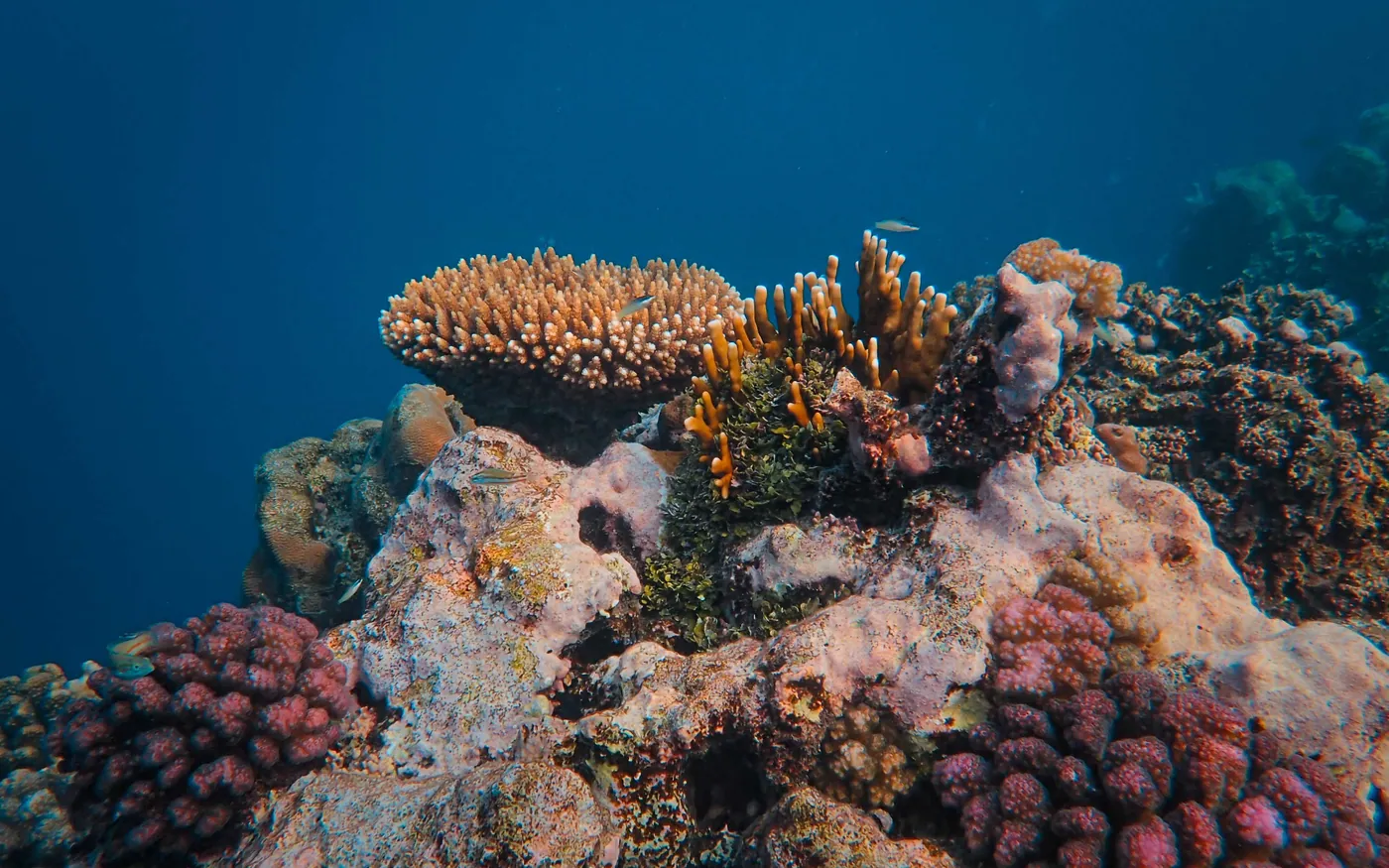
Diving here means cold, limited visibility, a thick suit, a lot of lead, surge, a shore entry over rock, and no guide. A tropical boat dive removes every one of those variables at once. Divers who learned in green water regularly find their first warm-water dive almost disconcertingly easy.
The hard version was the one you already learned.
The corollary is that the warm-water diver who comes here has a much steeper adjustment, which is the direction most published advice is written for.
The weighting is the big one
This is the change that catches everybody, and it is worth understanding rather than guessing at.
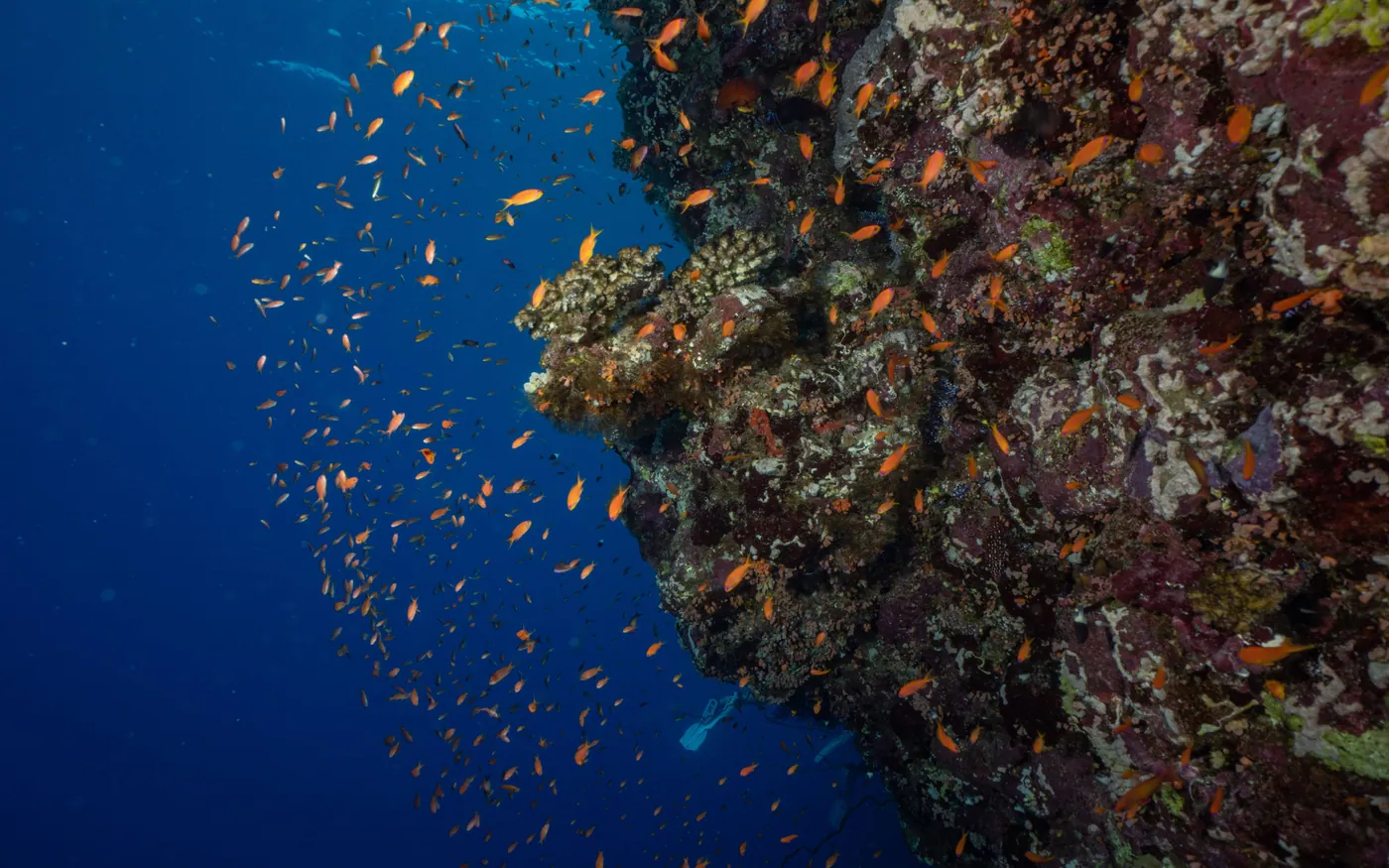
Almost all the lead a cold-water diver carries exists to counteract the buoyancy of a thick suit. Take the suit away and the reason for the lead goes with it. A diver who turns up in the tropics with their home weighting will be unable to get off the bottom without inflating the buoyancy device hard, which produces exactly the unstable, oscillating dive described in buoyancy and trim.
Do not try to calculate it. Do a weight check in the water on the first dive — empty device, normal breath, float at eye level — and adjust from there, exactly as in how much weight you actually need. Then write the number in your log, because you will want it on the next trip.
One practical consequence: with far less lead, integrated weight pockets that were straining at home are suddenly plenty, and a weight belt may be unnecessary.
What gets easier
Nearly everything, and the effects compound.
- Gas lasts longer. Less cold, less work and less tension all reduce consumption, often dramatically.
- Dives are longer, which is usually what ends them rather than the cylinder.
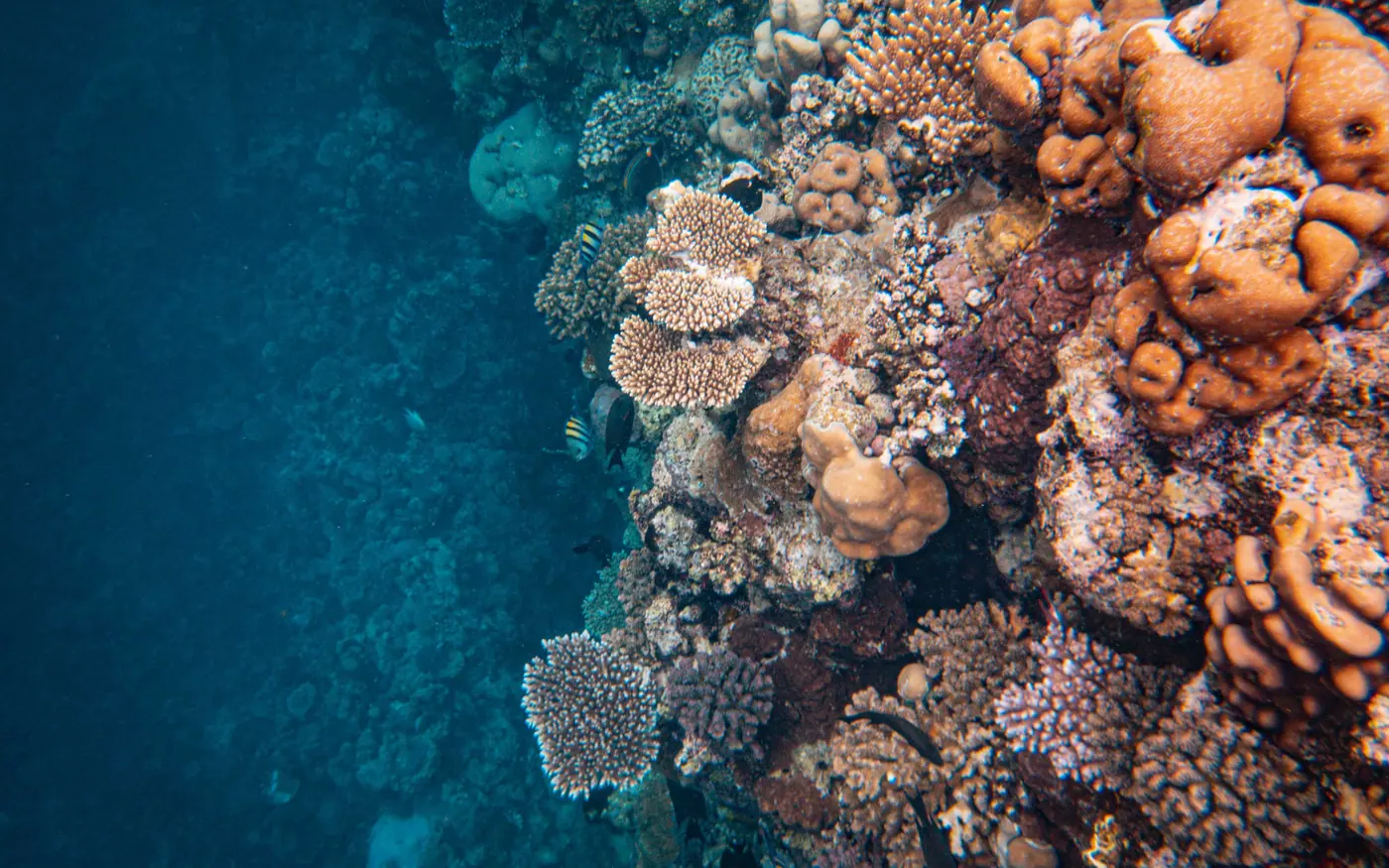
- Navigation is trivial when you can see fifty feet, and there is often a guide doing it anyway.
- Kitting up is quick. No hood, no gloves, no fighting a 7 mm suit on a hot morning.
- The entry is a step off a boat, not a walk over weed-covered granite.
It is genuinely a vacation version of the sport, and there is no reason to be sniffy about that.
And the two things that get harder

Two real risks, and both come from the same source: everything feels so easy that attention drops.
Depth creeps. In clear water there is no visual cue that you are descending, walls fall away below you, and eighty feet arrives without feeling like anything. That matters for gas, for no-decompression limits, and for narcosis, which is easy to miss when you are relaxed and enjoying yourself.
Repetitive diving stacks up. A trip usually means several dives a day for several days, which is a very different loading from one dive on a Saturday — the subject of two dives in a day. Build in conservatism, and leave a proper interval before flying home.
Your skills transfer, your habits need adjusting
A few small things behave differently enough to be worth expecting.
You will be warm, which sounds trivial and changes the dive completely: no shivering, no losing dexterity, no calling it at forty minutes because your hands have stopped working. You will also be far more buoyant at the safety stop with a nearly empty cylinder and almost no lead, so hold the stop deliberately rather than assuming you will stay put.
And the visibility changes your judgment of distance and depth. Objects that look close in clear water are further away than they seem, and a wall that appears to bottom out just below you may be a hundred feet down. Trust the gauge rather than your eyes.
What to take and what to leave
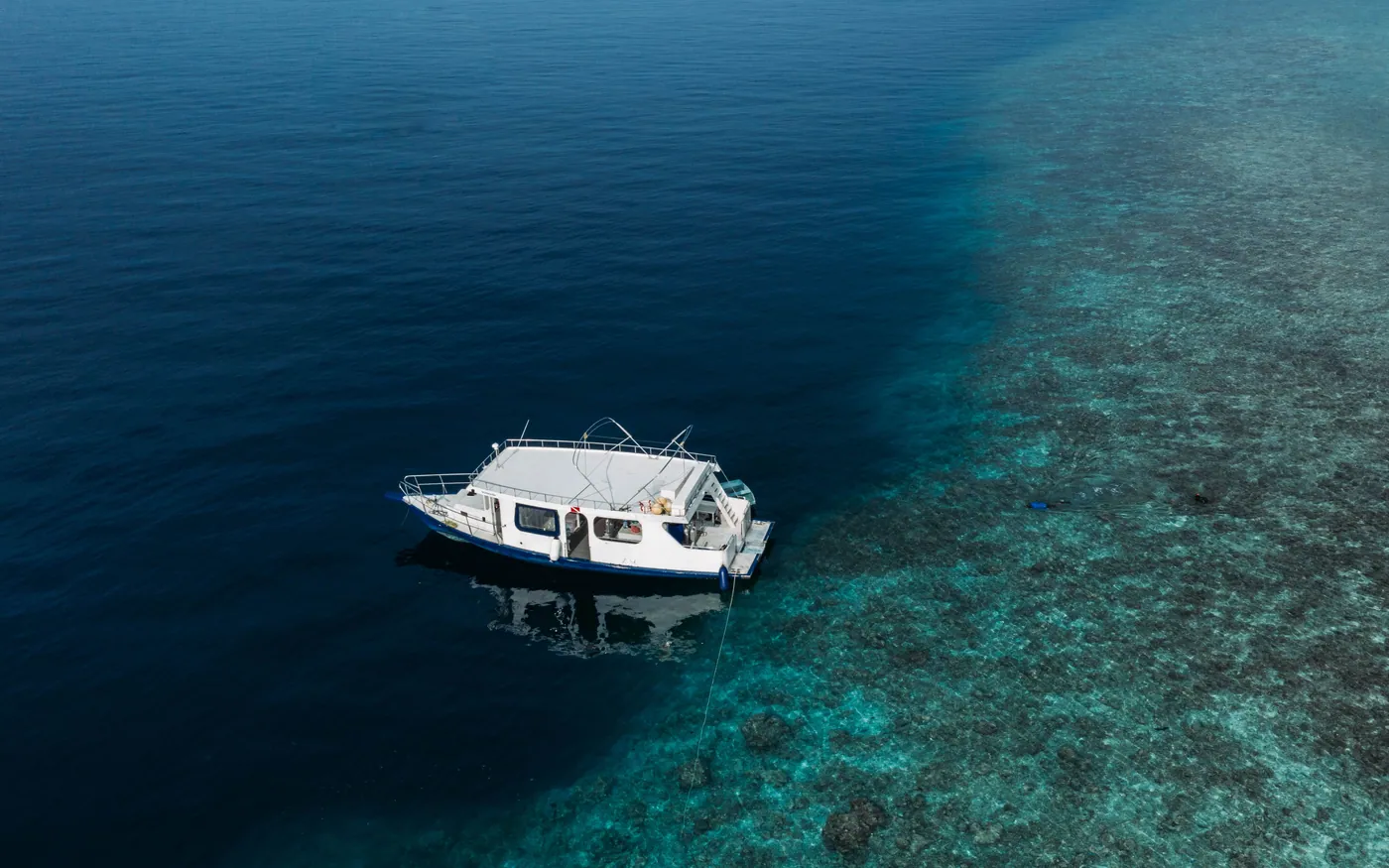
Packing decisions are mostly about weight allowance versus familiarity.
Take: your mask, without question, because a rental mask that does not seal will spoil a week rather than a morning. Your computer, because it holds your profiles and you know how to read it. A regulator if the allowance permits — you know how it breathes. And a save-a-dive kit, which matters far more when the nearest shop is unfamiliar.
Leave: the thick suit, the hood, the heavy gloves, most of your lead, and the cylinder. All of it is provided and none of it is worth the baggage. PADI sets out the broader comparison between the two kinds of diving if you want it in one place.
One more small thing: rental gear abroad will not be what you are used to. Assemble it yourself rather than accepting it assembled, check the releases and the inflator before you get in, and treat the first dive as a shakedown — the same buddy check described in being a dive buddy worth having, done a little more carefully than usual.
Coming home again

The transition back is the one worth a moment’s planning, and almost nobody gives it any.
After a week of warm, effortless diving, a local dive in a thick suit with twenty pounds of lead in twelve feet of visibility is a jolt. Your weighting is different again, your skills are rusty in the specific ways cold water tests, and your first dive back is not the one to do somewhere demanding.
Make it an easy site on a calm day, and treat it as a re-acclimatisation rather than a continuation. The conditions side of that judgment is in reading conditions before a shore dive, and the honest case for local diving as the harder training ground is in diving the same site again.
Frequently asked questions
How much less weight will I need?
Substantially less, because most of the lead you carry here is there to sink a thick suit. Do not guess a number — do a proper weight check in the water on the first dive, using the method in how much weight you actually need.
Do I need a wetsuit at all in the tropics?
Usually something. The body loses heat even in water around 80°F, and a thin suit or rash guard also protects against stings and scrapes. It is rarely more than 3 mm.
Will my gas last longer?
Almost certainly. Warm, clear, still water means less work, less cold and less tension, and all three show up in consumption — see how to use less air.
Should I take my own gear?
Mask and computer at minimum. Whether the rest is worth the baggage depends on the trip; a regulator you know is worth carrying, and a 7 mm suit is not.
Is warm-water diving easier?
In almost every respect. Which is why divers who learned here tend to find it straightforward, and why the transition in the other direction catches people out.
Thinking about a trip?
Ask us what the diving is actually like where you are heading, and what to take. We run trips and we have been to most of it.